3 Essential Data Minimization Strategies for Privacy-Conscious Marketers: Protect Your Data Now
Are you struggling to manage the overwhelming amount of data your marketing team collects? Data minimization for marketers is becoming increasingly crucial in today’s digital landscape.
As a life coach, I’ve helped many professionals navigate these challenges. In my experience, unbounded data retention can lead to significant privacy concerns and regulatory issues, including GDPR compliance for marketers.
In this post, you’ll discover effective data minimization strategies for marketers. We’ll explore data retention policies, data masking, and clear opt-out options as part of customer data protection techniques.
Each strategy aims to reduce privacy risks and increase consumer trust, aligning with privacy-first marketing strategies.
Let’s dive into ethical data handling in digital marketing.

The Growing Concern Over Unbounded Data Retention
In today’s privacy-focused landscape, consumers are more aware of how their data is handled. This awareness has sparked growing concerns about unbounded data retention and the lack of clear data deletion options, highlighting the importance of data minimization for marketers.
From my experience, many clients initially struggle with the overwhelming task of managing vast amounts of collected data. They often overlook the importance of clear data retention policies, leading to significant privacy risks and regulatory issues, including challenges with GDPR compliance for marketers.
Furthermore, poor data management can severely damage your brand’s reputation. Statistics show that 87% of consumers are willing to walk away from a company if they feel their data privacy is compromised. This underscores the need for robust customer data protection techniques and ethical data handling in digital marketing.
This demonstrates the critical need for effective data minimization strategies and privacy-first marketing strategies.
In the next section, we’ll explore actionable steps to address these concerns and implement data minimization for marketers.
Strategic Roadmap for Effective Data Minimization
Overcoming this challenge requires a few key steps. Here are the main areas to focus on for data minimization for marketers to make progress:
- Implement Data Retention Policies with Timelines: Establish clear policies to determine how long data should be kept, aligning with GDPR compliance for marketers.
- Utilize Data Masking for Non-Essential Information: Mask data that isn’t crucial for daily operations to maintain privacy, employing customer data protection techniques.
- Offer Clear Opt-Out and Data Deletion Options: Provide easy-to-use interfaces for customers to manage and delete their data, supporting privacy-first marketing strategies.
Let’s dive into these data minimization for marketers strategies!
1: Implement data retention policies with timelines
Implementing data retention policies with timelines is crucial to manage collected data effectively and ensure compliance with privacy regulations, forming a key aspect of data minimization for marketers.
Actionable Steps:
- Conduct a data audit: Identify and categorize all collected data. Use data mapping tools to visualize data flows and storage locations, supporting customer data protection techniques.
- Develop clear retention policies: Create specific timelines for each data category, aligning with legal requirements and business needs, ensuring GDPR compliance for marketers.
- Regularly review retention policies: Schedule quarterly reviews and involve key stakeholders to keep policies relevant and effective, promoting ethical data handling in digital marketing.
Explanation: These steps matter because they help reduce privacy risks and ensure compliance with regulations like GDPR. Regular reviews and clear policies build consumer trust, supporting privacy-first marketing strategies.
According to Milken Institute, evolving regulations compel businesses to rethink data management strategies.
Key benefits of implementing data retention policies:
- Reduced legal and compliance risks
- Improved data organization and accessibility
- Enhanced customer trust and transparency
Taking these steps will set a strong foundation for effective data minimization for marketers. Let’s move on to data masking techniques.

2: Utilize data masking for non-essential information
Utilizing data masking for non-essential information is crucial to maintain privacy without hindering business operations, which aligns with data minimization for marketers.
Actionable Steps:
- Identify non-essential data: Determine which data can be masked without affecting your daily operations. Collaborate with your IT team to ensure accuracy in customer data protection techniques.
- Implement data masking techniques: Use methods like tokenization or pseudonymization to mask non-essential data. Leverage specialized software tools to automate this process, supporting privacy-first marketing strategies.
- Monitor and test effectiveness: Regularly audit and conduct penetration tests to ensure the data masking techniques maintain privacy and security, adhering to GDPR compliance for marketers.
Explanation: These steps are vital because they help protect privacy while allowing necessary data operations to continue smoothly. Regular monitoring ensures ongoing security and compliance, supporting ethical data handling in digital marketing.
According to FPF, Privacy Enhancing Technologies (PETs) like data masking can significantly boost data security and privacy, which is essential for data minimization for marketers.
Taking these steps will help you safeguard non-essential data effectively. Next, we’ll explore offering clear opt-out and data deletion options.
3: Offer clear opt-out and data deletion options
Providing clear opt-out and data deletion options is crucial for respecting consumer privacy and fostering trust, aligning with data minimization for marketers and privacy-first marketing strategies.
Actionable Steps:
- Create user-friendly interfaces: Design intuitive dashboards that allow users to easily manage their data preferences, including opt-out options, supporting GDPR compliance for marketers.
- Automate data deletion processes: Develop and implement automated systems for handling data deletion requests to ensure efficiency and compliance, enhancing customer data protection techniques.
- Communicate transparently with customers: Clearly inform customers about their data rights and how to exercise them through detailed FAQs and customer support, promoting ethical data handling in digital marketing.
Best practices for implementing opt-out and deletion options:
- Use clear, jargon-free language in all communications
- Provide multiple contact methods for customer support
- Regularly update and test your data management systems
Explanation: These steps matter because they enhance transparency, build consumer trust, and ensure compliance with regulations like the GDPR, supporting data privacy in marketing efforts.
According to the CMSWire, transparency and consent are crucial for maintaining customer trust and satisfaction.
Implementing these practices will help you manage data responsibly and maintain consumer trust while minimizing personal data collection.
Let’s move on to how Alleo can assist in these processes.

Partner with Alleo on Your Data Minimization Journey
We’ve explored the challenges of data minimization for marketers, the benefits of solving them, and the steps to achieve it. But did you know you can work directly with Alleo to make this journey easier and faster, especially when it comes to implementing privacy-first marketing strategies?
Setting up an account with Alleo is simple. Just sign up and start your free 14-day trial—no credit card required. This trial allows you to explore data privacy in marketing and GDPR compliance for marketers.
Create a personalized plan tailored to your data management needs. Alleo’s AI coach will guide you through setting up data retention policies in marketing, automating data anonymization methods, and creating clear opt-out options to support ethical data handling in digital marketing.
The coach follows up on your progress, handles changes, and keeps you accountable with text and push notifications, ensuring you stay on track with minimizing personal data collection.
Ready to get started for free? Let me show you how to balance personalization and privacy while implementing customer data protection techniques!
Step 1: Log in or Create Your Alleo Account
To begin your data minimization journey, log in to your existing Alleo account or create a new one to access the AI coach and start your free 14-day trial.

Step 2: Choose “Building better habits and routines”
Click on “Building better habits and routines” to start developing consistent data management practices that will help you implement effective data minimization strategies and enhance your privacy protection efforts.

Step 3: Select “Career” as Your Focus Area
Choose “Career” as your focus area in Alleo to align your data minimization efforts with your professional growth, helping you navigate privacy challenges and regulatory issues in your marketing role more effectively.

Step 4: Starting a coaching session
Begin your journey with Alleo by scheduling an initial intake session, where our AI coach will guide you through setting up a personalized plan for implementing data minimization strategies tailored to your marketing needs.

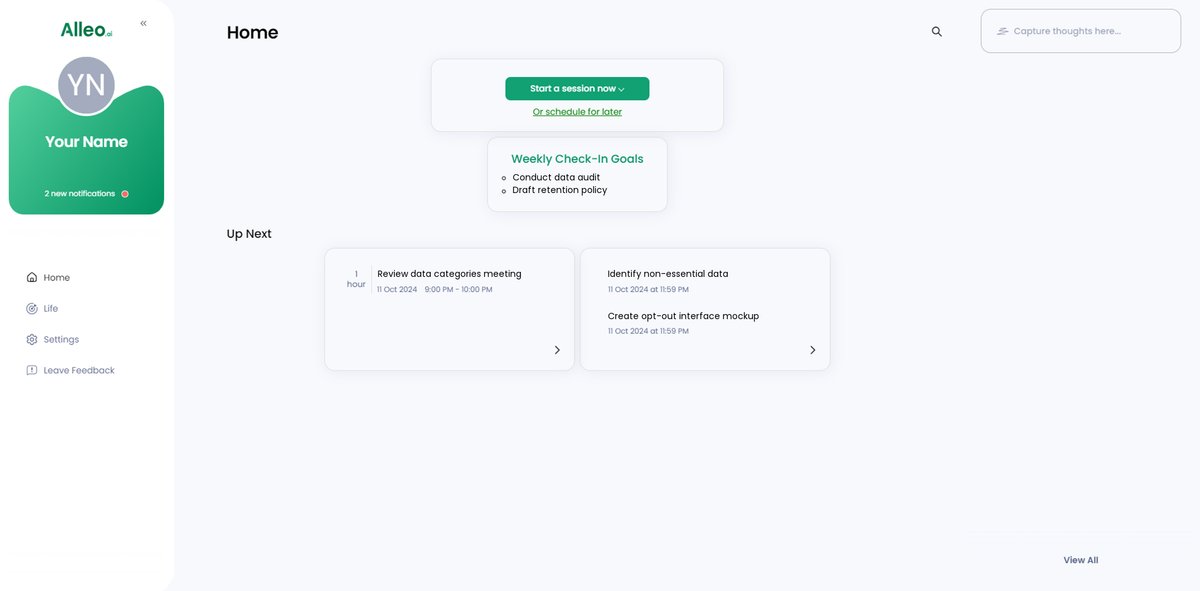
Step 5: Viewing and Managing Goals After the Session
After your coaching session on data minimization strategies, check the Alleo app’s home page to view and manage the goals you discussed, allowing you to track your progress in implementing data retention policies, masking techniques, and opt-out options.
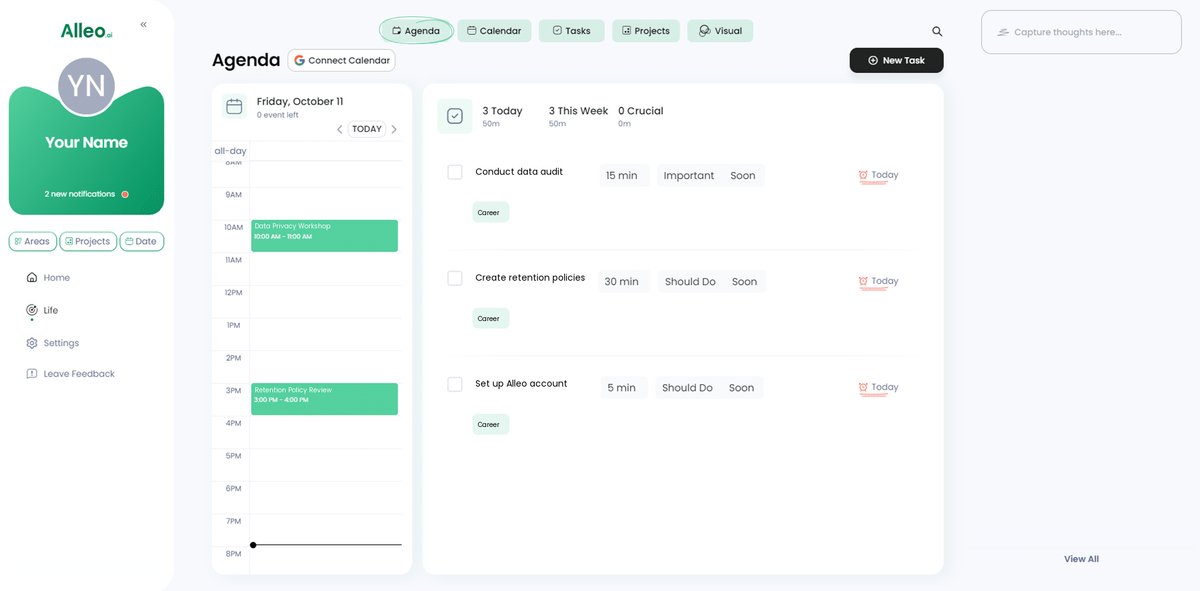
Step 6: Adding events to your calendar or app
Track your progress in implementing data minimization strategies by adding key milestones and deadlines to the Alleo app’s calendar and task features, ensuring you stay on top of your data management goals.
Wrap Up and Take Action
We’ve covered a lot of ground. Managing data effectively is crucial for privacy-conscious marketers implementing data minimization strategies.
Implementing data retention policies, data masking, and clear opt-out options can transform your data management. These steps reduce privacy risks, build consumer trust, and support GDPR compliance for marketers.
I know this can feel overwhelming. Remember, you don’t have to do it alone in your journey towards ethical data handling in digital marketing.
Alleo can help you streamline these processes. With personalized guidance, you can implement these privacy-first marketing strategies smoothly.
Ready to take control of your data management and embrace data minimization for marketers? Start your free trial with Alleo today and see the difference in your customer data protection techniques.
You’ve got this!