3 Essential Strategies for Managers to Analyze Conflicting Employee Testimonies
How do you navigate the tricky waters of conflicting employee testimonies in workplace disputes?
As a life coach, I’ve guided many professionals through similar challenges. In my experience helping clients resolve conflicts, I often see the importance of structured analysis when analyzing conflicting employee testimonies. Employee dispute resolution requires careful consideration and unbiased conflict analysis methods.
In this article, you’ll learn strategies for analyzing conflicting employee testimonies, ensuring fairness in workplace conflict management, and using tools like Alleo to streamline the process of investigating employee disagreements. We’ll explore fact-finding techniques for managers and HR investigation best practices.
Let’s dive into effective workplace mediation strategies and methods for resolving conflicting accounts at work.

Understanding the Challenges of Conflicting Testimonies
Analyzing conflicting employee testimonies is a significant problem for managers and lawyers. In my experience, people often find it tough to determine the truth when narratives clash, making workplace conflict management a complex task.
Many clients initially struggle with scenarios where employees provide inconsistent accounts of the same incident. For example, Michael might give contradictory statements about Angela’s and Pam’s complaints, making it hard to identify the real issue. This situation calls for effective fact-finding techniques for managers and unbiased conflict analysis methods.
This challenge is particularly painful because it directly impacts workplace fairness and trust. Ensuring that all parties feel heard and treated justly is essential for maintaining a healthy work environment. Proper employee testimony evaluation and workplace mediation strategies are crucial in resolving conflicting accounts at work.
Strategies for Analyzing Conflicting Employee Testimonies
Analyzing conflicting employee testimonies can be challenging. Overcoming this challenge requires a few key steps. Here are the main areas to focus on to make progress in workplace conflict management.
- Conduct impartial interviews with all parties: Schedule and prepare for unbiased conflict analysis methods to ensure fairness in employee dispute resolution.
- Document and compare key points in testimonies: Create a matrix to identify commonalities and discrepancies when investigating employee disagreements.
- Use active listening to identify inconsistencies: Practice active listening techniques to uncover inconsistencies, a crucial fact-finding technique for managers.
Let’s dive into these strategies for analyzing conflicting employee testimonies!
1: Conduct impartial interviews with all parties
Conducting impartial interviews is crucial for analyzing conflicting employee testimonies and ensuring fairness in conflict resolution.
Actionable Steps:
- Schedule Interviews: Arrange interviews with all relevant parties in a neutral setting to avoid any bias in workplace conflict management.
- Prepare Questions: Develop a standardized set of both open-ended and specific questions for consistency in investigating employee disagreements.
- Record Interviews: Use reliable recording devices to capture conversations accurately and obtain consent from participants for employee testimony evaluation.
Explanation: Conducting impartial interviews helps gather unbiased information, which is essential for fair employee dispute resolution.
According to the SHRM, a structured interview process ensures that all sides are heard, promoting transparency and trust in workplace mediation strategies.
Ensuring fairness in interviews helps maintain a healthy workplace environment, which is vital for overall employee morale and productivity when resolving conflicting accounts at work.
Key benefits of impartial interviews include:
- Promotes trust among employees
- Reduces bias in decision-making for unbiased conflict analysis methods
- Enhances the credibility of the resolution process
Taking these steps will set a solid foundation for effectively analyzing conflicting employee testimonies and implementing HR investigation best practices.

2: Document and compare key points in testimonies
Documenting and comparing key points in testimonies helps identify consistencies and discrepancies, which is crucial for analyzing conflicting employee testimonies and fair conflict resolution.
Actionable Steps:
- Create a Testimony Matrix: Develop a matrix to document key points from each testimony, including timeline, specific incidents, and witness statements for effective employee dispute resolution.
- Identify Commonalities and Discrepancies: Compare testimonies to find commonalities and discrepancies, focusing on details that either align or conflict, aiding in workplace conflict management.
- Cross-Reference with Evidence: Cross-reference testimonies with evidence such as emails and video footage to ensure key points are supported by tangible proof, a crucial step in investigating employee disagreements.
Explanation: Documenting and comparing testimonies ensures a systematic approach to analyzing conflicting employee testimonies. It helps in identifying inconsistencies and supports a fair investigation, utilizing fact-finding techniques for managers.
According to the Office of Institutional Equity, maintaining detailed records and cross-referencing with evidence enhances the integrity of the process. This approach builds trust and ensures a thorough and unbiased conflict analysis method.
Taking these steps ensures a comprehensive analysis of conflicting testimonies, aiding in fair conflict resolution and effective workplace mediation strategies.
3: Use active listening to identify inconsistencies
Active listening is crucial for analyzing conflicting employee testimonies during workplace conflict management and employee dispute resolution.
Actionable Steps:
- Practice Active Listening Techniques: Focus on the speaker, avoid interrupting, and observe non-verbal cues during interviews when investigating employee disagreements.
- Ask Clarifying Questions: Pose clarifying questions to address ambiguous statements and encourage additional context in employee testimony evaluation.
- Analyze Behavioral Cues: Pay attention to body language and tone of voice to identify signs of discomfort or hesitation during fact-finding techniques for managers.
Explanation: Active listening helps uncover inconsistencies by ensuring you fully understand each testimony when analyzing conflicting employee testimonies.
According to the Hacking HR Lab, effective communication and active listening are essential for resolving workplace conflicts.
By implementing these steps, you can create a more transparent and fair investigation process for workplace mediation strategies.
Common signs of inconsistencies in testimonies when reconciling contradictory statements:
- Contradictory statements between interviews
- Gaps in the timeline of events
- Sudden changes in demeanor or body language
Identifying these inconsistencies early on is key to resolving conflicts efficiently and fostering a healthier work environment through unbiased conflict analysis methods and HR investigation best practices.

Partner with Alleo for Effective Conflict Resolution
We’ve discussed strategies for analyzing conflicting employee testimonies. But did you know you can work directly with Alleo to make this process of workplace conflict management easier and faster?
Sign up with Alleo for a personalized coaching plan on employee dispute resolution. It provides affordable, tailored support for investigating employee disagreements, just like a human coach.
Alleo will help you conduct impartial interviews, document key points, and use active listening techniques for unbiased conflict analysis. Plus, Alleo’s AI coach ensures you stay on track with regular follow-ups and reminders via text and push notifications, supporting your fact-finding techniques as managers.
Ready to get started with analyzing conflicting employee testimonies for free?
Let me show you how to improve your HR investigation best practices!
Step 1: Log In or Create Your Account
To begin using Alleo for conflict resolution, Log in to your account or create a new one to access personalized coaching and support for analyzing employee testimonies.

Step 2: Choose “Building better habits and routines”
Select “Building better habits and routines” to develop structured approaches for analyzing conflicting testimonies, improving your conflict resolution skills, and creating a more effective workplace dispute management process.

Step 3: Select “Career” as Your Focus Area
Choose “Career” as your focus area in Alleo to receive tailored guidance on navigating workplace conflicts and improving your conflict resolution skills, which are crucial for maintaining a healthy work environment and advancing your professional growth.

Step 4: Starting a coaching session
Begin your journey with Alleo by scheduling an intake session to discuss your conflict resolution challenges and set up a personalized plan for navigating employee testimonies effectively.

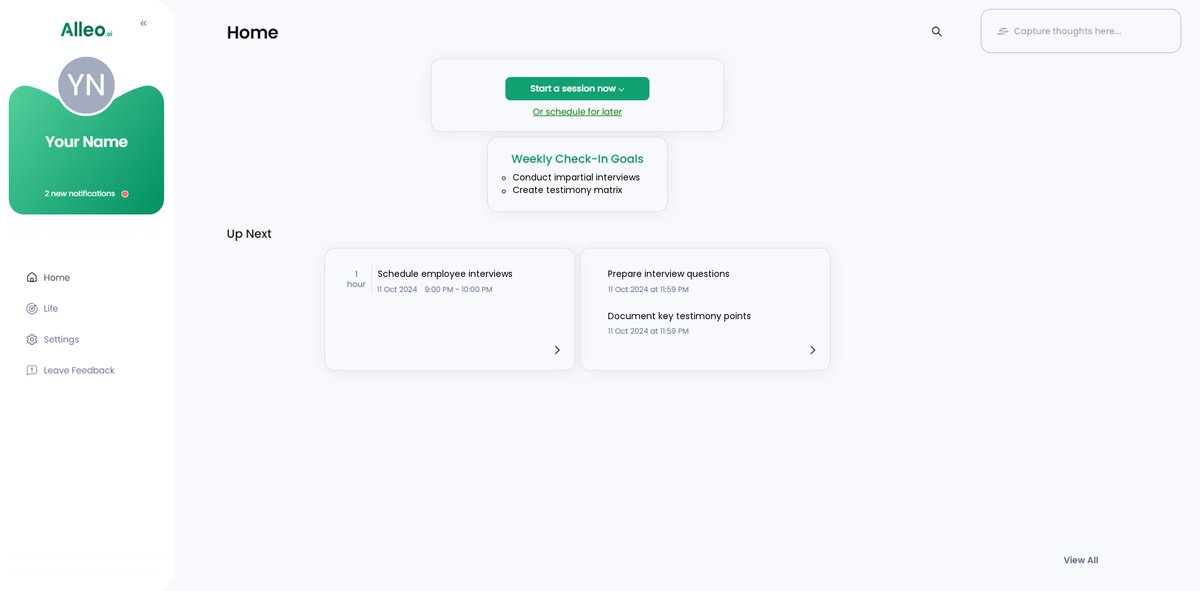
Step 5: Viewing and Managing Goals After the Session
After your coaching session on resolving workplace conflicts, check the Alleo app’s home page to view and manage the goals you discussed, helping you stay on track with implementing conflict resolution strategies.
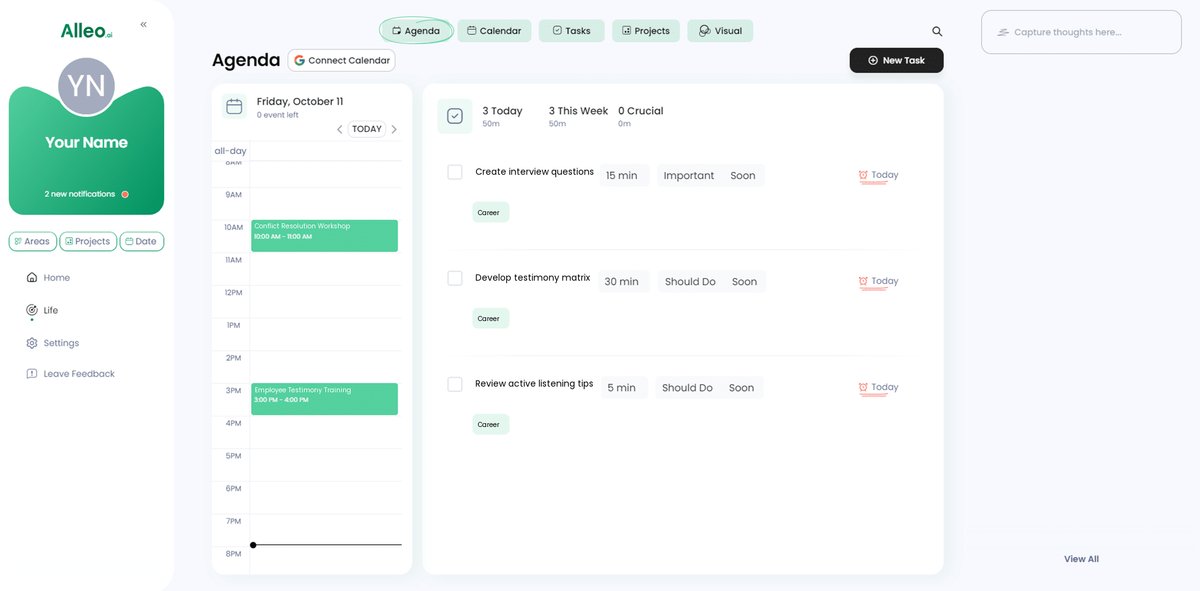
Step 6: Adding events to your calendar or app
Track your progress in resolving workplace conflicts by adding key meetings and follow-up tasks to the Alleo app’s calendar and task features, helping you stay organized throughout the resolution process.
Wrapping Up: Empowering Yourself with Effective Conflict Resolution
Transitioning from the detailed strategies, let’s bring it all together.
Analyzing conflicting employee testimonies isn’t easy, but with the right approach, you can ensure fairness and accuracy. Remember to conduct impartial interviews, document key points, and use active listening for effective workplace conflict management.
These steps will help you navigate the complexities of employee dispute resolution and investigating employee disagreements.
I understand how challenging this can be, but you’re not alone in reconciling contradictory statements.
You have the tools and strategies now for unbiased conflict analysis methods.
Consider partnering with Alleo for additional support and guidance in employee testimony evaluation.
Together, we can make your conflict resolution process smoother and more effective, implementing workplace mediation strategies.
Ready to get started with analyzing conflicting employee testimonies? Give Alleo a try for free today.