3 Essential Strategies for Managers to Prevent Burnout in Understaffed Teams
Ever felt like you’re juggling too many tasks with too few hands? This is a common challenge when preventing burnout in understaffed teams.
As a life coach, I’ve helped many professionals navigate these challenges. In my experience, managing workload effectively can transform your team’s productivity and improve employee well-being.
In this article, you’ll discover strategies to prioritize tasks, redistribute workloads, and implement flexible work arrangements. These approaches can significantly reduce stress and improve job satisfaction, contributing to better work-life balance and resilience building.
Let’s dive in and explore effective workload management techniques for preventing burnout in understaffed teams.

Understanding the Depth of the Burnout Problem
Let’s delve deeper into why preventing burnout in understaffed teams is such a significant issue. In my experience, many clients struggle with the constant pressure to meet deadlines, which directly impacts employee well-being.
This pressure becomes unbearable when teams are understaffed, making effective workload management crucial.
Burnout isn’t just about feeling tired. It leads to decreased job satisfaction, lower team productivity, and higher turnover rates.
This means more work for those who stay behind, further challenging work-life balance.
Several clients report that the stress of heavy workloads is a major concern. It’s not uncommon for team morale to plummet under these conditions, highlighting the need for stress reduction techniques.
The statistics are clear. A large percentage of workers experience heavy workloads, leading to significant stress and burnout. Effective delegation and time management skills become essential in these situations.
This cannot be ignored if we want to maintain a productive and happy workforce. Preventing burnout in understaffed teams requires a focus on communication strategies and resilience building.
Effective Strategies to Combat Burnout in Understaffed Teams
Preventing burnout in understaffed teams requires a few key steps. Here are the main areas to focus on to make progress and enhance employee well-being:
- Prioritize tasks and redistribute workload fairly: Audit tasks to identify priorities and balance workloads among team members, improving workload management and team productivity.
- Implement regular check-ins and support sessions: Schedule weekly check-ins and monthly support sessions to address workload and stress, focusing on communication strategies and resilience building.
- Offer flexible work arrangements to reduce stress: Introduce flexible hours and remote work options to enhance work-life balance and implement effective stress reduction techniques.
Let’s dive in to explore these strategies for preventing burnout in understaffed teams!
1: Prioritize tasks and redistribute workload fairly
In understaffed teams, it’s crucial to prioritize tasks and redistribute workload fairly to maintain productivity and prevent burnout. Effective workload management is key to employee well-being and team productivity.
Actionable Steps:
- Conduct a thorough task audit.
- List all tasks and identify those that directly impact key business outcomes.
- Use a task management tool to categorize and prioritize these tasks.
- Assess team capacity and redistribute tasks.
- Evaluate each team member’s current workload and skills.
- Allocate tasks to balance the workload evenly across the team, employing effective delegation.
- Set clear, realistic deadlines.
- Communicate deadlines transparently and ensure they are achievable.
- Utilize project management software to track progress and deadlines, enhancing time management skills.
Key benefits of prioritizing tasks include:
- Improved focus on high-impact activities
- Reduced stress from overwhelming workloads, supporting work-life balance
- Enhanced team productivity and efficiency through better resource allocation
Explanation: Prioritizing tasks ensures that your team’s efforts focus on activities that drive business results. Redistributing workload fairly helps prevent burnout in understaffed teams and leverages everyone’s strengths.
Setting realistic deadlines reduces stress and promotes a healthier work environment. For more insights on workload management, check out this resource.
These steps are essential to keep your team engaged and productive, fostering resilience building and implementing effective stress reduction techniques.

2: Implement regular check-ins and support sessions
Regular check-ins and support sessions are vital for managing stress and workloads in understaffed teams, playing a crucial role in preventing burnout.
Actionable Steps:
- Schedule weekly check-ins.
- Discuss workload management, challenges, and progress with each team member.
- Offer immediate support and resources to help manage tasks and improve time management skills.
- Organize monthly support sessions.
- Invite experts to provide stress reduction techniques and resilience building strategies.
- Encourage open discussions about workload concerns and work-life balance.
- Create an anonymous feedback system.
- Allow team members to share concerns and suggestions anonymously to enhance employee well-being.
- Review and address feedback regularly to improve the work environment and team productivity.
Explanation: Regular check-ins help identify and address workload issues promptly, fostering a supportive team culture and preventing burnout in understaffed teams.
Monthly support sessions and anonymous feedback systems encourage open communication strategies and provide actionable insights to reduce stress. For more strategies on managing team workloads, read this resource.
These steps are crucial for maintaining a healthy, productive work environment and preventing burnout in understaffed teams through effective delegation and resource allocation.

3: Offer flexible work arrangements to reduce stress
Offering flexible work arrangements is essential for reducing stress and preventing burnout in understaffed teams.
Actionable Steps:
- Implement flexible working hours.
- Allow team members to choose their start and end times within a set range.
- Ensure core hours for team collaboration and meetings.
- Introduce remote work options.
- Provide the option to work from home or another location if it suits the task.
- Equip team members with necessary tools and technologies for remote work.
- Encourage taking breaks and time off.
- Promote the importance of regular breaks to prevent burnout.
- Ensure team members take their allotted vacation days and time off.
Potential outcomes of flexible work arrangements:
- Increased job satisfaction and employee retention
- Better work-life balance for team members
- Higher team productivity due to reduced stress levels
Explanation:
Flexible work arrangements can significantly reduce stress and improve job satisfaction. They allow employees to manage their personal and professional lives better, which enhances productivity and supports employee well-being.
Moreover, providing remote work options and flexible hours can help maintain a healthy work-life balance. According to Runn.io, effective workload management is crucial for optimizing productivity and improving team morale.
Flexible arrangements create a supportive environment where your team can thrive, ultimately preventing burnout in understaffed teams.

Partner with Alleo to Prevent Burnout
We’ve explored the challenges of preventing burnout in understaffed teams. Did you know Alleo can make this journey easier for improving employee well-being and workload management?
Set up an account, create a personalized plan, and work with Alleo’s coach to overcome specific challenges in team productivity and stress reduction techniques.
The coach follows up on progress, handles changes, and keeps you accountable via text and push notifications, supporting your work-life balance and time management skills.
Ready to get started for free? Let me show you how to boost resilience building in your team!
Step 1: Log In or Create Your Account
To start your journey towards preventing burnout in your understaffed team, log in to your Alleo account or create a new one to access personalized coaching and support.

Step 2: Choose “Building better habits and routines”
Click on “Building better habits and routines” to start tackling workplace stress and burnout through improved time management and productivity practices, directly addressing the challenges of understaffed teams highlighted in the article.

Step 3: Select “Career” as Your Focus Area
Choose “Career” as your focus area in Alleo to address workload management and burnout prevention, aligning with the strategies discussed for prioritizing tasks, implementing check-ins, and offering flexible work arrangements to boost productivity and job satisfaction.

Step 4: Starting a Coaching Session
Begin your journey with Alleo by scheduling an intake session, where you’ll work with your coach to create a personalized plan for managing your team’s workload and preventing burnout.

Step 5: Viewing and Managing Goals After the Session
After your coaching session, check the Alleo app’s home page to view and manage the goals you discussed, allowing you to track progress and stay accountable in preventing burnout for your understaffed team.
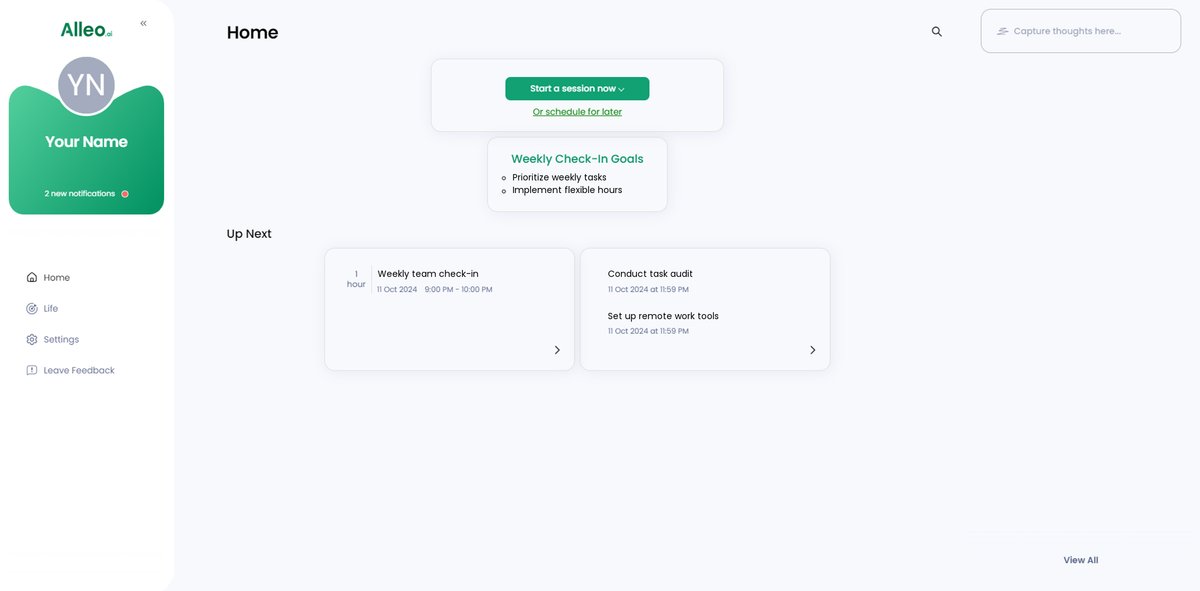
Step 6: Adding Events to Your Calendar or App
Use the Alleo app’s calendar and task features to add important events, deadlines, and check-ins, helping you track your progress in managing workload and preventing burnout for your team. This will allow you to stay organized and accountable as you implement the strategies discussed in the article.
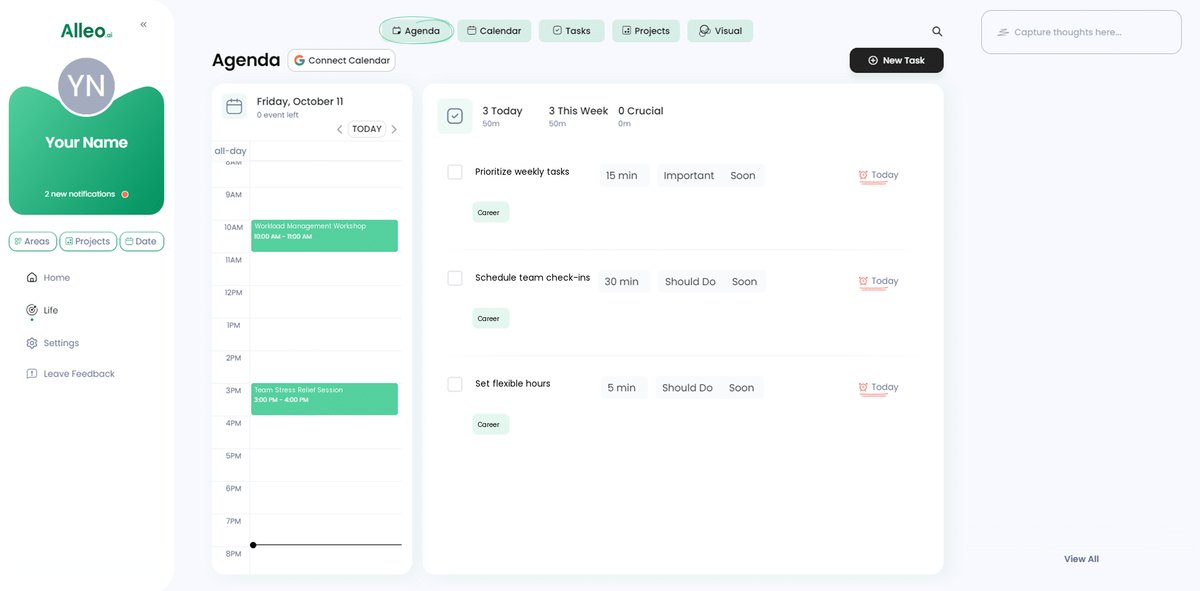
Bringing It All Together: Preventing Burnout in Your Team
Transitioning to the last part of our journey, let’s recap the key strategies for preventing burnout in understaffed teams.
We discussed prioritizing tasks and redistributing workloads fairly, which are essential for effective workload management. Regular check-ins and support sessions are crucial for employee well-being and communication strategies.
Flexible work arrangements can greatly reduce stress and improve work-life balance.
These steps can transform your team’s productivity and morale, building resilience in the process. I’ve seen it happen.
As an Alleo coach, I know how daunting managing an understaffed team can be, especially when it comes to resource allocation and time management skills.
But you don’t have to do it alone.
Try Alleo for free to help streamline these strategies for preventing burnout in understaffed teams. Together, we can create a healthier, happier, and more productive team through effective delegation and stress reduction techniques.
Take action now. Your team deserves it.