4 Essential Strategies for Medical Residents to Optimize Rest Between Training Sessions
Are you struggling to stay alert during critical procedures due to insufficient rest? Optimizing rest for medical residents is crucial for patient safety and your well-being.
As a life coach, I’ve helped many healthcare professionals navigate these challenges. In my experience, insufficient rest can severely impact your performance and patient safety. Proper sleep hygiene for medical residents is essential for burnout prevention and maintaining work-life balance in medical training.
In this article, we’ll explore specific strategies to help you optimize rest between training sessions. You’ll learn about:
- Sleep banking and circadian rhythm optimization for healthcare workers
- Strategic naps and power napping strategies for busy residents
- Caffeine optimization and caffeine management for medical trainees
- Consistent sleep schedules and time management in residency programs
Let’s dive in to explore these night shift recovery techniques and stress reduction methods for medical students.

The Consequences of Insufficient Rest in Medical Residency
It’s critical to understand how insufficient rest impacts your daily performance when optimizing rest for medical residents. Many clients I’ve coached initially struggle with maintaining alertness due to long hours and irregular sleep, highlighting the importance of sleep hygiene for medical residents.
Inadequate rest leads to increased medical errors and occupational fatigue. This not only jeopardizes patient safety but also hinders your own cognitive function and well-being, emphasizing the need for burnout prevention for doctors in training.
Several healthcare professionals report feeling mentally exhausted and unable to perform at their best. This is a common issue that needs addressing to ensure high performance and patient care, underlining the importance of work-life balance in medical training and stress reduction methods for medical students.

Essential Strategies for Optimizing Rest During Medical Training
Optimizing rest for medical residents is crucial for their well-being and performance. Overcoming this challenge requires a few key steps. Here are the main areas to focus on to make progress in improving sleep hygiene for medical residents.
- Implement Sleep Banking Before Night Shifts: Gradually increase your sleep before night shifts, a key aspect of circadian rhythm optimization for healthcare workers.
- Schedule Strategic Naps During Long Shifts: Plan short naps during low-activity periods, utilizing power napping strategies for busy residents.
- Optimize Caffeine Intake Timing and Amount: Use caffeine strategically to maintain alertness, an important part of caffeine management for medical trainees.
- Maintain Consistent Sleep Schedules Off-Duty: Stick to regular sleep schedules even on days off, enhancing work-life balance in medical training.
Let’s dive in to explore these techniques for optimizing rest for medical residents!
1: Implement sleep banking before night shifts
One effective strategy for optimizing rest for medical residents is to implement sleep banking before night shifts.
Actionable Steps:
- Gradually increase your sleep time by going to bed an hour earlier each night leading up to your night shift, improving sleep hygiene for medical residents.
- Use relaxation techniques such as mindfulness or meditation to improve the quality of your sleep during sleep banking periods, aiding in stress reduction methods for medical students.
- Track your sleep patterns using a sleep app to ensure you are gradually increasing your sleep duration before night shifts, contributing to circadian rhythm optimization for healthcare workers.
Explanation:
These steps are essential because they help you build a reservoir of rest, which can be crucial during demanding night shifts and for optimizing rest for medical residents.
Improved sleep quality and quantity can significantly enhance your cognitive function and overall performance, aiding in burnout prevention for doctors in training.
According to the Journal of Clinical Sleep Medicine, preparing your sleep schedule in advance can help you maintain higher levels of alertness and cognitive function.
Benefits of sleep banking include:
- Increased mental alertness during night shifts
- Better adaptation to changing sleep schedules, supporting time management in residency programs
- Reduced risk of fatigue-related errors, crucial for optimizing rest for medical residents
By preparing in advance, you set yourself up for better performance and well-being during night shifts, contributing to work-life balance in medical training.

2: Schedule strategic naps during long shifts
Scheduling strategic naps during long shifts can significantly boost your performance and alertness, which is crucial for optimizing rest for medical residents.
Actionable Steps:
- Identify optimal times for short naps during your shift, such as lunch breaks or low-activity periods, as part of effective time management in residency programs.
- Create a quiet, comfortable space for napping, like a designated break room or using noise-canceling headphones and an eye mask, to improve sleep hygiene for medical residents.
- Limit naps to 20-30 minutes to prevent grogginess and ensure you wake up refreshed and alert, a key power napping strategy for busy residents.
Explanation:
These steps are vital because they help you maintain high performance and mental clarity during extended shifts, contributing to burnout prevention for doctors in training.
According to the American Medical Association, short naps can significantly improve cognitive function and overall well-being.
Incorporating strategic naps into your routine can make a substantial difference in how you handle long, demanding hours, aiding in night shift recovery techniques.
Taking these steps ensures you stay refreshed and ready to provide the best patient care possible, supporting work-life balance in medical training.

3: Optimize caffeine intake timing and amount
Optimizing caffeine intake timing and amount can significantly enhance your alertness during long shifts, which is crucial for optimizing rest for medical residents.
Actionable Steps:
- Consume caffeine strategically by having a cup at the start of your shift and avoiding it 4-6 hours before the end of your shift to prevent sleep disruption, aiding in circadian rhythm optimization for healthcare workers.
- Combine caffeine intake with short naps (coffee naps) to enhance alertness when you wake up, a useful power napping strategy for busy residents.
- Monitor your caffeine tolerance and adjust the amount to find the optimal balance for maintaining alertness without causing jitters or anxiety, an important aspect of caffeine management for medical trainees.
Explanation:
These steps are crucial because they help you maintain high performance and avoid the negative effects of caffeine misuse, contributing to burnout prevention for doctors in training.
According to the American Medical Association, strategic caffeine use can significantly improve your alertness and cognitive function during long shifts, which is essential for optimizing rest for medical residents.
Implementing these tactics ensures you stay focused and provide the best patient care possible, supporting better time management in residency programs.
Key considerations for caffeine intake:
- Individual tolerance varies, so personalize your approach to optimize rest for medical residents
- Be mindful of caffeine’s half-life in your body
- Consider alternative sources like green tea for a more gradual energy boost, aligning with nutrition tips for medical residents
In the next section, we will discuss maintaining consistent sleep schedules off-duty, a crucial aspect of sleep hygiene for medical residents.
4: Maintain consistent sleep schedules off-duty
Maintaining consistent sleep schedules off-duty is crucial for regulating your internal clock and improving overall sleep quality, which is key to optimizing rest for medical residents.
Actionable Steps:
- Stick to a regular sleep schedule even on days off to help regulate your internal clock and support circadian rhythm optimization for healthcare workers.
- Create a bedtime routine that includes winding down activities such as reading, taking a warm bath, or practicing gentle yoga, enhancing sleep hygiene for medical residents.
- Avoid digital screens at least an hour before bedtime to reduce blue light exposure and promote melatonin production, an important aspect of night shift recovery techniques.
Explanation:
These steps matter because they help ensure you get quality rest, which is essential for maintaining high performance and cognitive function during your shifts, contributing to burnout prevention for doctors in training.
According to the American Medical Association, maintaining a consistent sleep schedule can significantly improve your alertness and well-being, supporting time management in residency programs.
By implementing these strategies, you can better manage the demands of your training and provide excellent patient care while optimizing rest for medical residents.
Elements of a good sleep environment:
- Cool, dark, and quiet bedroom
- Comfortable mattress and pillows
- Minimal clutter to reduce stress and anxiety, supporting stress reduction methods for medical students
Taking these steps ensures you stay refreshed and ready for your next shift, contributing to better work-life balance in medical training.

Partner with Alleo to Optimize Your Rest
We’ve explored the challenges of optimizing rest for medical residents and how solving them can benefit your performance. But did you know you can work directly with Alleo to make this journey easier and faster, especially when it comes to improving sleep hygiene for medical residents?
Alleo, our AI life coach, will help you implement these strategies and stay on track with time management in residency programs. Start by setting up an account and creating a personalized plan tailored to your needs, which can include burnout prevention for doctors in training.
Alleo will follow up on your progress, handle changes, and keep you accountable via text and push notifications. This support can be crucial for maintaining work-life balance in medical training and mastering night shift recovery techniques.
Ready to get started for free? Let me show you how to begin optimizing rest for medical residents!
Step 1: Sign In or Create Your Alleo Account
To begin optimizing your rest during medical residency, log in to your Alleo account or create a new one if you’re a first-time user.

Step 2: Choose “Build Better Habits and Routines”
Select “Build Better Habits and Routines” from the goal options to start optimizing your rest and performance during medical residency. This goal directly addresses the challenges discussed in the article and will help you implement strategies like sleep banking, strategic napping, and maintaining consistent sleep schedules.

Step 3: Select “Health” as Your Focus Area
Choose “Health” as your primary focus area in Alleo to address your rest optimization challenges during medical residency, allowing you to receive tailored strategies for improving sleep quality, managing fatigue, and enhancing overall well-being.

Step 4: Starting a Coaching Session
Begin your journey with Alleo by scheduling an initial intake session to discuss your rest optimization goals and create a personalized plan for improving your sleep during medical residency.

Step 5: Viewing and managing goals after the session
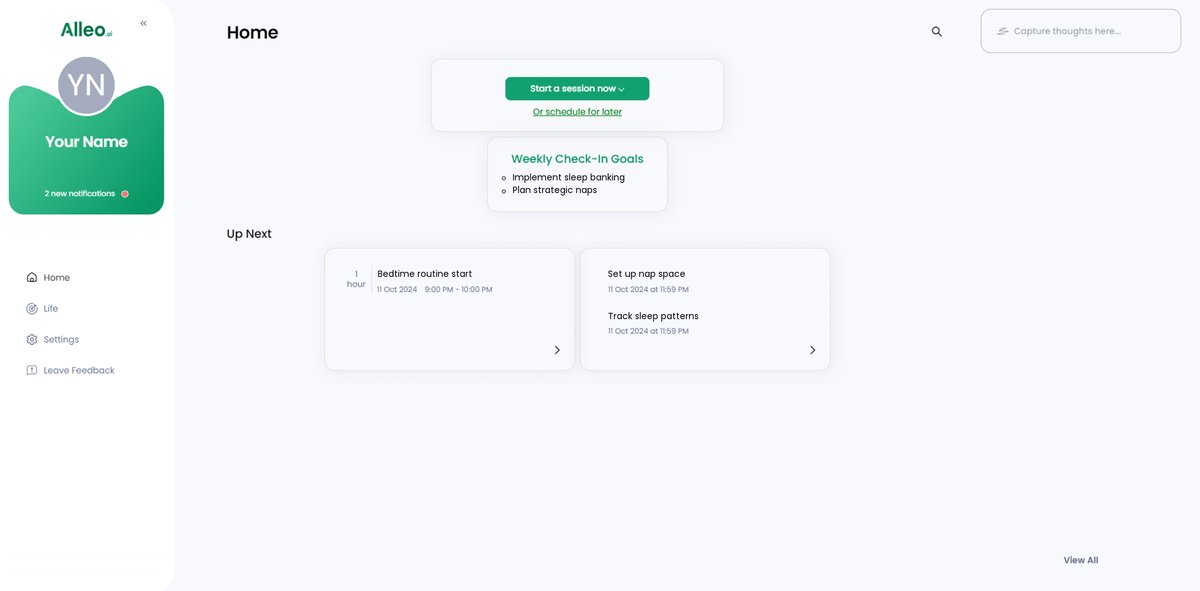
After your coaching session, open the Alleo app to find your discussed goals displayed on the home page, where you can easily view and manage them to stay on track with optimizing your rest during medical training.
Step 6: Adding events to your calendar or app
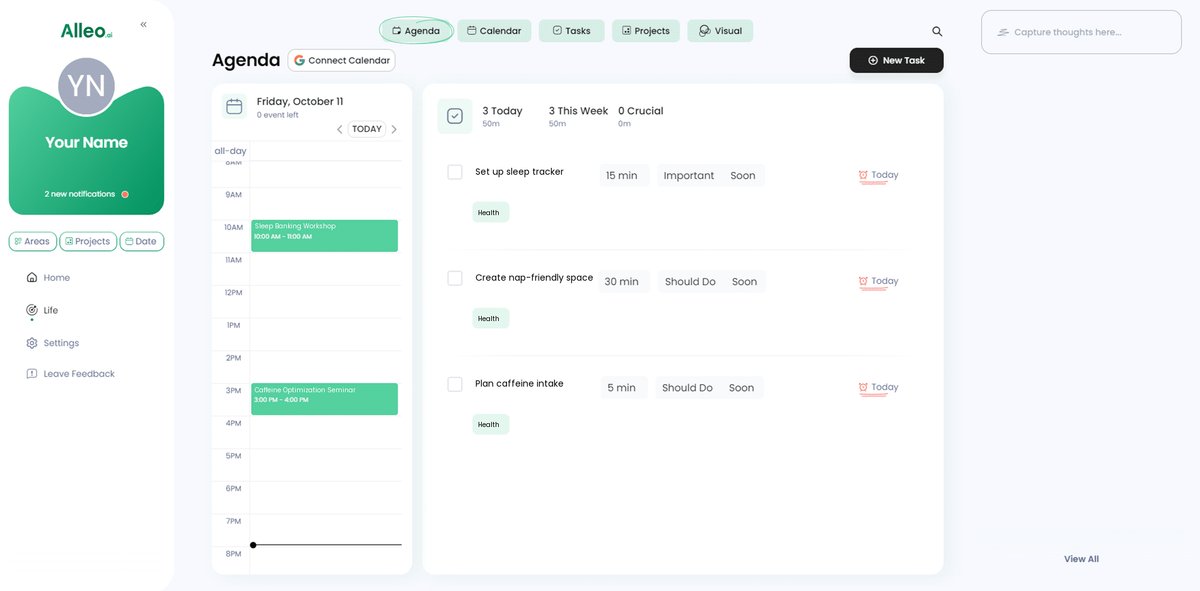
Use the calendar and task features in the Alleo app to schedule your optimized sleep routines, nap times, and caffeine intake, allowing you to easily track your progress in improving rest and alertness during your medical training.
Taking Control of Your Rest and Performance
By maintaining consistent sleep schedules off-duty, you’re already on the right path to optimizing rest for medical residents. Now, let’s wrap up everything we’ve covered.
Optimizing rest for medical residents is crucial for high performance and patient care. We’ve discussed strategies like sleep banking, strategic naps, caffeine management for medical trainees, and consistent sleep schedules.
These tactics can transform your residency experience and aid in burnout prevention for doctors in training. I know you can do it.
Imagine feeling refreshed and alert during your shifts, thanks to improved sleep hygiene for medical residents. You deserve that.
Remember, small changes in time management in residency programs lead to big improvements.
Try Alleo, your AI life coach, to make this journey easier. Let’s start optimizing your rest today for better work-life balance in medical training.