4 Essential Strategies for Proactive Crisis Management in Business Leadership
Imagine planning a major event, only to face an unexpected crisis that threatens to derail everything. How would you react? This scenario highlights the importance of proactive crisis management strategies.
As a life coach, I’ve helped many professionals navigate these challenges. I’ve seen firsthand the importance of having a proactive crisis management plan and implementing crisis preparedness planning.
In this article, you’ll discover effective strategies for proactive crisis management. We’ll cover how to develop a communication plan, conduct crisis simulation exercises, and more. These insights will help you with business continuity management and leadership during business emergencies.
Let’s dive in to explore essential proactive crisis management strategies.

Navigating Crisis Challenges as an Event Planner
When a crisis hits, event planners face immediate and significant challenges. The difference between proactive crisis management strategies and reactive approaches can feel overwhelming.
Without a clear crisis preparedness plan, stress levels soar, and crucial decisions get delayed.
Many clients initially struggle to decide whether to plan ahead or simply react. In my experience, proactive management leads to better outcomes and less chaos.
This is especially true when dealing with unpredictable events that require risk assessment techniques.
Imagine managing a high-stakes event and suddenly encountering a major crisis. You need a strategy to maintain control and minimize damage, showcasing leadership during business emergencies.
A proactive approach often proves more effective, reducing uncertainty and maintaining morale through effective communication strategies in crisis.
So, how can you ensure you’re ready for any crisis?
By adopting proactive crisis management strategies, you can confidently navigate any situation, from contingency planning for companies to business continuity management.

Proactive Strategies for Effective Crisis Management
Overcoming this challenge requires a few key proactive crisis management strategies. Here are the main areas to focus on to make progress:
- Develop a crisis communication plan: Create a detailed plan for effective communication strategies in crisis situations.
- Conduct regular crisis simulation exercises: Schedule and run exercises to enhance crisis preparedness planning.
- Establish a cross-functional crisis response team: Form a team with representatives from key departments for business continuity management.
- Monitor and analyze potential risk factors: Continuously track and assess risks using advanced risk assessment techniques.
Let’s dive into these proactive crisis management strategies!
1: Develop a crisis communication plan
Developing a crisis communication plan is critical for event planners to navigate unexpected crises effectively. This is a key component of proactive crisis management strategies.
Actionable Steps:
- Identify potential crisis scenarios. Conduct risk assessment techniques to uncover possible crises. Use historical data and industry insights to predict scenarios, enhancing crisis preparedness planning.
- Create clear communication protocols. Define roles for communication during a business emergency. Establish guidelines for both internal and external communication strategies in crisis.
- Train your team on the plan. Conduct workshops to familiarize the team with the crisis communication plan. Use crisis simulation exercises to simulate scenarios.
Key elements of an effective crisis communication plan:
- Clear chain of command for leadership during business emergencies
- Pre-approved messaging templates
- Designated spokesperson for reputation management during crises
Explanation:
These proactive crisis management strategies matter because they ensure your team is prepared and can respond swiftly during a crisis. Having a clear communication plan builds trust and reduces uncertainty.
According to research, effective internal crisis communication is crucial for maintaining employee morale and organizational stability during challenging times.
By following these steps, you can ensure a coordinated and effective response to any crisis, setting the stage for a resilient event planning process and robust business continuity management.

2: Conduct regular crisis simulation exercises
Conducting regular crisis simulation exercises is crucial for ensuring your team is prepared to handle unexpected events effectively, forming a key component of proactive crisis management strategies.
Actionable Steps:
- Schedule regular crisis simulations. Use tools like Virtual Table Top Exercises (VTTX) to simulate a range of crises. This prepares your team for various scenarios and enhances crisis preparedness planning.
- Evaluate and refine response strategies. Analyze team performance during simulations. Gather feedback and update your crisis management plan accordingly, improving your business continuity management.
- Foster a culture of continuous learning. Encourage team members to suggest improvements based on simulation outcomes. Regularly review and update crisis protocols, strengthening your crisis response team formation.
Explanation:
These steps matter because they ensure your team can respond swiftly and effectively during a crisis. Regular simulations help identify weaknesses and improve strategies, fostering a proactive approach to crisis management.
According to experts, well-designed exercises strengthen community efforts to mitigate and recover from hazards. By incorporating these steps, you build a resilient and prepared event planning process, enhancing your contingency planning for companies.
This proactive approach sets the stage for a more confident and controlled response in real crisis situations, bolstering your leadership during business emergencies.

3: Establish a cross-functional crisis team
Establishing a cross-functional crisis team is crucial for ensuring a coordinated response during unexpected events, forming a key component of proactive crisis management strategies.
Actionable Steps:
- Identify key departments and representatives. Include members from leadership, public relations, legal, HR, and operations. Ensure each member understands their role in the crisis response team formation.
- Develop a cohesive working strategy for the team. Set regular meetings to discuss potential risks and strategies. Create a communication channel for quick decision-making during a crisis, supporting effective communication strategies in crisis.
- Provide specialized training for team members. Offer training sessions on crisis management and leadership during business emergencies. Use case studies and real-life examples to enhance learning and improve crisis preparedness planning.
Benefits of a cross-functional crisis team:
- Diverse perspectives for problem-solving and risk assessment techniques
- Improved coordination across departments for effective business continuity management
- Faster decision-making in emergencies, enhancing contingency planning for companies
Explanation:
These steps matter because they ensure that every aspect of the organization is prepared to respond swiftly and effectively. A cross-functional team promotes a unified approach, reducing confusion and improving decision-making in proactive crisis management strategies.
According to experts, a well-prepared team can effectively manage crises, maintaining stability and morale.
This strategy fosters a resilient and proactive crisis management culture, preparing you for any situation, including post-crisis recovery strategies and reputation management during crises.
4: Monitor and analyze potential risk factors
Monitoring and analyzing potential risk factors is crucial for staying ahead of crises and ensuring swift responses. This is a key component of proactive crisis management strategies.
Actionable Steps:
- Implement a risk monitoring system. Utilize technology to continuously track potential risks and trends that could signal a crisis, enhancing your crisis preparedness planning.
- Conduct regular risk assessments. Perform quarterly evaluations to identify and mitigate emerging threats, using data analytics for predictive insights and improving your risk assessment techniques.
- Engage with stakeholders. Regularly communicate with stakeholders to understand their concerns and gather valuable feedback, which is essential for effective communication strategies in crisis.
Key areas to monitor for potential risks:
- Industry trends and regulations
- Social media sentiment
- Economic indicators
Explanation:
These steps matter because they help you stay informed and prepared for potential crises. Regular monitoring and assessments allow for proactive measures, while stakeholder engagement provides insights to refine strategies. This approach is fundamental to business continuity management and contingency planning for companies.
According to McKinsey, a proactive approach to risk management helps businesses thrive amid uncertainties.
By implementing these proactive crisis management strategies, you can build a resilient and prepared event planning process, ensuring effective leadership during business emergencies.
Partner with Alleo for Proactive Crisis Management
We’ve explored the challenges of proactive crisis management strategies for event planners, the benefits, and the steps to achieve it. But did you know you can work directly with Alleo to make this journey easier and faster?
Step 1: Set up your Alleo account for crisis preparedness planning.
- Create a personalized crisis management plan and contingency planning for companies.
- Use Alleo to outline your communication strategies in crisis and track progress.
- Schedule regular crisis simulation exercises and team training using Alleo.
Step 2: Utilize Alleo’s decision-making support for risk assessment techniques.
- Leverage Alleo’s AI-driven insights to monitor and analyze risk factors.
- Use Alleo’s recommendations to make informed decisions during business emergencies.
Step 3: Maintain a cohesive team strategy with Alleo for effective business continuity management.
- Use Alleo’s collaboration tools to keep your crisis response team connected and informed.
- Track team performance and feedback through Alleo’s platform for enhanced leadership during business emergencies.
Alleo provides affordable, tailored coaching support for proactive crisis management strategies. Get full coaching sessions like any human coach.
Enjoy a free 14-day trial, requiring no credit card, to explore reputation management during crises.
Ready to get started for free? Let me show you how to implement post-crisis recovery strategies!
Step 1: Log In or Create Your Alleo Account
To begin your proactive crisis management journey, log in to your Alleo account or create a new one to access personalized tools for developing your crisis communication plan and scheduling simulations.

Step 2: Choose “Building better habits and routines”
Select “Building better habits and routines” to develop a structured approach for crisis preparedness, helping you establish consistent practices that will strengthen your ability to manage unexpected challenges in event planning.

Step 3: Select the Career Life Area
Choose “Career” as your focus area in Alleo to develop proactive crisis management skills that will enhance your event planning expertise and help you navigate professional challenges with confidence.

Step 4: Starting a coaching session
Begin your journey with Alleo by scheduling an intake session, where you’ll discuss your crisis management goals and set up a personalized plan to enhance your proactive strategies.

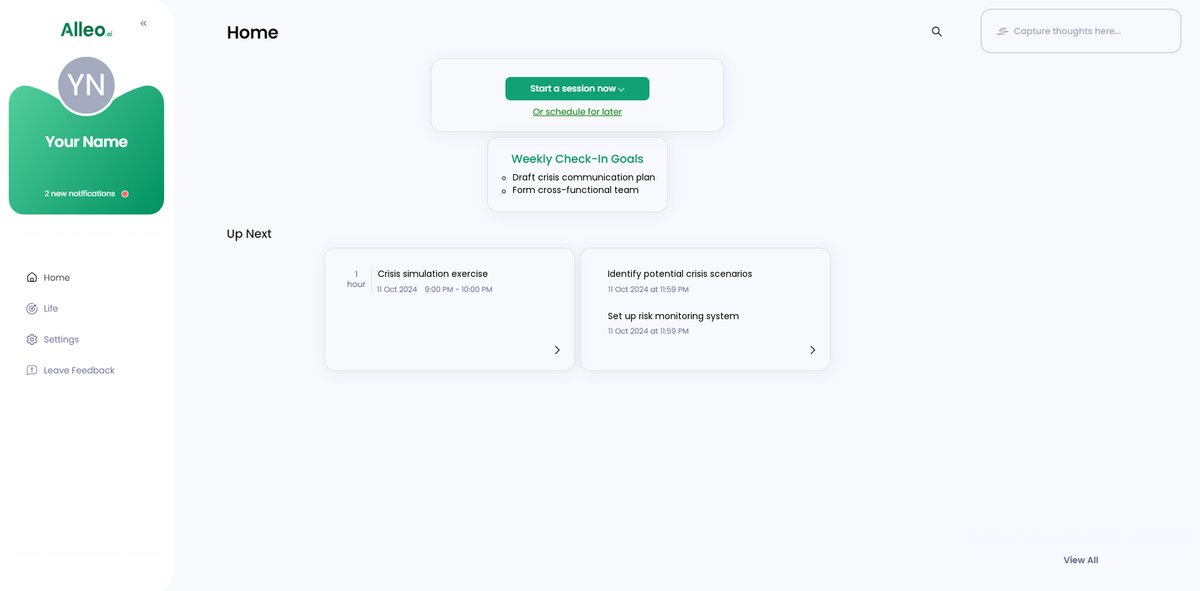
Step 5: Viewing and managing goals after the session
After your crisis management coaching session, log into the Alleo app to view and track the goals you discussed, which will be conveniently displayed on your home page for easy access and management.
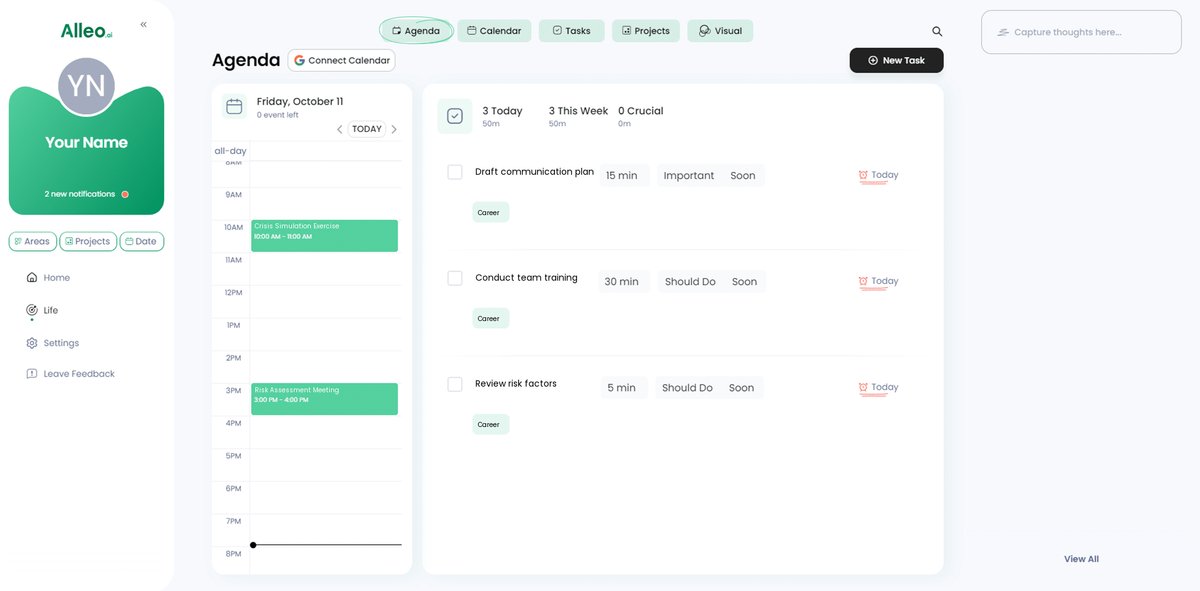
Step 6: Adding events to your calendar or app
Use Alleo’s integrated calendar feature to add crisis simulation exercises, team meetings, and risk assessment dates, allowing you to easily track your progress in implementing your proactive crisis management plan.
Final Thoughts on Proactive Crisis Management
We’ve explored how proactive crisis management strategies can transform your approach to unexpected challenges. Implementing these strategies ensures you’re ready for anything, from risk assessment techniques to contingency planning for companies.
I understand the stress you’re facing as an event planner. It’s overwhelming to balance planning with potential crises and business continuity management.
But taking proactive steps in crisis preparedness planning really does make a difference.
Alleo is here to support you. With tools and insights designed to help, you can confidently navigate any crisis, including leadership during business emergencies.
Start today. Set up your free Alleo trial and see the benefits of proactive crisis management strategies firsthand.
Ready to take control of your crisis response team formation? Let’s get started!