4 Essential Ways Tech Managers Balance Innovation and Customer Expectations
Are you struggling to balance innovation and customer expectations in your tech management role?
As a life coach, I’ve helped many professionals navigate these challenges in innovation management. In my experience, balancing incremental innovation with consumer expectations for significant advancements is a common struggle for those in tech leadership.
In this article, you’ll discover actionable strategies to achieve this balance between innovation and customer expectations. We’ll cover:
- Customer feedback loops for product innovation and user experience
- Data-driven decision-making in technology roadmapping
- Cross-functional collaboration for customer-centric technology
- Managing tech debt while balancing tech priorities
Let’s dive into these innovative solutions for customer needs and tech leadership strategies.
Understanding the Balance Between Innovation and Customer Expectations
Balancing innovation and customer expectations is a significant challenge for tech managers. Many clients initially struggle to align their innovative ideas with what customers actually want, which is crucial for effective innovation management.
The result? Reduced customer satisfaction and an increase in technical debt, affecting the overall product innovation and user experience.
Clients often find that focusing too much on innovation can lead to neglected customer needs. This imbalance in balancing tech priorities may cause frustration among users and a loss of trust, highlighting the importance of customer-centric technology approaches.
In my experience, people often overlook the importance of integrating customer insights into their innovation processes. The pain is real and impacts both product success and team morale, emphasizing the need for effective tech leadership strategies.
Key Strategies to Balance Innovation and Customer Expectations
Overcoming this challenge of balancing innovation and customer expectations requires a few key steps. Here are the main areas to focus on to make progress in innovation management while maintaining customer-centric technology.
- Implement customer feedback loops in development: Regularly gather and analyze customer feedback to guide innovation and inform technology roadmapping.
- Prioritize features using data-driven decision making: Use predictive analytics and A/B testing for informed feature prioritization, aligning product innovation with user experience.
- Foster cross-functional collaboration and ideation: Encourage cross-team brainstorming and mentorship to drive innovative solutions for customer needs.
- Balance tech debt reduction with new feature rollout: Allocate time and resources to manage tech debt alongside new developments, a crucial aspect of balancing tech priorities.
Let’s dive into these tech leadership strategies for balancing innovation and customer expectations!
1: Implement customer feedback loops in development
Incorporating customer feedback loops in development is crucial to balancing innovation and customer expectations in technology.
Actionable Steps:
- Conduct regular customer interviews to gather feedback on features, focusing on innovation management.
- Measure: Number of customer interviews conducted per month.
- Use AI tools to analyze customer feedback and identify trends in customer-centric technology.
- Measure: Frequency of feedback analysis sessions and number of insights generated.
- Develop a feedback-driven roadmap to prioritize features based on customer input, balancing tech priorities.
- Measure: Customer satisfaction scores pre- and post-roadmap implementation.
Explanation:
These steps ensure that your innovation efforts are grounded in real customer needs, reducing the risk of misaligned product features while balancing innovation and customer expectations.
Regular customer interviews and AI analysis can highlight trends that might otherwise be missed. For instance, the Organizational Leadership and Innovation MS program emphasizes the importance of adapting to customer feedback to stay competitive, a key aspect of tech leadership strategies.
Key benefits of customer feedback loops:
- Improved product-market fit through product innovation and user experience
- Higher customer satisfaction using agile development for customer satisfaction
- Reduced development waste by managing tech team expectations
Implementing these strategies helps you create innovative solutions for customer needs that not only meet but exceed customer expectations.
Next, let’s explore how to prioritize features using data-driven decision-making in technology roadmapping.

2: Prioritize features using data-driven decision making
Prioritizing features using data-driven decision making ensures that the most impactful features are developed first, helping in balancing innovation and customer expectations.
Actionable Steps:
- Implement predictive analytics to forecast feature success based on historical data, aiding in innovation management.
- Measure: Accuracy of predictions compared to actual feature performance.
- Use A/B testing to validate the impact of new features before full deployment, a key aspect of customer-centric technology.
- Measure: Conversion rates and user engagement metrics from A/B tests.
- Develop a scoring system to rank features by potential ROI and customer impact, supporting tech leadership strategies.
- Measure: Number of features successfully prioritized and launched using the scoring system.
Explanation:
These steps matter because they help you make informed decisions about which features to prioritize, effectively balancing tech priorities. Predictive analytics and A/B testing reduce the risk of investing in features that may not perform well, crucial for managing tech team expectations.
For instance, using data-driven approaches can align your product strategy with customer needs and technological capabilities, ensuring a higher success rate for new features and balancing innovation and customer expectations.
By following these steps, you can enhance customer satisfaction and optimize resource allocation, key elements in product innovation and user experience. Next, let’s explore how to foster cross-functional collaboration and ideation.
3: Foster cross-functional collaboration and ideation
Fostering cross-functional collaboration and ideation is essential for balancing innovation and customer expectations in technology development.
Actionable Steps:
- Organize regular cross-functional workshops to brainstorm innovative solutions for customer needs.
- Measure: Number of actionable ideas generated per workshop.
- Establish a mentorship program where experienced team members guide newer employees in innovation management practices.
- Measure: Number of mentorship sessions and participants’ feedback.
- Create a collaborative platform for ongoing ideation and knowledge sharing to support customer-centric technology development.
- Measure: Engagement levels and number of contributions on the platform.
Explanation:
These steps matter because they promote a culture of collaboration and continuous improvement. Regular workshops and mentorship programs can lead to innovative solutions that align with customer needs, helping tech leadership balance innovation and customer expectations.
A collaborative platform ensures that team members can share insights and ideas consistently, supporting agile development for customer satisfaction. According to RIT’s Organizational Leadership and Innovation MS program, fostering a collaborative environment is key to adapting to technological advancements and customer feedback.
Benefits of cross-functional collaboration in balancing tech priorities:
- Diverse perspectives lead to better solutions for product innovation and user experience
- Faster problem-solving and innovation in managing tech team expectations
- Improved team morale and engagement in technology roadmapping
Next, we will look at how to balance tech debt reduction with new feature rollout.

4: Balance tech debt reduction with new feature rollout
Balancing innovation and customer expectations is crucial for maintaining a healthy and agile product development cycle. This involves managing tech debt reduction while rolling out new features.
Actionable Steps:
- Allocate a specific percentage of development time to addressing tech debt, aligning with customer-centric technology practices.
- Measure: Reduction in tech debt over time.
- Implement a dual-track development process, balancing tech priorities between new feature development and maintenance tasks.
- Measure: Completion rates of new features vs. maintenance tasks.
- Schedule regular code reviews to identify and mitigate potential tech debt, supporting agile development for customer satisfaction.
- Measure: Number of code reviews conducted and issues resolved.
Explanation:
These steps matter because they ensure that your development team doesn’t neglect essential maintenance tasks while pursuing innovation management. Regularly allocating time to tech debt helps prevent long-term issues and keeps the codebase clean, supporting product innovation and user experience.
According to Zen Ex Machina, balancing innovation with operational tasks is vital for sustained growth and customer satisfaction.
Taking these steps will help you maintain a balance between innovation and stability in your tech products, effectively managing tech team expectations. Next, let’s explore how Alleo can help you achieve these goals.
Partner with Alleo to Balance Innovation and Customer Expectations
We’ve explored how to balance innovation and customer expectations and why it’s crucial for tech leadership strategies. But did you know Alleo can make this journey easier in managing tech team expectations?
With Alleo, you can set up an account in minutes. Create a personalized plan to address your challenges in balancing innovation and customer expectations, incorporating customer-centric technology approaches.
Alleo’s AI coach will provide full coaching sessions, just like a human coach, focusing on innovation management and technology roadmapping. The coach will follow up on your progress and keep you accountable via text and push notifications, ensuring agile development for customer satisfaction.
Ready to get started for free and explore product innovation and user experience strategies?
Let me show you how to balance tech priorities and develop innovative solutions for customer needs!
Step 1: Log in or Create Your Account
To start balancing innovation with customer expectations, log in to your existing Alleo account or create a new one in just a few clicks.

Step 2: Choose Your Focus Area
Select “Setting and achieving personal or professional goals” to align your innovation efforts with customer expectations, helping you tackle the challenges discussed in balancing tech management priorities.

Step 3: Selecting the life area you want to focus on
Choose “Career” as your focus area to address the challenge of balancing innovation with customer expectations in your tech management role, allowing our AI coach to provide targeted strategies for professional growth and leadership development.

Step 4: Starting a coaching session
Begin your journey with Alleo by initiating an intake session, where you’ll work with the AI coach to create a personalized plan for balancing innovation and customer expectations in your tech management role.

Step 5: Viewing and managing goals after the session
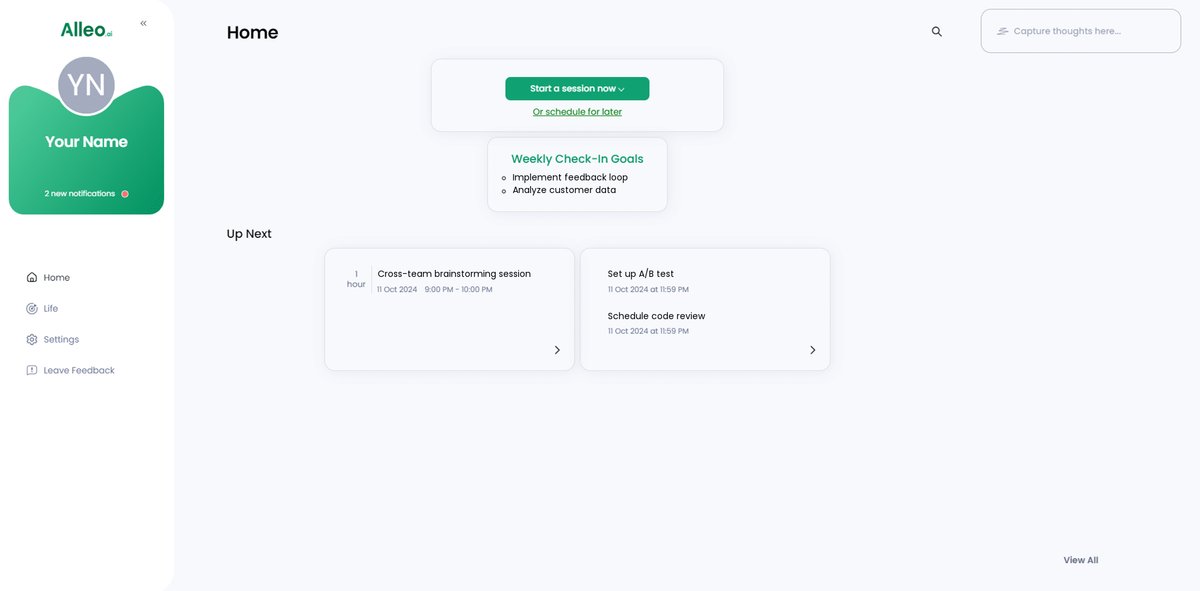
After your coaching session, check the Alleo app’s home page to view and manage the goals you discussed, helping you stay on track with balancing innovation and customer expectations in your tech management role.
Step 6: Adding events to your calendar or app
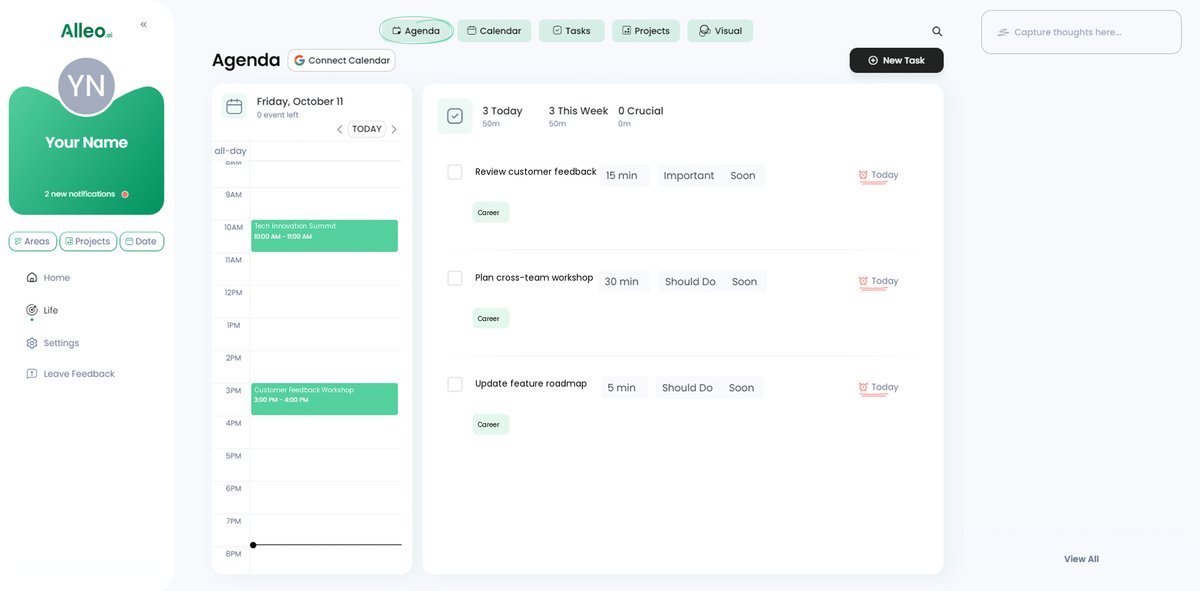
Use the calendar and task features in Alleo to schedule and track your progress on implementing customer feedback loops, data-driven decision making, cross-functional collaboration, and tech debt reduction efforts, helping you maintain a balance between innovation and customer expectations.
Bringing It All Together: Achieving Balance in Tech Management
Balancing innovation and customer expectations is challenging, but it’s essential for success in technology leadership.
By implementing customer feedback loops, you can ensure your innovations align with real needs. Data-driven decision-making helps you prioritize features effectively, supporting customer-centric technology development.
Cross-functional collaboration fosters innovative solutions for customer needs, while balancing tech debt maintains stability. This approach is crucial for managing tech team expectations and technology roadmapping.
Remember, you’re not alone in this journey of innovation management. Alleo can support you with AI-driven insights and personalized coaching to enhance your tech leadership strategies.
Take the first step towards balancing innovation and customer expectations. Try Alleo for free and transform your tech management approach today, improving product innovation and user experience.