4 Powerful Strategies to Overcome Negative Self-Talk After Job Rejection
Have you ever faced job rejection and found yourself spiraling into negative self-talk? Learning to overcome job rejection self-talk is crucial for maintaining motivation during job search.
As a life coach, I’ve helped many individuals navigate these challenges. I often encounter clients struggling with thoughts like “I’m not good enough” after facing rejection. Developing effective job rejection coping mechanisms is key to building resilience after job rejection.
In this article, we’ll explore effective strategies to overcome negative self-talk. You’ll discover actionable steps to challenge these thoughts, practice positive self-talk techniques, journal your successes, and seek support. We’ll also discuss reframing negative thoughts and boosting self-confidence after rejection.
Let’s dive in and explore how to overcome job rejection self-talk.

Understanding the Weight of Negative Self-Talk
When job rejection hits, it’s common to think, “I’m not good enough” or “I’ll never succeed.” These thoughts can be crippling and make it challenging to overcome job rejection self-talk.
Negative self-talk can intensify emotional pain and make recovery feel impossible. Many clients report feeling hopeless and seeing a significant dip in self-esteem, highlighting the importance of job rejection coping mechanisms.
Addressing and managing these thoughts is essential. It allows you to move forward positively and confidently, employing positive self-talk techniques and building resilience after job rejection.
Recognizing the importance of this step can be transformative. Let’s explore how to tackle this issue head-on, focusing on reframing negative thoughts and boosting self-confidence after rejection.

Key Strategies to Overcome Negative Self-Talk After Job Rejection
Overcoming job rejection self-talk requires a few key steps. Here are the main areas to focus on to make progress and build resilience after job rejection:
- Challenge Negative Thoughts with Evidence: Identify negative thoughts and replace them with evidence-based affirmations, using cognitive behavioral therapy for negative self-talk.
- Practice Daily Positive Affirmations: Create and repeat personalized affirmations daily as part of your positive self-talk techniques.
- Journal About Strengths and Past Successes: Reflect on your strengths and past achievements regularly to boost self-confidence after rejection.
- Seek Support from Friends or a Support Group: Reach out to trusted individuals or join supportive communities as part of your job rejection coping mechanisms.
Let’s dive in to explore these strategies to overcome job rejection self-talk!
1: Challenge negative thoughts with evidence
This strategy is crucial for dismantling harmful thoughts and replacing them with more constructive ones, helping you overcome job rejection self-talk.
Actionable Steps:
- Identify and document negative thoughts. Set aside 10 minutes daily to reflect and list the negative thoughts that arise after job rejection, focusing on reframing negative thoughts.
- Collect evidence that contradicts these thoughts. Review past achievements or positive feedback to find proof of your capabilities, boosting self-confidence after rejection.
- Replace negative thoughts with realistic affirmations. Change “I’ll never succeed” to “I have succeeded in the past and can do so again,” utilizing positive self-talk techniques.
Explanation:
These steps matter because they help you see the reality beyond your negative self-talk. By focusing on evidence, you can build a more balanced and positive self-view, which is essential for building resilience after job rejection.
According to Bay Area CBT Center, cognitive restructuring can significantly improve mental health by breaking the cycle of negativity, serving as one of the effective job rejection coping mechanisms.
Key benefits of challenging negative thoughts:
- Promotes a more realistic self-assessment
- Reduces anxiety and stress
- Improves decision-making abilities
Taking this approach sets a strong foundation for overcoming negative self-talk and maintaining motivation during job search. Now, let’s move on to practicing daily positive affirmations.

2: Practice daily positive affirmations
Practicing daily positive affirmations helps shift your mindset from negativity to positivity, which is essential to overcome job rejection self-talk. This is one of the effective job rejection coping mechanisms.
Actionable Steps:
- Create a list of personalized positive affirmations. Write affirmations like “I am capable and deserving of success,” which can help in reframing negative thoughts.
- Incorporate affirmations into your daily routine. Repeat them each morning and evening for at least 5 minutes as part of your positive self-talk techniques.
- Use visual reminders to reinforce affirmations. Place sticky notes with affirmations on your mirror or workstation to boost self-confidence after rejection.
Explanation:
These steps matter because they help reprogram your mind to focus on your strengths and potential. Positive affirmations can counteract negative thoughts and boost self-esteem, contributing to building resilience after job rejection.
According to Young Minds, reframing your mindset can be transformative in overcoming rejection.
Taking these steps can significantly improve your mental outlook and help overcome job rejection self-talk. Now, let’s move on to journaling about strengths and past successes.

3: Journal about strengths and past successes
Journaling helps you recognize and appreciate your strengths, boosting confidence after job rejection. This practice is an effective way to overcome job rejection self-talk and build resilience.
Actionable Steps:
- Dedicate a journal for strengths and successes. Spend 10 minutes each night writing about a strength or a past success, focusing on positive self-talk techniques.
- Reflect on how these strengths can aid future job searches. Connect past achievements to potential opportunities ahead, reframing negative thoughts.
- Set weekly journaling goals. At the end of each week, review entries to reinforce a positive self-view and maintain motivation during job search.
Explanation:
These steps matter because they help you maintain a balanced perspective and build resilience after job rejection.
Journaling can be transformative, as noted by Young Minds, which emphasizes the power of reframing experiences.
By focusing on your strengths, you can rebuild your self-confidence after rejection and stay motivated.
Effective journaling techniques:
- Use prompts to spark reflection and overcome job rejection self-talk
- Include both personal and professional achievements to boost self-confidence after rejection
- Review entries regularly for motivation, incorporating mindfulness for job seekers
This approach sets a solid foundation for moving forward positively and aids in professional development after setbacks.
Now, let’s explore seeking support from friends or a support group.

4: Seek support from friends or a support group
Seeking support plays a crucial role in helping overcome job rejection self-talk and building resilience after job rejection.
Actionable Steps:
- Reach out to trusted friends or family. Aim to have supportive conversations about job rejection coping mechanisms at least once a week.
- Join a support group or online community. Participate in discussions to share experiences and gain insights on positive self-talk techniques.
- Consider professional support. Schedule a consultation with a career coach or counselor for guidance on overcoming negative self-talk after job rejection.
Explanation:
These steps matter because connecting with others provides emotional support and new perspectives on reframing negative thoughts.
According to Young Minds, sharing feelings can be transformative. By seeking support, you can build resilience and move forward positively, boosting self-confidence after rejection.
Benefits of a strong support system:
- Provides emotional validation
- Offers diverse perspectives on challenges
- Enhances overall mental well-being and maintains motivation during job search
Taking these steps can significantly enhance your journey toward overcoming negative self-talk and professional development after setbacks.
Partner with Alleo to Overcome Negative Self-Talk
We’ve explored the challenges of overcoming job rejection self-talk. But did you know you can work directly with Alleo to make this journey easier and faster?
Alleo is an AI life coach that offers affordable, tailored coaching support to help you overcome job rejection self-talk. With Alleo, you can set up a daily affirmation routine and receive reminders to boost self-confidence after rejection.
The coach provides evidence-based strategies to challenge negative thoughts and reframe negative thoughts after job rejection. It also guides journaling sessions and connects you to support groups for building resilience after job rejection.
Setting up an account is simple. Create a personalized plan to overcome job rejection self-talk, and Alleo will follow up on your progress.
The coach handles changes and keeps you accountable via text and push notifications, helping you maintain motivation during job search.
Ready to get started for free and learn positive self-talk techniques? Let me show you how!
Step 1: Log In or Create Your Account
To start your journey of overcoming negative self-talk after job rejection with Alleo, simply log in to your existing account or create a new one if you’re joining us for the first time.

Step 2: Choose “Improving overall well-being and life satisfaction” as your goal
Select “Improving overall well-being and life satisfaction” as your primary focus to address negative self-talk after job rejection, helping you build resilience and maintain a positive outlook during your career journey.

Step 3: Select “Personal” as Your Focus Area
Choose “Personal” as your life area to address negative self-talk after job rejection, allowing Alleo to provide targeted strategies for building self-esteem and resilience in your personal life.

Step 4: Starting a coaching session
Begin your journey with Alleo by scheduling an intake session, where you’ll discuss your experiences with job rejection and negative self-talk, allowing the AI coach to create a personalized plan to boost your confidence and overcome limiting beliefs.

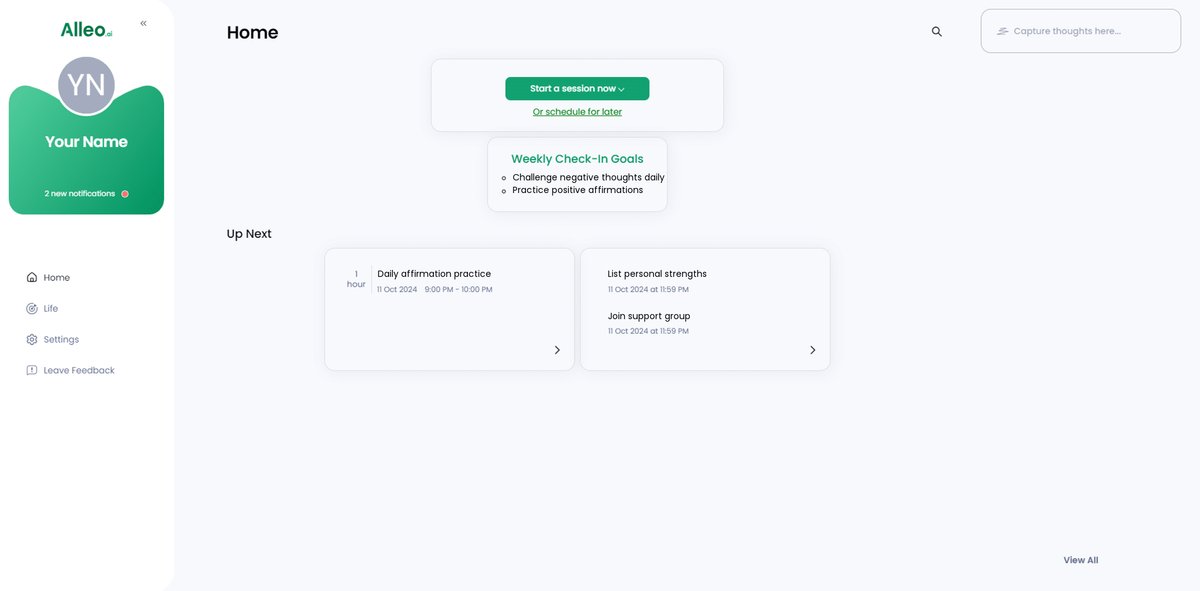
Step 5: Viewing and managing goals after the session
After your coaching session with Alleo, check the app’s home page to view and manage the goals you discussed, helping you stay on track with overcoming negative self-talk and building confidence after job rejection.
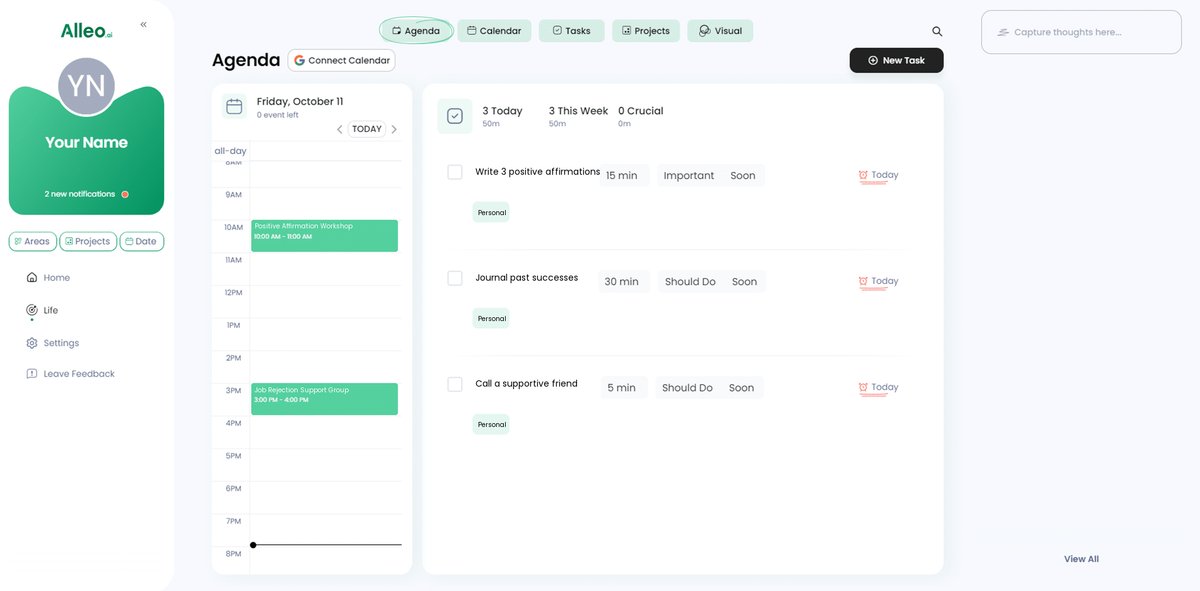
Step 6: Adding events to your calendar or app
Use Alleo’s calendar and task features to schedule and track your progress in overcoming negative self-talk, such as daily affirmations, journaling sessions, and support group meetings, helping you stay accountable and motivated on your journey to building self-confidence after job rejection.
Moving Forward Positively After Rejection
We’ve covered several strategies to help you overcome job rejection self-talk. Implementing these steps can transform your mindset and boost your self-confidence after rejection.
Remember, challenging negative thoughts with evidence is crucial. Practicing daily positive self-talk techniques can reprogram your mind and aid in building resilience after job rejection.
Journaling about your strengths and past successes reinforces a positive self-view. Seeking support from friends or support groups provides valuable perspective and encouragement, acting as job rejection coping mechanisms.
Empathizing with your feelings is important, but taking action is even more crucial. You don’t have to navigate this journey alone as you work on overcoming job rejection self-talk.
Consider partnering with Alleo for tailored coaching support. Alleo can help you stay on track with daily affirmations, evidence-based strategies, and guided journaling to maintain motivation during job search.
Plus, it connects you to supportive online communities.
Take the first step today. Embrace these strategies and let Alleo assist you in reframing negative thoughts and overcoming job rejection self-talk.
Remember, you are capable and deserving of success in your professional development after setbacks.