4 Proven Methods to Improve Communication with Deaf Patients in Healthcare
Have you ever wondered how miscommunication can affect patient care, especially when communicating with Deaf patients?
Imagine being in a medical setting where the inability to communicate leads to misdiagnoses and patient dissatisfaction. This is a common scenario for many Deaf patients, highlighting the importance of cultural competence for Deaf patients in healthcare.
As a life coach, I’ve seen the impact of effective communication in various settings, including the use of American Sign Language (ASL) in healthcare. My goal is to guide you through best practices for communicating with Deaf patients in healthcare settings.
In this article, you’ll discover actionable strategies like using clear masks, learning basic ASL, providing written materials as visual aids in patient communication, and utilizing professional medical interpreters for Deaf patients.
Let’s dive in to explore how we can improve patient-centered care for Deaf individuals.

Understanding the Depth of Communication Barriers
Effective communication is more than just exchanging words. For Deaf patients, the lack of understanding and connection can lead to severe consequences, including misdiagnoses and inadequate care. Communicating with Deaf patients requires specialized skills and tools.
This problem is pervasive and deeply rooted in many healthcare settings, highlighting the need for improved cultural competence for Deaf patients.
Many clients initially struggle to communicate effectively with their healthcare providers. This often results in frustration and anxiety, as patients feel unheard and misunderstood. The use of American Sign Language (ASL) in healthcare can significantly improve this situation.
In my experience, the emotional toll on both patients and healthcare professionals is significant. Professionals often feel ill-equipped to meet the needs of their Deaf patients, leading to a cycle of poor communication and patient dissatisfaction. Utilizing medical interpreters for Deaf patients can bridge this gap.
The logistical challenges are also substantial. Without the right tools and strategies, even routine appointments can become stressful and inefficient. Incorporating visual aids in patient communication can help overcome these barriers.
It’s clear that addressing these barriers is crucial for improving patient care. Effective communication is not just a nicety; it’s a necessity for quality healthcare, especially when communicating with Deaf patients.

A Roadmap to Effective Communication with Deaf Patients
Overcoming the challenge of communicating with Deaf patients requires a few key steps. Here are the main areas to focus on to make progress in providing patient-centered care for Deaf individuals.
- Use clear masks for better visual communication: Enhance nonverbal communication techniques by implementing clear mask policies in Deaf-friendly healthcare facilities.
- Learn basic medical American Sign Language (ASL) signs and finger spelling: Improve direct communication by mastering essential ASL signs, enhancing cultural competence for Deaf patients.
- Provide written materials for complex information: Support understanding with accessible, easy-to-read written materials and visual aids in patient communication.
- Utilize professional ASL interpreters when needed: Ensure accurate communication through qualified medical interpreters for Deaf patients, meeting legal requirements for Deaf accessibility.
Let’s dive in!
1: Use clear masks for better visual communication
Visual communication is essential for Deaf patients to understand and interact effectively with healthcare professionals. When communicating with Deaf patients, clear masks play a crucial role in enhancing nonverbal communication techniques.
Actionable Steps:
- Source clear masks from reliable suppliers and ensure they meet safety standards for Deaf-friendly healthcare facilities.
- Train staff on the importance of using clear masks and how to communicate effectively while wearing them, focusing on cultural competence for Deaf patients.
- Implement a clear mask policy in the healthcare setting and monitor compliance to improve patient-centered care for Deaf individuals.
Explanation:
Using clear masks significantly improves non-verbal communication, crucial for Deaf patients who rely on lip reading and facial expressions. Clear masks allow for better understanding and reduce the risk of miscommunication when communicating with Deaf patients.
According to CMS, effective, accessible communication is vital for patient care. Ensuring staff are equipped with clear masks and trained in their usage enhances patient satisfaction and outcomes, addressing Deaf community health disparities.
Key benefits of clear masks include:
- Improved lip-reading capability
- Enhanced facial expression visibility
- Increased patient comfort and trust
Transitioning to the next solution, let’s explore how learning basic medical American Sign Language (ASL) in healthcare can further improve communication.
2: Learn basic medical ASL signs and finger spelling
Knowing basic medical ASL signs and finger spelling can significantly improve direct communication with Deaf patients, enhancing the overall experience of communicating with Deaf patients in healthcare settings.
Actionable Steps:
- Enroll in a medical ASL course: Join an online or local American Sign Language (ASL) in healthcare course focusing on medical terminology for healthcare professionals.
- Practice regularly with peers: Engage in language exchange programs or practice sessions to build confidence and fluency in ASL, improving your skills in communicating with Deaf patients.
- Create a cheat sheet: Develop a quick reference guide of essential medical ASL signs and keep it accessible in clinical settings to support patient-centered care for Deaf individuals.
Explanation:
These steps matter because they empower healthcare professionals to communicate more effectively with Deaf patients, fostering trust and understanding. Learning ASL contributes to cultural competence for Deaf patients in healthcare settings.
According to the American Academy of Family Physicians, improving clinical conversations with Deaf patients can lead to better healthcare outcomes and help address Deaf community health disparities.
By learning and practicing ASL, you can bridge the communication gap and enhance patient care, creating more Deaf-friendly healthcare facilities.
Transitioning to the next solution, let’s explore how providing written materials can support understanding when communicating with Deaf patients.
3: Provide written materials for complex information
Providing written materials is crucial for ensuring Deaf patients fully understand complex medical information when communicating with Deaf patients.
Actionable Steps:
- Develop easy-to-read materials: Create written guides for common medical procedures and diagnoses, incorporating visual aids in patient communication.
- Offer multiple formats: Ensure materials are available in printed, digital, and Braille formats for accessibility in Deaf-friendly healthcare facilities.
- Update regularly: Review and revise materials based on patient feedback and current medical guidelines to address Deaf community health disparities.
Explanation:
These steps help healthcare professionals ensure Deaf patients receive clear and accessible information. Written materials support better understanding and retention, improving patient care and cultural competence for Deaf patients.
According to the HHS, accessible communication is vital for effective healthcare delivery. Regularly updated, easy-to-read materials can bridge communication gaps and enhance patient outcomes when communicating with Deaf patients.
Essential elements of effective written materials:
- Simple language and clear explanations
- Visual aids and diagrams
- Consistent formatting for easy navigation
Transitioning to the next solution, let’s explore how utilizing professional American Sign Language (ASL) interpreters in healthcare can further improve communication.
4: Utilize professional ASL interpreters when needed
Professional ASL interpreters are essential for ensuring accurate communication with Deaf patients in healthcare settings.
Actionable Steps:
- Establish partnerships with interpreter agencies: Connect with reputable American Sign Language (ASL) interpreter agencies to ensure availability for patient appointments, improving communication with Deaf patients.
- Train staff on working with interpreters: Educate healthcare staff on how to effectively collaborate with medical interpreters for Deaf patients, enhancing smooth communication.
- Implement a request system: Develop a system for patients to request an interpreter in advance of their appointments, promoting Deaf-friendly healthcare facilities.
Explanation:
These steps are crucial for providing accessible and accurate communication with Deaf patients. Using professional interpreters ensures that medical information is correctly conveyed, minimizing misunderstandings and addressing Deaf community health disparities.
According to the research, communication barriers significantly impact Deaf patients in healthcare settings. Establishing partnerships and training staff can greatly enhance patient care and satisfaction, supporting patient-centered care for Deaf individuals.
Best practices when working with ASL interpreters:
- Speak directly to the patient, not the interpreter
- Allow extra time for interpreted conversations
- Ensure proper positioning for clear visual communication, incorporating nonverbal communication techniques
Taking these steps further ensures that the healthcare environment is inclusive and supportive for all patients, meeting legal requirements for Deaf accessibility.
Partner with Alleo for Effective Communication with Deaf Patients
We’ve explored the challenges of communicating with Deaf patients in healthcare and the steps to improve it. But did you know you can work with Alleo to make this journey easier and faster?
Anecdote:
Imagine a healthcare professional named Sarah. She struggled to communicate with Deaf patients, leading to misunderstandings and frustration.
Then she discovered Alleo, a game-changer in her practice. With Alleo, Sarah learned basic American Sign Language (ASL) for healthcare, implemented clear mask policies, and effectively used medical interpreters for Deaf patients.
Her patient interactions improved dramatically, enhancing patient-centered care for Deaf individuals.
How Alleo Can Help:
- Goal Setting: Alleo helps users set specific goals for learning ASL and implementing clear mask policies to improve communication with Deaf patients.
- Scheduling: Organize ASL practice sessions and interpreter bookings effortlessly, ensuring cultural competence for Deaf patients.
- Habit Building: Foster consistent use of clear masks and visual aids in patient communication through reminders and progress tracking.
Getting Started:
- Set Up an Account: Sign up for Alleo’s free 14-day trial, no credit card required.
- Create a Personalized Plan: Tailor your plan to your specific challenges in communicating with Deaf patients.
- Work with Alleo’s Coach: Receive tailored coaching support, full coaching sessions like any human coach, focusing on nonverbal communication techniques.
- Follow-Up: The coach follows up on your progress and handles changes, ensuring you’re on track to create Deaf-friendly healthcare facilities.
- Accountability: Stay accountable via text and push notifications, helping you address Deaf community health disparities.
Ready to get started for free?
Let me show you how!
Step 1: Log In or Create Your Account
To start improving communication with Deaf patients, log in to your existing Alleo account or create a new one to access personalized coaching and tools for enhancing healthcare communication.

Step 2: Choose “Building better habits and routines”
Select “Building better habits and routines” to establish consistent practices for clear communication with Deaf patients, such as regularly using clear masks, learning ASL, and implementing written materials, which will help you overcome communication barriers and improve patient care.

Step 3: Select “Health” as Your Focus Area
Choose “Health” as your primary focus area in Alleo to address communication challenges with Deaf patients, as this will provide tailored strategies and resources to improve healthcare interactions and patient outcomes.

Step 4: Starting a Coaching Session
Begin your journey with Alleo by scheduling an intake session, where you’ll discuss your goals for improving communication with Deaf patients and create a personalized plan to enhance your healthcare practice.

Step 5: Viewing and managing goals after the session
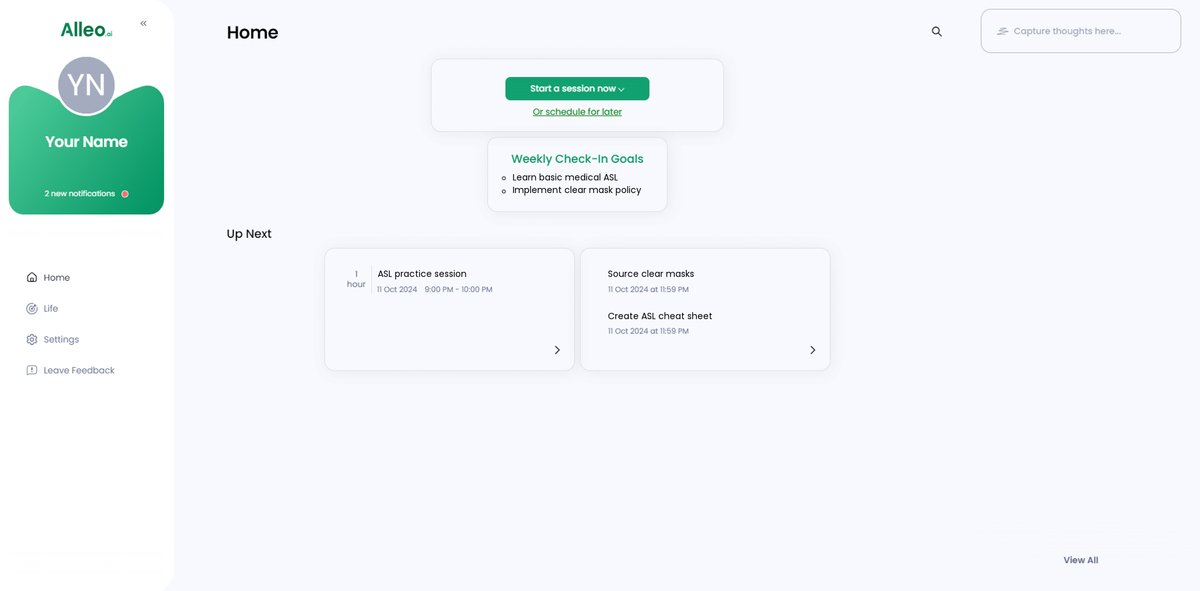
After your coaching session on improving communication with Deaf patients, check the Alleo app’s home page to view and manage the goals you discussed, such as learning basic ASL or implementing clear mask policies.
Step 6: Adding events to your calendar or app
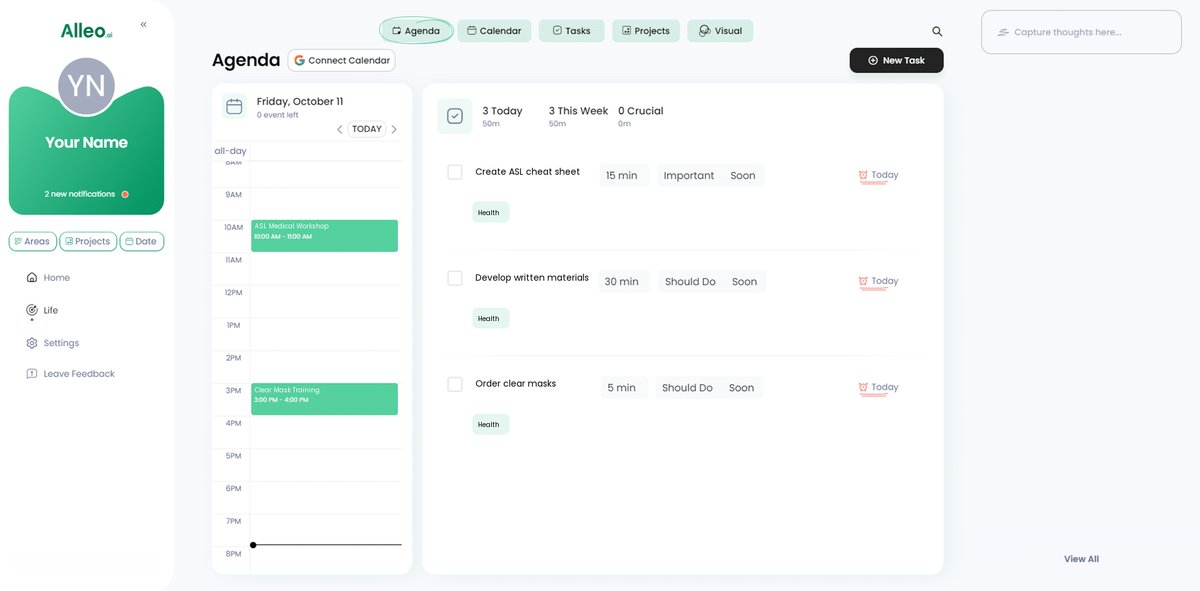
Use Alleo’s calendar and task features to schedule and track your progress in implementing communication strategies for Deaf patients, such as ASL practice sessions, interpreter bookings, and clear mask policy reminders.
Bringing It All Together: Effective Communication with Deaf Patients
We’ve journeyed through various strategies to enhance communicating with Deaf patients in healthcare settings.
Each step, from using clear masks to utilizing medical interpreters for Deaf patients, plays a crucial role in patient-centered care for Deaf individuals.
Remember, small changes can lead to significant improvements in patient care and help address Deaf community health disparities.
Empathy and preparation, including cultural competence for Deaf patients, go a long way.
By implementing these strategies, such as visual aids in patient communication and nonverbal communication techniques, you can build trust and improve outcomes for your Deaf patients.
As you take these steps towards creating Deaf-friendly healthcare facilities, consider how Alleo can support your efforts in communicating with Deaf patients.
With Alleo, achieving your communication goals, including meeting legal requirements for Deaf accessibility, becomes much easier.
Start your free 14-day trial today and see the difference it can make in your approach to American Sign Language (ASL) in healthcare.
You got this!