5 Essential Best Practices for Team Building Activity Frequency
Are you struggling to keep your team engaged due to inconsistent team-building activity frequency?
As a life coach, I’ve helped numerous professionals address this exact challenge. I’ve seen firsthand how a lack of clear guidelines for corporate team bonding frequency can lead to confusion and decreased morale.
In this post, we’ll explore the best practices for setting a team-building schedule. You’ll learn actionable steps to establish a clear and effective routine for regular team building events. We’ll discuss optimal schedules for team activities and strategies for team cohesion.
Let’s dive in and discover how to balance work and team activities for improved employee engagement through team building.
Understanding the Impact of Inconsistent Team-Building Activities
One major issue many teams face is the lack of clear guidelines on team building activity frequency. This uncertainty can lead to sporadic planning, leaving team members confused and disengaged when it comes to corporate team bonding frequency.
I’ve seen how this inconsistency in team building exercises can quickly erode team morale and productivity.
Moreover, without a structured approach to the optimal schedule for team activities, team-building activities can feel forced or irrelevant. This often results in team members viewing these events as burdensome rather than beneficial for employee engagement through team building.
It’s no wonder that many professionals struggle to see the value in poorly executed team-building initiatives that lack regular team building events.
A clear and consistent schedule for team building activity frequency is crucial. It ensures everyone knows what to expect and can look forward to meaningful interactions, balancing work and team activities effectively.
This structured approach to team cohesion strategies can make all the difference in maintaining a motivated and cohesive team, improving the productivity and team building correlation.

Roadmap to Effective Team-Building Activity Frequency
Overcoming this challenge requires a few key steps. Here are the main areas to focus on to make progress with optimal team building activity frequency.
- Establish quarterly team building schedules: Set clear goals and assign planning responsibilities for regular team building events.
- Survey teams on preferred activity frequency: Gather and analyze team preferences to balance work and team activities.
- Define activity types for different frequencies: Categorize team building exercises and assign appropriate frequencies for corporate team bonding.
- Create a team building activity calendar: Use a digital tool to share and manage the schedule for employee engagement through team building.
- Implement monthly mini-bonding sessions: Plan informal activities to maintain engagement and improve team cohesion strategies.
Let’s dive into these productivity and team building correlation strategies!
1: Establish quarterly team building schedules
Creating a quarterly team-building schedule is essential for maintaining a consistent and engaging team environment. This optimal schedule for team activities ensures regular team building events throughout the year.
Actionable Steps:
- Set clear goals: Define the objectives you want to achieve with each team building activity frequency. This helps in planning relevant activities and team building exercises.
- Assign responsibilities: Designate a team member or committee to organize and oversee the activities. This ensures accountability and smooth execution of corporate team bonding frequency.
- Review and refine: Implement a process to evaluate past activities and make necessary adjustments for future events. This helps in continuous improvement and measuring team building effectiveness.
Explanation:
These steps matter because they provide structure and clarity, making it easier to plan and execute meaningful team-building activities. By setting clear goals, you ensure each activity has a purpose, balancing work and team activities effectively.
Assigning responsibilities guarantees that someone is always in charge, leading to better organization. Regular reviews help in fine-tuning activities to better match your team’s needs, enhancing employee engagement through team building.
A structured schedule can significantly improve team morale and productivity, aligning with current industry trends in team cohesion strategies.
Key benefits of quarterly team-building schedules:
- Consistent engagement throughout the year
- Better resource allocation and planning
- Opportunity for diverse activities, including remote team building frequency
Effective team-building practices can be a game-changer in today’s corporate environment, showcasing the productivity and team building correlation.

2: Survey teams on preferred activity frequency
Understanding your team’s preferences for team building activity frequency is crucial for planning effective team-building schedules and optimizing corporate team bonding frequency.
Actionable Steps:
- Create a survey: Design a simple and concise survey to gather input on preferred team building activity frequency. Use online tools to make it easy for everyone to participate in assessing optimal schedules for team activities.
- Analyze results: Review the survey data to identify trends and common preferences for regular team building events. Look for patterns that can guide your scheduling decisions and enhance employee engagement through team building.
- Discuss findings: Hold a meeting to share the results with the team and discuss how to accommodate the majority’s preferences for balancing work and team activities.
Explanation:
These steps matter because they ensure the team’s voices are heard, leading to higher engagement and satisfaction. By surveying your team, you gather valuable insights that help in creating a more effective schedule for team building exercises.
Analyzing the data allows you to identify trends and make informed decisions about team cohesion strategies. Discussing the findings fosters open communication and aligns the team on the best approach for productivity and team building correlation.
For more tips on creating effective surveys, check out this guide on survey best practices.
This approach sets the stage for smoother implementation of your team-building activities and helps in measuring team building effectiveness.
3: Define activity types for different frequencies
Understanding the importance of varying activity types ensures that team building activity frequency is effective and engaging.
Actionable Steps:
- Categorize activities: Group team building exercises into bonding, skill development, and relaxation. This helps in planning diverse and relevant events for optimal schedule for team activities.
- Assign frequencies: Decide how often each category should occur, such as monthly for corporate team bonding frequency or quarterly for skill development.
- Provide examples: Offer specific activity ideas for each category to illustrate the variety and keep the team interested in regular team building events.
Explanation:
These steps matter because they help in crafting a balanced and engaging team-building schedule that addresses different needs and supports employee engagement through team building.
By categorizing activities, you ensure a mix of fun and growth opportunities. Assigning frequencies helps maintain consistency and relevance in balancing work and team activities.
Providing examples sparks creativity and aids in planning. For more insights on team cohesion strategies, check this guide on team-building activities.
This structured approach ensures that team-building remains engaging and beneficial for everyone involved, supporting productivity and team building correlation.
4: Create a team building activity calendar
Planning and sharing a team building activity calendar is essential to maintain consistency and keep everyone informed about the team building activity frequency.
Actionable Steps:
- Use a digital calendar tool: Select a user-friendly digital tool to plan, share, and manage the schedule for regular team building events.
- Include key dates and descriptions: Clearly mark important dates and provide brief descriptions of each team building exercise to set expectations.
- Set reminders and deadlines: Schedule reminders and deadlines to ensure timely preparation and participation in each activity, balancing work and team activities effectively.
Explanation:
These steps matter because they ensure everyone is aware of upcoming activities and can plan accordingly. A digital tool makes it easy to update and share the calendar, enhancing communication and supporting optimal schedules for team activities.
Including dates and descriptions helps team members understand the purpose of each activity. Setting reminders ensures nothing is forgotten, leading to better engagement and employee engagement through team building.
For more tips on creating effective digital calendars, check out this guide on calendar best practices.
Essential elements of an effective team-building calendar:
- Clear, accessible schedule of events
- Brief descriptions of each activity
- Automated reminders for participants
A well-maintained activity calendar is a key component of successful team cohesion strategies and helps in measuring team building effectiveness.
5: Implement monthly mini-bonding sessions
Monthly mini-bonding sessions are key to keeping your team engaged and connected. These regular team building events contribute to the optimal schedule for team activities.
Actionable Steps:
- Organize informal activities: Plan short, casual meet-ups like team lunches or coffee breaks to foster relaxed interactions, serving as effective team building exercises.
- Rotate planning duties: Assign different team members each month to organize these sessions, ensuring variety and shared responsibility in corporate team bonding frequency.
- Encourage participation: Make these sessions enjoyable and low-pressure to maximize attendance and engagement, balancing work and team activities.
Explanation:
These steps matter because they promote regular bonding without overwhelming your team. Informal activities provide a break from routine work, boosting morale and supporting employee engagement through team building.
Rotating planning duties ensures fresh ideas and shared ownership. Encouraging participation helps everyone feel included and valued, enhancing team cohesion strategies.
For more insights on effective team bonding, check out this guide on team bonding tips.
Benefits of monthly mini-bonding sessions:
- Improved team communication
- Increased workplace satisfaction
- Enhanced collaboration on projects
Consistent mini-bonding sessions can significantly enhance team cohesion and productivity. This team building activity frequency helps in measuring team building effectiveness and demonstrates the productivity and team building correlation.
Streamline Your Team-Building with Alleo
We’ve explored the importance of consistent team-building activity frequency and how it can boost morale and productivity. But did you know you can work directly with Alleo to make this process seamless and effective for your corporate team bonding frequency?
With Alleo, setting up an account is a breeze. Simply sign up, and you’ll be guided through creating a personalized plan for your team-building exercises and optimal schedule for team activities.
The Alleo AI coach will help you survey your team, analyze preferences, and set up a structured schedule for regular team building events.
Our AI coach offers full coaching sessions, just like a human coach would. You’ll receive follow-ups on progress, adjustments when needed, and accountability through text and push notifications to ensure employee engagement through team building.
Alleo also provides a free 14-day trial, with no credit card required. This allows you to experience the benefits of balancing work and team activities before committing.
Ready to get started for free and discover effective team cohesion strategies?
Let me show you how!
Step 1: Log In or Create Your Account
To start building a consistent team-building schedule with Alleo’s AI coach, simply Log in to your account or create a new one to begin your journey towards more effective team engagement.

Step 2: Choose “Building better habits and routines”
Click on “Building better habits and routines” to focus on establishing consistent team-building activities, which will help solve the problem of inconsistent engagement and boost team morale.

Step 3: Select “Career” as Your Focus Area
Choose “Career” as your focus area in Alleo to address team-building challenges and improve workplace dynamics. This selection will provide tailored strategies and activities specifically designed to enhance professional relationships and boost team productivity, directly addressing the issues of inconsistent team-building discussed in the article.

Step 4: Starting a Coaching Session
Begin your journey with Alleo by scheduling an intake session, where our AI coach will help you create a personalized team-building plan tailored to your organization’s needs and preferences.

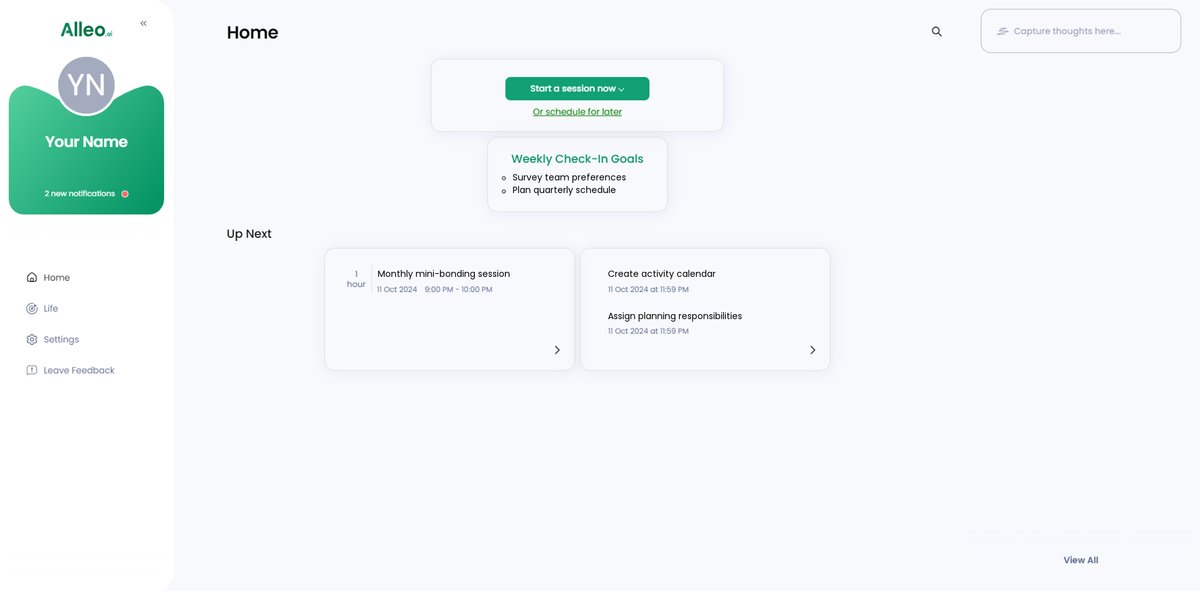
Step 5: Viewing and managing goals after the session
After your coaching session, check the Alleo app’s home page to view and manage the goals you discussed, allowing you to track your progress and stay accountable to your team-building objectives.
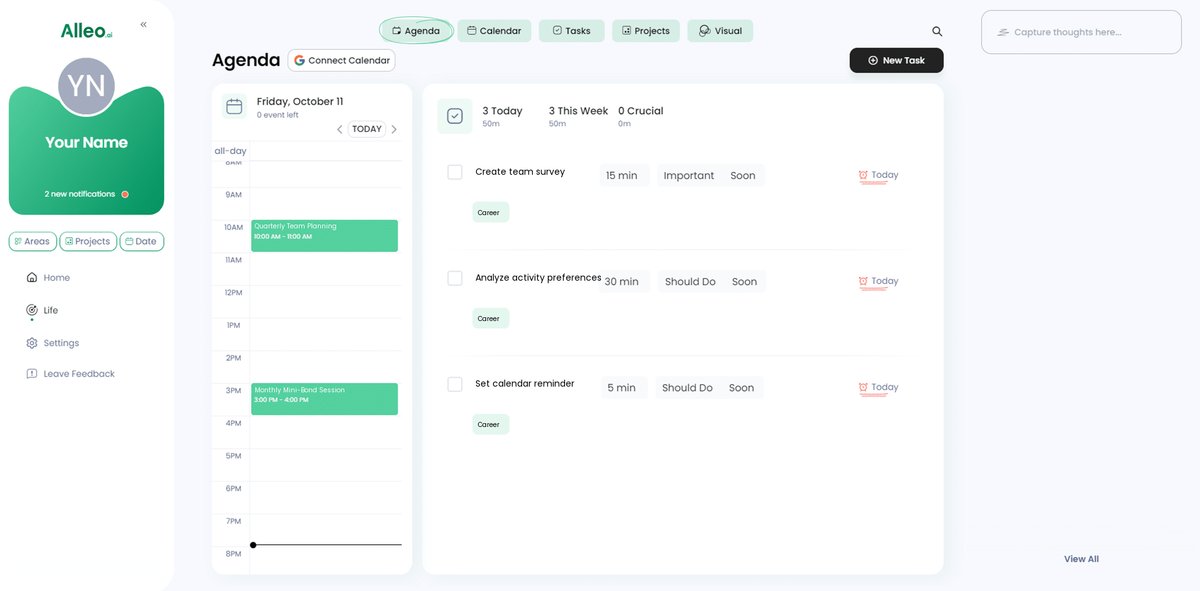
Step 6: Adding events to your calendar or app
Use the Alleo app to easily add your team-building activities to your calendar, ensuring you never miss an event and can track your progress in solving inconsistent team-building challenges.
Wrapping Up: Your Path to Consistent Team-Building Success
Inconsistent team building activity frequency can really drag a team down. We’ve covered a lot of ground to fix this.
From setting quarterly schedules for corporate team bonding frequency to surveying your team, each step is vital.
Remember to define team building exercises, create a calendar for regular team building events, and implement mini-bonding sessions.
Consistency is key in balancing work and team activities.
Now it’s your turn to take action. Start applying these team cohesion strategies today.
Don’t forget, Alleo can make this journey smoother. Our tools are designed to help you every step of the way, including measuring team building effectiveness.
Try Alleo for free and see the difference structured team-building can make for employee engagement through team building.