5 Proven Strategies for Managers to Boost Remote Team Performance
Managing Underperforming Remote Team Members
Are you grappling with the challenge of managing underperforming remote employees? You’re not alone. Many tech managers face this issue daily in remote team management.
As a life coach, I’ve helped many professionals navigate these complex challenges. I’ve seen firsthand the transformative power of effective strategies for managing underperforming remote employees.
In this article, you’ll discover actionable steps to improve your remote team leadership. We’ll cover:
- Setting clear goals for virtual teams
- Regular check-ins to address communication challenges in remote work
- Digital tools for employee productivity tracking
- Timely feedback for performance evaluation in virtual teams
- Structured improvement plans for managing underperforming remote employees
Let’s dive in to explore remote team motivation techniques and more.

The Unique Challenges of Remote Team Management
Managing remote teams introduces several unique challenges, including managing underperforming remote employees. Without face-to-face interaction, it’s harder to gauge team morale and address performance issues promptly in virtual teams.
This lack of physical presence makes it difficult to foster a cohesive team culture and implement effective virtual team building activities.
Effective communication is crucial for remote team management, yet it often falters in virtual settings. Many clients initially struggle with keeping remote team members engaged and motivated, highlighting the importance of remote team motivation techniques.
I often see clients benefit from implementing structured communication protocols and employee productivity tracking tools, although it’s a steep learning curve.
The stakes are high. Poor remote team management can lead to decreased productivity and increased employee turnover, especially when addressing burnout in distributed teams.
This is why mastering remote leadership strategies and performance evaluation for virtual teams is more critical than ever in today’s digital workplace.
It’s not just about managing tasks—it’s about leading people and developing effective remote work policies.
Effective Strategies for Remote Team Performance Management
Overcoming this challenge of managing underperforming remote employees requires a few key steps. Here are the main areas to focus on to make progress in remote team management.
- Set clear, measurable goals for remote employees: Use the SMART framework to define and align goals for virtual teams.
- Conduct regular one-on-one video check-ins: Schedule consistent meetings to foster open communication and address communication challenges in remote work.
- Implement digital project management tools: Choose and train the team on employee productivity tracking tools like Asana or Trello for effective technology for remote collaboration.
- Provide timely, specific feedback on performance: Use data-driven metrics for constructive feedback in performance evaluation for virtual teams.
- Create a structured Performance Improvement Plan: Identify gaps, develop action plans, and monitor progress to boost remote team motivation.
Let’s dive in!
1: Set clear, measurable goals for remote employees
Setting clear, measurable goals is crucial for managing underperforming remote employees and overall remote team performance management.
Actionable Steps:
- Define specific goals: Use the SMART framework to create goals that are specific, measurable, achievable, relevant, and time-bound for virtual teams.
- Align goals with team objectives: Ensure individual goals contribute to team and company objectives for better alignment and productivity in remote work.
- Communicate goals clearly: Use digital platforms and technology for remote collaboration to document and share goals transparently with the team.
Key benefits of clear goal-setting:
- Enhances focus and motivation in remote team management
- Improves accountability for managing underperforming remote employees
- Facilitates performance evaluation for virtual teams
Explanation: Setting clear goals helps remote employees understand expectations and focus on priorities, addressing communication challenges in remote work.
By aligning these goals with team and company objectives, you ensure everyone is working towards common goals, which is essential for managing underperforming remote employees.
Clear communication, facilitated by digital tools, enhances transparency and accountability. According to AEEN, effective goal-setting is a key factor in improving employee productivity.
Remember, clear goals set the foundation for success in remote teams and are crucial for managing underperforming remote employees.

2: Conduct regular one-on-one video check-ins
Regular one-on-one video check-ins are crucial for managing underperforming remote employees and maintaining strong communication in virtual teams.
Actionable Steps:
- Schedule consistent meetings: Set a weekly or bi-weekly cadence for one-on-one video calls to maintain regular contact and address remote team management challenges.
- Create a structured agenda: Prepare a clear agenda for each meeting to discuss performance evaluation for virtual teams, challenges, and support needed.
- Foster open communication: Encourage honest dialogue during check-ins to build trust and address communication challenges in remote work.
Explanation: Regular video check-ins help maintain a personal connection with remote team members, ensuring that issues are addressed promptly and support is provided when needed.
This fosters a sense of belonging and keeps everyone aligned with team goals. According to Teamdeck, effective communication is vital for successful remote project management.
These check-ins are essential for improving remote team performance and keeping everyone on track.

3: Implement digital project management tools
Leveraging digital project management tools is essential for remote team performance management and managing underperforming remote employees.
Actionable Steps:
- Choose the right tools: Select tools that fit your team’s needs, like Asana, Trello, or Jira for effective remote team management.
- Train the team: Conduct training sessions to ensure everyone is comfortable using these tools, addressing communication challenges in remote work.
- Monitor and adjust: Regularly review tool usage and make adjustments based on analytics for performance evaluation of virtual teams.
Essential features to look for in employee productivity tracking tools:
- Task assignment and tracking
- Real-time collaboration capabilities
- Progress reporting and analytics
Explanation: Utilizing digital project management tools streamlines task coordination and enhances productivity. These tools help track progress, maintain transparency, and ensure team alignment when managing underperforming remote employees.
According to Rippling, effective use of such tools is crucial for remote team management success.
Choosing the right tools and training your team are key steps to better remote team performance and addressing burnout in distributed teams.
4: Provide timely, specific feedback on performance
Giving timely, specific feedback is crucial for improving remote team performance and managing underperforming remote employees.
Actionable Steps:
- Use data to inform feedback: Base your feedback on clear data and metrics from employee productivity tracking tools.
- Be constructive and positive: Highlight achievements and suggest improvements for areas needing growth, addressing communication challenges in remote work.
- Follow up on feedback: Schedule follow-up meetings to review progress and offer additional support, effectively managing time zones in global teams.
Explanation: These steps help remote employees understand their performance and align their efforts with team goals, enhancing remote team management.
Constructive feedback, grounded in data, fosters a positive work environment and aids in performance evaluation for virtual teams.
For more insights, see InsideOut Development.
Regular, specific feedback ensures continuous improvement and keeps remote teams aligned, supporting remote work policy development.
5: Create a structured Performance Improvement Plan
Creating a structured Performance Improvement Plan is essential for managing underperforming remote employees and addressing performance issues in remote teams.
Actionable Steps:
- Identify performance gaps: Clearly document areas that need improvement and provide specific examples for virtual teams.
- Develop an action plan: Outline detailed steps and timelines for improvement, setting realistic milestones for remote team management.
- Monitor progress: Conduct regular reviews to track progress and make adjustments as needed, utilizing employee productivity tracking tools.
Key components of an effective Performance Improvement Plan for managing underperforming remote employees:
- Clear performance expectations for virtual teams
- Specific, measurable goals aligned with remote work policy development
- Regular check-ins and feedback to address communication challenges in remote work
Explanation: These steps help you provide clear guidance and support to underperforming team members in a remote setting. They ensure that employees know exactly what is expected and how to improve, even when working in distributed teams.
Regular monitoring also helps you stay on top of their progress and offer timely feedback, which is crucial for remote team motivation. For more insights, see Vintti.
A structured plan not only addresses current issues but also sets the stage for future success in managing underperforming remote employees.
Partner with Alleo for Effective Remote Team Management
We’ve explored the challenges of remote team management and how to overcome them, including managing underperforming remote employees. But did you know you can work with Alleo to make this journey easier and faster?
Alleo provides tailored coaching support for remote team management, including performance evaluation for virtual teams. Our AI coach offers full coaching sessions, just like a human coach, to help with communication challenges in remote work.
With a free 14-day trial, no credit card required, you can get started immediately on improving your remote team motivation techniques.
Setting Up with Alleo:
- Create an Account: Sign up and set up your profile to start managing underperforming remote employees.
- Personalized Plan: Alleo helps you create a plan tailored to your team’s needs, including virtual team building activities.
- Coaching Sessions: Receive detailed coaching sessions and actionable insights on remote work policy development.
- Progress Tracking: Alleo tracks your progress using employee productivity tracking tools and adjusts plans as needed.
- Accountability: Stay on track with text and push notifications, helping you manage time zones in global teams.
Ready to get started for free and improve your technology for remote collaboration?
Let me show you how!
Step 1: Log In or Create Your Account
To begin your journey with Alleo’s AI coaching for remote team management, simply Log in to your account or create a new one to access personalized strategies and support.

Step 2: Choose Your Focus Area
Select “Setting and achieving personal or professional goals” to align with the remote team management strategies discussed, helping you set clear objectives and improve performance for yourself and your team members.

Step 3: Select “Career” as Your Focus Area
Choose “Career” as your focus area in Alleo to address remote team management challenges, aligning perfectly with the strategies discussed for improving leadership and performance in virtual work environments.

Step 4: Starting a coaching session
Begin your journey with Alleo by scheduling an initial intake session, where you’ll discuss your remote team management challenges and set up a personalized plan to improve your leadership skills.

Step 5: Viewing and managing goals after the session
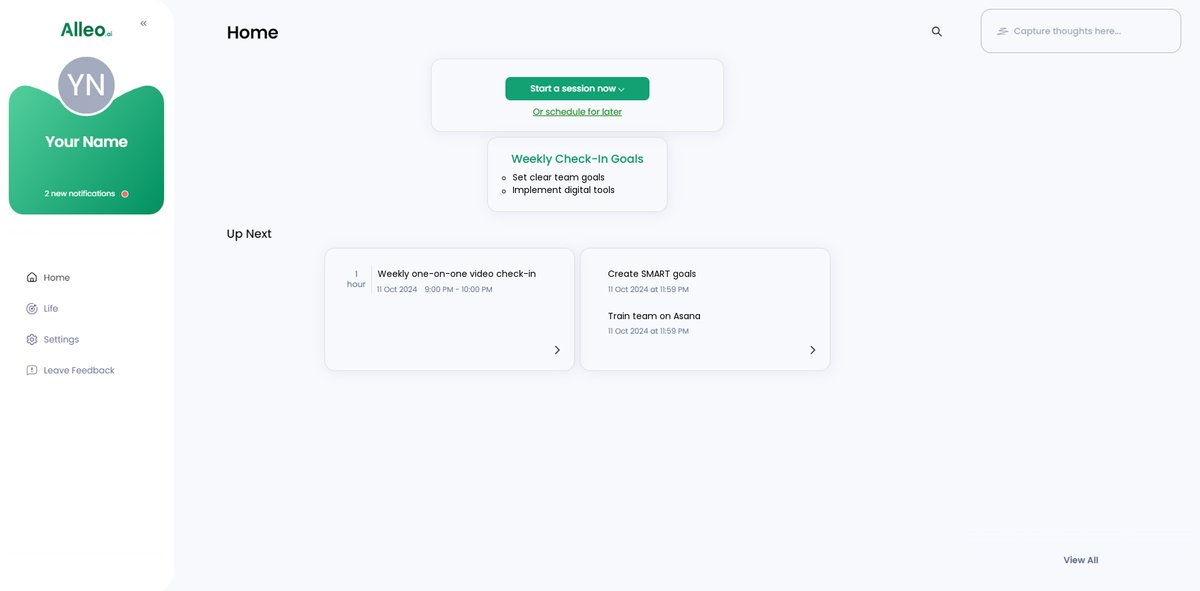
After your coaching session, check the home page of the Alleo app to view and manage the goals you discussed, allowing you to track your progress in improving remote team management.
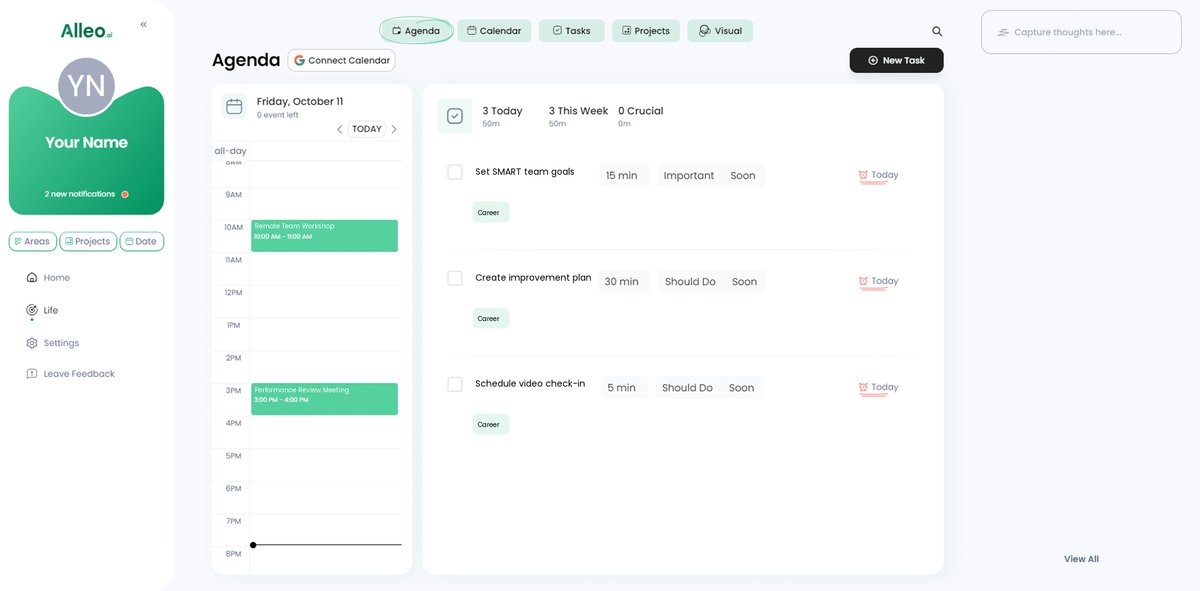
Step 6: Adding events to your calendar or app
Use Alleo’s calendar and task features to track your progress in implementing remote team management strategies, allowing you to easily schedule check-ins, set goal deadlines, and monitor performance improvement milestones.
Wrapping Up Your Remote Team Management Journey
By now, you should feel more equipped to tackle the unique challenges of managing underperforming remote employees and remote team management. Setting clear goals, regular check-ins, leveraging digital tools, providing timely feedback, and creating structured improvement plans are all crucial steps in performance evaluation for virtual teams.
Remember, you’re not alone in this journey. Every tech manager faces these hurdles, including communication challenges in remote work, but with the right strategies, you can overcome them.
Empathy and effective communication are your best tools for managing underperforming remote employees. Keep striving for improvement and stay connected with your team using technology for remote collaboration.
Lastly, consider giving Alleo a try. Our AI coach can make managing your remote team easier and more efficient, helping with employee productivity tracking tools and remote team motivation techniques.
Sign up now and start your free 14-day trial to enhance your remote work policy development.
You’ve got this.