5 Proven Strategies for Managers to Promote Workplace Inclusivity
Are you struggling to find concrete examples of promoting workplace inclusivity strategies during job interviews?
As a life coach, I’ve helped many professionals navigate these challenges. In my experience, fostering an inclusive workplace culture through diversity training programs and unconscious bias awareness can seem daunting.
In this article, you’ll discover practical strategies to help managers promote workplace inclusivity effectively. We’ll cover techniques like:
- Blind hiring processes and diverse hiring practices
- Creating diverse interview panels
- Offering inclusive leadership training and cultural competence development
Let’s dive in to explore these promoting workplace inclusivity strategies.
Understanding the Challenges of Promoting Inclusivity
As a recruiter, you might struggle to find specific examples of promoting workplace inclusivity strategies during job interviews. This often stems from the complex nature of unconscious bias awareness and the lack of diverse hiring practices in interview panels.
Many clients initially struggle with defining what inclusivity looks like in practice. This can lead to missed opportunities to engage diverse talent and negatively impact employee engagement. Implementing employee resource groups and cultural competence development can help address these challenges.
In my experience, people often find that insufficient diversity training programs exacerbate these challenges. Without proper guidance on inclusive leadership skills, it’s easy to overlook the nuances of promoting workplace inclusivity strategies.

A Roadmap to Promoting Inclusivity in the Workplace
Overcoming this challenge requires a few key steps. Here are the main areas to focus on to make progress in promoting workplace inclusivity strategies:
- Implement Blind Hiring Processes: Anonymize candidate information during initial screenings to reduce bias and enhance diverse hiring practices.
- Create Diverse Interview Panels: Assemble panels that reflect your organization’s diversity to support inclusive leadership skills.
- Offer Inclusive Leadership Training: Conduct regular workshops and mentorship opportunities for managers to improve cultural competence development.
- Establish Employee Resource Groups (ERGs): Support ERGs to foster belonging and inclusion, enhancing unconscious bias awareness.
- Conduct Regular D&I Surveys and Assessments: Gather and analyze employee feedback to drive improvements in diversity training programs and pay equity initiatives.
Let’s dive in!
1: Implement blind hiring processes
Implementing blind hiring processes is crucial for promoting workplace inclusivity strategies and reducing bias in recruitment.
Actionable Steps:
- Use software to anonymize candidate information during initial screenings, supporting diverse hiring practices.
- Develop clear criteria for evaluating candidates based solely on skills and experiences, fostering inclusive leadership skills.
- Regularly review and refine the blind hiring process to ensure effectiveness and enhance cultural competence development.
Key benefits of blind hiring include:
- Increased diversity in candidate pools
- Fairer evaluation based on merit
- Reduced influence of unconscious biases
Explanation: By anonymizing candidate information, you can ensure that evaluations are based on skills and experiences, not unconscious biases, supporting workplace inclusivity strategies.
This approach has been shown to increase diversity in hiring. A relevant study from British Business Bank highlights the benefits of blind hiring in promoting inclusivity and reducing bias.
This step is vital for creating an equitable hiring process and ensuring diverse talent is fairly considered, aligning with pay equity initiatives and inclusive workplace practices.
2: Create diverse interview panels
Creating diverse interview panels is essential for promoting workplace inclusivity strategies during the hiring process.
Actionable Steps:
- Assemble diverse panels: Include members from various backgrounds to reflect your organization’s diversity and enhance diverse hiring practices.
- Train panel members: Provide diversity training programs on recognizing and mitigating unconscious bias awareness.
- Rotate members regularly: Ensure a variety of perspectives by rotating panel members to improve cultural competence development.
Explanation: Diverse interview panels help reduce bias and promote fairness in hiring. This approach ensures multiple perspectives and fosters a more inclusive environment, supporting inclusive leadership skills.
According to Staffbase, diverse panels enhance decision-making and improve candidate evaluations.
These steps are crucial for achieving equitable hiring practices and fostering a diverse workforce, aligning with promoting workplace inclusivity strategies.

3: Offer inclusive leadership training
Offering inclusive leadership training is vital to fostering a diverse and welcoming workplace, and is a key strategy for promoting workplace inclusivity.
Actionable Steps:
- Schedule regular workshops: Conduct monthly inclusive leadership training sessions for managers to keep them updated on best practices and enhance their inclusive leadership skills.
- Encourage participation in forums: Invite managers to join diversity training programs and inclusion forums or webinars to broaden their understanding and cultural competence development.
- Implement mentorship programs: Pair leaders with diverse mentors to help them learn and grow in their inclusivity efforts, providing valuable mentorship opportunities.
Explanation: By providing ongoing training and support, managers can better understand and integrate inclusive practices into their leadership styles.
This approach helps address unconscious bias awareness and promotes fair treatment for all employees, including considerations for flexible work arrangements and accessibility accommodations.
According to Vantage Circle, inclusive leadership training is essential for creating a supportive and equitable work environment.
These steps are crucial for equipping managers with the skills and knowledge needed to foster inclusivity effectively, supporting diverse hiring practices and pay equity initiatives.
4: Establish employee resource groups (ERGs)
Establishing employee resource groups (ERGs) is essential for promoting workplace inclusivity strategies and fostering a sense of belonging in the workplace.
Actionable Steps:
- Support the formation of ERGs: Provide resources and meeting spaces for employees to create and maintain ERGs as part of promoting workplace inclusivity strategies.
- Encourage participation: Motivate employees to join ERGs that align with their interests or identities, enhancing diversity and inclusion efforts.
- Facilitate regular meetings: Organize regular interactions between ERG leaders and senior management to discuss concerns and share insights on inclusive leadership skills.
Key roles ERGs play in fostering inclusivity:
- Creating safe spaces for underrepresented groups
- Providing valuable insights to leadership on cultural competence development
- Promoting cultural awareness and understanding
Explanation: By supporting ERGs, companies create spaces where employees can connect and feel valued. These groups help address workplace challenges and drive inclusivity, complementing other strategies for promoting workplace inclusivity.
According to Vantage Circle, ERGs play a vital role in fostering an inclusive work environment.
This approach ensures diverse voices are heard and included in organizational decisions, supporting broader initiatives like unconscious bias awareness and diverse hiring practices.

5: Conduct regular D&I surveys and assessments
Conducting regular D&I surveys and assessments is essential for tracking progress and identifying areas for improvement in your promoting workplace inclusivity strategies.
Actionable Steps:
- Design and distribute surveys: Create quarterly surveys to gather employee feedback on diversity and inclusion, including topics like unconscious bias awareness and cultural competence development.
- Analyze survey results: Evaluate the data to identify areas for improvement and track progress on inclusive leadership skills and pay equity initiatives.
- Share findings and develop action plans: Communicate the survey results to the organization and create action plans based on feedback, which may include implementing diversity training programs or establishing employee resource groups.
Benefits of regular D&I assessments:
- Identifying blind spots in current practices, such as accessibility accommodations
- Measuring the impact of inclusivity initiatives, including flexible work arrangements
- Empowering employees by valuing their input on diverse hiring practices and mentorship opportunities
Explanation: Regular D&I surveys help you understand the current state of inclusivity in your organization. They provide valuable insights into employee experiences and highlight areas that need attention in promoting workplace inclusivity strategies.
According to Vantage Circle, conducting surveys and assessments is crucial for fostering a supportive and inclusive work environment.
These steps are fundamental in promoting workplace inclusivity strategies and ensuring that all employees feel valued and heard.

Partner with Alleo to Promote Inclusivity
We’ve explored the challenges of promoting workplace inclusivity strategies and how to address them. But did you know you can work directly with Alleo to make this journey easier and faster?
Setting up an account is simple. Create a personalized plan tailored to your inclusivity goals, including diversity training programs and employee resource groups.
Alleo’s AI coach provides actionable strategies for promoting workplace inclusivity and follows up on your progress. It handles changes and keeps you accountable with text and push notifications, supporting your efforts in unconscious bias awareness and inclusive leadership skills development.
Ready to get started for free and enhance your cultural competence development?
Let me show you how to begin implementing effective workplace inclusivity strategies!
Step 1: Log In or Create Your Account
To start your journey towards a more inclusive workplace, log in to your existing Alleo account or create a new one in just a few clicks.

Step 2: Choose “Building better habits and routines”
Select “Building better habits and routines” to develop consistent practices that promote inclusivity in your workplace, helping you overcome challenges in fostering a diverse and welcoming environment.

Step 3: Select “Career” as Your Focus Area
Choose “Career” as your focus area in Alleo to receive tailored strategies for promoting workplace inclusivity, enhancing your leadership skills, and creating a more diverse and equitable professional environment.

Step 4: Starting a Coaching Session
Begin your journey with Alleo by participating in an intake session, where you’ll discuss your inclusivity goals and create a personalized plan to promote diversity in your workplace.

Step 5: Viewing and managing goals after the session
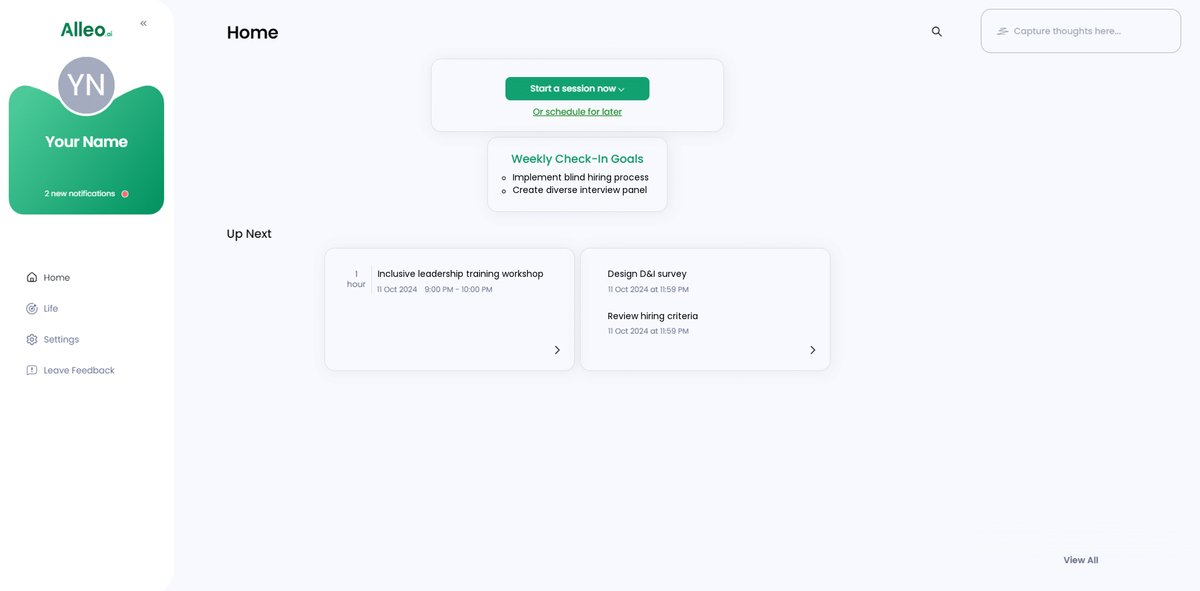
After your coaching session on promoting workplace inclusivity, check the Alleo app’s home page to view and manage the goals you discussed, allowing you to track your progress and stay accountable to your inclusivity initiatives.
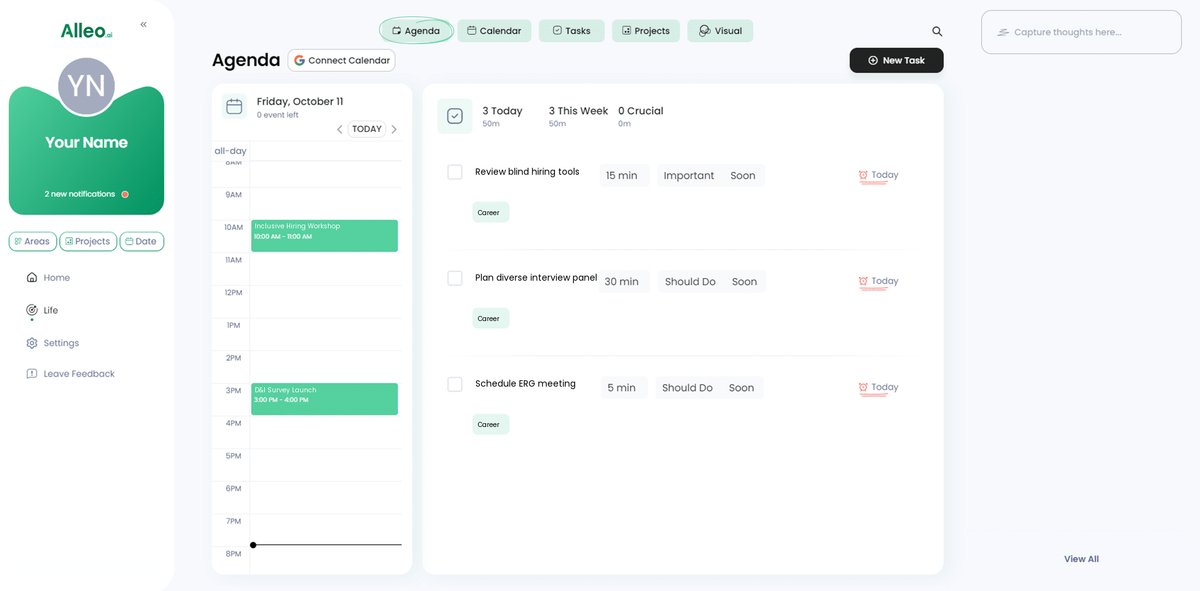
Step 6: Adding events to your calendar or app
Use Alleo’s calendar and task features to schedule and track your inclusivity initiatives, allowing you to monitor your progress in promoting workplace diversity and inclusion over time.
Moving Forward with Inclusivity
After exploring these strategies for promoting workplace inclusivity, it’s clear that this journey is both challenging and rewarding.
I understand the hurdles you face in making your hiring process more inclusive and implementing diverse hiring practices. However, by implementing these actionable steps, including diversity training programs and unconscious bias awareness initiatives, you can make a significant impact.
Remember, the journey to a more inclusive workplace doesn’t have to be solitary. Alleo can support you every step of the way, from developing inclusive leadership skills to establishing employee resource groups.
Let’s make promoting workplace inclusivity strategies a priority. Start transforming your workplace today with Alleo and see the difference it can make through cultural competence development and flexible work arrangements.
Try Alleo for free and commit to a more inclusive future, focusing on mentorship opportunities and pay equity initiatives.