6 Effective Classroom Management Strategies for Teachers with Talkative Students
Are you tired of using hand claps and chants to quiet your classroom, only to find students chattering moments later? Managing talkative students effectively can be a challenge for many educators.
As a life coach, I understand the struggles educators face in maintaining a productive learning environment. In my experience, managing talkative students requires more than just attention-grabbing techniques. Effective classroom behavior management strategies are essential for success.
In this article, you’ll learn effective classroom management strategies tailored for teachers dealing with chatty students. We’ll explore clear rules, nonverbal communication for teachers, reward systems, and more. These student engagement techniques will help you with noise control in classrooms and improve active listening strategies for students.
Let’s dive in and discover how to effectively manage talkative students while promoting positive reinforcement in education.

The Challenge of Managing Talkative Classrooms
Many teachers struggle to maintain a conducive learning environment when managing talkative students effectively. Persistent chatter disrupts classroom productivity and impacts student learning significantly, making classroom behavior management crucial.
Traditional methods like hand claps and chants often fail to keep students quiet for long. It’s frustrating when these noise control techniques only work momentarily before the level rises again, highlighting the need for better student engagement techniques.
In my experience, several clients report that talkative students divert attention from lessons, leading to missed instructions and reduced comprehension. This creates a chaotic atmosphere, making it difficult to achieve educational goals and emphasizing the importance of setting classroom expectations.
Effective classroom management strategies are crucial. Let’s explore how you can create a more focused and productive classroom while managing talkative students effectively.
Key Actions for Managing Talkative Students
Overcoming this challenge requires a few key steps. Here are the main areas to focus on to make progress in managing talkative students effectively:
- Establish clear rules for talking in class: Collaborate with students to create and communicate rules, setting classroom expectations.
- Use non-verbal cues to redirect chatty students: Develop and consistently implement non-verbal signals, enhancing nonverbal communication for teachers.
- Implement a reward system for quiet work time: Design a point system to incentivize quiet behavior, incorporating positive reinforcement in education.
- Address talkative behavior privately: Have one-on-one conversations to understand and manage talking, promoting active listening strategies for students.
- Arrange seating to minimize student chatter: Strategically place talkative students away from each other for effective noise control in classrooms.
- Incorporate structured group discussions: Plan regular discussions with clear guidelines, utilizing collaborative learning techniques.
Let’s dive in!
1: Establish clear rules for talking in class
Establishing clear rules for talking in class is essential for managing talkative students effectively and creating a focused learning environment.
Actionable Steps:
- Collaborate with students to create classroom behavior management rules. Hold a class meeting to discuss and agree on rules for talking during lessons.
- Clearly communicate the rules and consequences. Post the rules prominently in the classroom and review them regularly to reinforce setting classroom expectations.
- Reinforce the rules consistently. Use reminders and gentle prompts to ensure students adhere to the established rules, incorporating nonverbal communication for teachers when appropriate.
Explanation:
Creating clear rules for talking helps set expectations and fosters a sense of responsibility among students. This process encourages student buy-in and cooperation, which are crucial for maintaining classroom order and managing talkative students effectively.
According to SchoolsthatLead.org, involving students in rule development promotes ownership and accountability, leading to better compliance and improved student engagement techniques.
Establishing these rules is the first step to a more focused and productive classroom, essential for managing talkative students effectively.
2: Use non-verbal cues to redirect chatty students
Using non-verbal cues is crucial in managing talkative students effectively without interrupting the flow of the lesson. This classroom behavior management technique aids in noise control in classrooms.
Actionable Steps:
- Develop a set of non-verbal cues for common situations. Create a chart with these signals and practice them with students to enhance student engagement techniques.
- Implement non-verbal cues consistently. Use gestures like finger-to-lips or a raised hand to signal students to quiet down, effectively managing talkative students.
- Monitor and adjust the effectiveness of non-verbal cues. Reflect on which cues work best and adapt as needed for improved classroom behavior management.
Explanation:
Non-verbal cues help in managing classroom behavior subtly and effectively. They allow you to maintain a respectful environment while keeping students focused, which is essential for managing talkative students effectively.
According to Prodigy Game, incorporating non-verbal communication can significantly improve classroom dynamics and reduce disruptions, supporting active listening strategies for students.
Incorporating these cues aids in creating a more focused classroom environment and is an effective strategy for managing talkative students.

3: Implement a reward system for quiet work time
Implementing a reward system for quiet work time can effectively motivate students to maintain a peaceful classroom environment, which is crucial for managing talkative students effectively.
Actionable Steps:
- Design a point system that rewards quiet behavior. Introduce a system where students earn points for maintaining quiet work time, enhancing classroom behavior management.
- Use positive reinforcement to encourage compliance. Give immediate praise or small rewards to students who follow the rules, improving student engagement techniques.
- Track and celebrate class-wide progress. Set up a chart to track points and celebrate milestones with group rewards, promoting noise control in classrooms.
Explanation:
Using a reward system helps reinforce positive behavior and encourages students to follow classroom expectations consistently.
According to CDC, rewards and positive reinforcement in education are effective strategies in behavioral classroom management.
Integrating these steps can lead to a quieter and more productive classroom environment, essential for managing talkative students effectively.
This approach not only promotes good behavior but also fosters a sense of achievement among students, supporting collaborative learning techniques.

4: Address talkative behavior privately
Addressing talkative behavior privately is crucial for managing talkative students effectively and understanding individual student needs in classroom behavior management.
Actionable Steps:
- Conduct one-on-one conversations. Take time to understand the reasons behind each student’s talkative behavior and discuss active listening strategies for students.
- Develop personalized strategies. Work with each student to create a plan that helps them manage their talking and improve time management for talkative classrooms.
- Monitor and support progress. Regularly check in with students to provide feedback, use positive reinforcement in education, and adjust strategies as needed.
Explanation:
These steps matter because they help address the root causes of talkative behavior, fostering a more respectful and productive classroom environment while managing talkative students effectively.
According to Prodigy Game, addressing issues privately can be more effective than public reprimands, leading to better compliance and student engagement techniques.
Taking a personalized approach ensures each student’s needs are met, promoting a more harmonious classroom and enhancing noise control in classrooms.
5: Arrange seating to minimize student chatter
Arranging seating strategically is crucial for managing talkative students effectively and maintaining a focused classroom environment.
Actionable Steps:
- Assess the current seating arrangement and its impact on classroom behavior management. Observe and identify patterns of chatter linked to seating arrangements.
- Implement strategic seating plans. Place talkative students away from each other and closer to the teacher to improve student engagement techniques.
- Adjust seating plans as needed. Rotate seating periodically to find the most effective arrangement for noise control in classrooms.
Key benefits of strategic seating include:
- Reduced opportunities for disruptive conversations
- Improved focus and attention from students, enhancing active listening strategies
- Enhanced ability to monitor and manage classroom dynamics
Explanation:
These steps matter because they help you manage talkative behavior by reducing opportunities for students to chat, effectively managing talkative students.
According to Green Ninja, seating arrangements can significantly influence classroom dynamics and behavior.
By strategically arranging seats, you create a more controlled and productive learning environment, setting clear classroom expectations.
Implementing these strategies can lead to a more focused and orderly classroom, improving time management for talkative classrooms.
6: Incorporate structured group discussions
Incorporating structured group discussions is an effective strategy for managing talkative students by providing them with appropriate outlets for their energy and ideas. This approach aligns with classroom behavior management techniques and student engagement strategies.
Actionable Steps:
- Plan regular group discussions. Schedule specific times for group discussions to give students opportunities to talk and share ideas, promoting active listening strategies for students.
- Establish guidelines for group interactions. Set clear rules for respectful and productive discussions, ensuring everyone has a chance to speak. This helps in setting classroom expectations and managing talkative students effectively.
- Facilitate and monitor discussions. Actively engage with groups to keep discussions on topic and ensure they are effective, utilizing nonverbal communication for teachers to maintain control.
Effective group discussions can:
- Channel students’ energy into productive activities
- Promote collaborative learning techniques and idea sharing
- Develop critical thinking and communication skills
Explanation:
These steps matter because they channel students’ need to talk into productive activities, reducing disruptive behavior and aiding in noise control in classrooms.
According to TEFL Barcelona, incorporating interactive activities can make lessons more dynamic and reduce misbehavior. Structuring group discussions also promotes collaboration and deeper understanding among students, supporting time management for talkative classrooms.
By implementing these strategies, you can foster a more controlled and engaging classroom atmosphere, effectively managing talkative students through positive reinforcement in education and redirecting off-topic discussions.
Partner with Alleo for Effective Classroom Management
We’ve explored the challenges of managing talkative students effectively and strategies to address them. But did you know you can work directly with Alleo to make this journey easier, improving classroom behavior management and student engagement techniques?
Setting up an account with Alleo is simple. Create a personalized classroom management plan tailored to your needs, including noise control in classrooms and active listening strategies for students.
Alleo’s AI coach will provide support, track progress, and keep you accountable via text and push notifications, helping you with positive reinforcement in education and setting classroom expectations.
Ready to get started for free? Let me show you how to enhance your time management for talkative classrooms!
Step 1: Log in or Create Your Account
To begin managing your talkative classroom with Alleo, simply Log in to your account or create a new one if you’re a first-time user.

Step 2: Choose “Building better habits and routines”
Click on “Building better habits and routines” to start developing consistent classroom management practices that will help you effectively manage talkative students and create a more focused learning environment.

Step 3: Select “Career” as Your Focus Area
Choose “Career” as your focus area in Alleo to access tailored strategies for classroom management, helping you create a more productive learning environment and advance your teaching career.

Step 4: Starting a Coaching Session
Begin your journey with Alleo by participating in an initial intake session, where you’ll collaborate with your AI coach to establish a personalized classroom management plan tailored to address your talkative students and create a more focused learning environment.

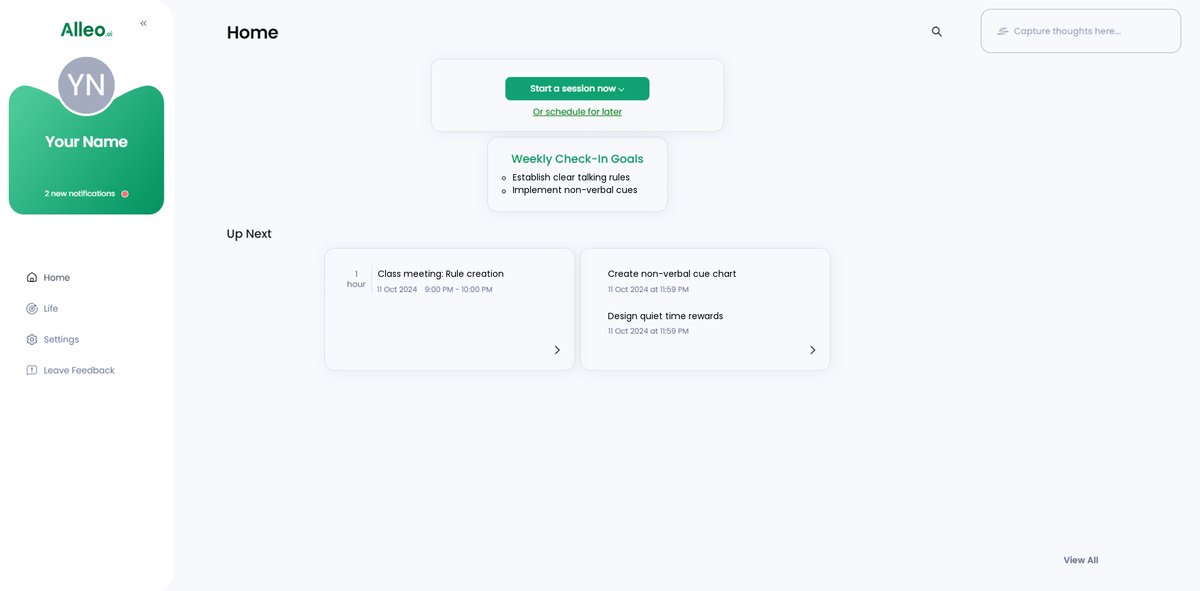
Step 5: Viewing and Managing Goals After the Session
After your coaching session, open the Alleo app to find your discussed classroom management goals conveniently displayed on the home page, allowing you to easily track and adjust your progress in creating a more focused learning environment.
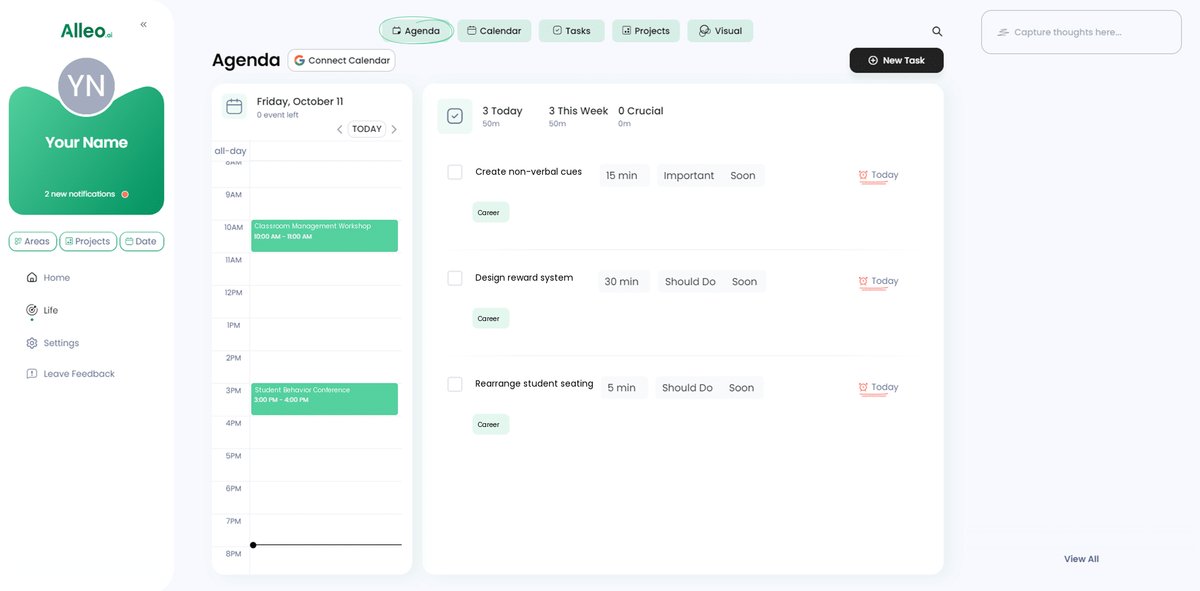
Step 6: Adding events to your calendar or app
Use the calendar and task features in Alleo to track your progress implementing classroom management strategies, allowing you to easily schedule and monitor activities like group discussions or one-on-one conversations with chatty students.
Bringing It All Together: Effective Strategies for a Peaceful Classroom
You’ve learned several strategies for managing talkative students effectively, from establishing clear rules to using non-verbal communication for teachers.
These classroom behavior management methods, when used together, create a harmonious and productive classroom environment.
Remember, every classroom is unique, and it’s important to find what student engagement techniques work best for you and your students.
Don’t get discouraged if progress is slow—consistency is key in setting classroom expectations.
Consider trying Alleo to help you implement these strategies for managing talkative students effectively and seamlessly.
With Alleo’s support, you’ll find maintaining a quiet and focused classroom much easier, improving noise control in classrooms.
Ready to take control of your classroom? Try Alleo for free today and enhance your time management for talkative classrooms!