6 Essential Strategies for Marketers to Conquer Information Overload in Digital Channels
Are you overwhelmed by the constant influx of notifications, emails, and data from multiple marketing channels? Managing marketing information overload can be a significant challenge for professionals in today’s digital landscape.
As a life coach, I’ve helped many professionals navigate these challenges. In my experience helping clients stand out in competitive industries, I often encounter the struggles of managing information overload, especially when it comes to digital marketing information management.
In this article, you’ll discover specific strategies to manage information overload in digital channels. We’ll cover actionable steps to prioritize KPIs, implement data-driven decision making for marketers, and explore content curation techniques. You’ll learn about social media analytics tools, email marketing optimization, and marketing automation solutions to streamline your processes.
Let’s dive in and explore effective methods for managing marketing information overload across various digital platforms.

Understanding the Pain of Information Overload for Marketers
In today’s fast-paced digital landscape, managing marketing information overload can be overwhelming. Many clients initially struggle with sifting through vast amounts of data from various digital marketing channels.
This constant barrage of notifications, emails, and updates makes it hard to focus on data-driven decision making for marketers. As a result, decision-making becomes less effective, and productivity suffers in digital marketing information management.
For instance, I’ve seen consultants fall behind on trends, leading to a dip in client satisfaction. This not only affects their current projects but also their reputation in the industry, highlighting the need for effective content curation techniques.
Navigating this flood of information is crucial for managing marketing information overload. Without a clear strategy, it’s easy to feel lost and overwhelmed by social media analytics tools and email marketing optimization.
So, what can you do?
Let’s dive into some actionable solutions for managing marketing information overload.

A Roadmap to Managing Information Overload for Marketers
Overcoming this challenge of managing marketing information overload requires a few key steps. Here are the main areas to focus on to make progress:
- Prioritize Key Performance Indicators (KPIs): Focus on metrics that align with your marketing goals and support data-driven decision making for marketers.
- Implement Data Segmentation for Focused Analysis: Segment data by demographics, behavior, and preferences to enhance customer segmentation in digital marketing.
- Use AI-Powered Tools for Trend Identification: Leverage AI to analyze data and identify trends, including social media analytics tools for comprehensive insights.
- Create a Content Curation System: Develop a content calendar and curate high-quality content using effective content curation techniques.
- Establish Cross-Department Data Sharing: Implement a centralized data repository for collaboration, facilitating digital marketing information management across teams.
- Set Up Real-Time Analytics Dashboards: Integrate real-time analytics tools for quick decision-making, utilizing marketing analytics dashboards for efficient monitoring.
Let’s dive in!
1: Prioritize key performance indicators (KPIs)
Prioritizing key performance indicators (KPIs) is crucial for managing marketing information overload and maintaining focus amidst the deluge of data.
Actionable Steps:
- Identify the most critical KPIs that support your marketing goals and digital marketing information management.
- Example: Focus on metrics like conversion rates, customer lifetime value, and ROI for data-driven decision making for marketers.
- Set up regular reviews to track these KPIs and adjust strategies accordingly using marketing analytics dashboards.
- Example: Hold monthly team meetings to review KPI performance and make data-driven decisions, incorporating SEO data analysis strategies.
Key benefits of prioritizing KPIs:
- Enhanced focus on crucial metrics for managing marketing information overload
- Improved decision-making process using social media analytics tools
- Alignment of team efforts with overall goals, including email marketing optimization
Explanation:
These steps matter because they help you concentrate on the most impactful metrics, enhancing decision-making and productivity while managing marketing information overload.
Regularly reviewing KPIs ensures your marketing efforts align with your goals and adapt to changing trends. For more insights on leveraging data-driven marketing, check out this article.
Implementing these steps can significantly reduce the noise and help you stay on track with your marketing objectives, utilizing content curation techniques and marketing automation solutions.

2: Implement data segmentation for focused analysis
Implementing data segmentation is essential for focused analysis and effective marketing strategies, especially when managing marketing information overload.
Actionable Steps:
- Segment your data by customer demographics, behavior, and preferences for digital marketing information management.
- Use CRM tools to categorize customers into specific segments for targeted marketing and data-driven decision making for marketers.
- Create tailored marketing campaigns for each segment to enhance relevance and engagement in digital channels.
- Personalize email campaigns based on customer purchase history and interests, utilizing email marketing optimization techniques.
Explanation:
These steps matter because they help you deliver more relevant content to your audience, boosting engagement and conversion rates while managing marketing information overload.
Data segmentation enables you to understand your customers better and tailor your messages accordingly, leveraging customer segmentation in digital marketing.
For more information on leveraging data-driven marketing, check out this article.
By implementing these steps, you can significantly improve the effectiveness of your marketing campaigns, ensuring they resonate with your audience and help in managing marketing information overload.
3: Use AI-powered tools for trend identification
Identifying trends with AI-powered tools is essential for managing marketing information overload and staying ahead in the competitive marketing landscape.
Actionable Steps:
- Leverage AI tools to analyze large datasets and identify emerging trends in digital marketing information management.
- Use predictive analytics to forecast market trends and adjust your strategy proactively, enhancing data-driven decision making for marketers.
- Automate routine data analysis tasks to save time and focus on strategic activities like content curation techniques.
- Set up automated reports using marketing analytics dashboards to get insights on key metrics without manual intervention.
Explanation:
These steps matter because they help you stay ahead of trends and make proactive decisions while managing marketing information overload.
By leveraging AI tools, you can quickly identify relevant trends and adjust your strategies accordingly, including social media analytics tools and email marketing optimization.
For more information on how AI can transform your marketing analytics, check out this article.
Incorporating AI tools into your strategy can significantly enhance your ability to manage information overload and stay competitive, especially in areas like SEO data analysis strategies and customer segmentation in digital marketing.
4: Create a content curation system
Establishing a content curation system is vital to managing marketing information overload effectively and keeping your audience engaged.
Actionable Steps:
- Develop a content calendar to organize and schedule high-quality content for digital marketing information management.
- Use tools like Trello or Asana to plan and manage your content pipeline.
- Curate content from reliable sources to keep your audience informed and engaged.
- Subscribe to industry newsletters and blogs to gather valuable content for sharing, aiding in data-driven decision making for marketers.
- Regularly review and update your curated content to ensure relevance and freshness.
- Set aside time weekly to assess your content and make necessary adjustments using content curation techniques.
Benefits of a well-structured content curation system:
- Consistent flow of high-quality content
- Improved audience engagement through personalization in digital channels
- Enhanced brand authority in your industry
Explanation:
These steps matter because they help you maintain a consistent content flow, ensuring your audience remains engaged and informed while managing marketing information overload.
A strategic content curation system allows you to focus on quality over quantity, which is crucial in today’s saturated digital landscape. It also facilitates customer segmentation in digital marketing.
For more advice on managing information overload, check out this article.
By implementing these steps, you can create a streamlined process that enhances your marketing effectiveness and audience engagement, utilizing marketing analytics dashboards for better insights.

5: Establish cross-department data sharing
Establishing cross-department data sharing is vital for cohesive and efficient marketing strategies, especially when managing marketing information overload.
Actionable Steps:
- Implement a centralized data repository accessible to all departments.
- Use cloud-based platforms like Google Drive or SharePoint for collaborative data sharing and digital marketing information management.
- Conduct regular cross-department meetings to discuss data insights and align strategies.
- Schedule quarterly strategy sessions involving marketing, sales, and customer support teams to facilitate data-driven decision making for marketers.
Explanation:
These steps matter because they foster collaboration and ensure all teams are aligned with the same goals when managing marketing information overload.
Sharing data across departments enhances decision-making and streamlines processes. For more insights, check out this article on effective data management strategies and content curation techniques.
By implementing these steps, you can improve communication and efficiency within your organization, leading to better overall performance in digital marketing information management.
6: Set up real-time analytics dashboards
Setting up real-time analytics dashboards is crucial for managing marketing information overload and staying responsive in a fast-paced marketing environment.
Actionable Steps:
- Integrate real-time analytics tools into your marketing technology stack.
- Use tools like Google Analytics or Tableau to create live dashboards for monitoring performance and managing digital marketing information.
- Customize dashboards to display the most relevant metrics for quick decision-making.
- Set up alerts for significant changes in key metrics to respond promptly and optimize data-driven decision making for marketers.
Key advantages of real-time analytics dashboards:
- Immediate access to critical data
- Faster response to market changes
- Data-driven decision making in real-time
Explanation:
These steps matter because they allow you to act on real-time data, improving your decision-making speed and accuracy when managing marketing information overload.
Customizable marketing analytics dashboards help you focus on the most critical metrics, ensuring you stay on top of trends and adjust strategies as needed, including SEO data analysis strategies and customer segmentation in digital marketing.
For more information on using analytics tools effectively, check out this article.
By implementing real-time analytics dashboards, you can enhance your ability to manage information overload and make informed decisions swiftly in your digital marketing efforts.

Partner with Alleo to Master Information Overload Management
We’ve explored the challenges of managing marketing information overload in digital channels. Solving them can boost your marketing effectiveness and improve data-driven decision making for marketers.
But did you know you can work directly with Alleo to streamline this process and enhance your digital marketing information management?
Setting up an account with Alleo is simple. You’ll create a personalized plan with our AI coach to tackle your specific challenges, including content curation techniques and social media analytics tools.
The coach will follow up on your progress, handle changes, and keep you accountable via text and push notifications, helping you optimize your email marketing and implement marketing automation solutions.
Ready to get started for free? Let me show you how to begin managing marketing information overload effectively!
Step 1: Log In or Create Your Account
To begin managing information overload with our AI coach, simply Log in to your account or create a new one if you’re new to Alleo.

Step 2: Choose “Building better habits and routines”
Select “Building better habits and routines” to create a structured approach for managing information overload, helping you establish consistent practices for prioritizing data, curating content, and leveraging analytics tools effectively in your marketing efforts.

Step 3: Select “Career” as Your Focus Area
Choose “Career” as your focus area to address information overload in your marketing role, enabling you to streamline your professional strategies and boost productivity in line with the article’s recommendations for managing digital marketing challenges.

Step 4: Starting a Coaching Session
Begin your journey with Alleo by participating in an initial intake session, where our AI coach will help you create a personalized plan to tackle information overload and optimize your marketing strategies.

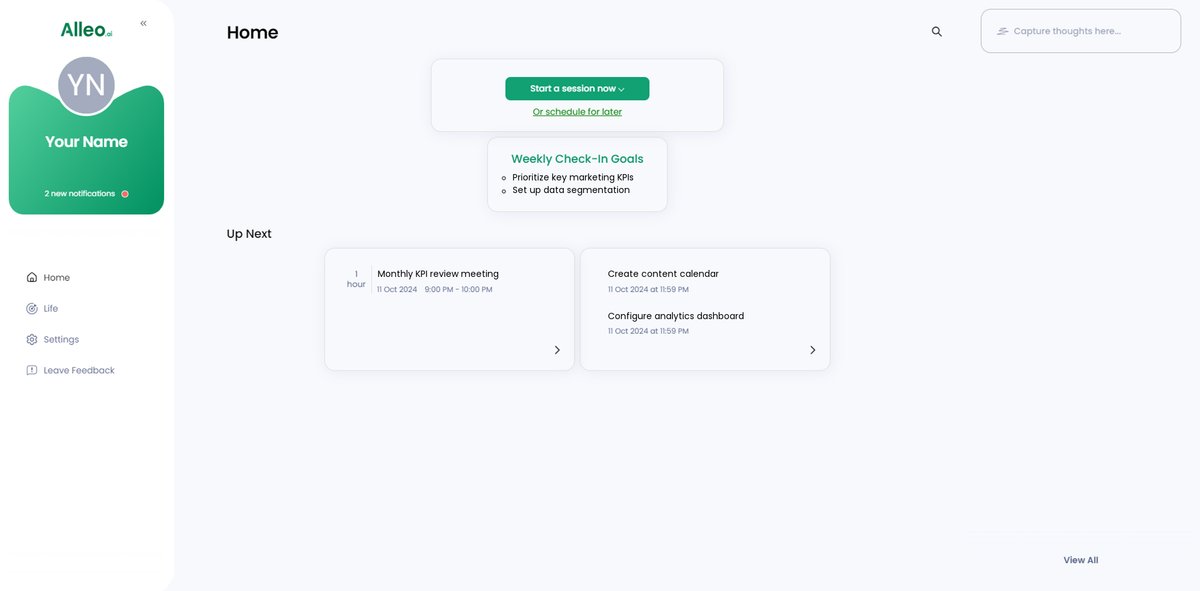
Step 5: Viewing and managing goals after the session
After your coaching session, open the Alleo app to find your discussed goals prominently displayed on the home page, allowing you to easily track and manage your progress towards overcoming information overload in your marketing efforts.
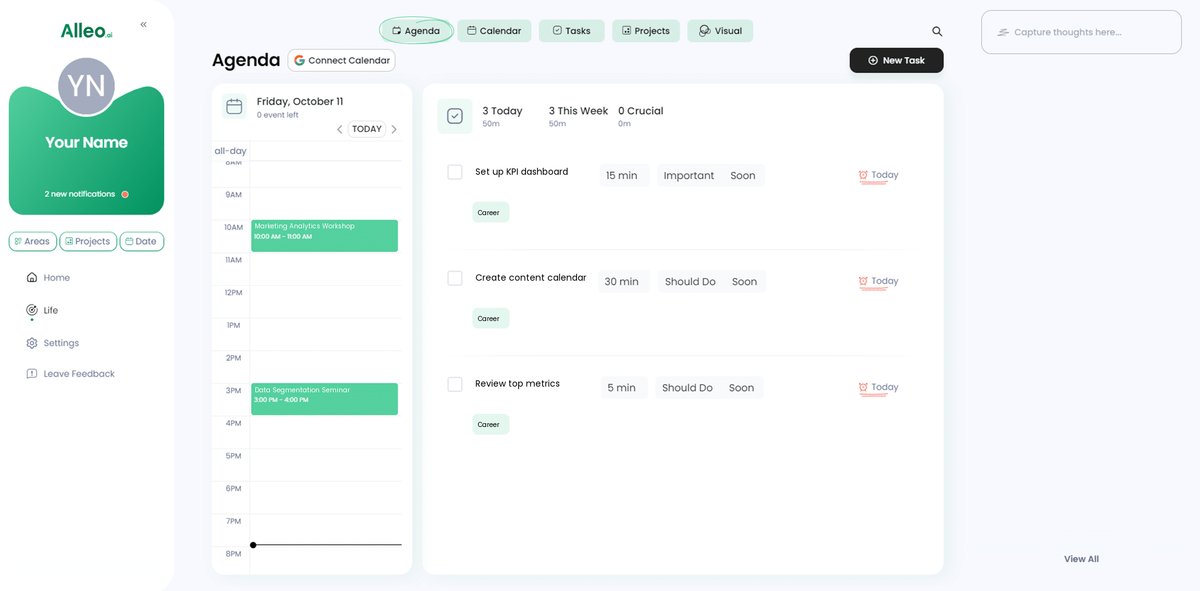
Step 6: Adding events to your calendar or app
Utilize the calendar and task features in the Alleo app to track your progress in managing information overload, allowing you to add events, set reminders, and monitor your advancement towards your marketing goals.
Empowering Your Marketing Strategy
As we wrap up, remember the importance of prioritizing KPIs, segmenting data, and using AI tools. These steps help you manage marketing information overload effectively.
Create a content curation system and establish cross-department data sharing. This ensures your digital marketing information management efforts are cohesive and impactful.
Setting up real-time marketing analytics dashboards keeps you responsive. This is key in a fast-paced environment for data-driven decision making for marketers.
You’re not alone in managing marketing information overload. With Alleo, you can tackle these challenges confidently, from SEO data analysis strategies to customer segmentation in digital marketing.
Start today and see how Alleo can streamline your marketing efforts and optimize your digital channels. Ready to make a change in managing marketing information overload?
Try Alleo for free.