6 Essential Strategies for Mastering Persuasion Skills in the Workplace
Are you struggling to improve workplace persuasion skills and effectively persuade your colleagues and clients?
As a life coach, I’ve helped many professionals navigate these challenges. In my experience helping clients stand out in competitive industries, I often encounter common hurdles related to persuasion skills and effective communication techniques.
In this post, you’ll discover proven strategies to stand out and accelerate your career growth. We’ll cover actionable steps to enhance your persuasion techniques, from active listening for better persuasion to developing emotional intelligence in business.
Ready to transform your communication skills and master workplace negotiation tactics? Let’s dive in.

The Impact of Poor Persuasion Skills in the Workplace
Many professionals face significant challenges due to weak persuasion skills. In meetings, you might struggle to get your ideas across, leading to missed opportunities to improve workplace persuasion skills.
This can be incredibly frustrating.
When giving presentations, lacking persuasive presentation skills can result in disengaged audiences. Your message might not resonate, impacting your ability to influence decision-makers.
Workplace negotiation tactics become tougher too.
I’ve seen clients lose potential business deals because they couldn’t effectively communicate their value. This not only affects your career growth but also hampers business outcomes, highlighting the importance of emotional intelligence in business.
Enhancing your persuasion skills is crucial for success in building rapport with colleagues and overcoming objections in the workplace.
Key Strategies to Enhance Persuasion Skills
Overcoming this challenge to improve workplace persuasion skills requires a few key steps. Here are the main areas to focus on to make progress in effective communication techniques.
- Practice Active Listening Techniques: Improve your listening habits through workshops and role-playing exercises to enhance active listening for better persuasion.
- Develop Emotional Intelligence Skills: Enroll in courses and practice mindfulness to enhance self-awareness and empathy, boosting emotional intelligence in business.
- Master the Art of Storytelling in Presentations: Join a public speaking club and use multimedia to convey your message, honing your persuasive presentation skills.
- Use Data and Evidence to Support Arguments: Incorporate data-driven insights and visualization tools in your presentations to develop a compelling argument.
- Build Rapport through Body Language and Tone: Refine non-verbal cues with communication coaching and practice mirroring techniques to improve body language and nonverbal communication.
- Tailor Persuasion Approach to Each Audience: Conduct audience analysis and customize your message for different segments, helping you in influencing decision-makers and overcoming objections in the workplace.
Let’s dive in to improve workplace persuasion skills and master workplace negotiation tactics!
1: Practice active listening techniques
Active listening is crucial to improve workplace persuasion skills, leading to more effective communication techniques with colleagues and clients.
Actionable Steps:
- Attend a workshop on active listening for better persuasion to learn and practice essential techniques.
- Implement a daily reflection journal to assess and improve your listening habits and workplace negotiation tactics.
- Engage in role-playing exercises with a peer to simulate real-life scenarios and practice building rapport with colleagues.
Explanation: These steps matter because they help you become more attuned to others’ needs and perspectives, making your communication more persuasive and enhancing your emotional intelligence in business.
According to a study by Harvard Business Review, active listening significantly enhances workplace collaboration and decision-making.
Key benefits of active listening include:
- Improved understanding of others‘ viewpoints
- Enhanced ability to build trust and rapport
- Increased effectiveness in problem-solving discussions and influencing decision-makers
Improving your active listening skills will set a strong foundation for other strategies to improve workplace persuasion skills that we will discuss.

2: Develop emotional intelligence skills
Enhancing your emotional intelligence is crucial for effectively persuading colleagues and clients in professional settings, helping you improve workplace persuasion skills.
Actionable Steps:
- Enroll in an online course focused on emotional intelligence in business and its application in the workplace.
- Partner with a mentor to receive feedback and guidance on emotional responses and building rapport with colleagues.
- Practice mindfulness techniques to enhance self-awareness and empathy, key components of effective communication techniques.
Explanation: These steps are important because they help you understand and manage your emotions, leading to better relationships and persuasive communication in the workplace.
According to a study by the World Economic Forum, high emotional intelligence significantly improves leadership effectiveness and team performance, which is essential for influencing decision-makers.
Developing emotional intelligence will enhance your ability to connect with others and influence their decisions, a crucial aspect of workplace negotiation tactics.
Improving your emotional intelligence lays a strong foundation for mastering other persuasion techniques and improving workplace persuasion skills overall.

3: Master the art of storytelling in presentations
Mastering the art of storytelling in presentations is essential to captivate your audience and improve workplace persuasion skills, making your message memorable.
Actionable Steps:
- Join a public speaking club to hone storytelling skills and receive constructive feedback on your persuasive presentation skills.
- Create a library of compelling stories relevant to your industry and practice integrating them into your presentations to enhance your workplace negotiation tactics.
- Use visual aids and multimedia to enhance the impact of your stories and improve your ability in influencing decision-makers.
Explanation: These steps matter because they help make your presentations more engaging and persuasive. Effective storytelling can significantly improve how your audience connects with your message, which is crucial for developing a compelling argument.
According to a study by the Harvard Business Review, stories are up to 22 times more memorable than facts alone. By enhancing your storytelling skills, you can make a lasting impression and better influence your audience, thus improving workplace persuasion skills.
Elements of a compelling story include:
- A relatable protagonist or situation that helps in building rapport with colleagues
- A clear conflict or challenge that demonstrates emotional intelligence in business
- A resolution that ties to your message and showcases effective communication techniques
Improving your storytelling skills will set a strong foundation for the other strategies we will discuss, including active listening for better persuasion and using body language and nonverbal communication effectively.

4: Use data and evidence to support arguments
Using data and evidence to support your arguments is crucial for improving workplace persuasion skills and making a compelling case in professional settings.
Actionable Steps:
- Take a data analysis course to learn how to gather and interpret relevant data effectively, enhancing your persuasive presentation skills.
- Develop a habit of incorporating data-driven insights into your proposals and presentations, strengthening your workplace negotiation tactics.
- Use data visualization tools to present your arguments more compellingly, influencing decision-makers in the workplace.
Explanation: These steps matter because they help you back up your claims with solid evidence, making your arguments more credible and improving workplace persuasion skills.
According to a study by McKinsey, data-driven organizations are 23 times more likely to acquire customers.
Enhancing your ability to use data will make your arguments stronger and more persuasive, contributing to effective communication techniques in the workplace.
Mastering the use of data and evidence will strengthen your overall persuasion strategy and help in developing a compelling argument.

5: Build rapport through body language and tone
Building rapport through body language and tone is crucial for improving workplace persuasion skills and effectively persuading colleagues and clients.
Actionable Steps:
- Work with a communication coach to refine your body language and nonverbal communication skills.
- Record and review your persuasive presentations to identify and improve non-verbal cues.
- Practice mirroring techniques to build rapport with colleagues and enhance workplace negotiation tactics.
Explanation: These steps matter because they help you convey confidence and empathy, making your communication more persuasive. According to a study by Forbes, non-verbal cues significantly impact how messages are received and interpreted.
Improving your body language and tone will enhance your ability to connect with others and influence decision-makers in the workplace.
Key aspects of effective non-verbal communication to improve workplace persuasion skills:
- Maintaining appropriate eye contact
- Using open and confident posture
- Matching your tone to the message and audience
Mastering these skills will strengthen your overall persuasion strategy and emotional intelligence in business.
6: Tailor persuasion approach to each audience
Tailoring your persuasion approach to each audience is crucial for effectively influencing colleagues, clients, and stakeholders, and is a key aspect of how to improve workplace persuasion skills.
Actionable Steps:
- Conduct audience analysis before key meetings to understand their interests and concerns, enhancing your workplace negotiation tactics.
- Customize your message to resonate with different audience segments, leveraging effective communication techniques.
- Seek feedback from diverse groups to refine your approach continuously, building rapport with colleagues.
Explanation: Understanding your audience’s preferences and needs ensures your message hits the mark, making your communication more effective and improving workplace persuasion skills.
Tailoring your approach can significantly boost engagement and influence, a crucial aspect of persuasive presentation skills.
According to a study by Harvard Business Review, personalized communication strategies are more likely to yield positive responses.
This customization will strengthen your overall persuasion strategy and help in influencing decision-makers.

Elevate Your Persuasion Skills with Alleo
We’ve explored how improving your workplace persuasion skills can boost your career. Did you know Alleo can make this journey easier, helping you master effective communication techniques?
Setting up an account is simple. Create a personalized plan tailored to your needs, focusing on workplace negotiation tactics and building rapport with colleagues.
Alleo’s AI coach assists you in overcoming specific challenges, such as developing emotional intelligence in business and enhancing persuasive presentation skills. The coach follows up on your progress and adjusts the plan as needed, helping you in influencing decision-makers.
You’ll receive reminders via text and push notifications to keep you accountable, encouraging you to practice active listening for better persuasion and refine your body language and nonverbal communication.
Ready to get started for free and improve your workplace persuasion skills? Let me show you how to overcome objections in the workplace and develop compelling arguments!
Step 1: Log In or Create Your Account
To start enhancing your persuasion skills with our AI coach, log in to your account or create a new one if you’re new to Alleo.

Step 2: Choose Your Focus Area
Select “Setting and achieving personal or professional goals” to align with your persuasion skill development journey, helping you target specific areas like active listening or emotional intelligence that will enhance your ability to influence others effectively.

Step 3: Select “Career” as Your Focus Area
Choose “Career” as your focus area to directly address your persuasion skill challenges and accelerate your professional growth. By selecting this life area, you’ll receive tailored guidance from our AI coach to enhance your communication abilities, helping you stand out in meetings, presentations, and negotiations.

Step 4: Starting a coaching session
Begin your journey with Alleo by scheduling an initial intake session, where our AI coach will help you create a personalized plan to enhance your persuasion skills based on the strategies discussed in this article.

Step 5: Viewing and Managing Goals After the Session
After your coaching session, you’ll find the persuasion goals you discussed conveniently displayed on the Alleo app’s home page, allowing you to easily track and manage your progress in enhancing your communication skills.
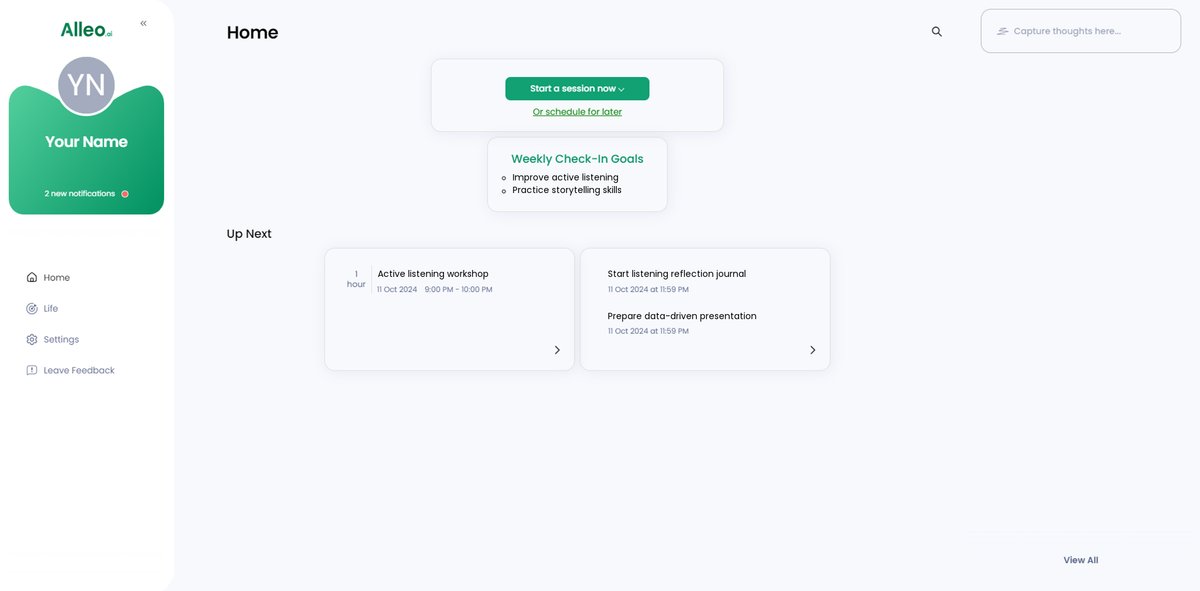
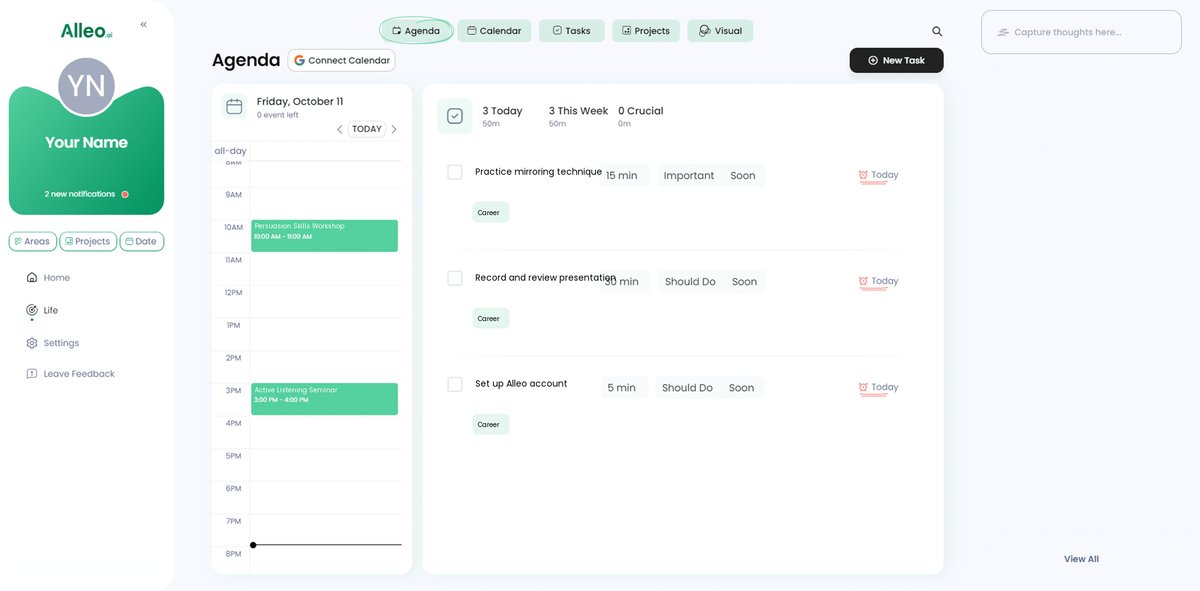
Step 6: Adding events to your calendar or app
Use Alleo’s calendar and task features to track your progress in improving your persuasion skills by adding key events, such as practice sessions or workshops, ensuring you stay on top of your personal development journey.
Take Action and Transform Your Persuasion Skills
With all these strategies, you’re now equipped to improve workplace persuasion skills and enhance your influence in professional settings.
Remember, even small steps can lead to significant improvements in your effective communication techniques.
You have the power to influence decision-makers and succeed in workplace negotiations.
Don’t let the lack of persuasion skills hold you back any longer from building rapport with colleagues.
Implement the actionable steps we’ve discussed, including active listening for better persuasion.
And for additional support in developing compelling arguments, try Alleo for free.
Our AI coach is here to guide you in mastering persuasive presentation skills.
Embrace the journey of improving your emotional intelligence in business, and watch your career soar.