6 Powerful Steps to Manage Emotional Reactions for Healthier Relationships
Are you struggling to manage your emotions in relationships, especially in stressful situations at work or in your personal life? Managing emotions in relationships is a crucial skill for maintaining healthier connections.
As a life coach, I’ve helped many healthcare professionals navigate these challenges. In my experience, developing emotional intelligence and self-awareness is essential for improving communication skills and conflict resolution in relationships.
In this article, you’ll discover effective strategies to control your emotions, enhance your communication skills, and establish healthier boundaries. These techniques draw from mindfulness practices and cognitive behavioral therapy principles.
Let’s dive in.
The Struggle with Emotional Reactions
Facing unmanaged emotional reactions can be overwhelming and lead to severe consequences. Many clients initially struggle with managing emotions in relationships, which often results in lashing out or emotional withdrawal.
This issue is particularly challenging for healthcare professionals. They work in high-stress environments and must regulate their emotions to maintain professional and personal relationships. Developing emotional intelligence and stress management skills is crucial in these settings.
Uncontrolled emotions can damage connections, leading to a cycle of regret and frustration. In my experience, people often find that poor emotional control exacerbates conflicts, causing a significant strain on relationships. Effective conflict resolution and communication skills are essential for managing emotions in relationships.
It’s a painful problem that demands urgent attention. Relationship counseling and cognitive behavioral therapy can provide valuable tools for improving emotional regulation.

High-Level Approach to Managing Emotional Reactions
Overcoming this challenge in managing emotions in relationships requires a few key steps. Here are the main areas to focus on to make progress:
- Practice Mindfulness to Increase Self-Awareness: Dedicate time to mindfulness techniques daily to enhance emotional intelligence.
- Identify Emotional Triggers and Patterns: Keep a daily log of emotional reactions for better stress management.
- Learn and Apply De-Escalation Techniques: Practice deep breathing exercises to calm down and improve conflict resolution skills.
- Develop Healthy Communication Skills: Use “I” statements to express feelings without blaming, fostering empathy development.
- Establish Clear Boundaries in Relationships: Have an open conversation about personal boundaries for effective anger management.
- Seek Professional Therapy or Counseling: Schedule an initial consultation with a therapist for relationship counseling or cognitive behavioral therapy.
Let’s dive in to explore these strategies for managing emotions in relationships!
1: Practice mindfulness to increase self-awareness
Practicing mindfulness is essential to increase self-awareness and manage emotional reactions effectively, especially when it comes to managing emotions in relationships.
Actionable Steps:
- Dedicate 10 minutes daily to mindfulness meditation for better emotional intelligence.
- Use a mindfulness app or journal to track daily emotions and identify patterns in your relationships.
- Attend a mindfulness workshop or online course to deepen your practice of managing emotions in relationships.
Explanation: Practicing mindfulness helps you become more aware of your emotional triggers and patterns, improving your self-awareness and communication skills.
By dedicating time to meditation and tracking your emotions, you can better understand your reactions and work towards healthier responses in your relationships.
Engaging in workshops or online courses can provide additional support and techniques for managing emotions in relationships. For more insights on mindfulness and its benefits, check out this guide on emotional control.
Incorporating mindfulness techniques into your daily routine can pave the way for better emotional regulation, stress management, and healthier relationships.

2: Identify emotional triggers and patterns
Understanding your emotional triggers and patterns is essential for managing emotions in relationships effectively.
Actionable Steps:
- Keep a daily log: Track your emotional reactions, noting triggers and context to improve self-awareness.
- Reflect on past conflicts: Identify common triggers and patterns in your responses to enhance conflict resolution skills.
- Set aside reflection time: Review and analyze emotional responses weekly to develop emotional intelligence.
Explanation: Identifying triggers helps you anticipate and manage emotional reactions in relationships.
By reflecting on past conflicts and tracking emotions, you can pinpoint patterns and work on healthier responses, improving your communication skills.
For more insights, visit this guide on managing emotional triggers.
Recognizing your emotional patterns can pave the way for improved emotional regulation and healthier relationships through mindfulness techniques and stress management.

3: Learn and apply de-escalation techniques
Learning and applying de-escalation techniques can help you manage emotions in relationships and reduce emotional reactions effectively, enhancing your emotional intelligence.
Actionable Steps:
- Practice deep breathing exercises: Take slow, deep breaths to calm yourself in moments of high stress, improving stress management.
- Use visualization techniques: Imagine peaceful scenarios to regain composure during emotional escalations, a key aspect of mindfulness techniques.
- Develop a personal mantra: Use a phrase like “Pause, Breathe, Proceed” during triggering situations to aid in anger management.
Key benefits of de-escalation techniques:
- Reduces stress and anxiety
- Improves emotional control and self-awareness
- Enhances interpersonal relationships and communication skills
Explanation: These techniques help you control emotional reactions, preventing escalation and promoting conflict resolution.
Deep breathing and visualization can calm your mind, while a mantra provides a quick mental reset, all crucial for managing emotions in relationships.
According to this guide on emotional regulation, practicing such techniques can improve overall well-being.
Incorporating these strategies can significantly enhance your ability to manage stress and maintain healthier relationships, which is essential for managing emotions in relationships effectively.

4: Develop healthy communication skills
Developing healthy communication skills is essential for managing emotions in relationships and fostering emotional intelligence.
Actionable Steps:
- Practice active listening: Focus entirely on your partner’s words without interrupting, showing empathy and understanding.
- Use “I” statements: Express your feelings without placing blame (e.g., “I feel hurt when…”), which aids in conflict resolution.
- Seek feedback: Ask your partner for input on how you can improve your communication methods and enhance self-awareness.
Explanation: Effective communication fosters understanding and reduces conflicts in relationships, promoting better emotional management.
By actively listening and using “I” statements, you can express your emotions constructively, a key aspect of managing emotions in relationships.
Seeking feedback helps you grow and adjust your communication style. For more tips, explore this guide on controlling emotions in relationships.
Improving your communication skills can strengthen your relationships and enhance emotional well-being, contributing to overall stress management and relationship satisfaction.
5: Establish clear boundaries in relationships
Establishing clear boundaries in relationships is vital for managing emotions in relationships and fostering healthier connections. It’s a key aspect of emotional intelligence and self-awareness.
Actionable Steps:
- Have an open conversation: Discuss personal boundaries with your partner to ensure mutual understanding and respect, enhancing communication skills.
- Create a list of non-negotiables: Identify and communicate boundaries that are essential for your emotional well-being and stress management.
- Regularly review boundaries: Revisit and adjust boundaries as needed to maintain a healthy relationship dynamic and practice conflict resolution.
Signs of healthy boundaries in relationships:
- Mutual respect for personal space and time
- Open communication about needs and expectations
- Ability to say “no” without guilt or fear, demonstrating effective anger management
Explanation: Establishing boundaries helps prevent misunderstandings and emotional strain in relationships. Open conversations and regular reviews ensure that both partners respect each other’s needs, fostering empathy development.
For more strategies on maintaining emotional balance, explore this guide on controlling emotions in relationships.
Clear boundaries contribute to healthier interactions and a more supportive relationship environment, which is crucial for managing emotions in relationships effectively.

6: Seek professional therapy or counseling
Seeking professional therapy or counseling is vital for effectively managing emotions in relationships and enhancing overall relationship health.
Actionable Steps:
- Schedule an initial consultation: Contact a therapist specializing in emotional regulation and relationship counseling to discuss your needs and goals.
- Join a support group: Connect with individuals facing similar challenges in emotional management to share experiences and strategies for improving emotional intelligence.
- Explore different therapy options: Investigate therapies like Cognitive Behavioral Therapy (CBT) or Dialectical Behavior Therapy (DBT) to find the best fit for managing emotions in relationships.
How therapy can improve emotional management:
- Provides personalized coping strategies for stress management and conflict resolution
- Helps identify and challenge negative thought patterns, enhancing self-awareness
- Offers a safe space for emotional exploration and growth, fostering empathy development
Explanation: Professional therapy provides tailored strategies and support for managing emotions in relationships. Therapies like CBT and DBT are effective in improving emotional regulation and communication skills.
According to Additude Magazine, these approaches can significantly enhance emotional well-being and relationship health.
Consider these steps to make meaningful progress in your emotional management journey and improve your ability to manage emotions in relationships.

Partner with Alleo to Master Emotional Management
We’ve explored the challenges of managing emotions in relationships. But did you know you can work directly with Alleo to make this journey of developing emotional intelligence easier and faster?
Alleo is an AI life coach that offers affordable, tailored coaching support for improving communication skills and self-awareness. You can start with a free 14-day trial, requiring no credit card.
Set up an account, create a personalized plan, and work with Alleo’s coach to overcome emotional challenges and enhance conflict resolution. The coach will follow up on your progress, handle changes, and keep you accountable via text and push notifications, helping you develop mindfulness techniques for stress management.
Ready to get started for free? Let me show you how to begin your journey towards better managing emotions in relationships!
Step 1: Log In or Create Your Account
To begin your journey towards better emotional management, log in to your Alleo account or create a new one to access personalized AI coaching support.

Step 2: Choose “Improving overall well-being and life satisfaction”
Select “Improving overall well-being and life satisfaction” as your goal to address emotional reactions and enhance your relationships, aligning with the strategies discussed in the article for better emotional management and communication skills.

Step 3: Selecting the life area you want to focus on
Choose the “Personal” life area to address your emotional reactions, as it directly relates to managing your feelings and improving relationships, aligning with the strategies discussed in the article for better emotional control and healthier connections.

Step 4: Starting a Coaching Session
Begin your journey with Alleo by scheduling an intake session to discuss your emotional management goals and create a personalized plan for improving your relationships.

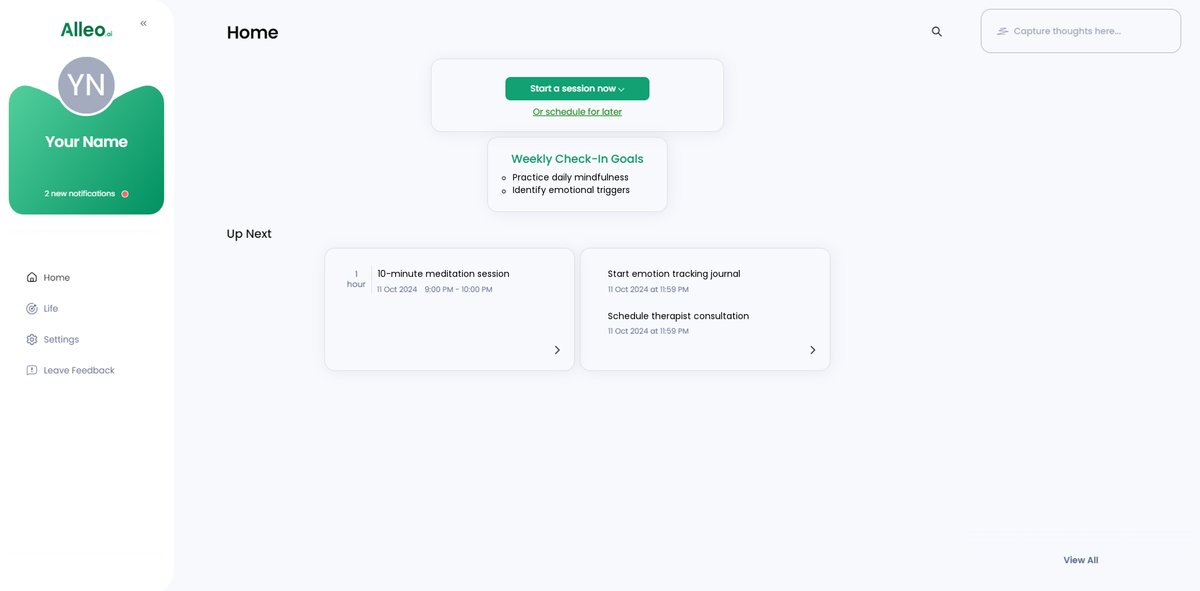
Step 5: Viewing and managing goals after the session
After your coaching session on managing emotional reactions, check the app’s home page to review and track the personalized goals you discussed with Alleo, helping you stay focused on improving your emotional regulation and relationship skills.
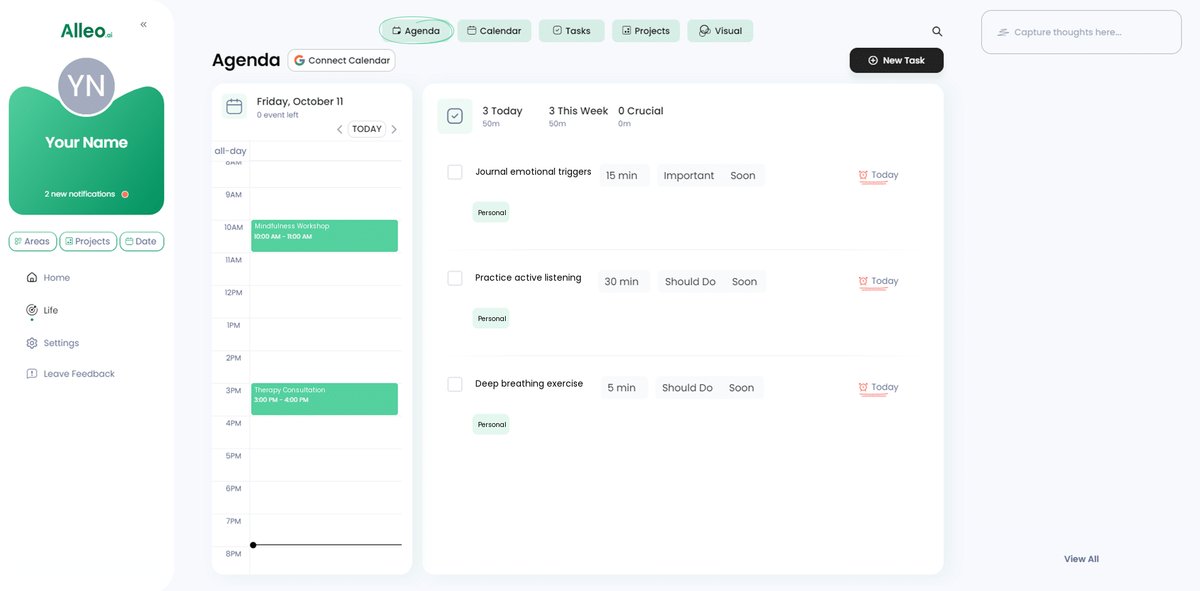
Step 6: Adding events to your calendar or app
Use Alleo’s calendar and task features to schedule and track your progress in managing emotional reactions, such as mindfulness sessions, therapy appointments, or boundary-setting conversations, helping you stay accountable and measure your improvement over time.
Final Thoughts on Managing Emotional Reactions
Addressing emotional reactions is a crucial step toward healthier relationships and a more balanced life. Managing emotions in relationships is essential for long-term happiness.
By practicing mindfulness techniques, identifying triggers, and learning de-escalation techniques, you can gain better control over your emotions and improve your emotional intelligence.
Effective communication skills and establishing boundaries further support emotional well-being and aid in conflict resolution.
Seeking professional therapy or relationship counseling offers additional guidance and tools for managing emotions and developing self-awareness.
Empathy development and self-awareness are key to fostering stronger connections and improving stress management.
Remember, Alleo is here to help. Our AI life coach can support you in this journey of managing emotions in relationships, providing personalized advice and tracking your progress.
Take the first step. Try Alleo for free and start transforming your relationships today through improved emotional intelligence and communication skills.