6 Powerful Strategies for Assigning Leadership Roles to Rookies Without Causing Conflict
Imagine leading a rookie team brimming with potential but struggling with assigning rookie leadership roles without causing friction.
As a life coach, I’ve helped many professionals navigate these challenges. In my experience guiding clients through team dynamics with new managers, I often encounter issues around leadership roles and mentoring new leaders.
In this article, you’ll discover actionable strategies for rookie leadership development without causing conflict. We’ll explore transparent criteria, rotation systems, gradual responsibility allocation, and more to empower first-time leaders.
Let’s dive into collaborative leadership approaches and peer support for new managers.

Navigating the Complexities of Rookie Team Leadership
Assigning rookie leadership roles in a new team is a delicate balancing act. It’s common to see conflicts arise from perceptions of favoritism or unclear criteria when mentoring new leaders.
These issues can erode trust and team dynamics with new managers.
Many clients initially struggle with jealousy among team members during leadership transitions. This often leads to decreased morale and productivity, highlighting the need for conflict resolution in leadership transitions.
In my experience, establishing fair role assignments without a clear strategy for rookie leadership development can be chaotic. It’s essential to avoid pitfalls like inconsistent criteria and lack of transparency when empowering first-time leaders.
By addressing these challenges head-on, you can foster a collaborative leadership approach and supportive team environment. Remember, the goal is to empower everyone to contribute their best, balancing experience and fresh perspectives in assigning rookie leadership roles.

Key Actions for Assigning Leadership Roles to Rookies Without Conflict
Overcoming this challenge of assigning rookie leadership roles requires a few key steps. Here are the main areas to focus on to make progress in rookie leadership development.
- Implement transparent role selection criteria: Use clear, objective criteria for leadership roles when assigning rookie leadership roles.
- Rotate leadership responsibilities periodically: Schedule regular rotations for leadership roles to balance experience and fresh perspectives.
- Offer mentoring for aspiring rookie leaders: Pair rookies with experienced mentors for guidance, focusing on mentoring new leaders.
- Create collaborative decision-making processes: Involve the team in decisions through meetings and voting, promoting collaborative leadership approaches.
- Provide leadership training for all team members: Organize workshops and offer training resources for empowering first-time leaders.
- Establish a peer nomination system for roles: Use anonymous nominations and fair review processes to enhance peer support for new managers.
Let’s dive in to explore these strategies for assigning rookie leadership roles!
1: Implement transparent role selection criteria
Creating transparent role selection criteria is crucial for maintaining fairness and trust when assigning rookie leadership roles within your team.
Actionable Steps:
- Define clear criteria: Establish specific, objective criteria like skills, experience, and teamwork for each leadership role, focusing on rookie leadership development.
- Communicate criteria: Hold a team meeting or send a detailed email to explain the criteria to everyone, emphasizing the importance of mentoring new leaders.
- Apply criteria consistently: Use a scoring system to evaluate candidates, ensuring no exceptions are made, which helps in balancing experience and fresh perspectives.
Explanation:
These steps help to build trust and reduce potential conflicts over role assignments, particularly when assigning rookie leadership roles.
By making the criteria transparent, everyone knows what is expected, which aligns with best practices in leadership development and supports gradual responsibility allocation for first-time leaders.
This approach sets the foundation for a fair and structured team environment, promoting collaborative leadership approaches and peer support for new managers.

2: Rotate leadership responsibilities periodically
Rotating leadership responsibilities periodically helps to ensure that all team members gain valuable experience and prevent burnout while assigning rookie leadership roles.
Actionable Steps:
- Set a fixed rotation period: Establish a rotation schedule, such as every 3-6 months, and share it with the team, focusing on gradual responsibility allocation for rookie leadership development.
- Assign temporary leadership roles: Allow team members to lead smaller projects to build confidence and skills, empowering first-time leaders through collaborative leadership approaches.
- Provide feedback after each rotation: Conduct performance reviews and hold one-on-one meetings to discuss progress and areas for improvement, mentoring new leaders throughout the process.
Explanation:
These steps matter because they promote fairness and development within the team. By rotating roles, you create opportunities for everyone to lead and learn, balancing experience and fresh perspectives.
This approach also aligns with best practices in leadership development, as highlighted by comprehensive supervisory training.
Encouraging rotation fosters a culture of continuous growth and shared responsibility, which can enhance team dynamics with new managers and improve overall performance. This method also provides peer support for new managers and aids in conflict resolution during leadership transitions.
3: Offer mentoring for aspiring rookie leaders
Mentoring aspiring rookie leaders is key to fostering growth and building confidence in new team members when assigning rookie leadership roles.
Actionable Steps:
- Pair aspiring leaders with experienced mentors: Create a mentor-mentee matching program to provide guidance and support for rookie leadership development.
- Set up regular mentoring sessions: Schedule bi-weekly check-ins to discuss leadership skills and tackle challenges in team dynamics with new managers.
- Encourage mentees to set development goals: Use a goal-setting framework to track progress and celebrate achievements in empowering first-time leaders.
Explanation:
These steps are vital because they provide structured support and promote continuous development in collaborative leadership approaches.
Mentoring aligns with best practices in leadership, as highlighted by professional development programs.
By fostering mentorship, you create a nurturing environment that helps rookies thrive and balance experience with fresh perspectives.
Mentoring is a powerful tool to ensure your team’s future leaders are well-prepared and confident in their roles when assigning rookie leadership roles.

4: Create collaborative decision-making processes
Creating collaborative decision-making processes is key to fostering inclusivity and shared ownership within your team, especially when assigning rookie leadership roles.
Actionable Steps:
- Involve the team in decision-making: Arrange regular meetings for brainstorming and group discussions, supporting rookie leadership development.
- Implement voting techniques: Use a simple voting system for key decisions to ensure everyone has a say, empowering first-time leaders.
- Foster an inclusive environment: Rotate meeting facilitators to encourage diverse participation and balance experience with fresh perspectives.
Explanation:
These steps matter because they promote inclusivity and shared responsibility, which enhance team dynamics with new managers. By involving everyone in decisions, you reduce biases and increase engagement, supporting peer support for new managers.
This approach aligns with industry practices, such as those found in collaborative workforce development. Inclusive decision-making fosters trust and ensures that all voices are heard, crucial when mentoring new leaders.
Effective collaboration can significantly boost team morale and productivity, essential for gradual responsibility allocation in rookie leadership roles.

5: Provide leadership training for all team members
Providing leadership training for all team members, including those in rookie leadership roles, ensures that everyone has the skills needed to lead effectively. This approach is crucial for empowering first-time leaders and promoting collaborative leadership approaches.
Actionable Steps:
- Organize workshops and training sessions: Schedule regular workshops on key leadership skills, focusing on rookie leadership development. Invite external trainers or utilize online courses for mentoring new leaders.
- Encourage attendance at leadership conferences: Offer financial support or time off for team members to attend leadership seminars and conferences, which can help in balancing experience and fresh perspectives.
- Create a leadership resource library: Build a collection of books, articles, and videos on leadership topics for team members to access, including resources on conflict resolution in leadership transitions.
Key benefits of leadership training include:
- Enhanced team performance and team dynamics with new managers
- Improved decision-making skills for those assigning rookie leadership roles
- Increased employee engagement through gradual responsibility allocation
Explanation:
These steps matter because they promote continuous learning and skill development. Offering varied training opportunities ensures that all team members, including those in rookie leadership roles, are well-equipped to lead.
This approach aligns with industry standards, as highlighted by supervisory foundations programs. Equipping your team with the right tools and knowledge can significantly enhance overall team performance and morale, especially when assigning rookie leadership roles.
Leadership training empowers your team, prepares them for future challenges, and fosters peer support for new managers.
6: Establish a peer nomination system for roles
Establishing a peer nomination system for roles can enhance inclusivity and fairness when assigning rookie leadership roles within your team.
Actionable Steps:
- Allow team members to nominate peers: Use anonymous nomination forms to gather input for mentoring new leaders.
- Implement a fair review process: Form a committee to review and validate the nominations objectively, focusing on rookie leadership development.
- Recognize and reward based on peer feedback: Hold an award ceremony or send appreciation notes to acknowledge contributions and empower first-time leaders.
Effective peer nomination systems often incorporate:
- Clear nomination criteria for balancing experience and fresh perspectives
- Transparent evaluation processes for collaborative leadership approaches
- Regular feedback loops to support team dynamics with new managers
Explanation:
These steps matter because they foster a sense of community and fairness. By involving peers in the nomination process, you ensure that leadership roles are assigned based on merit and collective input, supporting gradual responsibility allocation.
This aligns with best practices in leadership as highlighted by supervisory training programs.
A peer nomination system encourages a supportive team culture, enhances overall morale, and provides peer support for new managers in their leadership training for rookies.
Transform Team Leadership with Alleo
We’ve explored strategies for assigning leadership roles to rookies without causing conflict. Did you know you can work with Alleo to make this process of assigning rookie leadership roles smoother and more efficient?
Setting up an account with Alleo is easy. First, create a personalized plan tailored to your team’s needs for rookie leadership development and mentoring new leaders.
Our AI coach will guide you through transparent criteria, rotation schedules, and mentoring programs to empower first-time leaders and balance experience with fresh perspectives.
Alleo’s coach follows up on your progress and adjusts plans as needed. Stay accountable with text and push notifications, ensuring you stay on track with gradual responsibility allocation and collaborative leadership approaches.
Ready to get started for free? Let me show you how to enhance team dynamics with new managers!
Step 1: Log In or Create Your Alleo Account
To start implementing transparent leadership assignments for your rookie team, log in to your Alleo account or create a new one if you haven’t already.

Step 2: Choose Your Focus Area
Select “Setting and achieving personal or professional goals” to align your leadership development with clear objectives, helping you effectively assign roles and foster team harmony without conflict.

Step 3: Select “Career” as Your Focus Area
Choose “Career” as your focus area to address leadership challenges in your rookie team, aligning with the article’s emphasis on role assignments and team dynamics.

Step 4: Starting a coaching session
Begin your journey with Alleo by scheduling an initial intake session, where our AI coach will help you create a personalized plan for assigning leadership roles to your rookie team members without causing conflict.

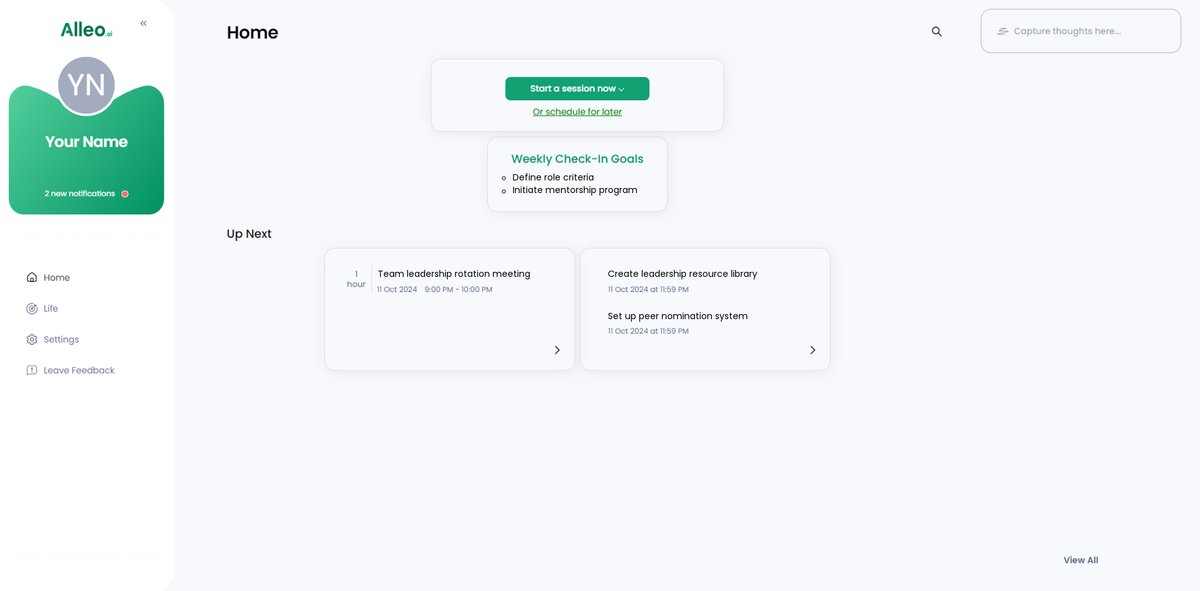
Step 5: Viewing and Managing Goals After the Session
After your coaching session, check the Alleo app’s home page to view and manage the leadership goals you discussed, allowing you to track progress and make adjustments as you implement strategies for assigning roles to your rookie team.
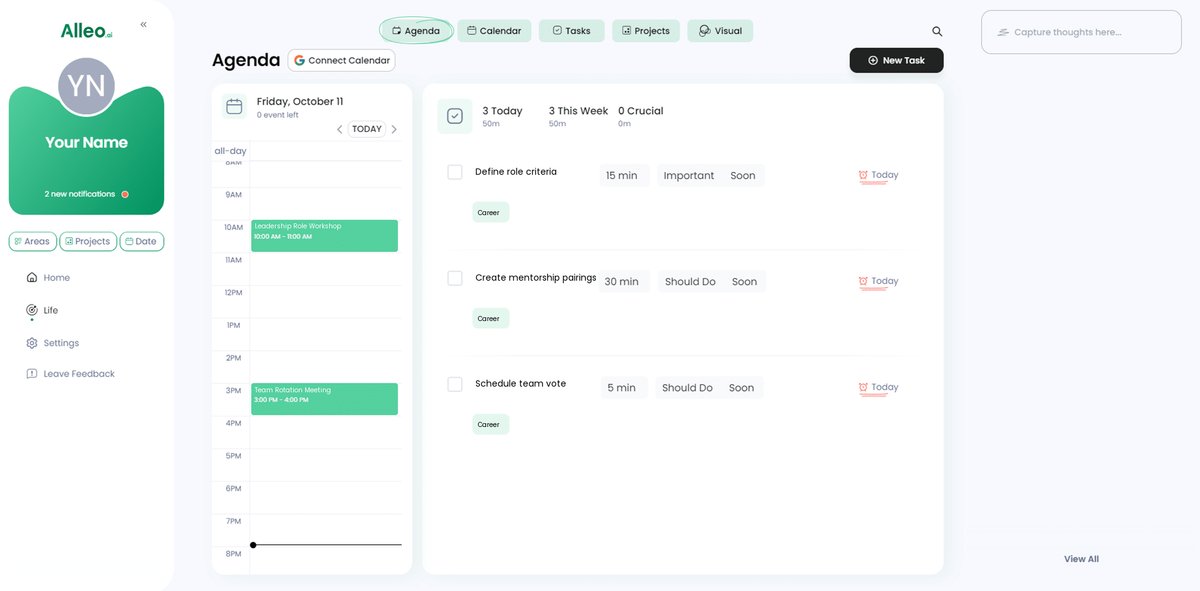
Step 6: Adding events to your calendar or app
Use Alleo’s calendar and task features to schedule and track your leadership development activities, such as mentoring sessions, team meetings, and training workshops, ensuring you stay on top of your team’s progress in assigning and rotating leadership roles.
Fostering Leadership and Team Harmony
As we conclude, it’s clear that assigning rookie leadership roles without conflict is vital for team success.
By using transparent criteria, rotating roles, and offering mentoring for new leaders, you can build a cohesive and motivated team while fostering rookie leadership development.
Involving your team in decision-making and providing leadership training for rookies ensures everyone feels valued and prepared, improving team dynamics with new managers.
Remember, fairness and inclusivity are key to maintaining harmony and empowering first-time leaders.
You’ve got this!
To make this process even smoother, consider using Alleo. Our tools can help you implement these strategies effectively, supporting collaborative leadership approaches.
Ready to transform your team leadership? Start with Alleo for free today and enhance your approach to assigning rookie leadership roles!