6 Powerful Strategies to Improve Leadership Course Consistency for College Instructors
Have you ever wondered why some students excel in leadership courses while others struggle, even when taught the same material? This question lies at the heart of improving leadership course consistency in higher education.
As a life coach, I’ve helped many educators navigate these challenges in curriculum standardization for leadership courses. I often encounter issues related to inconsistent teaching methods, highlighting the need for effective pedagogical approaches for leadership education.
In this article, you’ll discover strategies to standardize leadership courses, ensuring every student gets a quality education in leadership development in higher education. We’ll explore shared teaching beliefs, collaborative lesson planning, and more, focusing on best practices for teaching leadership skills and faculty collaboration in leadership curriculum design.
Let’s dive into improving leadership course consistency and enhancing student engagement in leadership courses.

The Impact of Inconsistent Leadership Courses
Imagine being a student who excels in one course section but struggles in another, despite the same syllabus. This inconsistency in leadership development in higher education can be frustrating and demotivating.
Many clients report challenges when instructors use varied teaching methods in leadership courses. This often leads to confusion and uneven learning experiences, highlighting the need for improving leadership course consistency.
In my experience, inconsistent course delivery affects student confidence and performance in leadership education. Educators face difficulties maintaining standardized material for teaching leadership skills, further complicating the issue.
Moreover, when course outcomes vary, it undermines the overall effectiveness of the program. Students deserve a cohesive and reliable educational journey in academic leadership instruction.
Addressing these inconsistencies is crucial for both student success and institutional reputation in leadership education.

Key Strategies for Achieving Leadership Course Consistency
Improving leadership course consistency requires a few key steps. Here are the main areas to focus on to make progress in curriculum standardization for leadership courses:
- Develop shared teaching beliefs and language: Align faculty on core teaching philosophies through workshops and discussions, enhancing consistency in academic leadership instruction.
- Create standard course learning outcomes: Establish unified learning objectives for leadership development in higher education and regularly review them.
- Implement collaborative lesson planning: Form lesson planning teams and use collaborative tools to improve faculty collaboration in leadership curriculum design.
- Establish regular faculty peer observations: Develop structured observation programs with clear guidelines, supporting college instructor training programs.
- Design consistent assessment rubrics: Create common rubrics and provide training for uniform application of assessment methods for leadership courses.
- Conduct ongoing professional development sessions: Schedule regular workshops and encourage participation in external training to enhance effective pedagogical approaches for leadership education.
Let’s dive in to explore these best practices for teaching leadership skills!
1: Develop shared teaching beliefs and language
Aligning teaching beliefs and language among faculty is essential for improving leadership course consistency and ensuring a cohesive learning experience for all students in leadership development in higher education.
Actionable Steps:
- Conduct quarterly workshops to align faculty on core teaching philosophies for leadership courses. Ensure each workshop has a clear agenda and measurable outcomes for effective pedagogical approaches in leadership education.
- Create a shared online repository for teaching resources and terminology related to leadership curriculum. Maintain this platform with regular updates and contributions from all faculty members to support curriculum standardization for leadership courses.
- Facilitate monthly discussion groups on teaching practices and beliefs in leadership education, with rotating facilitators to ensure diverse perspectives and faculty collaboration in leadership curriculum design.
Explanation:
These steps foster a unified approach to teaching leadership skills. Workshops and discussions help align faculty on core principles, leading to more consistent student experiences in academic leadership instruction.
For instance, an aligned teaching approach can greatly improve coherence in teaching methods. This ensures students receive equal quality education across different sections, enhancing student engagement in leadership courses.
Taking these actions will enhance the overall effectiveness of leadership courses and improve student outcomes through continuous improvement strategies for leadership education.

2: Create standard course learning outcomes
Establishing unified learning outcomes is essential for improving leadership course consistency and ensuring consistent educational experiences across all sections.
Actionable Steps:
- Collaborate with faculty to draft and finalize specific and measurable learning objectives for leadership development in higher education.
- Conduct backward design workshops to map out course content and assessments, ensuring alignment with objectives and best practices for teaching leadership skills.
- Implement a bi-annual review process to update learning outcomes based on feedback and data, supporting continuous improvement strategies for leadership education.
Key benefits of standardized learning outcomes:
- Ensures consistent course content across sections, supporting curriculum standardization for leadership courses
- Facilitates fair assessment methods for leadership courses
- Supports clear communication of expectations to students, enhancing student engagement in leadership courses
Explanation:
These steps ensure that all sections of a course deliver the same core content and objectives. By aligning objectives and continuously reviewing them, you can enhance the consistency and effectiveness of your courses, particularly in academic leadership instruction.
For example, consistent academic policies help maintain high standards and improve student outcomes. This approach not only benefits students but also supports faculty in delivering more cohesive instruction through effective pedagogical approaches for leadership education.
Taking these actions will help create a more uniform and effective learning environment, improving leadership course consistency across the board.

3: Implement collaborative lesson planning
Collaborative lesson planning is vital for improving leadership course consistency and ensuring high-quality instruction across different sections.
Actionable Steps:
- Form lesson planning teams for each course section and schedule bi-weekly planning meetings with clear objectives and deliverables, focusing on curriculum standardization for leadership courses.
- Utilize collaborative tools like Google Docs or Trello for real-time lesson planning and feedback. This will help streamline the process and enhance faculty collaboration in leadership curriculum design.
- Create a repository of best practices and exemplar lesson plans in an accessible format, updating quarterly based on feedback and new insights to support continuous improvement strategies for leadership education.
Explanation:
These steps help ensure that all instructors are on the same page, creating a more uniform learning experience for students and improving leadership course consistency.
For example, using collaborative planning tools can lead to more effective lesson plans and improved teaching methods, which are crucial for leadership development in higher education.
This approach not only enhances the quality of instruction but also supports faculty in sharing resources and strategies for effective pedagogical approaches for leadership education. For more on the benefits of consistent academic policies, check out this resource.
Embracing these strategies will make a significant difference in achieving course consistency and enhancing student engagement in leadership courses.

4: Establish regular faculty peer observations
Faculty peer observations are vital for maintaining consistency and improving teaching quality across different sections of leadership courses. This practice is crucial for improving leadership course consistency in higher education.
Actionable Steps:
- Develop a structured observation program with clear guidelines and schedules. Ensure all faculty participate at least once per semester to foster a culture of continuous improvement in leadership education.
- Provide training on effective observation and feedback techniques through annual sessions. These should include practice observations and debriefs to enhance skills, contributing to college instructor training programs for leadership development.
- Create a feedback loop to implement insights from observations. Set up regular follow-up meetings to discuss observations and apply feedback to teaching practices, supporting curriculum standardization for leadership courses.
Explanation:
These steps promote a unified approach to teaching by enabling faculty to learn from each other and share best practices for teaching leadership skills. Observations and feedback help identify areas for improvement, ensuring more consistent and effective instruction in academic leadership.
According to Learning Forward, collaborative professional learning significantly enhances teaching quality and student outcomes. Embracing these strategies will make a notable difference in achieving course consistency and improving leadership course consistency overall.

5: Design consistent assessment rubrics
Assessment rubrics play a crucial role in maintaining consistent evaluation standards across different sections of a leadership course, contributing to improving leadership course consistency.
Actionable Steps:
- Develop common assessment rubrics for key assignments by collaborating with faculty. Ensure rubrics undergo iterative revisions based on pilot testing, aligning with best practices for teaching leadership skills.
- Provide rubric training sessions to ensure uniform application. Conduct bi-annual training sessions with hands-on practice and Q&A segments, enhancing college instructor training programs.
- Regularly review and refine rubrics based on assessment outcomes. Establish a review committee to evaluate and recommend adjustments each semester, supporting continuous improvement strategies for leadership education.
Essential components of effective assessment rubrics for leadership development in higher education:
- Clear performance criteria
- Descriptive levels of achievement
- Consistent scoring guidelines
Explanation:
These steps matter because they ensure all students are graded against the same standards, promoting fairness and clarity in academic leadership instruction. Consistent rubrics also help instructors provide more objective and transparent feedback, enhancing student engagement in leadership courses.
According to Grand Rapids Community College, consistent assessment practices significantly enhance the reliability of student evaluations. Implementing these strategies will lead to better student outcomes and a more cohesive educational experience, furthering curriculum standardization for leadership courses.

6: Conduct ongoing professional development sessions
Conducting ongoing professional development sessions is crucial for improving leadership course consistency and maintaining high standards in leadership development in higher education.
Actionable Steps:
- Schedule regular professional development workshops focused on consistency and innovation in leadership courses. Plan a yearly calendar with diverse topics and expert facilitators to enhance curriculum standardization for leadership courses.
- Encourage participation in external conferences and training to bring in fresh perspectives on effective pedagogical approaches for leadership education. Provide funding and support for faculty to attend at least one external event annually.
- Implement a mentorship program for continuous professional growth in teaching leadership skills. Pair new instructors with experienced mentors, with structured mentorship plans and periodic reviews to ensure consistency in academic leadership instruction.
Key areas for professional development in leadership courses:
- Emerging leadership theories and practices
- Innovative teaching methodologies for improving leadership course consistency
- Technology integration in leadership education
Explanation:
These steps matter because they ensure that faculty continuously improve their teaching methods and stay updated on best practices for teaching leadership skills.
According to Learning Forward, consistent professional development enhances teaching quality and student outcomes in leadership courses.
By fostering a culture of continuous improvement, you can significantly enhance the consistency and effectiveness of your leadership courses, including student engagement and assessment methods.
Taking these actions will help create a more uniform and effective learning environment for leadership education.

Partner with Alleo for Leadership Course Consistency
We’ve explored the challenges of improving leadership course consistency in higher education. But did you know you can work with Alleo to make this journey easier for your college instructor training programs?
Alleo offers affordable, tailored coaching support for your specific problem in curriculum standardization for leadership courses. Our AI coach provides full coaching sessions like any human coach, focusing on best practices for teaching leadership skills.
Setting up an account is easy. Create a personalized plan and work with Alleo’s coach to overcome specific challenges in consistency in academic leadership instruction.
The coach will follow up on progress, handle changes, and keep you accountable via text and push notifications, ensuring effective pedagogical approaches for leadership education.
Ready to get started for free and enhance your leadership development in higher education? Let me show you how!
Step 1: Log In or Create Your Account
To start improving your leadership courses with personalized AI coaching, simply log in to your account or create a new one in just a few clicks.

Step 2: Choose “Building better habits and routines”
Select “Building better habits and routines” from the goal options to address inconsistencies in your leadership courses. This focus will help you develop consistent teaching practices and routines, directly tackling the challenges of standardizing course delivery across different sections.

Step 3: Select “Career” as Your Focus Area
Choose “Career” as your focus area to address challenges in leadership course consistency, aligning perfectly with your goal to improve educational outcomes and teaching effectiveness in your professional role.

Step 4: Starting a Coaching Session
Begin your journey with Alleo by scheduling an intake session, where you’ll discuss your leadership course consistency goals and create a personalized plan to enhance your teaching approach.

Step 5: Viewing and Managing Goals After the Session
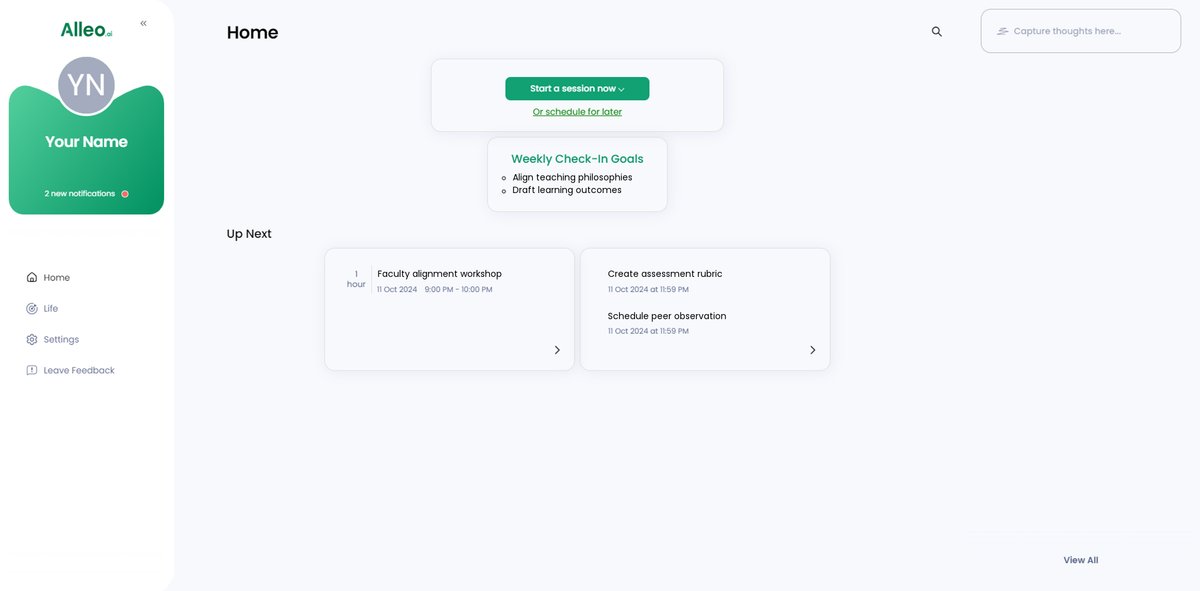
After your coaching session on improving leadership course consistency, you’ll find the goals you discussed displayed on the Alleo app’s home page, allowing you to easily track and manage your progress towards standardizing your teaching methods.
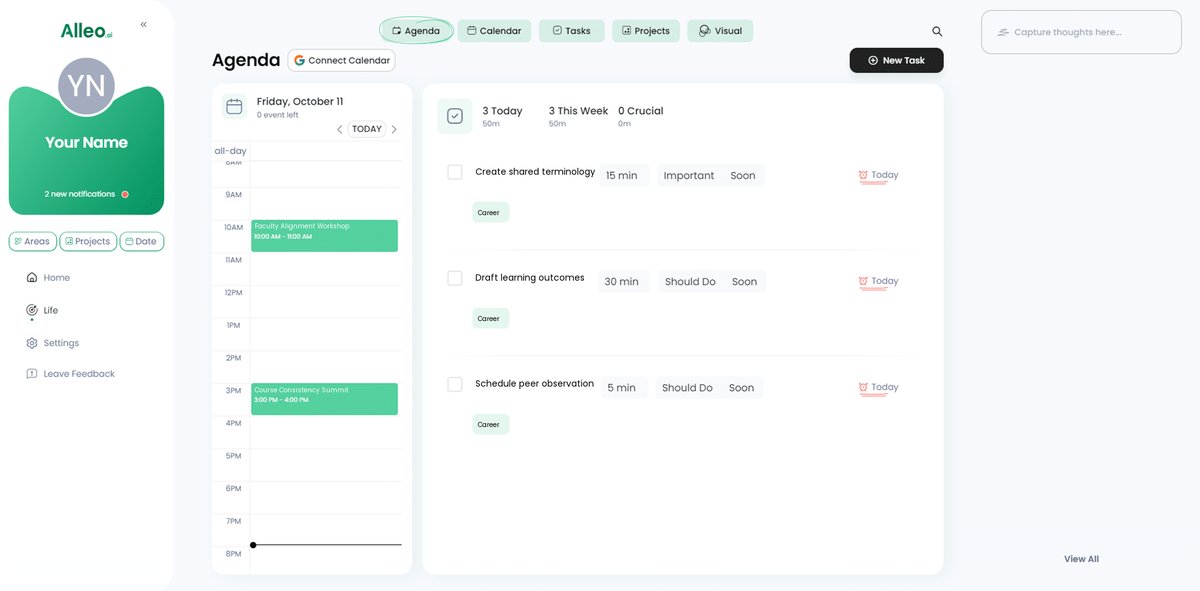
Step 6: Adding events to your calendar or app
Use the calendar and task features in the Alleo app to schedule and track your progress on implementing consistent teaching practices, such as collaborative lesson planning sessions or peer observation meetings, ensuring you stay accountable to your leadership course improvement goals.
Wrapping Up: Ensuring Consistency in Leadership Courses
We’ve covered several strategies to tackle the issue of inconsistent leadership courses. Implementing these steps will lead to more cohesive and effective learning experiences, improving leadership course consistency and enhancing curriculum standardization for leadership courses.
Consistency matters for student success in leadership development in higher education. It also enhances your teaching effectiveness and supports best practices for teaching leadership skills.
I understand the challenges you face in academic leadership instruction. That’s why these actionable steps are designed to be practical and impactful for college instructor training programs.
Remember, you don’t have to do this alone. Alleo is here to support you in improving leadership course consistency and implementing effective pedagogical approaches for leadership education.
Start improving your leadership courses today. Sign up with Alleo for personalized coaching and see the difference in your assessment methods for leadership courses.
Ready to make a change? Give Alleo a try for free and transform your teaching approach, enhancing student engagement in leadership courses and supporting continuous improvement strategies for leadership education.