6 Powerful Techniques for Project Managers to Handle Late-Stage Change Requests from Stakeholders
Imagine this: you’re about to wrap up your project when a stakeholder asks for a major change, presenting a challenge in managing late-stage project changes.
Late-stage change requests can throw off your timeline and mess with your scope management. Handling these requests properly is crucial to keep your project on track and maintain good stakeholder relationships. Effective change management in project management and project scope creep prevention are essential skills.
As a seasoned project management coach, I’ve guided many professionals through these exact situations. I understand how challenging it can be to manage these late changes without disrupting your entire project. This often involves employing agile project management techniques and honing negotiation skills for project managers.
In this article, we’ll explore strategies for assessing impacts, consulting your team, and updating your project plan efficiently. You’ll also learn about tools for transparent communication and effective documentation. We’ll discuss stakeholder communication strategies, risk assessment for late changes, and project timeline adjustment techniques.
Let’s dive in to mastering the art of managing late-stage project changes, including client expectations management and project budget impact analysis.

The Challenges of Late-Stage Change Requests
Managing late-stage project changes can wreak havoc on a project. They often lead to scope changes and timeline disruptions, making change management in project management crucial.
Many clients initially struggle with balancing these changes while keeping their teams on track, highlighting the importance of stakeholder communication strategies.
For example, a project nearing completion might face a significant delay due to late-stage project changes. The unexpected change can demoralize the team and stretch resources thin, emphasizing the need for project scope creep prevention.
In my experience, people often find it difficult to reassess and adapt quickly when managing late-stage project changes.
The pressure to accommodate these requests without derailing the project is immense. It requires quick thinking and efficient problem-solving, often utilizing agile project management techniques.
And the impact on team morale can be profound when dealing with late-stage project changes.
No one wants to see their hard work undone. So, handling these requests effectively through a robust change request evaluation process is crucial.

Key Steps to Handle Late-Stage Change Requests
Overcoming this challenge of managing late-stage project changes requires a few key steps. Here are the main areas to focus on to make progress in change management in project management:
- Evaluate Change Impact on Scope and Timeline: Assess how the change affects project deliverables and deadlines, conducting a thorough project budget impact analysis.
- Consult Team on Feasibility of Late Changes: Discuss the feasibility and implications with your team, utilizing agile project management techniques.
- Document Change Request Formally: Create a detailed change request document as part of the change request evaluation process.
- Communicate Transparently with Stakeholders: Hold open discussions about the change’s impact, employing effective stakeholder communication strategies.
- Prioritize Changes Based on Project Goals: Align the change request with project objectives to prevent project scope creep.
- Update Project Plan and Get Approval: Revise the project plan, adjust project timelines, and obtain stakeholder approval while managing client expectations.
Let’s dive in!
1: Evaluate change impact on scope and timeline
Understanding the impact of changes on project scope and timeline is crucial for managing late-stage project changes and maintaining project integrity while meeting deadlines.
Actionable Steps:
- Conduct a quick impact assessment to understand how the change will affect project deliverables and deadlines. Use a change impact matrix to assess scope and timeline impact within 24 hours of receiving the request, which is essential for project scope creep prevention.
- Identify potential risks and mitigation strategies associated with the change. Create a risk assessment for late changes report with at least three mitigation strategies for each identified risk.
Key factors to consider when evaluating change impact:
- Resource allocation and availability
- Budget implications and project budget impact analysis
- Potential ripple effects on other project components
Explanation: Evaluating the impact of changes on your project’s scope and timeline helps in managing expectations and ensuring project success, which is crucial for managing late-stage project changes.
According to a blog on Float, establishing a change request evaluation process is essential for managing scope, schedule, and cost effectively.
By assessing and documenting impacts quickly, you can make informed decisions and maintain project momentum, which is key to change management in project management.
Remember, a thorough impact evaluation sets the foundation for effective change management and is crucial when managing late-stage project changes.
2: Consult team on feasibility of late changes
Consulting your team on the feasibility of late changes is crucial for managing late-stage project changes and ensuring that the proposed changes can be implemented without major disruptions.
Actionable Steps:
- Schedule a team meeting within two days of receiving the change request to discuss its feasibility and implications for managing late-stage project changes. This ensures everyone is on the same page.
- Assign specific tasks to team members to analyze the change’s impact on different project aspects, including project scope creep prevention. Aim to complete these tasks within one week.
- Gather feedback during the meeting and document all insights and concerns raised by the team for further evaluation, incorporating stakeholder communication strategies.
Explanation: Involving your team in assessing the feasibility of late changes helps in making informed decisions and fosters a collaborative environment, which is essential for change management in project management.
According to Float, transparent decision-making and clear communication about change requests are essential for project success.
By consulting your team, you can identify potential challenges early and develop effective strategies to address them, including risk assessment for late changes and project timeline adjustment.
This collaborative approach not only helps in managing late-stage project changes effectively but also boosts team morale by valuing their input, which is crucial for client expectations management.
3: Document change request formally
Proper documentation of change requests is vital for ensuring clarity and accountability in managing late-stage project changes.
Actionable Steps:
- Create a formal change request document outlining the details, reasons, and expected impact of the change. Complete and circulate this document within 48 hours of the team meeting to prevent project scope creep.
- Implement a standardized process for documenting all change requests. Develop a change request template and ensure all team members are trained to use it within one week, incorporating agile project management techniques.
Explanation: A well-documented change request helps in maintaining transparency and tracking changes efficiently when managing late-stage project changes.
According to ProjectManager, having a structured change control process is crucial for managing and analyzing project changes.
By formalizing this process, you can ensure that all stakeholders are aware of the changes and their implications, leading to better project outcomes and improved stakeholder communication strategies.
Having a clear documentation process keeps everyone aligned and informed, facilitating effective change management in project management.
4: Communicate transparently with stakeholders
Effective communication with stakeholders is crucial for managing late-stage project changes and maintaining project integrity.
Actionable Steps:
- Schedule a meeting with stakeholders within three days of documenting the change request to discuss its potential impact and gather their feedback, as part of the change request evaluation process.
- Send weekly email updates to stakeholders detailing progress, any new developments, and how the change affects the project timeline and scope, which is essential for client expectations management.
Best practices for transparent stakeholder communication strategies:
- Use clear, jargon-free language
- Provide visual aids like charts or diagrams
- Encourage open dialogue and address concerns promptly
Explanation: Transparent communication ensures that all stakeholders are aware of the changes and their implications, fostering trust and collaboration. This is a key aspect of change management in project management.
According to Monday, clear communication about change requests is essential for project success. Keeping stakeholders informed helps manage expectations and supports smoother project execution, which is crucial when managing late-stage project changes.
This proactive approach to communication helps keep everyone aligned and reduces misunderstandings, aiding in project scope creep prevention.
Next, we will discuss how to prioritize changes based on project goals.
5: Prioritize changes based on project goals
Prioritizing changes based on project goals is crucial to ensure alignment and successful project completion when managing late-stage project changes.
Actionable Steps:
- Perform a goal alignment analysis to evaluate the change request’s alignment with the project’s original goals and objectives. Prioritize the change accordingly within two days, considering project scope creep prevention.
- Develop a prioritization framework to decide which changes to implement based on their impact and importance. Create and use a prioritization matrix for all change requests moving forward, incorporating change management in project management principles.
Explanation: Prioritizing changes based on project goals helps maintain focus and ensures that any adjustments contribute positively to the project’s success, especially when managing late-stage project changes.
According to ClearPoint Strategy, tracking project management KPIs is essential for making informed, data-driven decisions.
By aligning changes with your goals, you reinforce the project’s strategic direction and enhance decision-making clarity. This approach supports effective stakeholder communication strategies and client expectations management.
This approach ensures that every change request is evaluated rigorously and supports the project’s overall objectives, incorporating risk assessment for late changes and project budget impact analysis.
Next, we will discuss how to update the project plan and get approval, which is crucial for managing late-stage project changes.
6: Update project plan and get approval
Updating the project plan and obtaining approval is crucial to ensure all stakeholders are aligned with the proposed changes when managing late-stage project changes.
Actionable Steps:
- Revise the project plan to incorporate approved changes and update all relevant documentation. Complete this update within 48 hours of receiving stakeholder approval, focusing on change management in project management.
- Secure formal approval for the revised project plan from all key stakeholders. Ensure stakeholder sign-off within one week to maintain project momentum and prevent project scope creep.
Key elements to update in the project plan:
- Timeline and milestones, considering project timeline adjustment
- Resource allocation
- Budget adjustments, including project budget impact analysis
Explanation: Updating the project plan and obtaining formal approval ensures that all changes are documented and agreed upon, maintaining project integrity and managing late-stage project changes effectively.
According to ProjectManager, a structured change control process is essential for managing project changes effectively. This approach facilitates clear communication and helps keep the project on track, incorporating stakeholder communication strategies.
This structured process helps ensure smooth project execution, even with late-stage changes, utilizing agile project management techniques and risk assessment for late changes.

Partner with Alleo to Manage Late-Stage Change Requests Effectively
We’ve discussed the challenges of managing late-stage project changes and the steps to handle them effectively. Did you know Alleo can make this process easier and faster for you, especially when it comes to project scope creep prevention and stakeholder communication strategies?
Sign up for Alleo’s AI coach for tailored support in change management in project management. Create an account and personalize your plan to improve your project timeline adjustment skills.
Alleo’s coach will follow up on your progress and keep you accountable. Get notifications and timely advice to manage changes effectively, including tips on client expectations management and the change request evaluation process.
Ready to get started for free and enhance your skills in managing late-stage project changes? Let me show you how!
Step 1: Log In or Create Your Account
To get started with managing late-stage change requests using our AI coach, simply Log in to your account or create a new one if you haven’t already.

Step 2: Choose Your Focus Area
Select “Setting and achieving personal or professional goals” to address your project management challenges, aligning with the article’s strategies for handling late-stage change requests and improving your overall project leadership skills.

Step 3: Selecting the life area you want to focus on
Choose “Career” as your focus area to get tailored guidance on managing late-stage change requests effectively, helping you navigate project challenges and advance your project management skills.

Step 4: Starting a coaching session
Begin your AI coaching journey with an intake session, where you’ll discuss your project management challenges and set up a personalized plan to tackle late-stage change requests effectively.

Step 5: Viewing and managing goals after the session
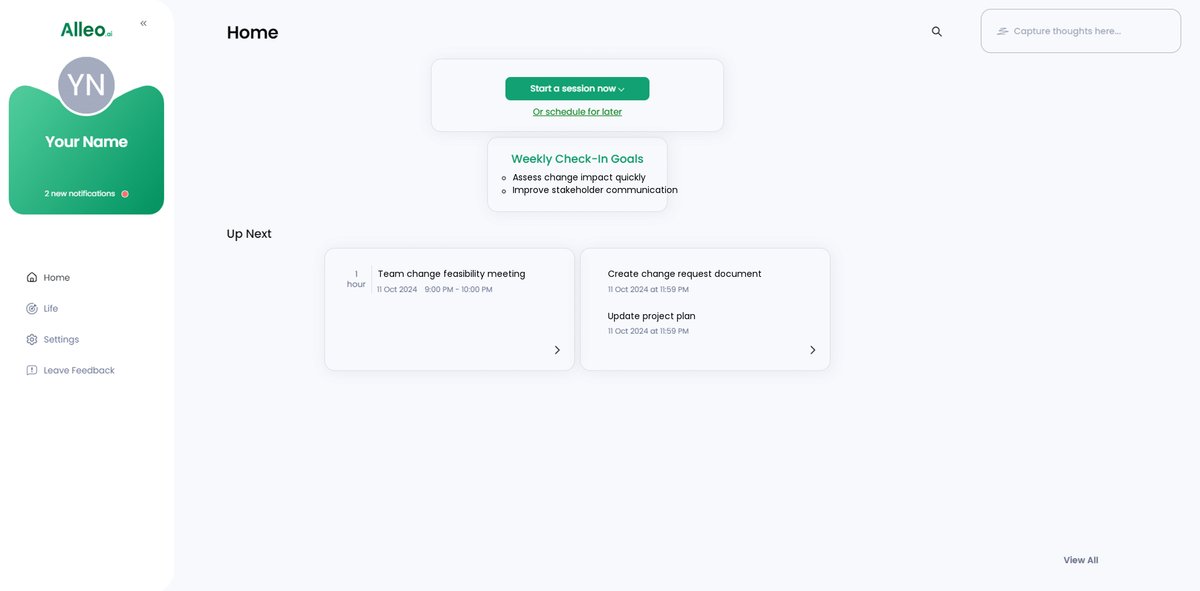
After your coaching session on handling late-stage change requests, you’ll find your discussed goals conveniently displayed on the home page of the Alleo app, allowing you to easily review and manage your project management objectives.
Step 6: Adding events to your calendar or app
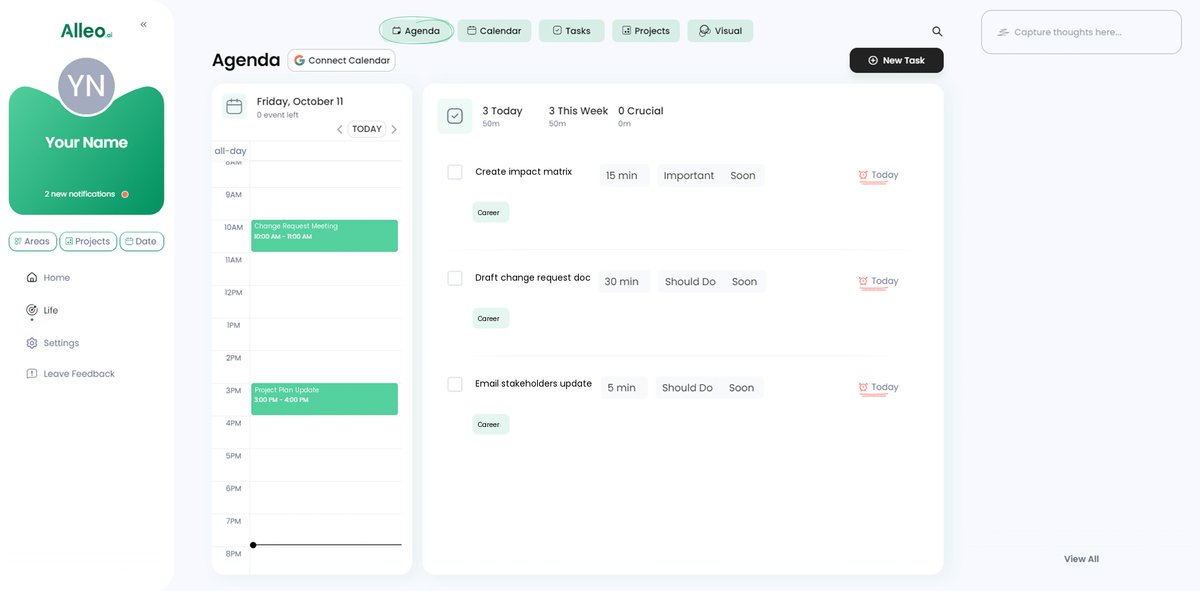
To effectively track your progress in managing late-stage change requests, use the AI coach’s calendar and task features to schedule key milestones, set reminders for stakeholder meetings, and monitor deadlines for updating project plans.
Wrapping Up: Embrace Change with Confidence
Managing late-stage project changes can be challenging, but you’re now equipped with actionable steps to tackle them effectively.
By evaluating impact, consulting your team, and updating your project plan, you can maintain project integrity and success while preventing project scope creep.
Remember, transparent communication and proper documentation are key in change management in project management. Prioritizing changes based on project goals ensures alignment and smooth execution, supporting effective stakeholder communication strategies.
You’re not alone in this journey of managing late-stage project changes. Alleo is here to support you with tools and guidance tailored to your needs, including agile project management techniques.
Ready to manage your projects better and improve your change request evaluation process? Sign up for Alleo today and experience the difference.