6 Powerful Techniques to Increase Learner Engagement Through Personal Connection Strategies
How can you make your students feel seen, heard, and genuinely engaged in their learning?
As a life coach, I’ve guided many educators through their journey to foster deeper connections with their students. I frequently encounter challenges in engaging students through personal connections and implementing effective student motivation techniques.
In this article, you’ll discover effective strategies to enhance student engagement by building meaningful connections. These methods are designed to create a supportive and interactive learning environment, focusing on student-teacher relationships and interactive teaching methods.
Let’s dive into personalized learning strategies and classroom community building techniques.

Understanding the Engagement Challenge
Engaging students through personal connections is more difficult than it seems. Many educators struggle to build student-teacher relationships, leading to disengagement and poor academic performance.
I often see clients frustrated by their inability to create a personal connection. This lack of connection directly affects students’ well-being and participation, hindering the development of a strong classroom community.
Moreover, implementing personalized learning strategies and active learning techniques can be daunting. Educators frequently face barriers such as time constraints and a lack of resources when trying to foster student participation.
These challenges in engaging students through personal connections are widespread. But don’t worry, there are actionable solutions that can make a significant difference in learner-centered instruction.

A Roadmap to Enhancing Student Engagement
Overcoming this challenge requires a few key steps. Here are the main areas to focus on to make progress in engaging students through personal connections.
- Implement personalized check-ins with students: Schedule regular one-on-one meetings to discuss progress and concerns, fostering student-teacher relationships.
- Create relatable real-world connections in lessons: Incorporate current events and real-life scenarios into your teaching, enhancing learner-centered instruction.
- Use collaborative learning activities: Organize group discussions and peer teaching sessions to foster teamwork and interactive teaching methods.
- Incorporate student interests into curriculum: Conduct surveys to learn about students’ hobbies and integrate them into lessons, supporting personalized learning strategies.
- Practice active listening during discussions: Encourage students to share their thoughts and show genuine interest in their contributions, building rapport with students.
- Establish clear, empathetic communication: Set clear expectations and use compassionate language when addressing student concerns, demonstrating emotional intelligence in education.
Let’s dive in to these student motivation techniques for engaging students through personal connections!

1: Implement personalized check-ins with students
Personalized check-ins with students are crucial for engaging students through personal connections and boosting learner engagement.
Actionable Steps:
- Schedule regular one-on-one meetings: Allocate 10-15 minutes per student bi-weekly to discuss their progress and concerns, fostering student-teacher relationships.
- Use surveys or feedback forms: Create a simple Google Form for students to fill out anonymously, sharing their preferences and needs, supporting personalized learning strategies.
- Track students’ emotional and academic well-being: Maintain a digital logbook to record key points from each check-in, enhancing emotional intelligence in education.
Explanation:
Implementing personalized check-ins ensures that students feel seen and heard. These steps help you understand their unique challenges and support their well-being, promoting student motivation techniques.
According to Edutopia, building meaningful relationships with students can significantly enhance their engagement and learning outcomes.
Taking the time to connect personally can transform your classroom environment, improve academic performance, and strengthen classroom community building efforts.
2: Create relatable real-world connections in lessons
Creating relatable real-world connections in lessons is essential for engaging students through personal connections and making learning relevant and meaningful.
Actionable Steps:
- Incorporate current events: Use news articles or case studies that tie into the lesson to make the content more relevant, fostering student participation.
- Invite guest speakers: Arrange for professionals in relevant fields to share practical insights during class sessions, enhancing interactive teaching methods.
- Design project-based learning activities: Assign group projects that require students to develop solutions for community issues, promoting active learning techniques.
Explanation:
Connecting lessons to real-world scenarios helps students see the relevance of their studies. This approach fosters engagement and deeper understanding, supporting learner-centered instruction.
According to Voyager Sopris Learning, using real-world applications can enhance student motivation and participation. Incorporating these steps can transform your teaching and significantly improve student outcomes.
With these connections, students are more likely to remain engaged and invested in their learning journey, strengthening student-teacher relationships and building rapport with students.
3: Use collaborative learning activities
Using collaborative learning activities is vital for engaging students through personal connections and fostering teamwork and communication skills.
Actionable Steps:
- Organize group discussions and peer teaching sessions: Implement a “Think-Pair-Share” strategy during lessons to encourage interaction and idea sharing, enhancing student-teacher relationships.
- Create collaborative assignments: Develop projects requiring students to work together to produce a final product, promoting teamwork and shared responsibility as part of interactive teaching methods.
- Utilize digital collaboration tools: Set up shared documents or boards, like Google Docs or Trello, for real-time collaboration on group projects, supporting learner-centered instruction.
Explanation:
Collaborative learning activities help students feel more connected and engaged with the material and each other. According to Voyager Sopris Learning, collaborative methods enhance student motivation and participation.
These activities also develop critical social skills and make learning more dynamic and enjoyable, fostering student participation and building rapport with students.
Key benefits of collaborative learning include:
- Enhanced problem-solving skills
- Improved communication abilities
- Increased retention of information
With these strategies, you can create a classroom environment that values cooperation and active participation, supporting classroom community building and emotional intelligence in education.
4: Incorporate student interests into curriculum
Incorporating student interests into the curriculum is a key strategy for engaging students through personal connections, making learning more relevant and enjoyable.
Actionable Steps:
- Conduct interest inventories: Have students complete a short survey about their hobbies and passions at the beginning of the term, supporting personalized learning strategies.
- Allow topic choices: Let students choose topics for certain assignments or projects, giving them a list of options or allowing them to propose their own, fostering student participation.
- Integrate popular culture references: Use relevant songs, movies, or books as part of your lesson materials to capture students’ interest, enhancing interactive teaching methods.
Explanation:
These steps help tailor lessons to students’ interests, making learning more engaging and enjoyable. Incorporating student interests fosters a deeper connection to the material, supporting student-teacher relationships and learner-centered instruction.
This approach is supported by Voyager Sopris Learning, which highlights how engaging content can significantly improve student motivation techniques and participation.
By integrating student interests, you can create a more dynamic and personalized learning experience, effectively engaging students through personal connections.
5: Practice active listening during discussions
Active listening during discussions is crucial for engaging students through personal connections and fostering a supportive classroom community.
Actionable Steps:
- Encourage open sharing: Use open-ended questions to prompt students to share their thoughts and opinions, enhancing student-teacher relationships.
- Show genuine interest: Acknowledge and follow up on student contributions with further questions to explore their ideas, promoting interactive teaching methods.
- Demonstrate attentiveness: Use non-verbal cues like nodding and maintaining eye contact to show you are engaged, building rapport with students.
Explanation:
Implementing active listening helps students feel valued and understood, which boosts their engagement and participation, supporting learner-centered instruction.
According to Faculty Focus, students appreciate when educators listen actively and respond thoughtfully. This approach reinforces positive interactions and enhances the learning experience, contributing to student motivation techniques.
By practicing active listening, you create an inclusive atmosphere where students are eager to contribute and learn, fostering student participation and engaging students through personal connections.

Partner with Alleo to Enhance Student Engagement
We’ve explored the challenges of engaging students through personal connections and fostering student participation. Did you know you can work directly with Alleo to make this process easier and faster for building rapport with students?
Set up an account on Alleo and create a personalized plan for student engagement and learner-centered instruction. Alleo’s AI coach will guide you through regular check-ins, track progress, and handle changes in your student-teacher relationships.
You’ll receive reminders and notifications to stay on track with your active learning techniques and classroom community building efforts.
Ready to get started for free? Let me show you how to improve your interactive teaching methods!
Step 1: Log In or Create Your Account
To start enhancing student engagement with Alleo’s AI coach, Log in to your account or create a new one to access personalized guidance and tools tailored for educators.

Step 2: Choose “Building better habits and routines”
Select “Building better habits and routines” to develop consistent practices that will help you implement and maintain the student engagement strategies discussed in this article, ensuring long-term success in creating meaningful connections with your students.

Step 3: Select “Career” as Your Focus Area
Choose “Career” as your focus area in Alleo to align your professional development goals with strategies for enhancing student engagement, helping you become a more effective educator and improve your classroom dynamics.

Step 4: Starting a Coaching Session
Begin your journey with Alleo by scheduling an initial intake session, where you’ll collaborate with our AI coach to create a personalized plan for enhancing student engagement and implementing the strategies discussed in this article.

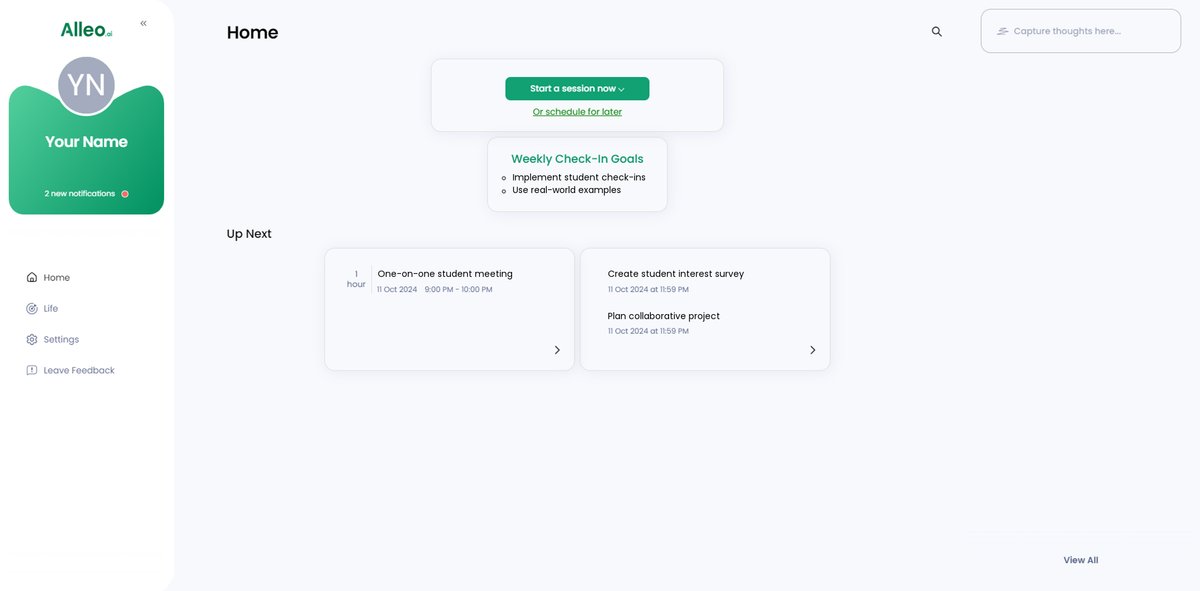
Step 5: Viewing and managing goals after the session
After your coaching session on enhancing student engagement, check the Alleo app’s home page to view and manage the personalized goals you discussed, helping you track your progress in implementing strategies like personalized check-ins and active listening.
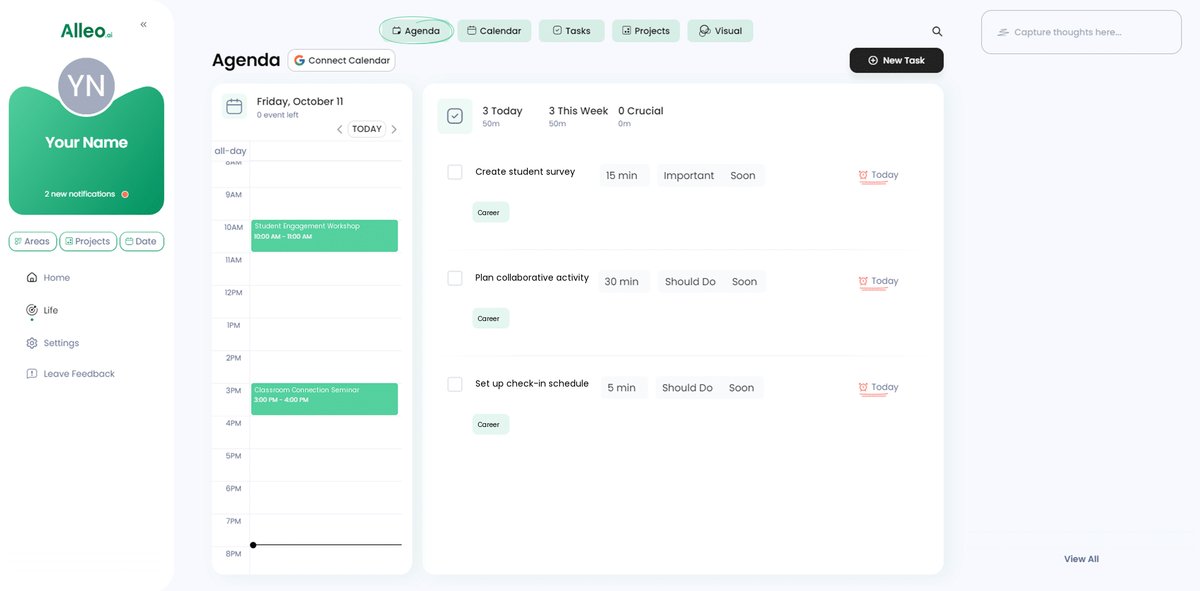
Step 6: Adding events to your calendar or app
Use the Alleo app’s calendar and task features to track your progress in implementing student engagement strategies, allowing you to schedule personalized check-ins, collaborative activities, and feedback sessions with ease.
Bringing It All Together
You’ve now explored several strategies for engaging students through personal connections.
These methods can transform your classroom atmosphere and improve student outcomes through effective student-teacher relationships.
Remember, small steps like personalized check-ins and empathetic communication make a big difference in fostering student participation.
Don’t be overwhelmed by the challenge of building rapport with students.
Take it one step at a time.
As you implement these strategies for engaging students through personal connections, you’ll see positive changes in your students.
If you need support with learner-centered instruction, Alleo can help.
Our AI coach will guide you through this journey of developing emotional intelligence in education, making it easier and more efficient.
Try Alleo for free and see the impact of interactive teaching methods firsthand.
You’ve got this!