6 Powerful Ways to Rebuild Trust in Relationships After Trauma
Have you ever felt like building trust after trauma in relationships is an impossible task?
As a life coach, I’ve guided many individuals through the complex journey of healing from trauma in relationships. I’ve seen firsthand how trust issues can infiltrate every aspect of one’s emotional life.
In this article, you’ll discover practical strategies for overcoming trust issues in relationships and insecurity. We’ll explore self-care for trauma survivors in relationships, boundary-setting, therapy options for couples affected by trauma, communication strategies for trauma survivors, mindfulness, and more.
Let’s dive into trauma-informed relationship practices.

Delving Deeper into Trust Issues and Emotional Toll
When trauma strikes, hypervigilance and avoidance often become second nature. Many clients initially struggle to feel secure in any relationship, constantly on edge and wary of potential threats. Building trust after trauma can be a challenging process for survivors.
This emotional turmoil leads to anxiety, fear, and self-sabotage, making genuine connections feel impossible. I’ve seen people retreat into themselves, becoming emotionally unavailable to protect their hearts. Overcoming trust issues in relationships is a crucial step in healing from trauma in relationships.
Imagine the pain of wanting connection but being too afraid to reach out. This cycle creates isolation, leading to further mistrust and insecurity. Establishing emotional safety in relationships becomes paramount for trauma survivors.
Breaking free from this pattern is challenging but not impossible. Understanding these common reactions is the first step toward healing. Trauma-informed relationship practices can help in rebuilding intimacy after trauma and fostering healthier connections.

A Roadmap to Rebuilding Trust
Overcoming this challenge requires a few key steps. Here are the main areas to focus on to make progress in building trust after trauma:
- Practice self-compassion and patience daily: Start a gratitude journal, set affirmations, and maintain a weekly self-care routine for trauma survivors in relationships.
- Establish clear boundaries in relationships: Define, communicate, and enforce your personal boundaries consistently, which is crucial for trauma survivors in relationships.
- Engage in trauma-focused therapy or counseling: Find a qualified therapist, attend regular sessions, and participate actively in therapy options for couples affected by trauma.
- Use “I statements” to communicate feelings: Practice this communication strategy for trauma survivors in low-stress situations and during conflicts.
- Practice mindfulness to increase self-awareness: Incorporate meditation, yoga, and mindfulness techniques into your routine to support healing from trauma in relationships.
- Gradually increase vulnerability with trusted people: Share small, manageable pieces of your story with trusted individuals as part of trust-building exercises for trauma survivors.
Let’s dive in to explore these trauma-informed relationship practices!
1: Practice self-compassion and patience daily
Self-compassion and patience are essential for building trust after trauma and healing in relationships.
Actionable Steps:
- Start a daily gratitude journal focusing on self-acknowledgement. Write down three things you appreciate about yourself each morning as part of your self-care for trauma survivors in relationships.
- Set daily affirmations to reinforce positive self-perception. Repeat affirmations like “I am worthy of trust and respect” every day to support overcoming trust issues in relationships.
- Implement a weekly self-care routine to reinforce self-compassion. Schedule a relaxing activity, like a nature walk or a hobby you enjoy, once a week as part of your trauma-informed relationship practices.
Explanation:
These steps matter because they foster a positive self-image and emotional resilience, helping you to gradually rebuild trust after trauma and improve emotional safety in relationships.
According to the SAMHSA, self-compassion can significantly impact one’s emotional recovery from trauma.
By practicing self-compassion and patience, you set a sturdy foundation for healing from trauma in relationships.
Key benefits of self-compassion include:
- Reduced anxiety and depression
- Improved emotional regulation
- Increased resilience to stress
Taking these steps can pave the way for more profound healing, leading to increased trust and emotional stability, which are crucial for rebuilding intimacy after trauma.

2: Establish clear boundaries in relationships
Establishing clear boundaries in relationships is crucial for trauma survivors to feel safe and secure when building trust after trauma.
Actionable Steps:
- Define your personal boundaries and write them down. List out your non-negotiables and what makes you feel safe in a relationship, which is essential for healing from trauma in relationships.
- Communicate your boundaries with friends and potential partners. Have a conversation about your boundaries early in a new relationship, using effective communication strategies for trauma survivors.
- Practice enforcing your boundaries consistently. If someone crosses a boundary, address it immediately and calmly, which is key to maintaining emotional safety in relationships.
Explanation:
These steps matter because they help to foster a sense of safety and control in your relationships. According to Dr. Erin Watson, recognizing and honoring your body’s signals about safety and comfort is key to building trust.
Setting boundaries ensures that you protect your emotional well-being and build healthier connections, which is crucial for overcoming trust issues in relationships.
Taking these steps can pave the way for more profound healing, leading to increased trust and emotional stability, essential elements in rebuilding intimacy after trauma.

3: Engage in trauma-focused therapy or counseling
Engaging in trauma-focused therapy or counseling is crucial for building trust after trauma and facilitating healing.
Actionable Steps:
- Research and select a qualified trauma-informed therapist. Look for therapists who specialize in EMDR or CBT for trauma, which are effective therapy options for couples affected by trauma.
- Commit to attending regular therapy sessions. Schedule and attend at least one therapy session per week to work on overcoming trust issues in relationships.
- Participate actively in therapy exercises and homework. Complete any assignments given by your therapist to reinforce healing and practice trust-building exercises for trauma survivors.
Explanation:
These steps matter because they provide structured support and professional guidance tailored to trauma recovery and building trust after trauma.
According to Allied Wellness Collective, trauma therapy can significantly improve mental, emotional, and physical well-being.
Regular and active participation in therapy helps to build trust and emotional resilience, essential for healing from trauma in relationships.
Common types of trauma-focused therapy include:
- Cognitive Behavioral Therapy (CBT)
- Eye Movement Desensitization and Reprocessing (EMDR)
- Somatic Experiencing
Taking these steps can pave the way for more profound healing, leading to increased trust and emotional stability, which are crucial for rebuilding intimacy after trauma.

4: Use “I statements” to communicate feelings
Using “I statements” helps you express emotions without sounding accusatory, which is crucial for building trust after trauma.
Actionable Steps:
- Practice using “I statements” in low-stress situations. Start with friends and family to get comfortable with this communication strategy for trauma survivors.
- Apply “I statements” during conflicts or difficult conversations. Use phrases like “I feel overwhelmed when…” instead of “You always make me feel…”, which is essential for emotional safety in relationships.
- Reflect on the outcomes of using “I statements” to improve communication. After each conversation, journal about how using “I statements” affected the interaction, supporting healing from trauma in relationships.
Explanation:
These steps matter because they promote effective communication and reduce misunderstandings, which are vital for rebuilding intimacy after trauma.
According to experts at DVA Riverside, using “I statements” helps create a safe space for open and honest dialogue. This practice strengthens trust and fosters healthier relationships, particularly for couples affected by trauma.
Mastering “I statements” can significantly improve your communication skills, leading to deeper connections and overcoming trust issues in relationships impacted by trauma.
5: Practice mindfulness to increase self-awareness
Practicing mindfulness is key to increasing self-awareness and healing from trauma, which is essential for building trust after trauma.
Actionable Steps:
- Incorporate daily mindfulness meditation into your routine. Spend 10 minutes each morning meditating to ground yourself and clear your mind, a valuable self-care practice for trauma survivors in relationships.
- Engage in mindfulness-based activities like yoga or tai chi. Join a weekly yoga class to enhance your mind-body connection and reduce stress, supporting healing from trauma in relationships.
- Use mindfulness techniques to manage stress and emotional triggers. Practice deep breathing exercises when you feel anxious or triggered to calm your mind, an important aspect of trauma-informed relationship practices.
Explanation:
These steps matter because mindfulness helps you become more aware of your thoughts and emotions. This awareness can reduce emotional reactivity and improve self-regulation, which are crucial for overcoming trust issues in relationships.
According to Healthrive Dream, mindfulness can improve communication by increasing self-awareness and emotional regulation. By practicing mindfulness, you can enhance your emotional resilience and build trust after trauma, fostering emotional safety in relationships.
By integrating mindfulness into your daily routine, you’ll foster a deeper connection with yourself and those around you, supporting the process of rebuilding intimacy after trauma.

6: Gradually increase vulnerability with trusted people
Gradually increasing vulnerability with trusted people is essential for building trust after trauma and fostering healing from trauma in relationships.
Actionable Steps:
- Identify trusted individuals with whom you feel safe. Choose a close friend or family member to start sharing more with, focusing on emotional safety in relationships.
- Share small, manageable pieces of your story or feelings. Begin by discussing a minor concern or past experience, using communication strategies for trauma survivors.
- Monitor your comfort levels and gradually share more over time. As you feel more secure, open up about deeper issues gradually, practicing trust-building exercises for trauma survivors.
Explanation:
These steps matter because they help build trust after trauma and enhance emotional resilience in a controlled and safe manner.
According to Counseling of Alexandria, rebuilding trust and relationships is a key focus for trauma survivors.
By following these steps, you can foster deeper connections and enhance your emotional well-being while overcoming trust issues in relationships.
Benefits of gradual vulnerability:
- Builds stronger, more authentic relationships
- Increases emotional intimacy
- Enhances self-acceptance and self-esteem
Taking these steps can pave the way for more profound healing, leading to increased trust and emotional stability, which are crucial when rebuilding intimacy after trauma.

Partner with Alleo on Your Journey to Rebuild Trust
We’ve explored the challenges of building trust after trauma in relationships. Now, let’s see how Alleo can make this journey easier and faster for trauma survivors seeking to heal and rebuild intimacy.
Alleo provides personalized coaching support tailored to your needs, including trust-building exercises for trauma survivors. You can start with a free 14-day trial—no credit card required.
Step 1: Set up an account to begin your journey of overcoming trust issues in relationships.
Step 2: Create a personalized plan for rebuilding trust, incorporating trauma-informed relationship practices.
Step 3: Work with Alleo’s AI coach to track your progress, handle changes, and stay accountable as you develop communication strategies and establish boundaries in relationships.
Ready to get started for free? Let me show you how to begin building trust after trauma!
Step 1: Log In or Create Your Account
To begin your journey of rebuilding trust after trauma, log in to your existing Alleo account or create a new one to access personalized coaching support tailored to your needs.

Step 2: Choose Your Focus Area
Click on “Improving overall well-being and life satisfaction” to start rebuilding trust and healing from past traumas, setting the foundation for healthier relationships and a more fulfilling life.

Step 3: Select “Personal” as Your Focus Area
Choose “Personal” as your life area to address trust issues and heal from relationship trauma, allowing Alleo’s AI coach to provide targeted guidance on self-compassion, boundary-setting, and building emotional resilience.

Step 4: Starting a coaching session
Begin your journey with Alleo by scheduling an initial intake session, where you’ll discuss your trust-building goals and create a personalized plan to guide your future coaching sessions.

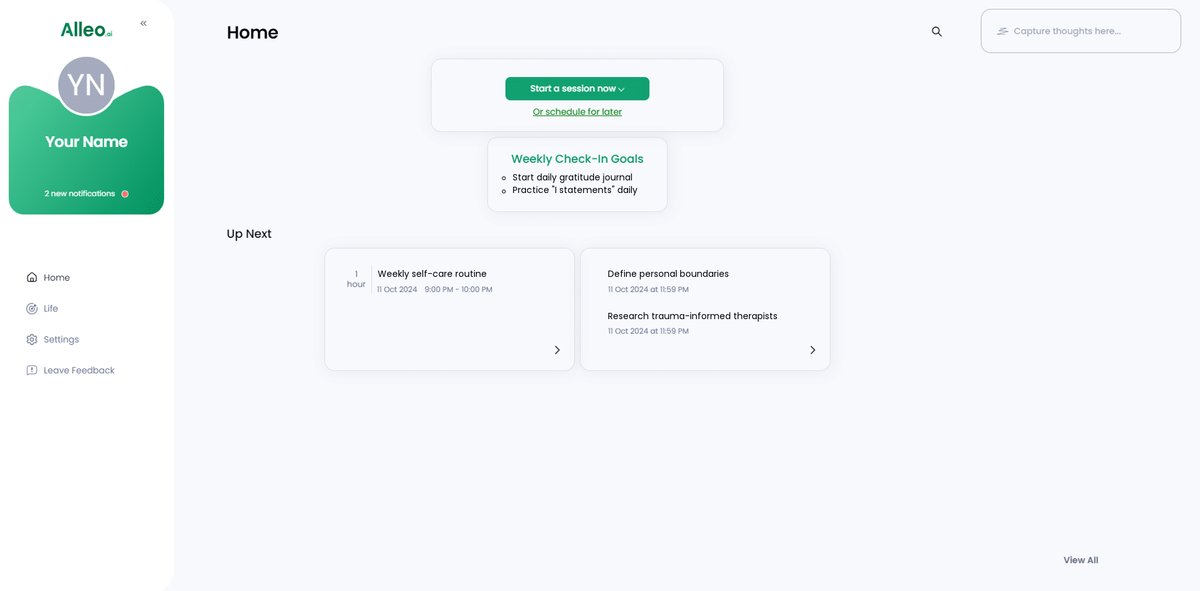
Step 5: Viewing and managing goals after the session
After your coaching session on rebuilding trust, check the Alleo app’s home page to view and manage the goals you discussed, helping you stay on track with your journey toward healing and stronger relationships.
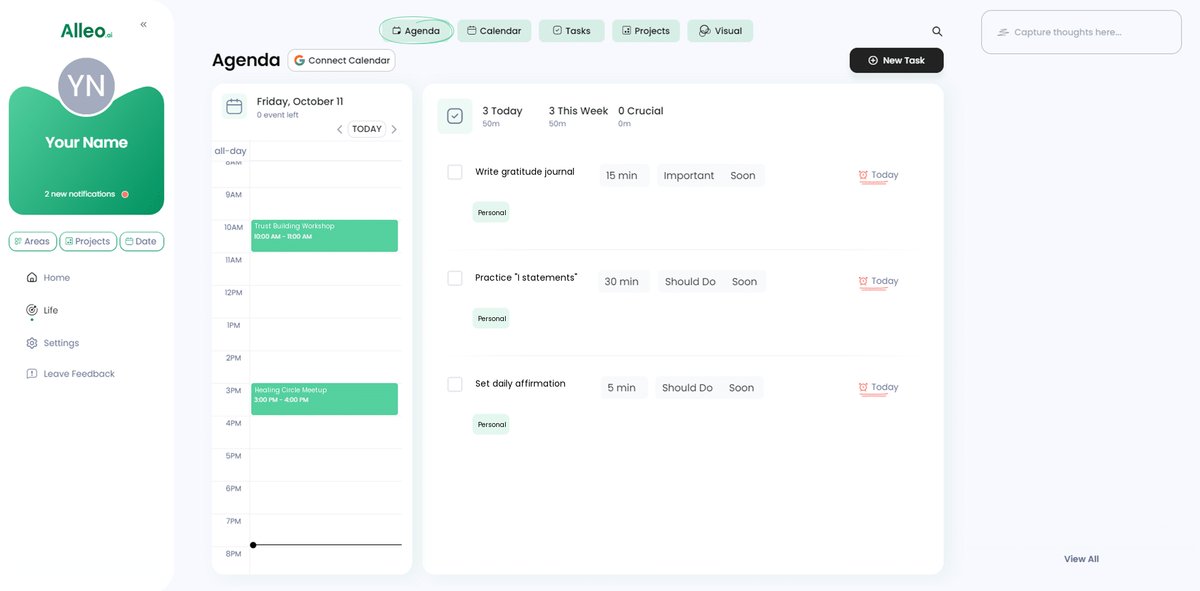
Step 6: Adding events to your calendar or app
Use the calendar and task features in Alleo to add and track events related to rebuilding trust, such as therapy appointments, self-care activities, or mindfulness sessions, helping you monitor your progress and stay accountable on your journey to healing and building stronger relationships.
Your Path to Building Trust and Healing
As you continue this journey of building trust after trauma, remember that rebuilding trust takes time and effort.
Practice self-care for trauma survivors in relationships through daily self-compassion and patience. Establish clear boundaries in relationships for trauma survivors.
Seek out trauma-focused therapy or counseling as therapy options for couples affected by trauma. Use “I statements” to improve communication strategies for trauma survivors.
Practice mindfulness to become more self-aware. Gradually increase your vulnerability with trusted people, focusing on rebuilding intimacy after trauma.
These trust-building exercises for trauma survivors will help you rebuild trust and improve your relationships.
You have the power to heal from trauma in relationships and create meaningful connections.
Alleo can support you every step of the way in overcoming trust issues in relationships. Start your free 14-day trial today and begin your journey to a brighter, more trusting future using trauma-informed relationship practices.