6 Proven Methods to Balance Intensive Study Sessions with Effective Breaks for Students
Are you struggling to find the right balance between extended study sessions and adequate rest periods? Balancing study and breaks is crucial for academic success.
As a life coach, I’ve helped many students and professionals navigate these challenges. I understand the importance of maintaining focus while avoiding burnout. Effective break strategies are key to improving productivity for college students.
In this article, you’ll discover practical strategies to balance intensive study sessions with effective breaks. We’ll cover time management techniques for students, physical activity, environment optimization, and mental health practices that impact academic performance. You’ll learn about the Pomodoro technique for studying and how to determine the optimal study-break ratio.
Let’s dive in and explore study techniques for academic success that will help you in improving focus and concentration in studies while managing stress effectively.

Understanding the Challenge of Balancing Study and Breaks
Finding the right balance between study and breaks isn’t just difficult; it’s essential. Many students, especially those juggling side jobs, struggle with balancing study and breaks daily. Effective time management for students is crucial for academic success.
Prolonged study sessions without breaks can lead to burnout. You might notice decreased productivity and a loss of focus. Implementing brain breaks and cognitive function exercises can help maintain mental health and academic performance.
I’ve seen many clients face this issue. They start strong but quickly lose steam, resulting in frustration and poor performance. Incorporating effective break strategies and productivity tips for college students can make a significant difference.
Effective breaks are crucial. They help maintain concentration and improve learning outcomes. The Pomodoro technique for studying is one method to optimize your study-break ratio.
It’s about finding a rhythm that works for you when balancing study and breaks, incorporating stress management for students to improve focus and concentration in studies.

Key Strategies for Balancing Study Sessions with Breaks
Overcoming this challenge of balancing study and breaks requires a few key steps. Here are the main areas to focus on to make progress in achieving an optimal study-break ratio:
- Implement the Pomodoro Technique for study sessions: Use 25-minute study intervals followed by short breaks, a proven time management technique for students.
- Schedule active breaks with short exercise routines: Integrate 10-minute exercise routines to recharge, enhancing cognitive function through brain breaks.
- Create a distraction-free study environment: Designate a specific, clutter-free study space to improve focus and concentration in studies.
- Use color psychology to enhance focus and retention: Incorporate calming and bright colors in your study area to boost productivity for college students.
- Incorporate low-stakes quizzes for memory retention: Regularly quiz yourself on study material, an effective study technique for academic success.
- Practice mindfulness and relaxation between sessions: Engage in deep breathing exercises and meditation, contributing to stress management for students and overall mental health and academic performance.
Let’s dive in to explore these strategies for balancing study and breaks!
1: Implement the Pomodoro Technique for study sessions
The Pomodoro Technique is an excellent method for balancing study and breaks, maintaining focus and avoiding burnout during intensive study sessions.
Actionable Steps:
- Set a timer for 25-minute study intervals followed by a 5-minute break. Repeat this cycle four times before taking a longer break of 15-30 minutes, optimizing your study-break ratio.
- Use a Pomodoro app to track your intervals and breaks. This ensures consistency and makes the process easier to manage, enhancing time management for students.
- Reflect on your productivity after each Pomodoro session. Identify patterns and make necessary adjustments to improve your study techniques for academic success.
Explanation:
These steps can significantly enhance your productivity and prevent burnout by ensuring regular breaks, which are crucial for balancing study and breaks effectively.
According to a study, taking frequent breaks can rejuvenate your mind and improve focus during study sessions. For more insights, explore the benefits of the Pomodoro Technique.
Key benefits of the Pomodoro Technique include:
- Improved focus and concentration in studies
- Reduced mental fatigue, supporting mental health and academic performance
- Better time management skills for students
By following the Pomodoro Technique, you can maintain a healthy balance between study and breaks, enhancing your overall learning experience and implementing effective break strategies.

2: Schedule active breaks with short exercise routines
Scheduling active breaks with short exercise routines is essential for maintaining energy and focus during study sessions, helping in balancing study and breaks effectively.
Actionable Steps:
- Plan 10-minute exercise routines such as stretching, yoga, or a quick walk during breaks to rejuvenate your mind and body, improving focus and concentration in studies.
- Use fitness apps or video guides to provide structure and variety to your exercise breaks, making them more engaging and enhancing productivity tips for college students.
- Set reminders to stand up and move around every hour to reduce sedentary behavior and increase energy levels, supporting effective break strategies.
Explanation:
Incorporating active breaks can significantly enhance your productivity and prevent burnout. Regular exercise boosts energy levels and helps maintain focus, contributing to optimal study-break ratio and time management for students.
According to research, breaking up study time with physical activity improves on-task behavior and attention, aligning with study techniques for academic success. For further insights, explore the benefits of active breaks.
By following these steps, you can keep your energy up and stay focused throughout your study sessions, effectively balancing study and breaks for improved mental health and academic performance.
3: Create a distraction-free study environment
Creating a distraction-free study environment is crucial for balancing study and breaks and maintaining focus and productivity.
Actionable Steps:
- Designate a specific study area that is free from distractions like noise, clutter, and electronic devices. This helps create a dedicated space for concentration and improves focus and concentration in studies.
- Use tools like noise-canceling headphones or white noise apps to maintain focus. These tools block out background distractions, making it easier to stay on task and implement effective break strategies.
- Implement a digital detox by limiting social media and non-essential app usage during study times. This minimizes interruptions and keeps you focused on your work, which is essential for time management for students.
Explanation:
These steps help you maintain a focused and productive study environment. By reducing distractions, you can improve your concentration and study efficiency, which are key productivity tips for college students.
According to a study, a distraction-free environment is essential for effective learning and balancing study and breaks. For more tips on creating a productive study space, visit this resource.
Creating a focused study space is the first step toward achieving your academic goals and implementing study techniques for academic success.

4: Use color psychology to enhance focus and retention
Using color psychology can significantly improve focus and memory retention during study sessions, helping in balancing study and breaks effectively.
Actionable Steps:
- Incorporate calming colors like blue and green in your study space to enhance concentration and reduce stress, supporting effective break strategies.
- Highlight key study materials with bright colors like yellow or orange to improve memory retention, a crucial aspect of study techniques for academic success.
- Use visual aids and colorful study tools to make learning more engaging and effective, enhancing productivity tips for college students.
Explanation:
These steps matter because they leverage the psychological effects of color to boost cognitive function. Research shows that colors can influence focus, comprehension, and memory retention, which are essential for improving focus and concentration in studies.
For more insights, explore the impact of color psychology on learning.
Colors can have a significant impact on your study environment and the optimal study-break ratio:
- Blue promotes calmness and productivity, aiding in stress management for students
- Green enhances concentration and reduces eye strain, supporting mental health and academic performance
- Yellow stimulates creativity and memory, beneficial for brain breaks and cognitive function
By following these steps, you can create a more conducive study environment and enhance your learning experience, effectively balancing study and breaks.
5: Incorporate low-stakes quizzes for memory retention
Incorporating low-stakes quizzes can significantly enhance memory retention during your study sessions, helping you balance study and breaks effectively.
Actionable Steps:
- Create or use online platforms to take regular low-stakes quizzes on the material you are studying. This helps reinforce learning and identify gaps in knowledge, improving focus and concentration in studies.
- Review quiz results to pinpoint areas needing improvement and reinforce learning through repetition. This ensures you address weak points effectively, contributing to academic success.
- Join study groups or forums where you can quiz each other and discuss answers to enhance understanding and retention. This approach can also aid in stress management for students.
Explanation:
These steps matter because they actively engage you in the learning process, making information easier to recall and helping with time management for students.
According to research, frequent quizzing can improve memory retention and understanding. For more tips on balancing study and breaks, visit this resource.
By following these steps, you can enhance your study sessions and improve your retention of the material, ultimately leading to better academic performance and productivity for college students.
6: Practice mindfulness and relaxation between sessions
Practicing mindfulness and relaxation is vital for balancing study and breaks, maintaining mental clarity, and reducing stress during intensive study sessions.
Actionable Steps:
- Practice deep breathing exercises for 5-10 minutes during breaks. This helps reduce stress and improve mental clarity, enhancing productivity tips for college students.
- Engage in relaxation techniques like progressive muscle relaxation or visualization to calm your mind and body, supporting effective break strategies.
- Use mindfulness apps that offer guided practices tailored to students’ needs to ensure consistency and variety in time management for students.
Explanation:
These steps matter because they help manage stress and maintain focus. Mindfulness practices improve cognitive function and emotional well-being, contributing to mental health and academic performance.
According to a study, incorporating relaxation techniques can enhance productivity and prevent burnout. For further insights, explore the benefits of mindfulness.
Quick mindfulness exercises for students balancing study and breaks:
- One-minute focused breathing
- Body scan meditation
- Mindful observation of surroundings
Integrating these practices into your routine can help you stay balanced and focused throughout your study sessions, improving focus and concentration in studies.
Partner with Alleo to Optimize Your Study Sessions
We’ve explored balancing study and breaks to enhance academic success. But did you know you can work directly with Alleo to make this easier and improve your time management for students?
Setting up an Alleo account is simple. Create a personalized plan tailored to your study needs, incorporating effective break strategies and optimal study-break ratios.
Alleo coaches will track your progress and keep you accountable, helping you implement productivity tips for college students and manage stress.
Ready to get started for free and boost your focus and concentration in studies? Let me show you how!
Step 1: Log In or Create Your Account
To start optimizing your study sessions with Alleo, simply Log in to your account or create a new one if you haven’t already.

Step 2: Choose “Building better habits and routines”
Select “Building better habits and routines” to create a structured approach for balancing your study sessions and breaks, helping you develop a sustainable and productive learning routine that aligns with the strategies discussed in the article.

Step 3: Selecting the life area you want to focus on
Choose the “Personal” life area to improve your study habits and time management skills, which are crucial for balancing intensive study sessions with effective breaks and maintaining overall well-being.

Step 4: Starting a coaching session
Begin your journey with Alleo by scheduling an intake session, where you’ll discuss your study habits and goals to create a personalized plan for balancing intensive study with effective breaks.

Step 5: Viewing and Managing Goals After the Session
After your coaching session, open the Alleo app and check your home page to view and manage the study goals you discussed, allowing you to track your progress and maintain the balance between intensive study and effective breaks.

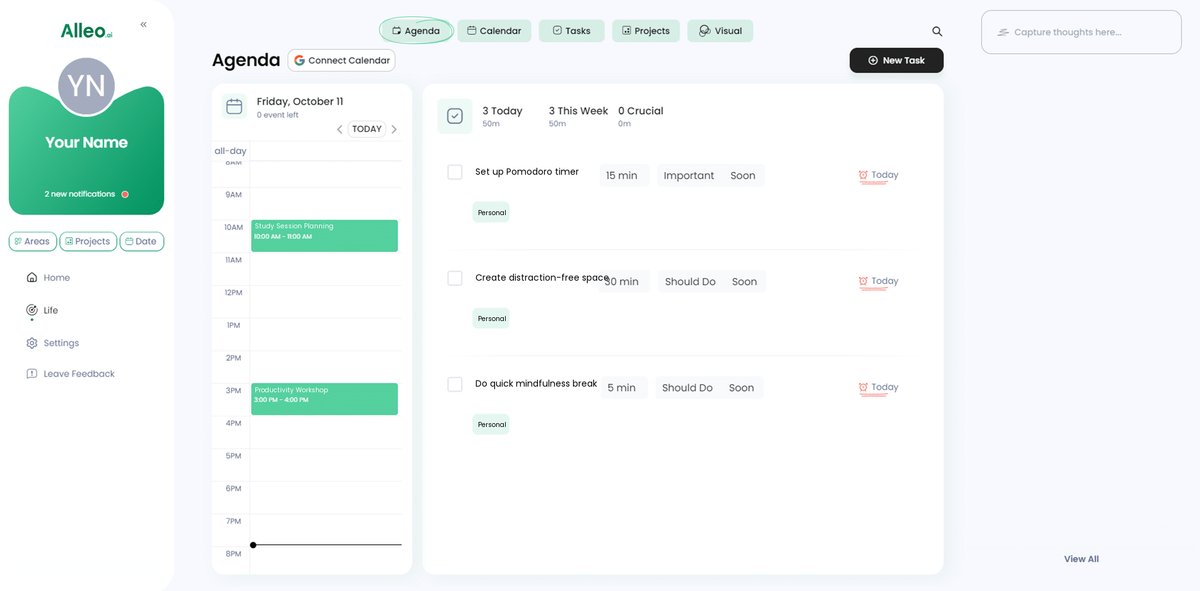
Step 6: Adding events to your calendar or app
Use the Alleo app to add study sessions, breaks, and exercise routines to your calendar, allowing you to easily track your progress in balancing intensive study with effective breaks and maintain accountability towards your academic goals.
Achieving Balance: Your Path to Effective Study Sessions
Let’s recap the journey we’ve taken.
Balancing study and breaks is essential for avoiding burnout and improving productivity. By implementing study techniques for academic success like the Pomodoro technique for studying, active breaks, and a distraction-free environment, you can maintain focus and energy.
Using color psychology and low-stakes quizzes enhances retention and engagement, while mindfulness practices support mental clarity and improve focus and concentration in studies.
Remember, it’s all about finding the right rhythm and creating a routine that works for you, including an optimal study-break ratio.
And don’t forget, Alleo is here to help. With personalized plans and reminders, Alleo makes balancing study and breaks easier, supporting your time management for students.
Ready to transform your study routine? Try Alleo for free and experience the difference in your productivity and stress management for students.
You’ve got this!