6 Proven Methods to Remember Child Development Milestones for New Parents
Are you feeling overwhelmed trying to keep track of your baby’s developmental milestones? Imagine the joy of watching your baby take their first steps, say their first word, or smile for the first time as part of their cognitive development in infants.
Now imagine you missed it because you weren’t sure when it was supposed to happen, lacking a proper baby development chart or toddler milestones checklist.
As a life coach, I’ve helped many new parents navigate these challenges of tracking baby development milestones. I often see the stress and anxiety they face over their child’s growth stages.
In this article, you’ll discover practical strategies to track and remember your child’s developmental milestones with ease. From using digital tools for tracking baby’s progress to joining supportive parenting groups for first-time parents, we’ll cover it all, including age-appropriate activities for babies.
Let’s dive into the world of tracking baby development milestones.

The Struggles New Parents Face in Tracking Developmental Milestones
Navigating the world of developmental milestones can be daunting for new parents. Many clients initially struggle with understanding what milestones to expect and when, especially when it comes to tracking baby development milestones. This uncertainty often leads to stress and anxiety.
In my experience, people often find themselves overwhelmed with conflicting information from various sources, including baby development charts and toddler milestones checklists. This confusion can make it difficult to know if their child is progressing through child growth stages normally.
Additionally, common mistakes and misconceptions about milestones can add to the pressure. For example, some parents may overestimate their child’s abilities based on informal comparisons with other children, rather than relying on proper developmental screening or tracking baby’s progress accurately.
Effective Strategies for Tracking Child Development Milestones
Overcoming this challenge of tracking baby development milestones requires a few key steps. Here are the main areas to focus on to make progress in monitoring your child’s growth stages.
- Use a milestone tracking app or digital tool: These can provide alerts and progress reports for your baby’s development.
- Create a visual milestone chart for reference: A colorful baby development chart helps track and celebrate milestones.
- Set calendar reminders for key developmental stages: Keep track of important toddler milestones with digital reminders.
- Join a parenting group for milestone discussions: Gain support and insights from other parents on tracking baby’s progress.
- Keep a baby journal to note observed milestones: Document and cherish these moments in your child’s cognitive development.
- Review milestones during pediatrician visits: Discuss progress and any developmental red flags with your pediatrician.
Let’s dive in to explore these strategies for tracking baby development milestones!
1: Use a milestone tracking app or digital tool
Using a milestone tracking app or digital tool can simplify tracking baby development milestones.
Actionable Steps:
- Download the CDC’s Milestone Tracker app: Install it on your smartphone to get started tracking baby’s progress right away.
- Set up alerts: Schedule notifications to remind you of upcoming milestones in your child’s growth stages.
- Update the app regularly: Dedicate time each week to log your child’s progress using a toddler milestones checklist.
Explanation:
These steps help you stay organized and proactive in monitoring your child’s growth and cognitive development in infants.
For instance, the CDC’s Milestone Tracker app offers a reliable way to track developmental milestones and create a baby development chart.
Regular updates ensure you capture all significant moments, reducing stress and providing clear insights for pediatric developmental screening visits.
Taking these steps will make tracking baby development milestones manageable and less overwhelming for first-time parents.

2: Create a visual milestone chart for reference
Creating a visual milestone chart can make tracking baby development milestones fun and easy.
Actionable Steps:
- Design a colorful baby development chart: Place it in a frequently visited area at home, like the kitchen or nursery.
- Break down the chart into age-specific sections: Use separate columns for different child growth stages, such as 0-3 months and 4-6 months.
- Update the chart regularly: Use stickers or markers to indicate achieved milestones and involve your child for added fun, turning it into a toddler milestones checklist.
Explanation:
These steps help you visually track and celebrate your child’s milestones, making it easier to stay organized while tracking baby’s progress.
Visual aids like charts can reduce stress and provide a clear picture of your child’s development. For more insights on developmental milestones, you can refer to Parents.com.
This method keeps you engaged and connected with your child’s growth, aiding in tracking baby development milestones effectively.
3: Set calendar reminders for key developmental stages
Setting calendar reminders for key developmental stages ensures you never miss an important milestone when tracking baby development milestones.
Actionable Steps:
- Sync reminders with your digital calendar: Add milestones to your phone or computer calendar for easy access to your toddler milestones checklist.
- Include detailed notes: Add specific actions or observations to each reminder, such as “Look for first words” or other cognitive development in infants.
- Review weekly: Have a dedicated time each week to check upcoming milestones and adjust plans if needed, focusing on age-appropriate activities for babies.
Explanation:
These steps help you stay organized and proactive in tracking baby’s progress. Digital reminders offer convenience and ensure you don’t overlook key moments in child growth stages.
For example, using a calendar can complement other tracking methods and enhance your overall approach to monitoring baby development milestones. According to Parents.com, understanding and tracking developmental milestones is crucial for your child’s growth.
Key benefits of using calendar reminders include:
- Never missing important developmental stages in your baby development chart
- Staying proactive in your child’s growth journey and motor skills timeline
- Reducing parental anxiety about forgetting milestones, especially for first-time parents
This method integrates smoothly with your daily routine, making it simple to stay on top of your child’s progress and identify any potential developmental red flags.
4: Join a parenting group for milestone discussions
Connecting with other parents in a parenting group can provide valuable support and insights into tracking baby development milestones.
Actionable Steps:
- Find a local or online parenting group: Look for groups that focus on child growth stages and developmental milestones.
- Attend monthly meetings or online sessions: Aim to participate in at least one discussion each month about tracking baby’s progress.
- Share and seek advice: Actively engage by asking questions about toddler milestones checklists and sharing your own experiences.
Explanation:
These steps help you gain diverse perspectives and reassurance from other parents on tracking baby development milestones. Being part of a group can reduce anxiety and offer practical solutions for monitoring cognitive development in infants.
According to CDC’s Act Early initiative, community support plays a crucial role in child development. This approach ensures you stay informed about motor skills timelines and supported throughout your parenting journey.
Joining a parenting group can make the process of tracking baby development milestones less overwhelming for first-time parents.
5: Keep a baby journal to note observed milestones
Keeping a baby journal is a wonderful way to document and cherish your child’s developmental milestones while tracking baby development milestones.
Actionable Steps:
- Start a dedicated baby journal: Write brief entries with dates and descriptions for each milestone observed, creating a personalized baby development chart.
- Include photos and mementos: Add visual elements related to the milestones, creating a scrapbook section in the journal to track your baby’s progress.
- Review and update regularly: Set a recurring reminder to journal weekly, ensuring you capture all important moments in your child’s growth stages.
Explanation:
These steps help you organize and celebrate your child’s development while creating lasting memories. Journaling can also reduce stress by providing a clear record of progress, similar to a toddler milestones checklist.
According to Parents.com, tracking milestones is crucial for understanding your child’s growth.
Elements to include in your baby journal for tracking baby development milestones:
- Detailed descriptions of new skills and behaviors, including cognitive development in infants
- Dates of significant achievements in the motor skills timeline
- Photos or drawings of memorable moments, highlighting age-appropriate activities for babies
This method makes tracking milestones enjoyable and meaningful for parents tracking baby development milestones.
6: Review milestones during pediatrician visits
Reviewing milestones during pediatrician visits ensures you stay on track with tracking baby development milestones.
Actionable Steps:
- Prepare a list of observed milestones: Before each visit, use your milestone tracking app to generate a detailed report on your baby’s progress.
- Discuss progress and concerns: During the visit, talk about any milestones your child has met or missed and ask for advice on child growth stages.
- Take notes on pediatrician’s guidance: Write down all recommendations and follow-up steps provided during the visit, including any toddler milestones checklist.
Explanation:
These steps are crucial for keeping an accurate record of your child’s development and addressing any potential developmental red flags early on.
Regularly discussing milestones with your pediatrician can provide peace of mind and professional insights on tracking baby’s progress.
For additional information, you can refer to the CDC’s Act Early initiative, which emphasizes the importance of monitoring child development.
This approach ensures you have expert support while tracking baby development milestones.
Key topics to discuss with your pediatrician:
- Recent developmental achievements in cognitive development in infants
- Any concerns about missed milestones on the motor skills timeline
- Strategies to support upcoming developmental stages and age-appropriate activities for babies
Consistently reviewing milestones with your pediatrician enhances your understanding and keeps you informed about your baby’s development chart.
Partner with Alleo to Track Your Child’s Development
We’ve explored the challenges of tracking baby development milestones and the steps to make it easier. Did you know you can work with Alleo to simplify this journey through child growth stages?
Set up an account and create a personalized toddler milestones checklist. Alleo’s AI coach will follow up on your progress, handle changes, and keep you accountable via text and push notifications, helping you track your baby’s progress efficiently.
Ready to get started for free? Let me show you how to begin tracking baby development milestones with ease!
Step 1: Logging In or Creating an Account
To begin tracking your child’s developmental milestones with our AI coach, simply Log in to your account or create a new one if you’re a first-time user.

Step 2: Choose “Building better habits and routines”
Click on “Building better habits and routines” to establish a consistent system for tracking your child’s milestones, making it easier to monitor their development and reduce the stress of potentially missing important moments.

Step 3: Select “Personal” as Your Focus Area
Choose the “Personal” life area to track your child’s developmental milestones effectively, ensuring you stay on top of their growth and celebrate each achievement in their journey.

Step 4: Starting a Coaching Session
Begin your journey with Alleo by participating in an initial intake session, where you’ll discuss your child’s developmental milestones and create a personalized plan to track their progress effectively.

Step 5: Viewing and Managing Goals After the Session
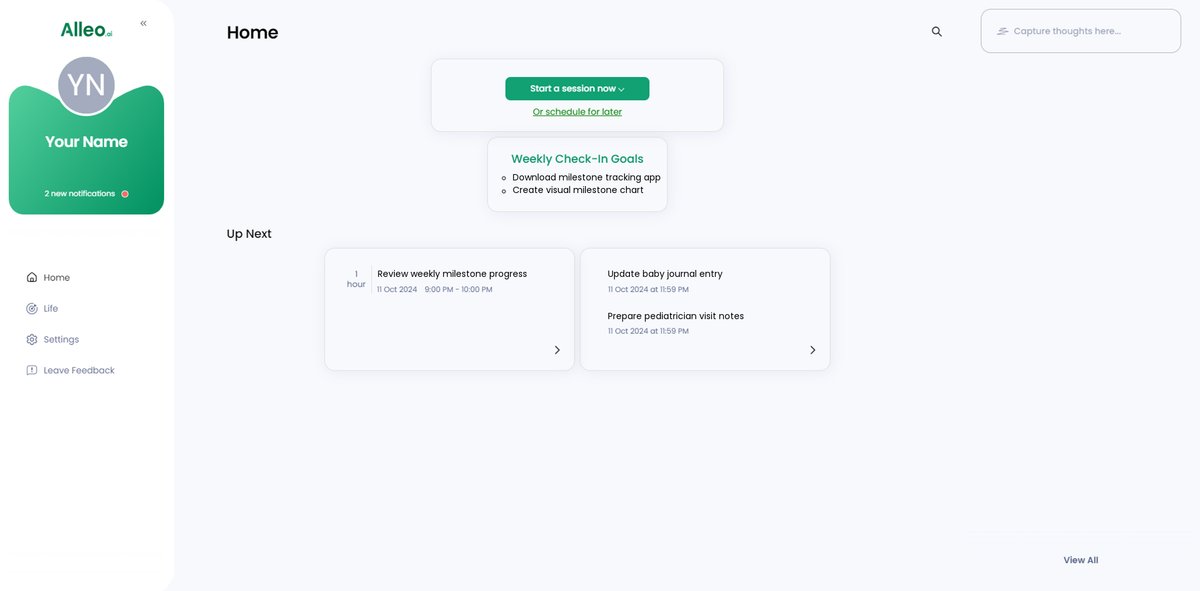
After your coaching session, open the Alleo app to find your discussed developmental milestone goals displayed on the home page, where you can easily track and update your progress in supporting your child’s growth.
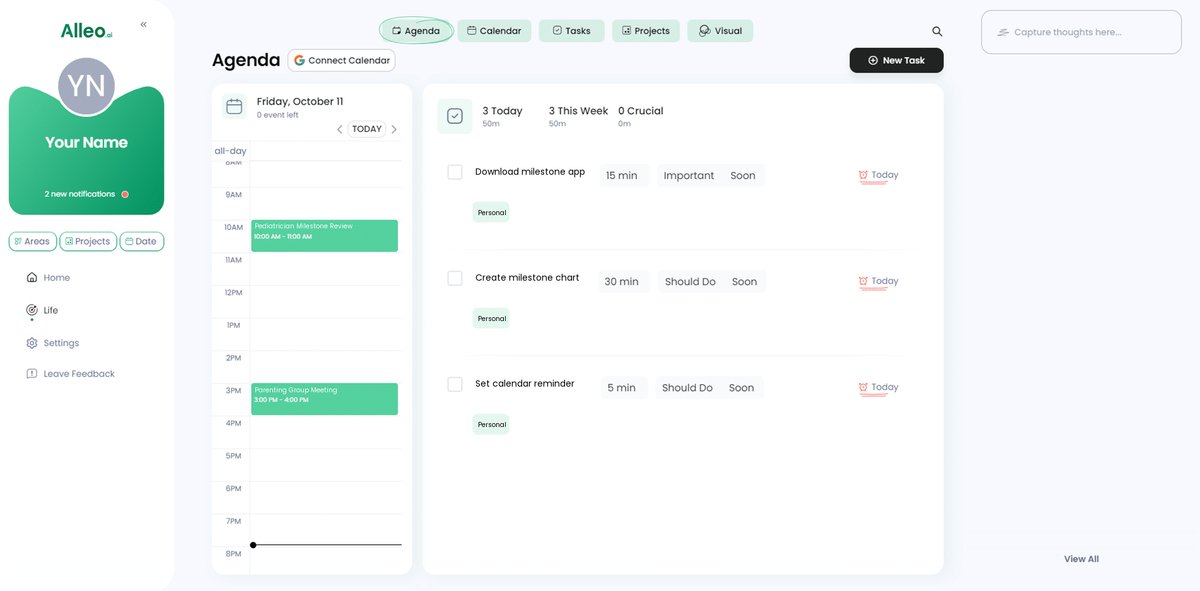
Step 6: Adding events to your calendar or app
Use Alleo’s calendar and task features to add important developmental milestones and pediatrician appointments, allowing you to easily track your child’s progress and stay on top of crucial events in their growth journey.
Wrap-Up and Next Steps
Navigating your child’s developmental milestones can be a daunting journey. However, with the right strategies and tools for tracking baby development milestones, it becomes manageable and even enjoyable.
Remember, you’re not alone in this. Many new parents face similar challenges when monitoring child growth stages.
By using apps, visual baby development charts, reminders, and support groups, you can stay on top of your child’s progress and track toddler milestones.
Don’t forget to document and celebrate each milestone in a baby journal. Sharing these moments with your pediatrician will ensure you get expert advice on developmental screening and potential red flags.
With Alleo, you have a trusted partner to guide you through this journey of tracking baby development milestones. Try it for free and simplify your experience today!