6 Proven Strategies for First-Time Managers Leading Remote Teams Effectively
Imagine leading a team where every member works from a different location, each with unique challenges and needs. This is the reality of remote team leadership strategies in today’s digital workplace.
As a life coach, I’ve helped many professionals navigate these first-time manager challenges in virtual environments. I’ve seen firsthand the struggles and triumphs of managing remote teams and developing virtual leadership skills.
In this article, you’ll find effective remote team management tips for first-time managers leading distributed teams. We’ll cover communication norms for building trust in distributed teams, setting SMART goals for remote performance management, and using digital collaboration tools for managers to boost remote team productivity strategies.
Let’s dive into these work-from-home leadership best practices.

The Real Struggles of Remote Team Leadership
Transitioning to remote team leadership strategies often brings unexpected communication barriers. Many clients initially struggle with the lack of face-to-face interactions, leading to misunderstandings and frustration. Effective communication in remote teams is crucial for overcoming these challenges.
Tracking productivity remotely is another common hurdle for first-time managers. Without the right remote team productivity strategies and digital collaboration tools for managers, it’s easy for projects to fall behind, impacting overall team performance and morale.
Team cohesion also suffers. In my experience, remote teams often feel disconnected, which can diminish motivation and collaboration. Virtual team building activities can help address this issue and build trust in distributed teams.
These challenges are real and can make your new role feel overwhelming. But with the right remote team management tips and work-from-home leadership best practices, you can turn these obstacles into opportunities for growth and develop essential virtual leadership skills.

Roadmap to Successful Remote Team Leadership
Overcoming this challenge requires a few key steps. Here are the main areas to focus on to make progress in remote team leadership strategies:
- Establish clear communication channels and norms: Use platforms like Slack or Microsoft Teams for effective communication in remote teams.
- Set SMART goals and KPIs: Create goals that are Specific, Measurable, Achievable, Relevant, and Time-bound with your team to enhance remote team productivity strategies.
- Implement regular one-on-one check-ins: Schedule weekly or bi-weekly meetings to discuss progress and challenges, improving virtual leadership skills.
- Use project management tools for task tracking: Tools like Asana or Trello help keep projects on track and are essential digital collaboration tools for managers.
- Foster virtual team-building activities: Organize events to build camaraderie and enhance team cohesion, addressing first-time manager challenges in remote settings.
- Develop a remote work policy and expectations: Create guidelines outlining work hours, communication protocols, and performance expectations to support work-from-home leadership best practices.
Let’s dive into these remote team management tips!
1: Establish clear communication channels and norms
Establishing clear communication channels and norms is crucial for ensuring smooth collaboration in remote teams and is a fundamental remote team leadership strategy.
Actionable Steps:
- Implement dedicated communication platforms like Slack or Microsoft Teams for different types of interactions (e.g., project updates, casual chats), enhancing digital collaboration tools for managers.
- Set and share clear guidelines on communication frequency, response times, and preferred channels to improve virtual leadership skills.
- Encourage transparency and open communication through regular team meetings and feedback sessions, addressing first-time manager challenges.
Explanation: Clear communication channels help prevent misunderstandings and foster a cohesive team environment. By setting guidelines, you ensure everyone is on the same page, which enhances productivity and supports effective communication in remote teams.
According to Rippling, consistent communication is key to overcoming remote work challenges and building trust in distributed teams.
Key benefits of clear communication channels:
- Improved team cohesion and collaboration, essential for remote team management
- Reduced misunderstandings and conflicts, supporting work-from-home leadership best practices
- Enhanced productivity and efficiency, contributing to remote team productivity strategies
Establishing these norms early on sets a solid foundation for effective remote team leadership strategies and management.

2: Set SMART goals and KPIs for remote team members
Setting SMART goals and KPIs is crucial for ensuring clarity and accountability in remote teams, making it a key remote team leadership strategy.
Actionable Steps:
- Collaborate with team members to define SMART goals: Work together to set goals that are Specific, Measurable, Achievable, Relevant, and Time-bound, enhancing remote team management.
- Develop key performance indicators (KPIs): Align KPIs with both team and individual goals to measure progress effectively, a vital aspect of remote performance management.
- Use tools like Asana or Trello: Track progress and provide regular updates on goal attainment using digital collaboration tools for managers.
Explanation:
SMART goals provide a clear roadmap, making it easier to track progress and achieve desired outcomes in remote team leadership strategies.
According to this article, setting measurable objectives can significantly enhance productivity in remote teams, addressing first-time manager challenges.
Regular updates keep everyone aligned and motivated, crucial for effective communication in remote teams.
By setting clear goals and KPIs, you create a structured environment that fosters accountability and success, key to building trust in distributed teams.

3: Implement regular one-on-one check-ins
Regular one-on-one check-ins are essential for maintaining connection and addressing individual team member needs in remote settings, making them a crucial component of effective remote team leadership strategies.
Actionable Steps:
- Schedule consistent check-ins: Plan weekly or bi-weekly meetings to discuss progress, challenges, and needed support, enhancing virtual leadership skills.
- Provide constructive feedback: Use these sessions to give feedback and recognize achievements, reinforcing positive performance and addressing remote performance management.
- Create a safe environment: Encourage open dialogue, allowing team members to voice concerns and share ideas, building trust in distributed teams.
Explanation: Regular check-ins foster trust and engagement by providing a consistent platform for communication, a key aspect of remote team management tips.
This helps in addressing issues promptly and recognizing achievements, which is crucial for maintaining motivation and productivity in remote team leadership strategies.
According to Predictive Index, regular communication is key to effective remote team management.
These steps ensure that everyone stays aligned and motivated, contributing to overall team success and improving remote team productivity strategies.

4: Use project management tools for task tracking
Using project management tools for task tracking is essential for maintaining organization and ensuring project success in remote teams. This is a crucial aspect of remote team leadership strategies.
Actionable Steps:
- Select the right tool: Choose a project management tool that fits your team’s needs, such as Monday or Smartsheet, to enhance virtual leadership skills.
- Set up project boards: Assign tasks with clear deadlines and priorities to keep everyone on track, addressing first-time manager challenges in remote settings.
- Regularly review progress: Frequently update project statuses to ensure alignment and address any issues promptly, supporting effective communication in remote teams.
Explanation: Using project management tools helps in organizing tasks, setting clear expectations, and tracking progress efficiently, which are key remote team productivity strategies.
According to this article, such tools are crucial for bridging productivity gaps in remote work settings. Regular reviews ensure that everyone remains aligned with project goals, contributing to building trust in distributed teams.
Essential features to look for in project management tools:
- Task assignment and deadline tracking
- Progress visualization (e.g., Gantt charts)
- Collaboration and communication features, vital for digital collaboration tools for managers
This structured approach to task tracking can significantly enhance your team’s productivity and collaboration, embodying work-from-home leadership best practices.
5: Foster virtual team-building activities
Fostering virtual team-building activities is essential for maintaining team morale and building strong connections in remote team leadership strategies.
Actionable Steps:
- Organize virtual team-building events: Plan online games, virtual coffee breaks, or team challenges to promote bonding and enhance remote team management.
- Create informal chat channels: Set up channels for non-work topics to help team members connect on a personal level, improving virtual leadership skills.
- Celebrate milestones and achievements: Host virtual recognition events to acknowledge and celebrate both team and individual accomplishments, addressing first-time manager challenges.
Explanation:
These steps help build camaraderie and reduce feelings of isolation among remote team members, enhancing effective communication in remote teams.
According to this study, virtual team-building activities can enhance team cohesion and productivity, which are crucial for remote team productivity strategies.
Engaging in these activities can create a more connected and motivated team, building trust in distributed teams.
Fostering these connections can significantly improve team dynamics and job satisfaction, supporting work-from-home leadership best practices.

6: Develop a remote work policy and expectations
Developing a remote work policy and setting clear expectations are critical for ensuring consistency and accountability in remote teams. This is a key aspect of effective remote team leadership strategies.
Actionable Steps:
- Draft a comprehensive remote work policy: Outline work hours, communication protocols, and performance expectations clearly. This is crucial for remote team management.
- Share and discuss the policy with your team: Ensure everyone understands and agrees to the guidelines by holding a meeting to discuss, demonstrating your virtual leadership skills.
- Regularly review and update the policy: Adapt the policy to address new challenges and incorporate feedback from team members, a vital practice for first-time managers.
Explanation:
A well-defined remote work policy sets clear expectations, reducing misunderstandings and fostering a cohesive work environment. According to Rippling, clear guidelines and consistent communication are crucial for remote team success. This is especially important for effective communication in remote teams.
Regularly updating the policy ensures it remains relevant and effective, which is essential for building trust in distributed teams.
Key components of an effective remote work policy:
- Work hours and availability expectations
- Communication protocols and response times
- Performance evaluation criteria, which ties into remote performance management
Creating and maintaining a robust remote work policy helps in building a reliable and productive remote team, a cornerstone of successful remote team leadership strategies.
Transform Your Remote Team Leadership with Alleo
We’ve explored the challenges of remote team leadership and effective strategies for virtual leadership skills. But did you know you can work with Alleo to make this journey easier and enhance your remote team leadership strategies?
Alleo offers tailored coaching support for remote managers, helping you overcome first-time manager challenges. Set up an account and create a personalized plan to improve your remote team management tips.
Our AI coach will follow up on your progress and handle changes, assisting you in building trust in distributed teams.
You’ll get actionable advice and practical experience in remote team productivity strategies. Alleo helps you stay accountable via text and push notifications, supporting your work-from-home leadership best practices.
Ready to get started for free and boost your remote team leadership strategies?
Let me show you how!
Step 1: Log in or Create Your Alleo Account
To begin your remote leadership journey with Alleo, simply Log in to your account or create a new one to access personalized coaching support tailored for remote team managers.

Step 2: Choose Your Focus Area
Select “Setting and achieving personal or professional goals” to align with the article’s emphasis on effective remote team leadership, helping you implement SMART goals and boost your team’s performance.

Step 3: Select “Career” as Your Focus Area
Choose “Career” as your focus area in Alleo to address the challenges of remote team leadership, aligning perfectly with the strategies discussed for effective management and communication in distributed work environments.

Step 4: Starting a Coaching Session
Begin your journey with Alleo by scheduling an intake session to discuss your remote leadership challenges and create a personalized action plan for improving your team management skills.

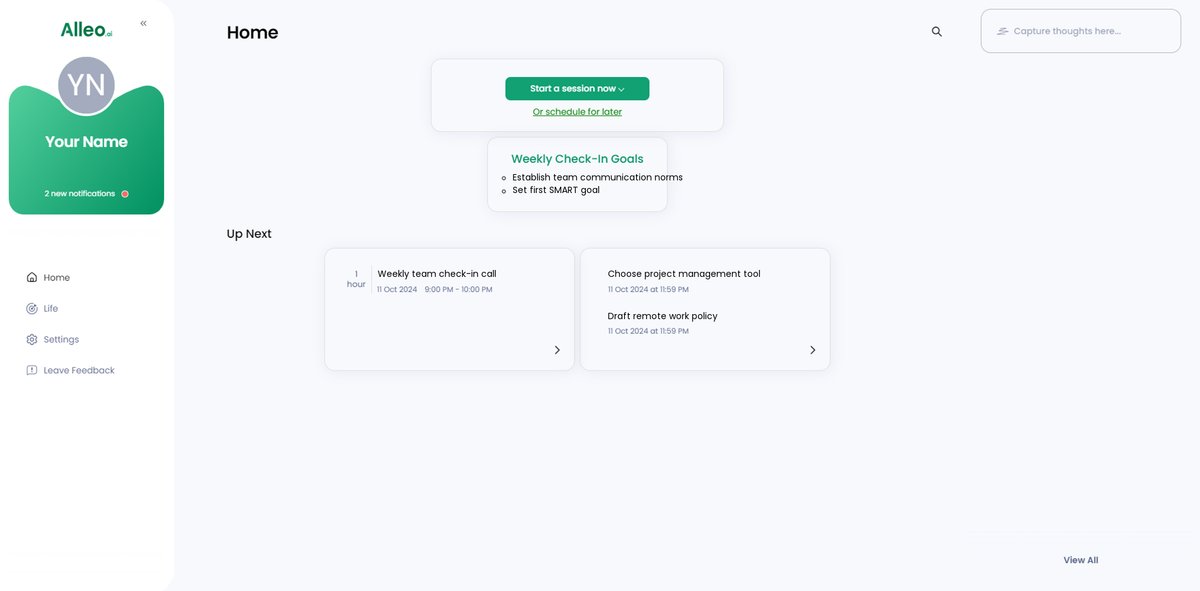
Step 5: Viewing and managing goals after the session
After your coaching session, check the Alleo app’s home page to view and manage the goals you discussed, ensuring you stay on track with your remote team leadership objectives.
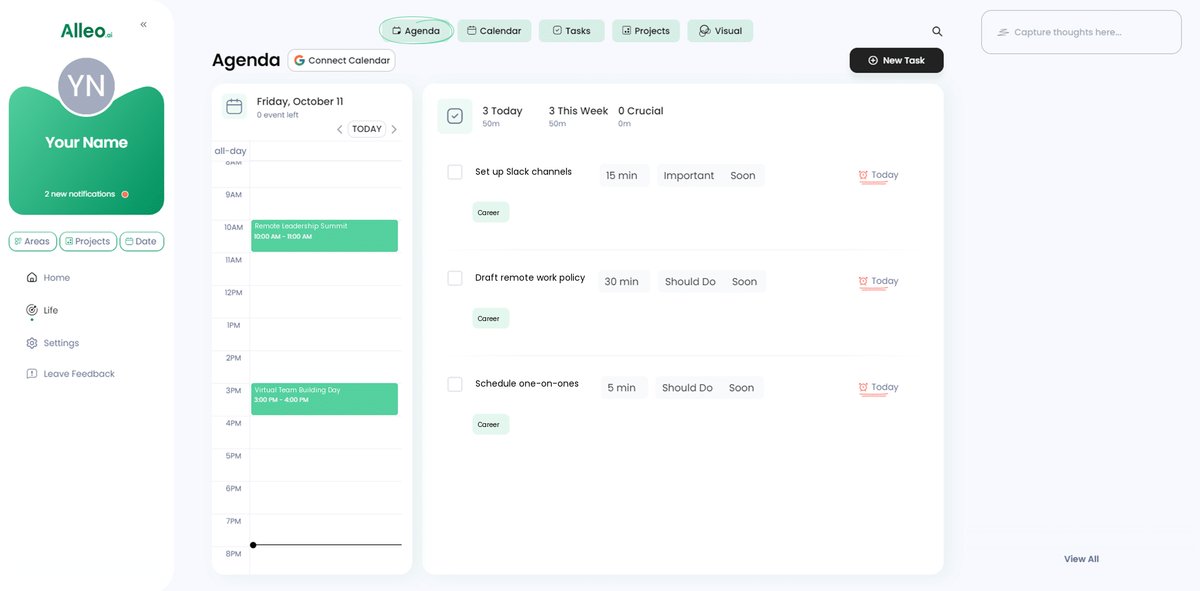
Step 6: Adding events to your calendar or app
Use Alleo’s calendar and task features to schedule and track your remote leadership activities, helping you stay organized and accountable as you implement the strategies discussed in this article.
Bringing It All Together
Transitioning to remote team leadership can be daunting, but you’re not alone in facing these first-time manager challenges.
By focusing on effective communication in remote teams, setting SMART goals, and using digital collaboration tools for managers, you can implement successful remote team leadership strategies. Regular check-ins and virtual team building activities help maintain connection and morale while building trust in distributed teams.
Creating a remote work policy ensures everyone is on the same page, which is crucial for remote team productivity strategies. These work-from-home leadership best practices empower you to turn challenges into growth opportunities.
Remember, Alleo is here to support your virtual leadership skills every step of the way. Try Alleo for free and transform your remote team management today.
You’ve got this. Let’s make remote team leadership a success!