6 Proven Strategies for Handling Workplace Favoritism Gracefully
Have you ever been chosen for a task only to feel sidelined by your team? This is a common scenario when dealing with workplace favoritism professionally.
As a life coach, I’ve helped many professionals navigate these challenges. In my experience, addressing favoritism gracefully is vital for maintaining professional relationships and personal well-being, especially when dealing with unfair treatment at work.
In this article, you’ll discover proven strategies to handle workplace favoritism. We’ll cover everything from documenting incidents to seeking feedback and communicating with HR, focusing on professional responses to workplace bias and navigating office politics and favoritism.
Ready to dive in and learn about handling workplace favoritism professionally? Let’s go!

Understanding the Impact of Favoritism
Handling workplace favoritism professionally is crucial as it can lead to feelings of exclusion and disrupt team dynamics. Many clients initially struggle with the isolation that comes from being given tasks over more senior colleagues, which is a common aspect of dealing with unfair treatment at work.
This can create tension and resentment within the team, damaging morale and cooperation. In my experience, these changes can significantly impact both individual and team performance, making it essential to learn professional responses to workplace bias.
Several clients report feeling undervalued and questioning their abilities when favoritism occurs. It’s a painful experience that can hinder professional growth and satisfaction, highlighting the importance of building resilience against workplace discrimination.
Addressing this issue is crucial for maintaining a healthy work environment and improving workplace equality and fairness.

Key Steps to Handle Workplace Favoritism Gracefully
Handling workplace favoritism professionally requires a few key steps. Here are the main areas to focus on to make progress in dealing with unfair treatment at work.
- Document instances of favoritism objectively: Keep a detailed record of each occurrence to support professional responses to workplace bias.
- Focus on personal performance and growth: Set measurable development goals and seek opportunities to improve, maintaining productivity despite favoritism.
- Build relationships across the team: Engage in team-building activities and show appreciation for colleagues, fostering positive relationships despite favoritism.
- Seek feedback on your work from various sources: Request constructive feedback regularly and use it to improve, aiding in career advancement strategies in biased environments.
- Communicate concerns professionally with HR: Prepare and present your documented concerns with proposed solutions, addressing issues of workplace equality and fairness.
- Practice self-care and maintain work-life balance: Prioritize your mental and physical health and set clear boundaries, building resilience against workplace discrimination.
Let’s dive in to explore these strategies for handling workplace favoritism professionally!
1: Document instances of favoritism objectively
Documenting instances of favoritism objectively is essential for handling workplace favoritism professionally and addressing the issue effectively.
Actionable Steps:
- Keep a detailed journal: Note the dates, times, and specific details of each occurrence of favoritism, aiding in dealing with unfair treatment at work.
- Gather evidence: Collect relevant materials such as emails and meeting notes to support your observations when communicating concerns about preferential treatment.
- Maintain objectivity: Record the impact on team dynamics and personal performance without letting emotions color the entries, fostering professional responses to workplace bias.
Explanation:
Documenting incidents helps build a clear case when discussing concerns with HR. Objective records ensure your points are taken seriously when navigating office politics and favoritism.
By maintaining objectivity, you align with industry best practices, such as those highlighted in the Harvard Business Review. This approach underscores your professionalism and commitment to a fair work environment, contributing to improving workplace equality and fairness.
Key benefits of documenting favoritism:
- Provides concrete evidence for discussions
- Helps identify patterns over time
- Supports a more objective perspective
By keeping detailed records, you set the stage for constructive conversations about favoritism and build resilience against workplace discrimination.

2: Focus on personal performance and growth
Focusing on personal performance is crucial for handling workplace favoritism professionally and fostering professional development.
Actionable Steps:
- Set achievable goals: Identify key areas for improvement and create a plan to reach them, helping you navigate office politics and favoritism.
- Pursue professional development: Attend workshops, seminars, and enroll in online courses to enhance your skills and build resilience against workplace discrimination.
- Track progress: Regularly monitor your progress and adjust your goals as needed, maintaining productivity despite favoritism.
Explanation:
These steps help you stay proactive and professional, showcasing your dedication to growth despite favoritism and dealing with unfair treatment at work.
Developing your skills and tracking progress can boost your confidence and value within the team, contributing to career advancement strategies in biased environments.
For more insights, check out this guide on handling workplace favoritism.
By focusing on your growth, you can turn a challenging situation into a personal development opportunity while professionally responding to workplace bias.

3: Build relationships across the team
Creating strong connections with your team is crucial for handling workplace favoritism professionally and fostering a supportive environment.
Actionable Steps:
- Participate in team-building activities: Join in on social events and outings organized by your team to build rapport and navigate office politics and favoritism.
- Organize informal meetups: Plan casual get-togethers such as coffee breaks or lunch outings to strengthen relationships and foster positive relationships despite favoritism.
- Show appreciation for colleagues: Acknowledge your team members’ contributions during meetings and offer your support on projects, helping to maintain productivity despite favoritism.
Explanation:
Building relationships helps to mitigate the negative effects of favoritism by fostering a sense of unity and collaboration, which is essential when dealing with unfair treatment at work.
Engaging in team-building activities and informal meetups can improve team cohesion and morale, contributing to building resilience against workplace discrimination.
According to the CIPD, maintaining positive workplace dynamics is vital for preventing conflict and ensuring a respectful environment, which is crucial for improving workplace equality and fairness.
These steps can help create a more inclusive and supportive team atmosphere, making it easier to address favoritism constructively and develop professional responses to workplace bias.
4: Seek feedback on your work from various sources
Seeking feedback from different sources is crucial for personal growth and handling workplace favoritism professionally.
Actionable Steps:
- Schedule regular check-ins: Arrange bi-weekly meetings with your manager to discuss your progress and receive constructive feedback, which can help in navigating office politics and favoritism.
- Request peer reviews: Ask colleagues for feedback on specific tasks to gain diverse perspectives on your work, aiding in dealing with unfair treatment at work.
- Utilize anonymous surveys: Implement anonymous feedback forms to get honest insights from team members, fostering positive relationships despite favoritism.
Explanation:
These steps help you gather comprehensive feedback, which is vital for continuous improvement and building resilience against workplace discrimination. Regular check-ins and peer reviews provide varied insights, while anonymous surveys ensure candid responses.
Embracing feedback aligns with best practices noted by Asana, fostering a culture of openness and growth. By seeking diverse feedback, you demonstrate a commitment to excellence and adaptability in your role, which are essential for career advancement strategies in biased environments.
Benefits of seeking diverse feedback:
- Gains multiple perspectives on your work
- Identifies blind spots in your performance
- Encourages continuous improvement
This approach helps you build a well-rounded view of your performance, paving the way for professional development and improving workplace equality and fairness.

5: Communicate concerns professionally with HR
Effectively communicating concerns with HR is crucial when handling workplace favoritism professionally.
Actionable Steps:
- Prepare your documentation: Collect and organize your journal entries, emails, and meeting notes that highlight instances of favoritism and unfair treatment at work.
- Outline your concerns clearly: Write down your specific concerns about preferential treatment and what outcomes you hope to achieve from the conversation.
- Propose constructive solutions: Think ahead and suggest possible solutions or changes that could address the favoritism issues and improve workplace equality and fairness.
Explanation:
By preparing thoroughly, you ensure your discussion with HR is focused and productive. This approach demonstrates your professionalism and commitment to navigating office politics and favoritism effectively.
According to the CIPD, clear communication and constructive solutions are key to resolving workplace conflicts effectively. Engaging HR with a solutions mindset can foster a collaborative atmosphere and drive positive changes in biased environments.
Communicating your concerns professionally can lead to constructive outcomes and a more inclusive workplace environment, helping you maintain productivity despite favoritism.
6: Practice self-care and maintain work-life balance
Practicing self-care and maintaining a healthy work-life balance are crucial for handling workplace favoritism professionally and effectively.
Actionable Steps:
- Prioritize regular breaks: Schedule short breaks throughout your workday to recharge and avoid burnout when dealing with unfair treatment at work.
- Engage in physical activity: Incorporate daily exercise routines like walking or yoga to reduce stress and boost mental health, helping you navigate office politics and favoritism.
- Set clear boundaries: Define your work hours and communicate them to your team to protect your personal time, which is essential for building resilience against workplace discrimination.
Explanation:
These steps are essential for promoting your well-being and sustaining productivity while handling workplace favoritism professionally. Regular breaks and physical activity help mitigate stress, while clear boundaries ensure a healthy separation between work and personal life.
According to LinkedIn, focusing on mental health and well-being is vital for thriving in a professional setting, especially when dealing with workplace bias.
Self-care strategies for workplace resilience:
- Practice mindfulness or meditation to maintain productivity despite favoritism
- Cultivate hobbies outside of work to improve workplace equality and fairness
- Seek support from friends or a therapist when communicating concerns about preferential treatment
By prioritizing self-care, you can better navigate workplace challenges and maintain a balanced lifestyle while handling workplace favoritism professionally.
Partner with Alleo to Navigate Workplace Favoritism
We’ve explored strategies for handling workplace favoritism professionally. But did you know you can work directly with Alleo to make this journey easier and faster when dealing with unfair treatment at work?
Start by setting up an Alleo account. Create a personalized plan to address favoritism and navigate office politics effectively.
Alleo’s AI coach provides tailored coaching support for professional responses to workplace bias, much like a human coach.
With Alleo, document incidents, track progress, and receive regular feedback on building resilience against workplace discrimination. The AI coach keeps you accountable through text and push notifications, helping you maintain productivity despite favoritism.
Ready to get started for free and improve workplace equality and fairness? Let me show you how!
Step 1: Log In or Create Your Account
To begin addressing workplace favoritism with our AI coach, log in to your existing Alleo account or create a new one to access personalized support and tools.

Step 2: Choose Your Focus Area
Select “Setting and achieving personal or professional goals” to address workplace favoritism by improving your performance and demonstrating your value to the team. This aligns with the article’s advice on focusing on personal growth and development to navigate challenging work environments.

Step 3: Select “Career” as Your Focus Area
Choose “Career” as your focus area in Alleo to address workplace favoritism effectively, aligning your goals with strategies for professional growth and improved team dynamics.

Step 4: Starting a Coaching Session
Begin your journey with Alleo by scheduling an initial intake session, where you’ll discuss your experiences with workplace favoritism and create a personalized plan to address it effectively.

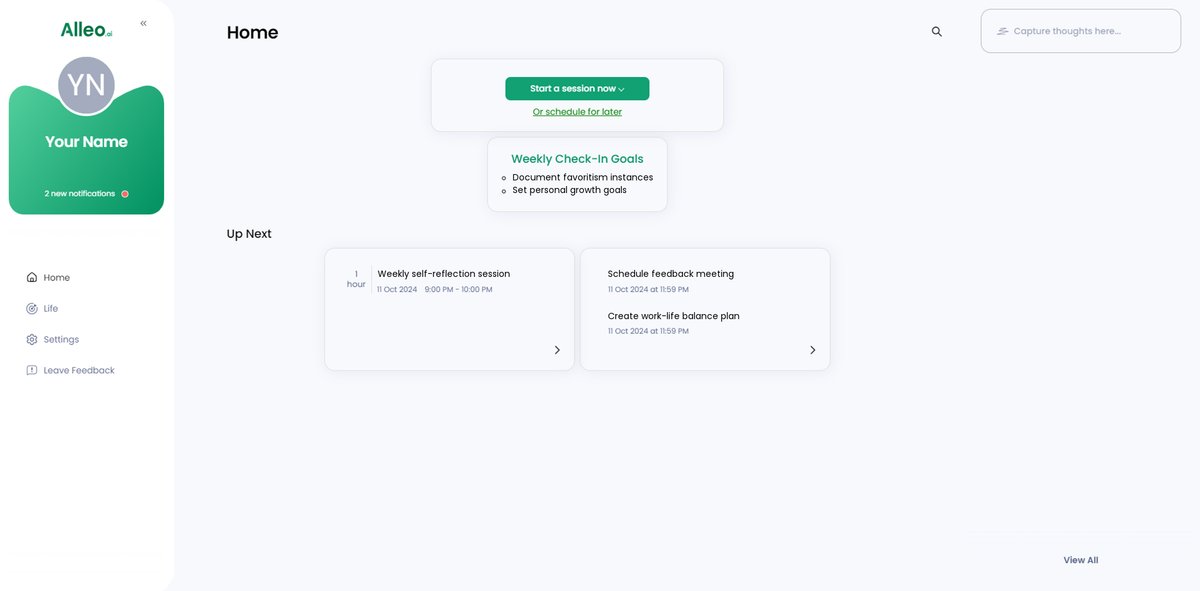
Step 5: Viewing and managing goals after the session
After your coaching session on handling workplace favoritism, check the Alleo app’s home page to view and manage the goals you discussed, allowing you to track your progress and stay accountable in addressing the issue professionally.
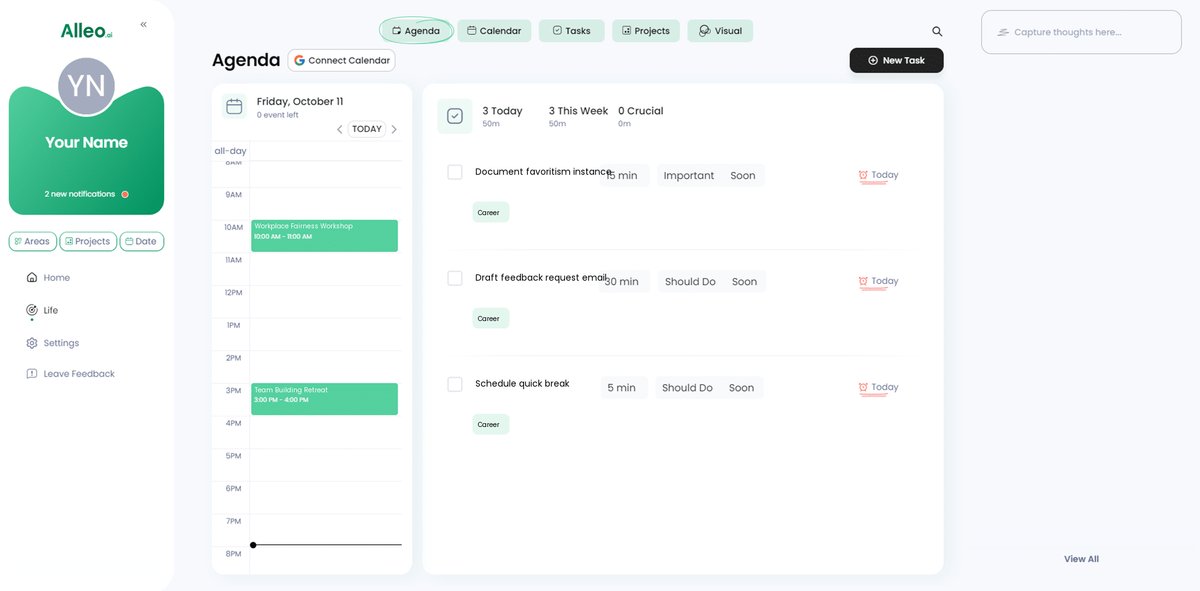
Step 6: Adding events to your calendar or app
Use Alleo’s calendar and task features to schedule and track your progress in addressing workplace favoritism, allowing you to set reminders for documenting incidents, seeking feedback, and practicing self-care activities.
Final Thoughts on Handling Favoritism Gracefully
Let’s reflect on what we’ve covered.
Handling workplace favoritism professionally can be challenging, but it’s possible to navigate it gracefully. By documenting incidents, focusing on personal growth, building resilience against workplace discrimination, communicating concerns about preferential treatment, and practicing self-care, you can manage this issue effectively.
Remember, you’re not alone in dealing with unfair treatment at work. Many professionals face similar challenges in navigating office politics and favoritism.
Taking these steps can transform a difficult situation into an opportunity for growth and career advancement strategies in biased environments.
Lastly, consider partnering with Alleo for personalized support and tools to improve workplace equality and fairness. It’s free to get started, and it can make a big difference in maintaining productivity despite favoritism.
You got this!