6 Proven Ways to Improve Sleep for Better Learning Retention in Your Professional Life
Are you struggling to retain new skills and knowledge despite putting in the effort to learn? Many professionals face challenges with memory consolidation during sleep, impacting their cognitive performance and learning retention.
As a life coach, I’ve helped many professionals overcome this challenge. In my experience, inadequate sleep often hinders learning retention and skill acquisition. Improving sleep for learning retention is crucial for success.
In this article, you’ll discover effective strategies to improve your sleep for better learning retention. These techniques will help you achieve your professional goals by optimizing your sleep habits and enhancing your work-life balance and sleep quality.
Let’s dive in to explore sleep optimization techniques that can boost your productivity and learning capabilities.

Understanding the Impact of Poor Sleep on Learning Retention
Inadequate sleep can severely hinder your brain’s ability to solidify newly learned techniques, which is essential for skill acquisition and learning retention. Many clients initially struggle with retaining information because their brains aren’t given enough time to process it during sleep, highlighting the importance of sleep hygiene for professionals.
Imagine feeling exhausted and unable to concentrate during crucial moments at work. In my experience, people often find that their cognitive functions, such as memory and problem-solving, are significantly impaired due to lack of sleep. This demonstrates the strong link between cognitive performance and sleep quality.
This makes even simple tasks feel overwhelming, affecting work-life balance and sleep quality.
Healthcare professionals often face this issue. Approximately 30.26% of them suffer from chronic insomnia, leading to decreased performance and disrupting their circadian rhythm and productivity.
It’s clear that sleep deprivation is a major obstacle to achieving your professional goals and can have significant effects on learning and information retention.
So, what can you do to improve sleep for learning retention?

The Transformative Power of Coaching
Have you ever felt stuck in your personal or professional life, unsure of how to move forward? Perhaps you’ve set goals but struggle to achieve them, or you’re facing challenges that seem insurmountable. This is where coaching can make a significant difference, especially when you want to improve sleep for learning retention.
Coaching is a powerful tool for personal and professional development. It’s a collaborative process that helps individuals unlock their potential and achieve their goals, including optimizing sleep habits for successful professionals.
But what exactly does a coach do?
The Role of a Coach
A coach is not just a mentor or advisor. They are a partner in your journey of growth and transformation. Here’s what a good coach does:
- Helps you clarify your goals and vision, including improving sleep for learning retention
- Identifies obstacles and limiting beliefs, such as poor sleep hygiene for professionals
- Develops strategies to overcome challenges, like sleep optimization techniques
- Provides accountability and support for maintaining healthy sleep habits
- Encourages self-reflection and awareness of your circadian rhythm and productivity
Benefits of Coaching
The benefits of coaching are numerous and can impact various aspects of your life. Here are some key advantages:
1. Improved Self-Awareness: Coaching helps you understand your strengths, weaknesses, values, and motivations better, including how sleep affects your cognitive performance.
2. Enhanced Goal Setting and Achievement: A coach can help you set clear, achievable goals and create a roadmap to reach them, such as improving sleep for learning retention.
3. Increased Confidence: As you overcome challenges and achieve your goals, your self-confidence naturally grows, boosting your work-life balance and sleep quality.
4. Better Decision-Making: Coaching equips you with tools and perspectives to make more informed decisions, considering factors like sleep deprivation effects on learning.
5. Improved Relationships: The self-awareness and communication skills you develop through coaching can positively impact your personal and professional relationships, including understanding the importance of REM sleep and information retention.
Is Coaching Right for You?
Coaching can be beneficial for anyone who wants to improve their life or achieve specific goals. However, it’s particularly useful if:
- You feel stuck or unfulfilled in your current situation, possibly due to poor sleep habits
- You have specific goals but struggle to achieve them, like improving sleep for learning retention
- You’re going through a major life transition that affects your sleep patterns
- You want to improve your leadership skills through better cognitive performance and sleep
- You’re seeking better work-life balance and sleep quality
Remember, coaching is not about fixing what’s “wrong” with you. It’s about unlocking your potential and empowering you to create the life you want, including optimizing your sleep for improved learning.
Choosing the Right Coach
Selecting the right coach is crucial for a successful coaching experience. Here are some factors to consider:
- Credentials and experience in areas like sleep optimization techniques
- Coaching style and approach to improving sleep for learning retention
- Areas of specialization, such as sleep hygiene for professionals
- Client testimonials and success stories related to memory consolidation during sleep
- Personal rapport and trust in discussing sleep habits of successful professionals
Take the time to research and speak with potential coaches before making a decision. Many coaches offer initial consultations, which can be a great way to gauge if they’re the right fit for you and your sleep improvement goals.
Conclusion
Coaching is a powerful tool for personal and professional growth. It can help you overcome obstacles, achieve your goals, and lead a more fulfilling life, including improving sleep for learning retention.
Are you ready to unlock your potential and transform your life by optimizing your sleep habits?
Consider taking the first step towards coaching today. The journey of a thousand miles begins with a single step, and your journey to a better you, with improved sleep and learning retention, could start right now.
Essential Steps to Improve Sleep for Better Learning Retention
Overcoming this challenge requires a few key steps. Here are the main areas to focus on to improve sleep for learning retention and make progress:
- Establish a consistent sleep schedule: Regulate your body’s internal clock with fixed sleep and wake times to optimize your circadian rhythm and productivity.
- Create a relaxing bedtime routine: Signal your body to wind down with calming activities before bed, enhancing sleep hygiene for professionals.
- Limit screen time before bed: Reduce blue light exposure to improve your sleep quality and cognitive performance.
- Optimize your sleep environment: Make your bedroom a sleep-friendly sanctuary to support memory consolidation during sleep.
- Practice stress-reduction techniques: Manage stress to enhance your sleep quality and work-life balance.
- Incorporate daily exercise: Engage in regular physical activity to promote deeper sleep and improve learning retention.
Let’s dive in!

1: Establish a consistent sleep schedule
Creating a regular sleep schedule is essential for regulating your body’s internal clock and improving learning retention. This is a key step to improve sleep for learning retention.
Actionable Steps:
- Set a fixed bedtime and wake-up time: Stick to these times even on weekends to maintain consistency and support your circadian rhythm and productivity.
- Use a sleep tracker: Monitor and adjust your sleep patterns with sleep technology for improved learning to find what works best for you.
Explanation:
A consistent sleep schedule helps your body know when to expect sleep, making it easier to fall asleep and wake up refreshed. This regularity enhances your ability to retain new information and skills, which is crucial for cognitive performance and sleep quality.
According to a study, a regular sleep schedule can significantly improve cognitive functions and overall performance. For more insights on sleep hygiene for professionals, check out this article on Coursera.
Key benefits of a consistent sleep schedule include:
- Improved cognitive function
- Enhanced memory consolidation during sleep
- Better overall mood and energy levels, contributing to work-life balance and sleep quality
Implementing a consistent sleep schedule is a foundational step to boosting your learning retention and mitigating sleep deprivation effects on learning.

2: Create a relaxing bedtime routine
Creating a relaxing bedtime routine is essential for signaling your body that it’s time to wind down and prepare for sleep, which can improve sleep for learning retention.
Actionable Steps:
- Engage in calming activities: Read a book or take a warm bath to relax your mind and body, supporting your sleep hygiene for professional success.
- Practice mindfulness or meditation: Spend 10 minutes before bed practicing mindfulness or meditation to reduce stress and optimize your circadian rhythm and productivity.
- Write a to-do list: Clear your mind of lingering tasks by writing a to-do list for the next day, enhancing work-life balance and sleep quality.
Explanation:
A calming pre-sleep routine helps your body transition into sleep mode, improving your ability to fall asleep and stay asleep, which is crucial for memory consolidation during sleep.
Engaging in these activities can enhance your sleep quality, leading to better learning retention and cognitive performance.
According to this article on USA.edu, a relaxing bedtime routine is a key component of effective sleep hygiene.
Implementing these sleep optimization techniques can significantly improve your sleep, aiding in better skill acquisition and professional growth while mitigating sleep deprivation effects on learning.

3: Limit screen time before bed
Reducing screen time before bed is crucial for improving sleep for learning retention and enhancing cognitive performance and sleep quality.
Actionable Steps:
- Avoid electronic devices: Refrain from using screens at least one hour before bedtime to support your circadian rhythm and productivity.
- Use blue light filters: Install blue light filters on your devices to minimize blue light exposure if you must use them, aiding in sleep optimization techniques.
- Engage in alternative activities: Replace screen time with relaxing activities like reading a book or listening to calming music to improve sleep hygiene for professionals.
Explanation:
Limiting screen time helps your body produce melatonin, the hormone that regulates sleep. Blue light from screens can interfere with melatonin production, making it harder to fall asleep and potentially affecting REM sleep and information retention.
Implementing these steps will enhance your sleep quality, aiding better cognitive function and skill acquisition. According to research from USA.edu, reducing screen time is a key component of effective sleep hygiene, which is essential to improve sleep for learning retention.
This practice will set a strong foundation for improved sleep and learning retention, helping to mitigate sleep deprivation effects on learning and supporting work-life balance and sleep quality.
4: Optimize your sleep environment
Optimizing your sleep environment is crucial for creating a sanctuary that promotes restful sleep and enhances learning retention. To improve sleep for learning retention, consider the following steps.
Actionable Steps:
- Keep your bedroom cool, dark, and quiet: Use blackout curtains, earplugs, or a white noise machine to create an ideal sleep setting, supporting your circadian rhythm and productivity.
- Invest in a comfortable mattress and pillows: Ensure your bed provides the support and comfort needed for a good night’s sleep, which is essential for cognitive performance and sleep quality.
- Remove electronic devices and other distractions: Keep your bedroom free from screens and clutter to enhance relaxation and improve sleep hygiene for professionals.
Explanation:
A conducive sleep environment helps your body relax and prepares it for deep sleep, essential for memory consolidation during sleep and cognitive function.
Creating a sleep-friendly space boosts your ability to retain new skills and knowledge. For more detailed insights, check out this Coursera article on study habits.
Elements of an ideal sleep environment include:
- Temperature between 60-67°F (15-19°C)
- Minimal light and noise exposure
- Comfortable, supportive bedding
Optimizing your sleep environment is a key step in improving your sleep quality and learning retention. By focusing on sleep optimization techniques, you can mitigate sleep deprivation effects on learning and enhance REM sleep and information retention.

5: Practice stress-reduction techniques
Practicing stress-reduction techniques is vital for improving sleep for learning retention and enhancing overall cognitive performance and sleep quality.
Actionable Steps:
- Incorporate deep breathing exercises: Spend five minutes before bed practicing deep breathing to relax your mind and body, supporting your sleep hygiene for professionals.
- Practice progressive muscle relaxation: Gradually tense and relax each muscle group to release physical tension, aiding in sleep optimization techniques.
- Keep a gratitude journal: Write down three things you’re grateful for each night to shift your focus to positive thoughts, promoting better work-life balance and sleep quality.
Explanation:
Reducing stress helps you fall asleep faster and sleep more soundly, which is crucial for memory consolidation during sleep.
For instance, deep breathing and muscle relaxation can significantly enhance sleep quality and support your circadian rhythm and productivity.
According to a source from BIE, stress management plays a key role in improving sleep and cognitive functions, helping to mitigate sleep deprivation effects on learning.
Implementing these techniques can greatly enhance your sleep quality and professional growth, aligning with the sleep habits of successful professionals.

Partner with Alleo for Better Sleep and Learning Retention
We’ve explored the challenges of inadequate sleep and how solving them can improve sleep for learning retention and boost your cognitive performance and professional growth. But did you know you can work directly with Alleo to make this journey easier and faster, enhancing your sleep hygiene for professionals?
Setting up an account with Alleo is simple. Create a personalized plan tailored to your sleep goals, focusing on sleep optimization techniques and work-life balance for improved sleep quality.
Alleo’s AI coach will guide you through each step, offering full coaching sessions just like a human coach. Receive reminders via text and push notifications to stay accountable and track your progress in improving sleep for learning retention and memory consolidation during sleep.
Ready to get started for free and enhance your circadian rhythm and productivity? Let me show you how!
Step 1: Log In or Create Your Alleo Account
To start improving your sleep and learning retention, log in to your existing Alleo account or create a new one to access personalized sleep coaching and AI-driven guidance.

Step 2: Choose “Building better habits and routines”
Select “Building better habits and routines” from the goal options to focus on establishing a consistent sleep schedule and bedtime routine, which are crucial for improving your sleep quality and enhancing learning retention.

Step 3: Select “Health” as Your Focus Area
Choose “Health” as your focus area to address sleep issues and improve learning retention, aligning with the article’s emphasis on how better sleep enhances cognitive performance and skill acquisition.

Step 4: Starting a Coaching Session
Begin your journey with Alleo by scheduling an initial intake session, where you’ll discuss your sleep challenges and set up a personalized plan to improve your learning retention and skill acquisition.

Step 5: Viewing and Managing Goals After the Session
After your coaching session, open the Alleo app to find your discussed sleep improvement goals conveniently displayed on the home page, allowing you to easily track and manage your progress towards better sleep and enhanced learning retention.
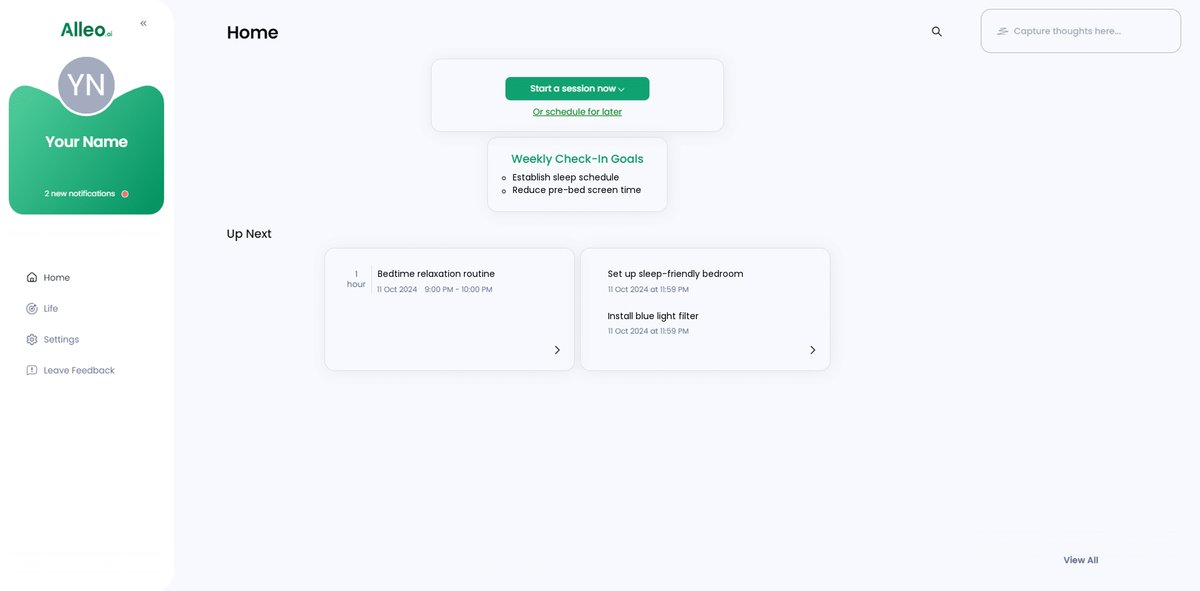
Step 6: Adding events to your calendar or app
Use Alleo’s calendar and task features to schedule and track your sleep improvement activities, helping you monitor your progress in achieving better sleep for enhanced learning retention.

Wrapping Up Your Journey Towards Better Sleep and Learning Retention
As we’ve explored, improving sleep is crucial for enhancing learning retention and skill acquisition. Sleep hygiene for professionals plays a vital role in cognitive performance and sleep.
I understand the challenges of maintaining a consistent sleep schedule while balancing professional commitments and work-life balance and sleep quality.
Start by implementing the steps discussed to improve sleep for learning retention, and you’ll notice significant improvements in your cognitive performance. Memory consolidation during sleep is key to information retention.
Remember, Alleo is here to assist you every step of the way. Our personalized plans and AI coach make the process simpler, helping you optimize your circadian rhythm and productivity.
Don’t let inadequate sleep hold you back from adopting the sleep habits of successful professionals.
Take action today and try Alleo for free to support your journey towards better sleep and professional growth. Discover how sleep technology for improved learning can enhance your REM sleep and information retention.