6 Simple Steps to Manage Newborn Feeding Schedules for Exhausted New Parents
Are you finding it challenging to manage your newborn’s feeding schedule and feeling utterly exhausted? Many sleep-deprived parents struggle with this.
As a life coach, I understand the overwhelming nature of newborn feeding routines. Many new parents struggle with the frequent feedings and lack of sleep, whether they’re following a breastfeeding schedule or looking for formula feeding tips.
In this article, you’ll discover practical newborn feeding schedule tips to create a flexible feeding routine, log feedings, and share duties with your partner. We’ll explore strategies for feeding on demand vs scheduled feeding, recognizing baby hunger cues, and managing nighttime feeding strategies.
Let’s dive into these essential newborn feeding schedule tips.

Understanding the Challenges of Newborn Feeding Schedules
Newborns need to be fed frequently, often every hour. This constant demand, typical of a newborn feeding schedule, can leave you feeling physically and mentally exhausted.
Many clients initially struggle with balancing the frequent feedings with their need for sleep. It’s not uncommon for sleep-deprived parents to feel like they’re just surviving hour by hour, especially when managing a breastfeeding schedule or formula feeding routine.
Sleep deprivation and the impact on your health can make this period even more challenging. In my experience, people often find it hard to maintain their well-being while meeting their baby’s needs, particularly during nighttime feeding sessions.
The physical and mental toll can be significant. But, there are ways to manage this more effectively, including learning to recognize baby hunger cues and implementing newborn feeding schedule tips.
Key Steps to Manage Newborn Feeding Schedules
Overcoming this challenge requires a few key steps. Here are the main areas to focus on to make progress with your newborn feeding schedule:
- Implement a flexible feeding routine: Follow your baby’s hunger cues instead of a strict schedule, balancing feeding on demand vs scheduled feedings.
- Create a feeding log: Track feeding times and patterns to adjust your newborn feeding routine effectively.
- Alternate feeding duties with your partner: Share nighttime feeding strategies to ensure better rest for sleep-deprived parents.
- Cluster daytime feedings: Feed more frequently during the day to extend nighttime sleep, utilizing cluster feeding techniques.
- Practice side-lying nursing: Use this position for more restful night feedings in your breastfeeding schedule.
- Prepare bottles in advance: Pre-measure and store bottles for quick night feeds, incorporating formula feeding tips.
Let’s dive into these newborn feeding schedule tips!
1: Implement flexible feeding routine, not rigid schedule
Introducing a flexible feeding routine is crucial for managing your newborn feeding schedule without the stress of a rigid timetable.
Actionable Steps:
- Follow your baby’s hunger cues: Watch for signs like lip-smacking or rooting and feed accordingly, embracing feeding on demand vs scheduled approaches.
- Adapt based on needs: Adjust your newborn feeding routine to fit your baby’s and your family’s changing schedules, including nighttime feeding strategies.
- Utilize wake windows: Guide feeding times by observing your baby’s sleep and awake times, which can help manage newborn feeding frequency.
Explanation:
These newborn feeding schedule tips help ensure your baby gets the nutrition they need while allowing you to maintain some flexibility. By following baby hunger cues and adapting routines, you can better balance your baby’s needs with your well-being, whether you’re following a breastfeeding schedule or implementing formula feeding tips.
According to Taking Cara Babies, using wake windows can also aid in establishing a manageable routine.
This approach sets the foundation for a more organized yet adaptable feeding schedule, which is crucial for sleep-deprived parents managing cluster feeding and maintaining parent self-care during feeding sessions.
2: Create a feeding log to track patterns and needs
Creating a feeding log is essential to understand and manage your baby’s feeding patterns and needs, especially when establishing a newborn feeding schedule.
Actionable Steps:
- Record feeding times and durations: Note when and how long your baby feeds each time, helping you develop a consistent newborn feeding routine.
- Document baby’s reactions: Track any fussiness, satisfaction, or other behaviors after feeding, including baby hunger cues.
- Review and analyze the log: Regularly check for patterns and adjust your routine accordingly, balancing feeding on demand vs scheduled approaches.
Explanation:
Keeping a feeding log helps you recognize patterns and anticipate your baby’s needs. This can make your routine more predictable and less stressful for sleep-deprived parents.
According to ECLKC, observing and documenting infant feeding behaviors plays a crucial role in ensuring proper nutrition and well-being.
Using a feeding log allows you to fine-tune your approach and better support your baby’s growth and development, whether you’re following a breastfeeding schedule or implementing formula feeding tips.
3: Alternate feeding duties with partner if possible
Sharing feeding duties with your partner can significantly improve your overall rest and well-being when following a newborn feeding schedule.
Actionable Steps:
- Create a balanced feeding schedule: Plan a nighttime feeding schedule that allows both parents to take turns, incorporating sleep-deprived parent strategies.
- Incorporate bottle feeding: Use bottle feeding for one of the night feeds to let the other parent sleep longer, balancing breastfeeding and formula feeding tips.
- Stay flexible and communicate: Regularly discuss each other’s needs and adjust the schedule as necessary, considering baby hunger cues and feeding frequency.
Explanation:
These steps help ensure that both parents get adequate rest, making it easier to manage the demands of newborn feeding routines.
According to Henry Ford Health, sharing responsibilities can significantly reduce stress and improve overall family well-being.
By alternating duties, you can better support each other during this challenging time and implement effective nighttime feeding strategies.
Benefits of alternating feeding duties:
- Improved sleep quality for both parents
- Shared bonding experiences with the baby
- Reduced risk of parental burnout
Consider trying these strategies to balance nighttime feedings more effectively, whether you’re feeding on demand vs scheduled, or dealing with cluster feeding.
4: Cluster daytime feedings to extend nighttime sleep
By clustering daytime feedings, you can help your baby sleep longer stretches at night. This is a crucial newborn feeding schedule tip for sleep-deprived parents.
Actionable Steps:
- Feed more frequently during the day: Offer feedings every 2 hours to ensure your baby gets enough calories. This aligns with recommended newborn feeding frequency.
- Gradually extend nighttime feeds: Start extending the intervals between night feedings by 15 minutes each night. This is an effective nighttime feeding strategy.
- Monitor weight gain: Track your baby’s weight to ensure they are still gaining appropriately. This is important whether you’re following a breastfeeding schedule or using formula feeding tips.
Explanation:
These steps help your baby get more calories during the day, reducing nighttime hunger. This approach allows for longer sleep stretches at night, benefiting both you and your baby. It’s a balance between feeding on demand vs scheduled feeding.
According to EOTTA, consistent feeding during the day can support better nighttime sleep patterns. This is a key aspect of establishing a newborn feeding routine.
Consider these strategies to improve your nighttime rest and your baby’s feeding routine. Remember, parent self-care during feeding is also crucial.
5: Practice side-lying nursing for restful feedings
Practicing side-lying nursing can make night feedings more restful for both you and your baby, an essential aspect of a successful newborn feeding schedule.
Actionable Steps:
- Learn and practice the side-lying position: Ensure you and your baby are comfortable and safe in this nursing position, which can be particularly helpful for sleep-deprived parents.
- Set up a cozy nursing area: Use pillows and a supportive mattress to create a comfortable space for side-lying nursing, an important part of your breastfeeding schedule.
- Use pillows for support: Place pillows around your body to maintain a comfortable and secure position during feedings, enhancing your nighttime feeding strategies.
Explanation:
These steps help make nighttime feedings less disruptive and more restful. Side-lying nursing allows you to get more rest while feeding your baby, which is crucial for maintaining a consistent newborn feeding routine.
According to Taking Cara Babies, this position can make night feedings more manageable and less taxing on your body.
Key benefits of side-lying nursing:
- Minimizes disruption to your sleep
- Reduces physical strain on your body
- Promotes bonding with your baby
Consider these strategies to create a more restful nighttime feeding experience for you and your baby, supporting a balanced newborn feeding schedule.
6: Prepare bottles in advance for quick night feeds
Preparing bottles in advance can save precious time during night feedings, making the process smoother for you and your baby. This is a crucial newborn feeding schedule tip for sleep-deprived parents.
Actionable Steps:
- Pre-measure and prepare bottles: Fill bottles with the correct amount of formula or breast milk before bedtime, following your newborn feeding routine.
- Store bottles in a cooler: Keep prepared bottles in a cooler or use a bottle warmer for quick access during the night, supporting your nighttime feeding strategies.
- Consider pre-mixed options: Use pre-mixed formula or breast milk to minimize preparation time, especially helpful for formula feeding tips.
Explanation:
These steps streamline night feedings, reducing stress and allowing for more restful nights. Preparing bottles in advance ensures you’re ready when your baby wakes up hungry, which is essential for responding to baby hunger cues.
According to EOTTA, consistent and easy access to prepared bottles can support better feeding routines.
Tips for efficient bottle preparation:
- Use sterilized bottles and nipples
- Follow proper storage guidelines for prepared formula or breast milk
- Label bottles with preparation date and time
Implementing these strategies can make night feedings more manageable and improve your overall well-being, whether you’re following a breastfeeding schedule or practicing feeding on demand vs scheduled.
Work with Alleo to Manage Your Newborn’s Feeding Schedule
We’ve explored the challenges of managing newborn feeding schedules and actionable steps to improve them. But did you know you can work directly with Alleo to make this journey easier and faster for sleep-deprived parents?
Alleo is your AI life coach, ready to offer affordable, tailored support for managing newborn feeding schedule tips. Alleo provides full coaching sessions like any human coach and offers a free 14-day trial, requiring no credit card. Whether you’re following a breastfeeding schedule or need formula feeding tips, Alleo can help.
Setting up an account is simple. Create a personalized plan to address your specific needs, including newborn feeding frequency and strategies for nighttime feeding.
Alleo will help track feeding logs, analyze patterns, and provide reminders and suggestions for feeding times. The coach will follow up on your progress, handle changes in your newborn feeding routine, and keep you accountable via text and push notifications. Alleo can even assist with recognizing baby hunger cues and managing cluster feeding.
Ready to get started for free and optimize your newborn feeding schedule? Let me show you how!
Step 1: Log In or Create Your Account
To start managing your newborn’s feeding schedule with Alleo, Log in to your account or create a new one to begin your free 14-day trial and access personalized coaching support.

Step 2: Choose “Building Better Habits and Routines”
Select “Building Better Habits and Routines” to create a structured approach for managing your newborn’s feeding schedule, helping you establish consistent patterns that will make feedings more manageable and less stressful for both you and your baby.

Step 3: Select “Personal” as Your Focus Area
Choose “Personal” as your life area to address newborn feeding challenges, allowing Alleo to provide targeted strategies for creating a flexible routine, improving sleep, and maintaining your well-being while caring for your baby.

Step 4: Starting a Coaching Session
Begin with an intake session to discuss your newborn’s feeding challenges and set up a personalized plan for managing your baby’s schedule more effectively.

Step 5: Viewing and Managing Goals After the Session
After your coaching session on managing your newborn’s feeding schedule, access your personalized goals directly from the Alleo app’s home page, where you can easily track and update your progress towards establishing a more manageable feeding routine.
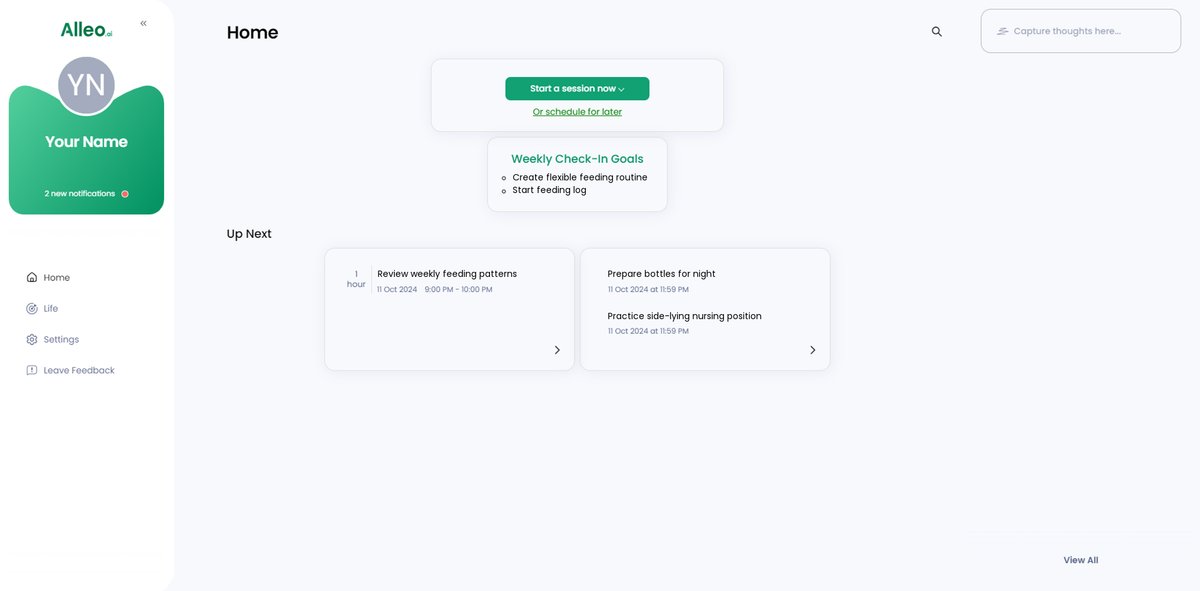
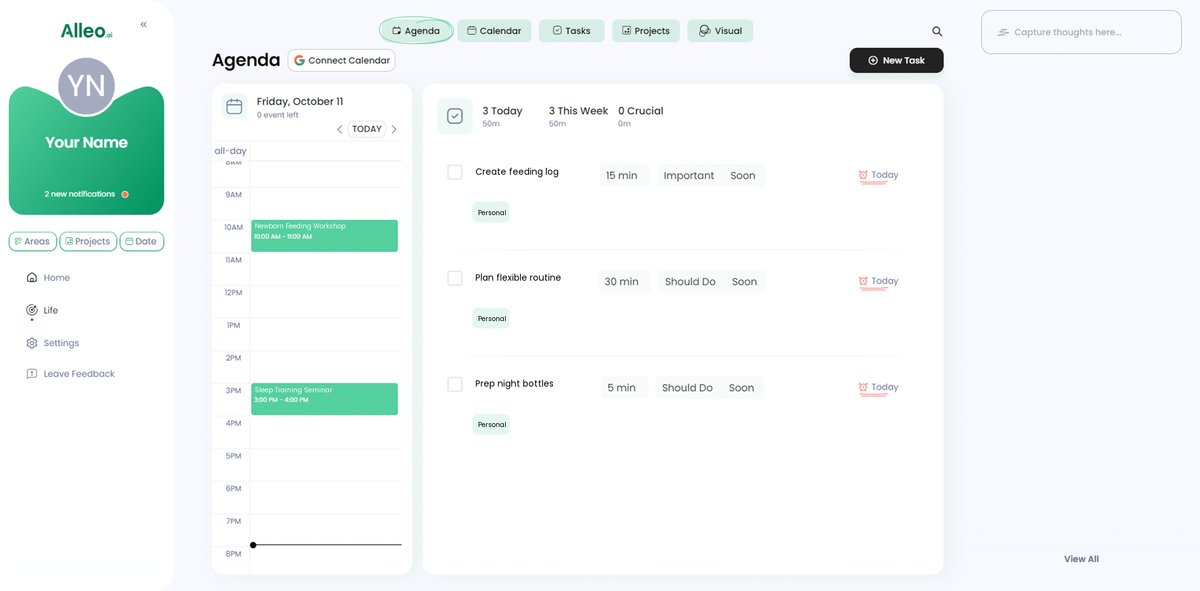
Step 6: Adding events to your calendar or app
Use Alleo’s calendar and task features to track your baby’s feeding schedule, set reminders for feeding times, and monitor your progress in managing your newborn’s feeding routine more effectively.
Wrapping Up: Manage Newborn Feeding with Confidence
Let’s bring it all together.
Navigating newborn feeding schedules is tough, but you’re not alone. Remember, a flexible newborn feeding routine can make a world of difference for sleep-deprived parents.
Creating a feeding log helps you understand your baby’s hunger cues better. Sharing duties with your partner ensures both of you get some rest and practice essential self-care during feeding times.
Clustering daytime feedings can lead to longer nighttime sleep, an important aspect of newborn feeding schedule tips.
Don’t forget to practice side-lying nursing for more restful nights. Preparing bottles in advance simplifies nighttime feeding strategies.
You’ve got this. Alleo is here to help with breastfeeding schedules and formula feeding tips.
Try our 14-day free trial and let’s make this journey smoother together, whether you’re following a newborn feeding schedule or feeding on demand.