7 Essential Strategies for Managers: Handling Disruptive Questioners in Meetings
Imagine a high-stakes presentation where constant interruptions derail your focus. This scenario exemplifies the challenge of managing disruptive meeting questioners.
As a life coach, I’ve helped many professionals navigate these challenges. In my experience, persistent questioners can significantly disrupt meeting flow and productivity. Effective communication techniques for managers are crucial in handling interruptions in business meetings.
In this post, you’ll discover strategies to manage these disruptions effectively. We’ll cover setting clear guidelines, structured Q&A formats, and more. These tips will aid in maintaining meeting productivity and dealing with difficult employees in meetings.
Let’s dive into these strategies for keeping meetings on track!

Understanding the Disruption Dilemma
Persistent questioners can transform a productive meeting into a chaotic one. Imagine someone raising their hand multiple times, even after the discussion has moved on. This scenario exemplifies the challenge of managing disruptive meeting questioners.
It disrupts the flow and frustrates everyone involved, highlighting the importance of effective communication techniques for managers.
I often see clients struggle with maintaining control in such scenarios. This constant interruption not only hinders the speaker but also affects other attendees’ focus and engagement, emphasizing the need for strategies for keeping meetings on track.
Many clients report feeling overwhelmed and unable to address all the questions effectively. This can lead to a significant drop in meeting productivity and morale, underscoring the importance of professional meeting etiquette.
The impact is real. Let’s explore how to handle it and implement assertive leadership in group discussions.

Effective Strategies to Manage Disruptive Questioners in Meetings
Overcoming the challenge of managing disruptive meeting questioners requires a few key steps. Here are the main areas to focus on to make progress in meeting disruption management:
- Set clear meeting guidelines and expectations: Establish and communicate a code of conduct for professional meeting etiquette.
- Use a structured Q&A format with time limits: Allocate specific time slots and manage speaking time to maintain meeting productivity.
- Implement a “parking lot” for off-topic questions: Note off-topic questions for later discussion, helping in dealing with difficult employees in meetings.
- Practice active listening and redirection skills: Attend workshops and role-play scenarios to improve effective communication techniques for managers.
- Employ non-verbal cues to manage interruptions: Use hand signals and maintain eye contact when handling interruptions in business meetings.
- Schedule follow-up sessions for in-depth queries: Set dedicated times for detailed discussions, aiding in conflict resolution in workplace meetings.
- Encourage written questions for efficient handling: Provide a platform for attendees to submit questions, demonstrating assertive leadership in group discussions.
Let’s dive into these strategies for keeping meetings on track and managing challenging personalities in meetings!
1: Set clear meeting guidelines and expectations
Establishing clear guidelines and expectations is crucial to maintaining order and productivity in meetings, especially when managing disruptive meeting questioners.
Actionable Steps:
- Communicate a code of conduct at the beginning of each meeting. This ensures everyone knows the rules and expected behavior, helping with meeting disruption management.
- Use visual aids like slides or posters to reinforce these guidelines. This provides a visual reminder throughout the meeting, assisting in maintaining meeting productivity.
- Regularly remind attendees of these guidelines. Consistent reinforcement helps embed these expectations into your team culture and supports professional meeting etiquette.
Explanation: Clear guidelines help manage persistent questioners by setting boundaries. This approach also aligns with effective meeting policies that prioritize order and respect, which is crucial for handling interruptions in business meetings.
By clearly communicating and reinforcing these rules, you can reduce disruptions and improve overall meeting productivity while effectively managing disruptive meeting questioners.
These steps are essential for creating a structured and respectful environment, setting the stage for a smooth meeting flow and dealing with difficult employees in meetings.
2: Use a structured Q&A format with time limits
Using a structured Q&A format with time limits ensures that meetings stay focused and productive, while effectively managing disruptive meeting questioners.
Actionable Steps:
- Allocate specific time slots for Q&A sessions. This helps manage the flow and ensures that questions are addressed within a set timeframe, maintaining meeting productivity.
- Implement a timer to manage speaking time. This prevents any one person from monopolizing the discussion and keeps the meeting on track, aiding in meeting disruption management.
- Rotate questions to ensure diverse participation. This approach allows different voices to be heard and avoids repetitive questions from the same individuals, helping in dealing with difficult employees in meetings.
Explanation: Structuring Q&A sessions with time limits helps maintain order and ensures that meetings are efficient, which is crucial for handling interruptions in business meetings.
This approach aligns with effective time management practices as highlighted in time management tips. By managing the time allocated for questions, you can keep the meeting focused and productive while managing disruptive meeting questioners.
These steps will ensure that your meetings run smoothly and that all participants feel their questions are valued, promoting professional meeting etiquette and conflict resolution in workplace meetings.
3: Implement a “parking lot” for off-topic questions
Managing disruptive meeting questioners and handling interruptions in business meetings is crucial to maintaining focus and flow.
Actionable Steps:
- Create a visible space (virtual or physical) to note down off-topic questions. This ensures they are acknowledged without derailing the current discussion, supporting effective communication techniques for managers.
- Revisit the “parking lot” at the end of the meeting or in follow-up sessions. This shows commitment to addressing all concerns and questions, aiding in conflict resolution in workplace meetings.
- Assign someone to manage and track these questions. This adds accountability and ensures that off-topic questions are not forgotten, contributing to managing challenging personalities in meetings.
Explanation: Implementing a “parking lot” for off-topic questions helps keep meetings streamlined and focused, which is essential for managing disruptive meeting questioners.
This approach aligns with effective meeting management strategies, as outlined in community association meeting policies.
By managing disruptive meeting questioners efficiently, you can maintain meeting productivity and ensure all concerns are eventually addressed.
This method ensures that your meetings remain on track while still valuing all participant input, demonstrating professional meeting etiquette and assertive leadership in group discussions.

4: Practice active listening and redirection skills
Active listening and redirection skills are essential to maintaining control and ensuring productive meetings, especially when managing disruptive meeting questioners.
Actionable Steps:
- Attend workshops on active listening techniques. These sessions provide practical skills to enhance your listening abilities and manage disruptions in business meetings.
- Role-play scenarios with team members to practice redirection. This helps you prepare for real-life situations and improves your confidence in handling interruptions and dealing with difficult employees in meetings.
- Provide training sessions on handling disruptions effectively. This ensures that your entire team is equipped with the skills to manage persistent questioners and maintain meeting productivity.
Key benefits of active listening in meetings:
- Improved understanding of participants’ concerns
- Enhanced ability to address underlying issues
- Increased trust and rapport among team members
Explanation: Practicing active listening and redirection skills can significantly improve meeting productivity. These steps align with effective feedback practices, as highlighted in feedback exercises.
By enhancing your listening and redirection abilities, you can create a more focused and respectful meeting environment, essential for professional meeting etiquette and conflict resolution in workplace meetings.
Developing these skills will help you handle disruptions smoothly and keep your meetings on track, demonstrating assertive leadership in group discussions and effective communication techniques for managers.
5: Employ non-verbal cues to manage interruptions
Using non-verbal cues can be an effective way to manage interruptions and maintain control during meetings, especially when managing disruptive meeting questioners.
Actionable Steps:
- Use hand signals to indicate when a question is off-topic. This provides a quick and silent way to redirect the conversation without halting the flow, aiding in meeting disruption management.
- Maintain eye contact to assert control over the discussion. This helps signal to the speaker that you are aware of their interruption and are managing it, demonstrating assertive leadership in group discussions.
- Position yourself strategically to manage the flow of questions. Standing or sitting in a place where you can see all participants helps you address interruptions promptly, essential for handling interruptions in business meetings.
Explanation: Employing non-verbal cues helps manage interruptions efficiently, ensuring that meetings stay focused and productive, which is crucial for maintaining meeting productivity.
This approach aligns with effective facilitation techniques, as highlighted in time management tips.
By using non-verbal signals, you can control disruptions without breaking the meeting’s momentum, an essential strategy for keeping meetings on track.
This method ensures that meetings remain orderly, allowing all participants to stay engaged and productive, even when dealing with difficult employees in meetings.

6: Schedule follow-up sessions for in-depth queries
Scheduling follow-up sessions for detailed discussions is an effective strategy for managing disruptive meeting questioners while ensuring that all questions are addressed without disrupting the main meeting.
Actionable Steps:
- Set up dedicated time slots for detailed discussions post-meeting. This provides a structured opportunity for in-depth queries and helps in maintaining meeting productivity.
- Use feedback forms to gather questions that require more attention. This helps prioritize and address the most pressing concerns, supporting effective communication techniques for managers.
- Offer one-on-one sessions for persistent questioners. This allows for personalized attention and detailed explanations, aiding in handling interruptions in business meetings.
Explanation: Scheduling follow-up sessions is essential for maintaining meeting efficiency while ensuring all questions are addressed, which is crucial for managing disruptive meeting questioners.
This approach aligns with effective meeting management practices, as highlighted in dealing with disruptive meetings.
By managing detailed queries separately, you can keep the main meeting focused and productive while still valuing all participant input, demonstrating professional meeting etiquette.
This method ensures that your meetings remain efficient, and all participants feel heard, contributing to conflict resolution in workplace meetings.

7: Encourage written questions for efficient handling
Encouraging written questions can help streamline meeting discussions and ensure all voices are heard efficiently, which is crucial for managing disruptive meeting questioners.
Actionable Steps:
- Provide a platform for attendees to submit questions in writing. This can be an online form or a simple shared document, aiding in meeting disruption management.
- Review and prioritize written questions before responding. This ensures that the most relevant queries are addressed first, helping in dealing with difficult employees in meetings.
- Share written responses with all attendees to ensure transparency. This keeps everyone informed and reduces repetitive questions, supporting effective communication techniques for managers.
Advantages of written questions in meetings:
- Allows for thoughtful, well-formulated queries
- Reduces interruptions during presentations, assisting in handling interruptions in business meetings
- Creates a record for future reference, promoting professional meeting etiquette
Explanation: Encouraging written questions helps manage meeting flow and ensures that all participant concerns are addressed, which is key to maintaining meeting productivity.
This method aligns with effective meeting management practices, as outlined in dealing with disruptive meetings.
By organizing and prioritizing queries, you can maintain a focused and productive meeting environment, effectively managing challenging personalities in meetings.
This approach ensures that your meetings remain efficient and inclusive, demonstrating assertive leadership in group discussions.

Partner with Alleo for Effective Meeting Management
We’ve explored handling disruptive questioners in meetings and the strategies to manage them. But did you know you can work directly with Alleo to make this journey of managing disruptive meeting questioners easier and faster?
Set up an Alleo account quickly and create a personalized plan tailored to your needs for meeting disruption management. Alleo’s AI coach offers full coaching sessions on effective communication techniques for managers, just like any human coach.
With Alleo, you’ll receive tailored advice on professional meeting etiquette, proactive follow-ups, and accountability through text and push notifications to help you in dealing with difficult employees in meetings.
And the best part? You can start with a free 14-day trial—no credit card required—to learn strategies for keeping meetings on track.
Ready to get started for free and enhance your skills in handling interruptions in business meetings? Let me show you how!
Step 1: Log In or Create Your Alleo Account
To start managing disruptive questioners more effectively, log in to your Alleo account or create a new one to access our AI coach and personalized meeting management strategies.

Step 2: Choose “Building better habits and routines”
Click on “Building better habits and routines” to focus on creating structured meeting practices that will help you manage disruptive questioners more effectively and maintain productivity in your presentations.

Step 3: Select “Career” as Your Focus Area
Choose “Career” as your focus area to address meeting disruptions and enhance your professional skills, aligning with the strategies discussed in the article for more effective and productive meetings.

Step 4: Starting a Coaching Session
Begin your journey with Alleo by scheduling an intake session, where you’ll discuss your meeting management challenges and set up a personalized plan to tackle disruptive questioners effectively.

Step 5: Viewing and Managing Goals After the Session
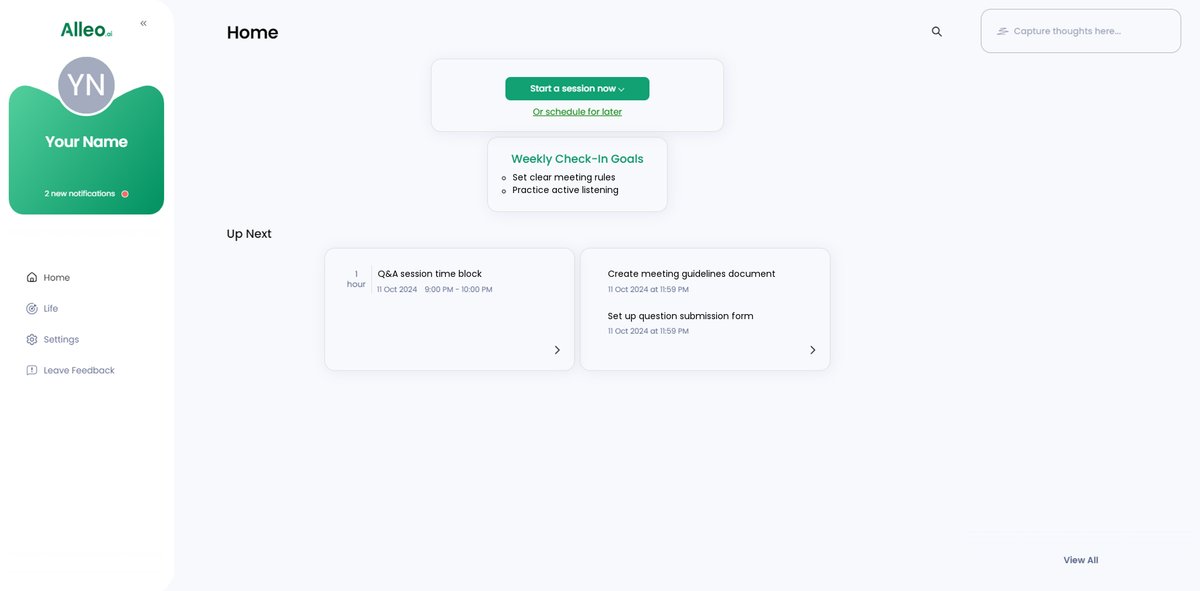
After your coaching session on managing disruptive questioners, check your Alleo app’s home page to view and manage the goals you discussed, helping you implement strategies like structured Q&A formats and active listening techniques in your meetings.
Step 6: Adding events to your calendar or app
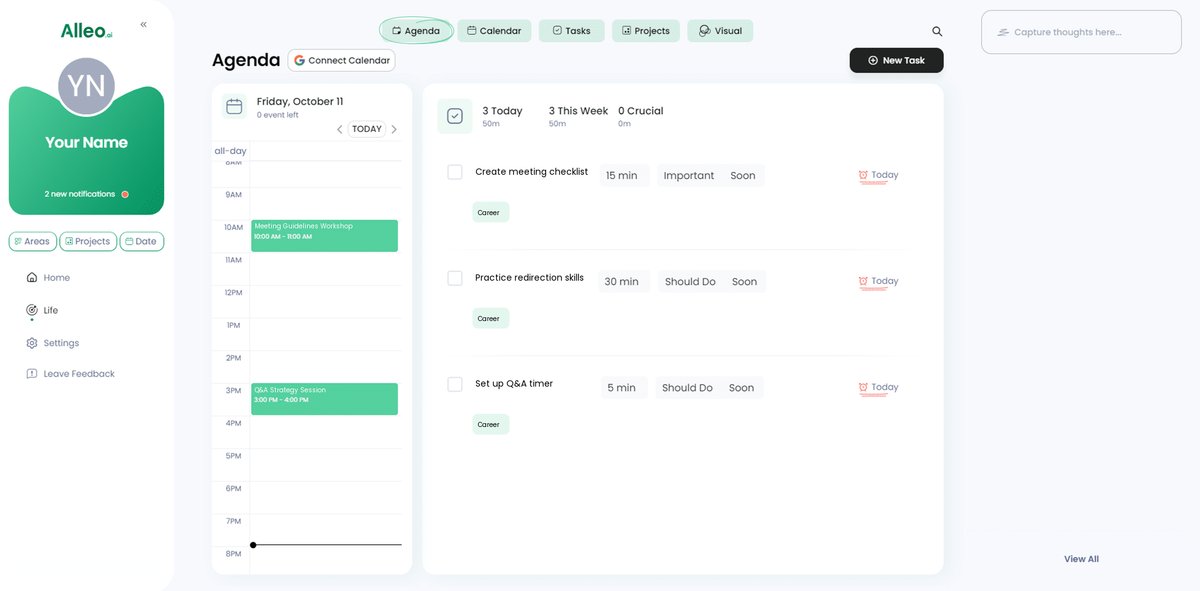
To track your progress in managing disruptive questioners, use the AI coach’s calendar and task features to schedule follow-up sessions, set reminders for implementing new strategies, and monitor your improvement over time.
Wrapping Up: Mastering Meeting Disruptions with Confidence
As we conclude, consider the impact of managing disruptive questioners effectively in meetings. Setting clear guidelines, using structured Q&A formats, and practicing active listening can truly transform your meetings and help in dealing with difficult employees in meetings.
Remember, you’re not alone in this challenge of managing disruptive meeting questioners. Many professionals face the same issues with handling interruptions in business meetings, and the strategies we’ve discussed can make a significant difference in maintaining meeting productivity.
Don’t let disruptions derail your productivity. Implement these actionable steps for meeting disruption management, and you’ll see a noticeable improvement in your meetings. Effective communication techniques for managers are key to managing challenging personalities in meetings.
Finally, if you need extra support in professional meeting etiquette and conflict resolution in workplace meetings, Alleo is here to help. Try our AI coach for free and experience smoother, more productive meetings with assertive leadership in group discussions.