7 Powerful Strategies for Professionals to Reduce Work Stress and Prevent Burnout
Are you feeling overwhelmed by work stress and noticing its toll on your health and well-being? Managing work stress effectively is crucial for maintaining a healthy work-life balance.
As a life coach, I’ve helped many professionals navigate these challenges. I’ve seen firsthand the severe consequences of unmanaged work stress, including burnout and decreased productivity.
In this article, you’ll discover effective strategies to combat work-related stress and prevent burnout. I’ll share practical advice and tools to help you manage stress better, including time management skills for professionals and mindfulness practices at work.
Let’s dive in and explore stress management for career success.

The Rising Tide of Work-Related Stress
Stress at work is more common than you might think. Many young professionals face intense pressure to perform, often leading to serious health issues. Managing work stress effectively is crucial for long-term career success.
In my experience, people often find themselves overwhelmed by unrealistic workloads and tight deadlines. This constant stress can lead to burnout, affecting both personal and professional life. Work-life balance techniques are essential for maintaining overall well-being.
Several clients report physical symptoms like headaches, fatigue, and even heart problems due to prolonged stress. It’s alarming how quickly stress can escalate if not managed properly. Implementing stress management for career success is vital.
Consider the impact on productivity. Stress not only affects your health but also your efficiency at work. Time management skills for professionals can significantly reduce job-related stress.
Studies show that work stress can reduce productivity and overall well-being. Incorporating mindfulness practices at work can help mitigate these effects.
Unfortunately, I’ve seen how stress can lead to premature deaths among professionals who fail to manage it. The consequences are severe and far-reaching. Effective workplace communication and setting boundaries in professional life are crucial for preventing burnout.
Ignoring stress isn’t an option. It’s time to take proactive steps to manage work-related stress and protect your health. Self-care strategies for busy professionals and productivity hacks to reduce job stress are essential tools for effectively managing work stress.
A Roadmap to Overcoming Work-Related Stress
Managing work stress effectively requires a few key steps. Here are the main areas to focus on to make progress in stress management for career success.
- Practice mindfulness and deep breathing daily: Start each day with calmness, incorporating mindfulness practices at work.
- Create a comfortable, organized work environment: Enhance focus and efficiency to reduce job stress.
- Take regular breaks and short walks during work: Stretch and recharge, implementing self-care strategies for busy professionals.
- Set clear boundaries between work and personal life: Avoid overworking and improve work-life balance techniques.
- Prioritize tasks and learn to say no when needed: Manage your workload effectively using time management skills for professionals.
- Engage in regular physical exercise and self-care: Maintain your well-being through workplace wellness programs.
- Seek support from colleagues or professionals: Share experiences and solutions through effective workplace communication.
Let’s dive in to explore these burnout prevention tips!
1: Practice mindfulness and deep breathing daily
Practicing mindfulness and deep breathing daily can significantly reduce stress and enhance overall well-being, helping you in managing work stress effectively.
Actionable Steps:
- Start your day with 10 minutes of deep breathing exercises to promote a calm mind and improve work-life balance techniques.
- Use mindfulness apps to follow guided meditation sessions during lunch breaks, enhancing stress management for career success.
- Incorporate a 5-minute breathing exercise before bed to improve sleep quality and prevent burnout.
Explanation: Incorporating these daily routines can help you stay calm and focused, reducing work-related stress and boosting time management skills for professionals.
According to Verywell Mind, mindfulness practices are effective in managing stress and enhancing productivity, making them essential self-care strategies for busy professionals.
Making these small changes can lead to significant improvements in your mental health and work performance, contributing to effective workplace communication and setting boundaries in professional life.
Remember, consistent practice is key to experiencing the benefits of mindfulness and deep breathing, which are crucial for managing work stress effectively.

2: Create a comfortable, organized work environment
Creating a comfortable, organized work environment is crucial for managing work stress effectively and boosting productivity.
Actionable Steps:
- Arrange your workspace ergonomically to reduce physical discomfort and prevent burnout. Adjust your chair and screen height to maintain good posture.
- Declutter your desk and organize materials to enhance focus and efficiency. Use storage solutions to keep items tidy and accessible, improving time management skills for professionals.
- Personalize your workspace with plants or inspirational quotes. Create a positive atmosphere that motivates you throughout the day, promoting workplace wellness.
Explanation: Maintaining an ergonomic and organized workspace can significantly reduce physical and mental stress, contributing to better work-life balance techniques.
According to Verve BH, an organized environment enhances focus and reduces distractions, improving your efficiency and aiding in stress management for career success.
Personal touches like plants can improve mood and creativity, making your workspace a pleasant place to be and supporting mindfulness practices at work.
Taking these steps can make your workday more enjoyable and productive, effectively managing work stress and promoting overall workplace wellness.

3: Take regular breaks and short walks during work
Taking regular breaks and short walks during work is essential for managing work stress effectively and maintaining your energy and focus throughout the day.
Actionable Steps:
- Set a timer to take a 5-minute break every hour to stretch and recharge, promoting work-life balance techniques.
- Schedule a 15-minute walk during your lunch break to boost your energy levels and practice stress management for career success.
- Use break times to engage in quick physical activities like desk yoga or light exercises, incorporating mindfulness practices at work.
Explanation: Incorporating regular breaks and short walks into your workday can prevent burnout and improve productivity, which are key burnout prevention tips.
According to Verywell Mind, taking breaks helps reduce stress and enhances overall well-being.
By following these steps, you’ll stay refreshed and ready to tackle your tasks more efficiently, effectively managing work stress.
Key benefits of regular breaks include:
- Improved focus and concentration, enhancing time management skills for professionals
- Reduced physical tension and eyestrain
- Enhanced creativity and problem-solving abilities, contributing to effective workplace communication
These small adjustments can make a significant difference, helping you feel more balanced throughout your workday and supporting self-care strategies for busy professionals.

4: Set clear boundaries between work and personal life
Setting clear boundaries between work and personal life is essential for managing work stress effectively and maintaining overall well-being.
Actionable Steps:
- Define specific work hours and stick to them to avoid overworking, a key aspect of work-life balance techniques.
- Turn off work notifications after hours to focus on personal time, an important self-care strategy for busy professionals.
- Communicate your boundaries to your team to ensure mutual respect, promoting effective workplace communication.
Explanation: Establishing boundaries helps you balance your professional and personal life, reducing stress and serving as one of the essential burnout prevention tips.
According to CDC guidelines, clear boundaries are crucial for preventing burnout and improving mental health, emphasizing the importance of setting boundaries in professional life.
By implementing these steps, you can protect your well-being and stay more focused during work hours, effectively managing work stress and enhancing productivity.
Taking these steps will help you maintain a healthy work-life balance, ensuring you remain productive and stress-free, which is vital for career success and workplace wellness.
5: Prioritize tasks and learn to say no when needed
Prioritizing tasks and learning to say no is vital for managing work stress effectively and reducing overall stress.
Actionable Steps:
- Use a task management tool to prioritize tasks based on urgency and importance. This ensures you focus on high-priority tasks first, improving time management skills for professionals.
- Practice saying no to additional tasks that could overwhelm your workload. Politely decline or delegate tasks when necessary, setting boundaries in professional life.
- Delegate tasks to colleagues when appropriate to maintain a manageable workload and ensure efficiency, contributing to work-life balance techniques.
Explanation: Effective task prioritization and the ability to say no prevent overwhelming workloads, reducing stress and supporting stress management for career success.
According to BJ Kenno Motivation, managing your workload through prioritization is important for preventing burnout. Implementing these steps helps maintain a balanced workflow and improves productivity, which are essential burnout prevention tips.
Strategies for effective task prioritization:
- Use the Eisenhower Matrix to categorize tasks
- Break large projects into smaller, manageable tasks
- Reassess priorities regularly to adapt to changing demands
Taking control of your tasks will help you stay focused and reduce work-related stress, contributing to managing work stress effectively.

6: Engage in regular physical exercise and self-care
Engaging in regular physical exercise and self-care is crucial for managing work stress effectively and maintaining overall health.
Actionable Steps:
- Schedule at least 30 minutes of physical activity, such as jogging or gym sessions, most days of the week to reduce job stress.
- Incorporate self-care strategies for busy professionals like taking a relaxing bath or reading a book weekly.
- Join a fitness class or group to stay motivated and accountable, promoting work-life balance techniques.
Explanation: Regular physical activity and self-care practices help maintain your well-being and reduce stress, contributing to effective workplace communication and productivity.
According to BJ Kenno Motivation, engaging in physical exercise and self-care is vital for preventing burnout and managing work stress effectively.
These steps ensure you remain energized and focused, positively impacting your work performance and overall health, while enhancing time management skills for professionals.
Taking these steps will help you feel balanced and rejuvenated, ready to face your daily challenges and effectively manage work stress.

7: Seek support from colleagues or professionals
Seeking support from colleagues or professionals is crucial to managing work stress effectively and preventing burnout.
Actionable Steps:
- Join a support group within your workplace to share experiences and solutions. This can help create a community of support and improve workplace communication.
- Consult a mental health professional for guidance on managing work stress effectively and preventing burnout. They can offer personalized stress management for career success strategies.
- Utilize Employee Assistance Programs (EAPs) offered by your organization for additional resources and support, including workplace wellness programs.
Explanation: Seeking support helps you navigate work stress and build resilience. According to the CDC, having access to support systems is essential for maintaining mental health and work-life balance.
By connecting with colleagues and professionals, you gain valuable insights and coping mechanisms for managing work stress effectively.
Benefits of seeking professional support:
- Gain objective perspectives on your situation
- Learn tailored stress management techniques and self-care strategies for busy professionals
- Develop long-term strategies for career success and burnout prevention
Don’t hesitate to lean on others; it can make a significant difference in your well-being and help you in managing work stress effectively.
Partner with Alleo to Manage Work Stress
We’ve discussed the challenges of work-related stress and practical strategies for managing work stress effectively. But did you know Alleo can make this journey easier?
Setting up an account with Alleo is simple. First, create your personalized plan for stress management and career success.
Then, work with our AI coach to tackle your stress and improve your work-life balance techniques.
Alleo follows up on your progress, handles changes, and keeps you accountable via text and push notifications, helping you develop time management skills for professionals.
Ready to get started for free? Let me show you how to effectively manage work stress!
Step 1: Log In or Create Your Alleo Account
To begin managing your work stress with Alleo’s AI coach, Log in to your account or create a new one if you’re a first-time user.

Step 2: Choose “Improving overall well-being and life satisfaction”
Select “Improving overall well-being and life satisfaction” as your goal to address work-related stress comprehensively, tackling both professional and personal aspects of your life for a more balanced and fulfilling experience.

Step 3: Select “Health” as Your Focus Area
Choose “Health” as your primary focus area in Alleo to directly address work-related stress and its physical impacts. By prioritizing your health, you’ll develop strategies to manage stress, improve your well-being, and boost your overall work performance.

Step 4: Starting a Coaching Session
Begin your journey with Alleo by scheduling an intake session, where you’ll discuss your work stress challenges and set up a personalized plan to tackle them effectively.

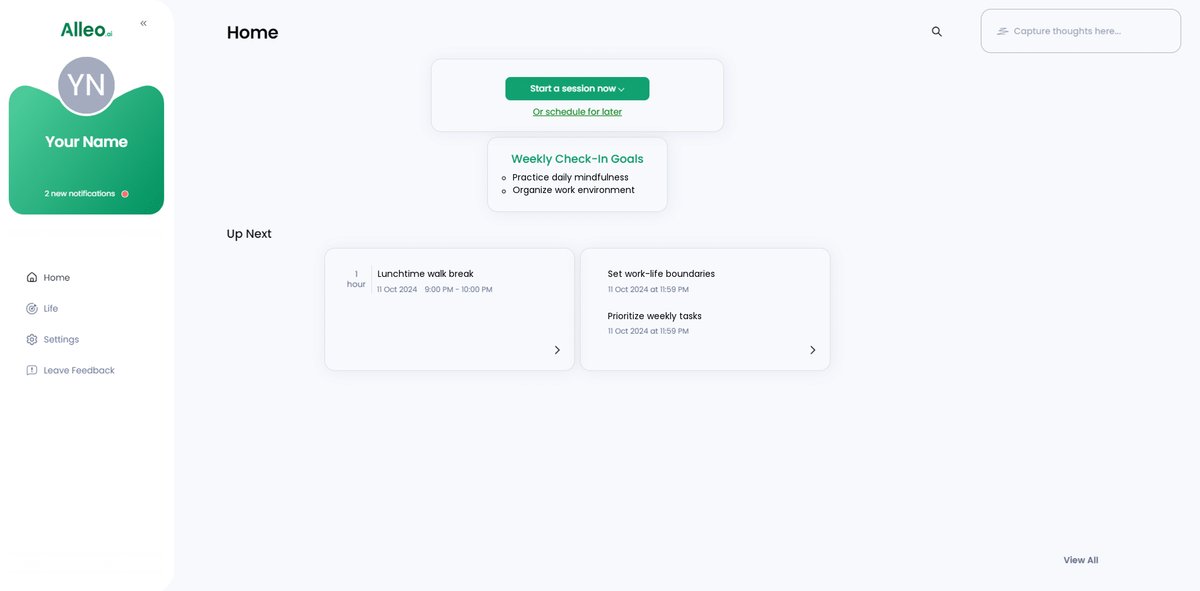
Step 5: Viewing and Managing Goals After the Session
After your coaching session, open the Alleo app to find your discussed goals displayed on the home page, where you can easily track and manage your progress in reducing work-related stress.
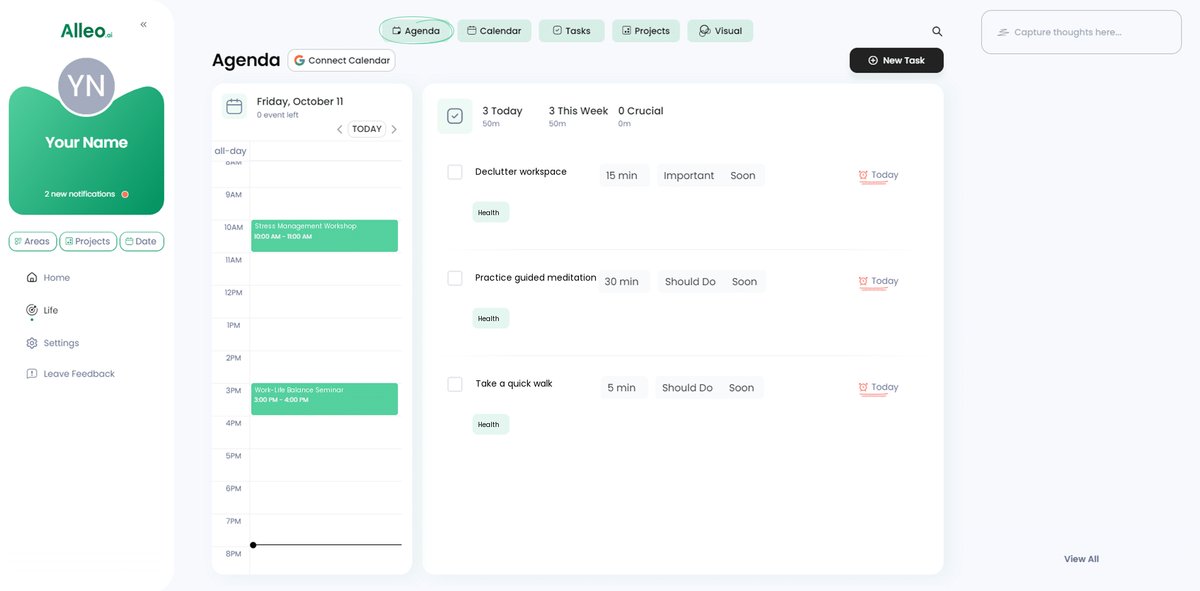
Step 6: Adding events to your calendar or app
Use the app’s calendar feature to schedule and track your stress-reducing activities, such as mindfulness sessions, exercise, and breaks, ensuring you stay accountable to your wellness goals and can easily monitor your progress in managing work-related stress.
Taking Control of Work Stress for a Healthier You
As we wrap up, it’s clear that managing work stress effectively is crucial for your health and productivity.
Remember, practicing mindfulness at work, creating a comfortable workspace, and taking regular breaks can make a big difference in stress management for career success.
Setting clear boundaries in professional life and prioritizing tasks will help you maintain work-life balance and reduce overwhelm.
Don’t forget to engage in regular exercise and self-care strategies for busy professionals to stay energized.
Seeking support from colleagues or professionals is vital for your well-being and burnout prevention.
Taking these steps isn’t just about managing work stress effectively—it’s about improving your overall quality of life.
I understand the challenges you’re facing in maintaining workplace wellness.
You can do this.
With Alleo, you have a partner to guide you through these time management skills for professionals.
Try it for free and start your journey to a stress-free, healthier life today.