7 Powerful Strategies for Setting Realistic Goals as a Life Coach: Transform Your Practice
Are your clients often discouraged by unmet fitness goals?
As a life coach, I’ve seen how unrealistic expectations can derail progress. Many fitness professionals face this challenge daily when it comes to setting realistic fitness goals.
In this article, you’ll discover practical strategies to help clients set achievable goals. We’ll cover the SMART framework for goal-setting techniques, breaking goals into manageable steps, and more. These client motivation strategies will help in measuring progress in life coaching.
Let’s dive in to explore personalized goal-setting approaches and methods for overcoming goal-setting obstacles.
Understanding the Challenge of Unrealistic Goals
When clients set overly ambitious goals, it often leads to frustration and demotivation. They might start with enthusiasm but quickly burn out when results don’t match their expectations. Setting realistic fitness goals is crucial for long-term success.
In my experience, people often find themselves disheartened by their lack of progress. This not only impacts their motivation but also their self-esteem. Implementing effective goal-setting techniques for life coaches can help overcome these obstacles.
Managing expectations is crucial for sustainable progress. If clients’ goals are not realistic, they risk feeling like failures, even when they are making significant improvements. Using SMART goals in life coaching can aid in setting achievable targets.
By helping clients set more achievable goals, you can foster a positive mindset and long-term success. Let’s delve into practical strategies that can help you manage these expectations effectively, including client motivation strategies and personalized goal-setting approaches.

Effective Strategies for Setting Realistic Goals
Overcoming this challenge in setting realistic fitness goals requires a few key steps. Here are the main areas to focus on to make progress in goal-setting techniques for life coaches.
- Implement SMART Goal-Setting Framework: Use the SMART criteria to set clear, achievable goals, essential for setting realistic fitness goals.
- Break Down Goals: Divide goals into small, manageable steps for incremental progress, balancing long-term vs short-term goals.
- Assess Client’s Situation: Realistically evaluate clients’ starting points for tailored plans, employing personalized goal-setting approaches.
- Use Visualization Techniques: Employ visualization for clarity and motivation in setting realistic fitness goals.
- Establish Accountability Partnerships: Foster mutual support and accountability in goal achievement.
- Celebrate Small Wins: Recognize and reward achievements to maintain motivation and overcome goal-setting obstacles.
- Regularly Review and Adjust Goals: Adapt goals as needed for continued progress, measuring progress in life coaching.
Let’s dive in to explore these strategies for setting realistic fitness goals!
1: Implement SMART goal-setting framework
Implementing the SMART goal-setting framework can help clients set clear, achievable goals that lead to success, especially when setting realistic fitness goals.
Actionable Steps:
- Assess Clients’ Goals: Regularly evaluate clients’ goals to ensure they meet SMART criteria and align with client values.
- Create SMART Templates: Develop and use SMART goal templates for client planning, incorporating personalized goal-setting approaches.
- Conduct Workshops: Attend workshops to stay updated on effective goal-setting techniques for life coaches.
Explanation: SMART goals—Specific, Measurable, Achievable, Relevant, Time-bound—provide a clear roadmap for clients. This approach helps maintain focus and motivation, crucial for overcoming goal-setting obstacles.
According to BetterUp, setting clear, specific goals can significantly boost task performance and persistence.
Using this framework ensures goals are realistic and manageable, leading to sustainable progress and long-term success. It also aids in measuring progress in life coaching and enhances accountability in goal achievement.
2: Break down goals into small, manageable steps
Breaking down goals into small, manageable steps is essential to maintain motivation and ensure steady progress when setting realistic fitness goals.
Actionable Steps:
- Set Weekly Milestones: Establish weekly milestones to track progress towards larger goals. This helps clients stay focused and motivated, aligning with client motivation strategies.
- Develop Daily Task Lists: Create daily task lists that contribute to achieving weekly milestones. This makes each day’s efforts feel purposeful and manageable, supporting SMART goals in life coaching.
- Schedule Regular Check-Ins: Arrange regular check-ins to adjust and refine steps as needed. This keeps clients on track and allows for flexibility, enhancing accountability in goal achievement.
Key benefits of breaking down goals:
- Increases sense of achievement
- Reduces overwhelm
- Allows for easier progress tracking
Explanation: Breaking down goals into smaller steps helps clients see their progress, reducing feelings of being overwhelmed and supporting personalized goal-setting approaches.
According to NWEA, setting short-term goals can boost motivation and task performance. By focusing on incremental progress, clients are more likely to stay committed and achieve their long-term fitness goals, balancing long-term vs short-term goals.
This method naturally leads to a greater sense of accomplishment and encourages continuous improvement, helping in overcoming goal-setting obstacles and setting realistic fitness goals.
3: Assess client’s current situation realistically
Understanding a client’s starting point is crucial for setting realistic fitness goals and implementing effective goal-setting techniques for life coaches.
Actionable Steps:
- Conduct Initial Assessments: Begin with a thorough assessment of clients’ fitness levels and limitations to create a baseline, essential for setting realistic fitness goals.
- Develop Personalized Plans: Use the initial assessment to tailor fitness plans that align with clients’ current capabilities, incorporating personalized goal-setting approaches.
- Implement Feedback Mechanisms: Regularly gather and analyze feedback to adjust and improve fitness plans as needed, ensuring accountability in goal achievement.
Explanation: Conducting a realistic assessment helps in creating personalized, achievable fitness plans that cater to individual needs. This approach ensures clients are set up for success when setting realistic fitness goals from the start.
According to Life Coach Training, understanding your clients’ unique starting points is essential for effective goal-setting. This strategy fosters a sense of accomplishment and encourages continuous progress, aligning with SMART goals in life coaching.
Properly assessing the current situation paves the way for setting realistic fitness goals and long-term success, while helping overcome goal-setting obstacles.

4: Use visualization techniques for goal clarity
Using visualization techniques can significantly enhance goal clarity and motivation for your clients when setting realistic fitness goals.
Actionable Steps:
- Create Vision Boards: Encourage clients to make vision boards displaying their fitness goals and desired outcomes. This provides a visual reminder and keeps them motivated, supporting long-term vs short-term goals.
- Practice Guided Visualization: Incorporate guided visualization exercises into your sessions. Help clients imagine achieving their goals vividly and in detail, which is one of the effective goal-setting techniques for life coaches.
- Maintain Progress Journals: Suggest clients keep progress journals where they document their visualized goals and track their achievements. This reinforces their commitment and aids in measuring progress in life coaching.
Explanation: Visualization helps clients mentally rehearse and prepare for success. According to NWEA, visualizing goals can boost motivation and task performance.
By using these techniques, clients can stay focused on their objectives and maintain high levels of motivation, which is crucial for setting realistic fitness goals and overcoming goal-setting obstacles.
This approach naturally strengthens their belief in their ability to achieve their goals, enhancing accountability in goal achievement.

5: Establish accountability partnerships
Establishing accountability partnerships is essential for maintaining motivation and ensuring clients stay on track with their goals when setting realistic fitness goals.
Actionable Steps:
- Peer Partnering: Pair clients with accountability partners to provide mutual support. This fosters a sense of shared responsibility and motivation, crucial for achieving SMART goals in life coaching.
- Group Sessions: Organize group sessions where clients can discuss their progress and challenges. This builds a supportive community and encourages consistency, aiding in overcoming goal-setting obstacles.
- Accountability Contracts: Develop accountability contracts that outline commitments and regular check-ins. This formalizes the process and reinforces accountability in goal achievement.
Explanation: Accountability partnerships are crucial for sustained progress and motivation when setting realistic fitness goals.
According to NWEA, having a support system significantly enhances goal achievement. By implementing these steps, clients are more likely to stay committed and reach their fitness goals, effectively measuring progress in life coaching.
These partnerships help build a sense of community and ensure clients feel supported throughout their journey, aligning with personalized goal-setting approaches.

6: Celebrate small wins to maintain motivation
Celebrating small wins is crucial for maintaining motivation and encouraging continuous progress in your clients’ fitness journey when setting realistic fitness goals.
Actionable Steps:
- Hold Weekly Celebrations: Organize mini-celebrations each week for milestones achieved. This keeps clients excited and motivated, supporting long-term vs short-term goals.
- Create Achievement Rewards: Establish a reward system for reaching specific goals. This can include small gifts or additional privileges, enhancing client motivation strategies.
- Publicly Recognize Success: Use social media or community boards to highlight client achievements. This public recognition fosters a sense of pride and accomplishment, aiding in accountability in goal achievement.
Effective ways to celebrate small wins:
- Share success stories in group sessions
- Award badges or certificates for milestones
- Create a “Wall of Fame” in your coaching space
Explanation: Celebrating small wins reinforces positive behavior and boosts confidence when setting realistic fitness goals.
According to Sedona Sky, recognizing achievements helps maintain motivation and encourages clients to stay committed to their goals. This approach creates a supportive and motivating environment, essential for long-term success and aligns with personalized goal-setting approaches.
By celebrating small wins, you build a culture of positivity and continuous improvement, which is crucial when setting realistic fitness goals and overcoming goal-setting obstacles.

7: Regularly review and adjust goals as needed
Regularly reviewing and adjusting goals is essential to ensure continued progress and adaptability when setting realistic fitness goals.
Actionable Steps:
- Schedule Monthly Reviews: Set monthly sessions to evaluate clients’ progress and make necessary adjustments, a key aspect of goal-setting techniques for life coaches.
- Develop Adaptation Plans: Create plans to address unexpected challenges, ensuring clients stay on track with their SMART goals in life coaching.
- Encourage Flexibility: Teach clients to be flexible with their fitness goals, adapting as needed for sustained progress and overcoming goal-setting obstacles.
Signs that goals may need adjustment:
- Consistent underperformance in measuring progress in life coaching
- Significant changes in client’s circumstances affecting long-term vs short-term goals
- Rapid achievement of initial goals, requiring personalized goal-setting approaches
Explanation: Consistently revisiting and adjusting goals helps maintain progress and motivation. This approach ensures that goals remain relevant and achievable despite changing circumstances, supporting client motivation strategies.
According to LinkedIn, flexibility in goal-setting is crucial for long-term success. By implementing these steps, you can better support your clients in achieving their fitness objectives and ensure accountability in goal achievement.
Adapting goals regularly fosters resilience and a proactive mindset, key elements for long-term success in setting realistic fitness goals and adapting goals for different life areas.
Partner with Alleo to Set Realistic Fitness Goals
We’ve explored the challenges of setting realistic fitness goals and effective strategies to overcome them. But did you know you can work directly with Alleo to make this journey easier and master goal-setting techniques for life coaches?
Alleo offers tailored coaching support, providing full coaching sessions like any human coach. You’ll get a personalized goal-setting approach and regular follow-ups to help with measuring progress in life coaching.
Alleo helps you stay accountable through text and push notifications, ensuring accountability in goal achievement.
Ready to get started for free? Try Alleo’s 14-day trial with no credit card required and begin setting realistic fitness goals with expert guidance.
Let’s get you on the path to success by aligning your fitness goals with your personal values!
Step 1: Log in or Create Your Account
To begin setting realistic fitness goals with our AI coach, log in to your account or create a new one to access personalized guidance and support.

Step 2: Choose Your Focus Area
Select “Setting and achieving personal or professional goals” to align with the SMART goal-setting framework discussed in the article, helping you break down your fitness aspirations into manageable, realistic targets that you can steadily work towards and achieve.

Step 3: Selecting the Health Life Area
Choose “Health” as your focus area to align with your fitness goals, enabling Alleo to provide targeted strategies for setting realistic health and wellness objectives that support your overall well-being and physical progress.

Step 4: Starting a coaching session
Begin your journey with Alleo by scheduling an intake session, where you’ll discuss your fitness goals and create a personalized plan that aligns with the SMART framework, setting you up for success from day one.

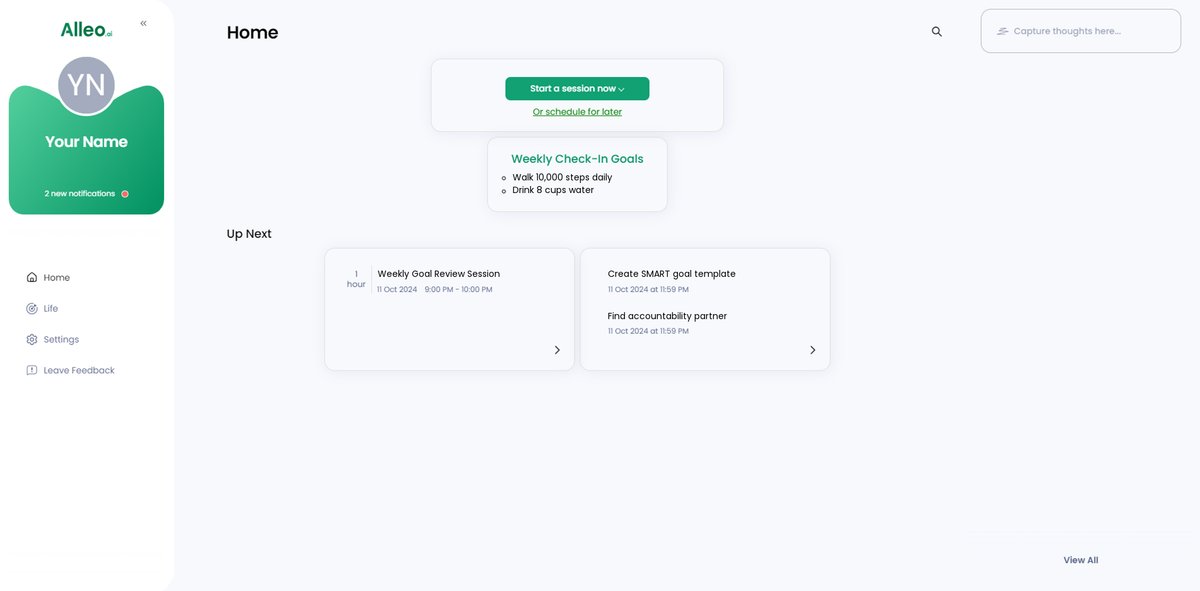
Step 5: Viewing and managing goals after the session
After your coaching session, open the app to find your discussed goals conveniently displayed on the home page, allowing you to easily review and manage your progress toward realistic fitness objectives.
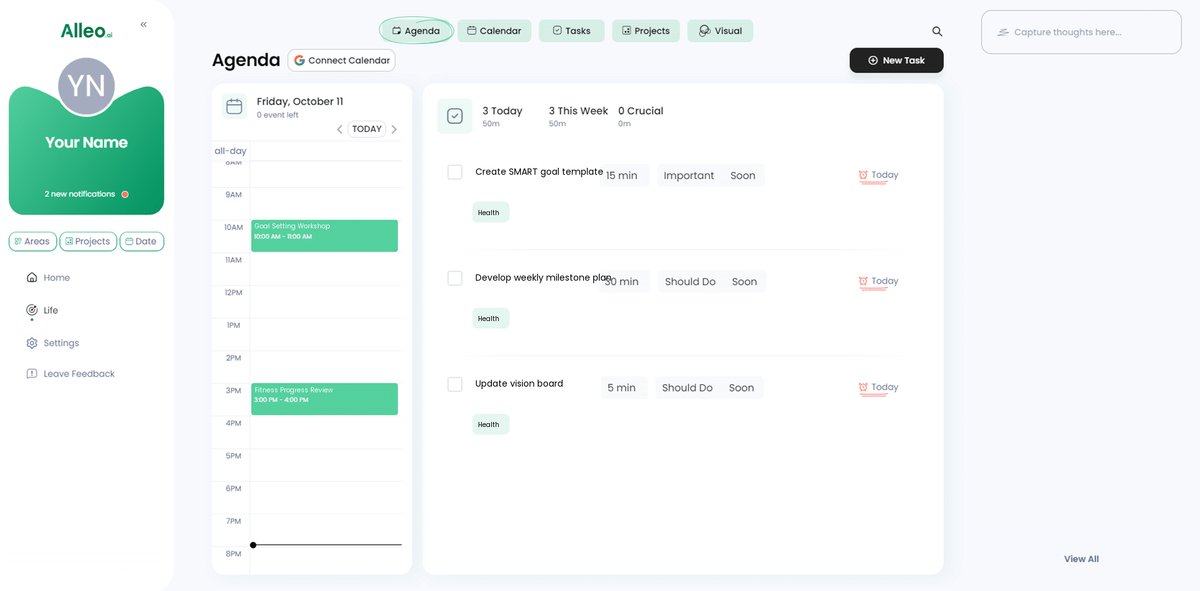
Step 6: Adding events to your calendar or app
Track your progress towards your fitness goals by adding events and tasks to the Alleo app’s calendar feature, allowing you to visualize your journey and stay accountable to your commitments.
Bringing It All Together for Success
Understanding the importance of setting realistic fitness goals is the first step. Implementing these goal-setting techniques for life coaches can make a significant difference in your clients’ progress.
By focusing on SMART goals in life coaching, breaking tasks into manageable steps, and celebrating wins, you create a supportive environment. It’s about building confidence and fostering sustainable growth while adapting goals for different life areas.
Remember to assess your clients’ starting points realistically and use visualization techniques to keep them motivated. Establish accountability partnerships to ensure they stay on track, which is crucial for overcoming goal-setting obstacles.
Together, we can make setting realistic fitness goals more effective and rewarding. Try Alleo’s 14-day free trial to experience how AI coaching can enhance your practice in measuring progress in life coaching.
Let’s achieve those personalized goal-setting approaches!