7 Proven Methods for Healthcare Workers to Set Effective Self-Care Reminders
Are you constantly feeling overwhelmed and struggling to find time for self-care as a healthcare worker? Self-care reminders for healthcare workers can be a game-changer in managing stress and maintaining work-life balance.
As a life coach, I’ve helped many professionals navigate these challenges. In my experience, the key lies in setting effective self-care reminders. These reminders can serve as stress management tools for healthcare workers, helping them prioritize their well-being.
In this article, you’ll learn practical strategies to create personalized, adaptive self-care reminders for healthcare workers. These will help you take essential breaks without interfering with critical tasks, promoting better time management strategies in healthcare settings.
Let’s dive in and explore how self-care techniques for healthcare professionals can make a difference in your daily routine.

The Prevalence and Pain of Burnout Among Healthcare Workers
Burnout is an all-too-common issue for healthcare workers. Many struggle to balance the demands of their jobs with personal well-being, making self-care reminders for healthcare workers essential. The constant pressure can make it difficult to remember to take breaks and practice self-care techniques for healthcare professionals.
In my experience, people often find themselves overwhelmed, unable to prioritize their own needs. This can lead to severe consequences, such as compassion fatigue and declining mental health. Mental health reminders for medical staff are crucial in maintaining work-life balance.
Remember, preventing burnout is crucial. It’s not just about surviving the day but thriving in your career. Implementing stress management tools for healthcare workers and time management strategies in healthcare can make a significant difference.
A Roadmap to Setting Effective Self-Care Reminders for Healthcare Workers
Overcoming this challenge requires a few key steps. Here are the main areas to focus on to make progress with self-care reminders for healthcare workers:
- Use a dedicated self-care app with custom alerts: Choose reliable digital wellness apps for medical professionals and set up personalized alerts.
- Set calendar reminders for quick breaks: Integrate self-care breaks into your daily schedule to improve work-life balance for nurses and doctors.
- Create a personalized self-care checklist: Develop a daily checklist of key self-care activities and stress management tools for healthcare workers.
- Use smart wearables for discreet reminders: Set up custom alerts with wearable devices for mental health reminders for medical staff.
- Establish a buddy system for mutual check-ins: Pair up with a colleague for regular reminders, supporting burnout prevention for hospital staff.
- Utilize voice assistants for hands-free reminders: Program reminders using voice assistants to incorporate mindfulness practices for healthcare employees.
- Implement a visual cue system in workspaces: Create visual cues to prompt self-care breaks and physical health reminders for medical personnel.
Let’s dive into these self-care techniques for healthcare professionals!
1: Use a dedicated self-care app with custom alerts
Using a dedicated self-care app with custom alerts can significantly help manage your well-being, especially for healthcare workers seeking effective self-care reminders.
Actionable Steps:
- Choose a reliable app: Select an app that offers flexible customization. Apps like Headspace or Calm can provide tailored reminders, serving as digital wellness apps for medical professionals.
- Set up alerts for self-care activities: Schedule reminders for hydration, stretching, or short walks. Customizable alerts ensure you remember to take breaks, crucial for stress management in healthcare workers.
- Track your self-care activities: Use the app to monitor frequency and adherence. This helps you stay on top of your self-care routine, supporting work-life balance for nurses and doctors.
Explanation:
These steps are crucial because they ensure you don’t overlook essential self-care activities. Regular self-care helps prevent burnout and improves your overall well-being, which is vital for healthcare professionals.
According to a SAMHSA resource, consistent self-care practices can mitigate stress and enhance mental health, highlighting the importance of mental health reminders for medical staff.
Taking these steps can help you maintain a balanced routine and avoid burnout, serving as effective burnout prevention reminders for hospital staff.

2: Set calendar reminders for quick breaks
Setting calendar reminders for quick breaks is crucial for maintaining a balanced schedule without neglecting self-care for healthcare workers. These self-care reminders for healthcare workers help manage the demanding nature of medical professions.
Actionable Steps:
- Integrate break times into your digital calendar: Use tools like Google Calendar or Outlook to schedule breaks every 2-3 hours, incorporating stress management tools for healthcare workers.
- Set recurring reminders: Program short breaks into your calendar to ensure consistency, even during busy shifts, supporting work-life balance tips for nurses and doctors.
- Adjust reminders based on workload: Customize break times to fit your shift patterns and daily tasks, enhancing time management strategies in healthcare.
Explanation:
Taking regular breaks is essential for reducing burnout and maintaining focus. By scheduling breaks, you create a structured routine that supports well-being and serves as burnout prevention reminders for hospital staff.
According to a USA University resource, integrating regular breaks can significantly improve productivity and mental health.
This method ensures you don’t overlook self-care amidst your demanding schedule, promoting wellness routines for busy healthcare schedules.
3: Create a personalized self-care checklist
Creating a personalized self-care checklist is essential for ensuring you consistently engage in activities that promote well-being, especially for healthcare workers seeking effective self-care reminders.
Actionable Steps:
- Identify key self-care activities: Determine which activities benefit you the most, such as drinking water, quick meditations, and light exercises. These self-care techniques for healthcare professionals can significantly impact mental health.
- Develop a daily checklist: Use digital wellness apps for medical professionals or physical tools to create a checklist that covers all your essential self-care activities, including work-life balance tips for nurses and doctors.
- Review and adjust weekly: Evaluate your checklist each week to see what works and what needs adjustment, incorporating stress management tools for healthcare workers as needed.
Explanation:
These steps matter because they help you establish a routine that supports your mental and physical health. Regularly reviewing and adjusting your checklist ensures it remains relevant and effective, serving as burnout prevention reminders for hospital staff.
According to a SNHU resource, practicing self-care can lead to increased productivity and improved well-being.
This method helps you stay committed to self-care, making it easier to manage stress and avoid burnout. It’s particularly valuable for healthcare workers who need consistent self-care reminders to maintain their well-being in demanding environments.
4: Use smart wearables for discreet reminders
Using smart wearables for discreet reminders can significantly enhance your self-care routine for healthcare workers without disrupting your workflow.
Actionable Steps:
- Choose a compatible wearable device: Select a smartwatch or fitness tracker that supports customizable alerts for self-care reminders for healthcare workers, such as the Apple Watch or Fitbit.
- Set up custom reminders: Program alerts for self-care activities like hydration, movement, and relaxation. Ensure these mental health reminders for medical staff are spaced throughout your shift.
- Monitor and adjust settings: Regularly review your wearable’s data to track adherence and adjust the frequency of self-care reminders as needed.
Key benefits of using smart wearables for self-care techniques for healthcare professionals:
- Discreet reminders that don’t interrupt workflow
- Personalized alerts based on your activity levels
- Easy tracking of self-care habits over time
Explanation:
These steps are vital because they allow you to integrate self-care reminders for healthcare workers seamlessly into your daily routine. According to a SNHU resource, consistent self-care practices can lead to improved productivity and well-being.
By using smart wearables as stress management tools for healthcare workers, you ensure that important self-care activities are not overlooked, helping prevent burnout and maintain a balanced lifestyle.
Implementing this strategy can help you stay committed to self-care, making it easier to manage stress and maintain focus in your healthcare role.
5: Establish buddy system for mutual check-ins
Creating a buddy system for mutual check-ins is a powerful way to stay accountable and ensure you prioritize self-care reminders for healthcare workers.
Actionable Steps:
- Pair up with a colleague: Choose someone with similar work schedules and self-care goals. This ensures both of you can support each other effectively in maintaining work-life balance tips for nurses and doctors.
- Schedule regular check-ins: Establish a routine for daily or weekly check-ins. Use these times to remind each other to take breaks and practice self-care techniques for healthcare professionals.
- Share progress and support: Discuss your self-care activities and offer encouragement. Joint breaks or shared self-care activities can be particularly motivating for healthcare workers.
Explanation:
These steps matter because they create a support network, making it easier to maintain self-care routines and implement stress management tools for healthcare workers.
According to a Talkspace resource, building a support network can reduce feelings of isolation and enhance focus during stressful times.
Establishing a buddy system ensures that you have someone to remind and motivate you, helping to prevent burnout and maintain well-being, which is crucial for healthcare employees.
This approach fosters a sense of community and shared responsibility for self-care reminders for healthcare workers.
6: Utilize voice assistants for hands-free reminders
Utilizing voice assistants for hands-free self-care reminders for healthcare workers can streamline your wellness routine in a busy healthcare environment.
Actionable Steps:
- Set up a voice assistant: Install a voice assistant like Alexa or Google Assistant in your workspace. Ensure it’s connected and easily accessible for stress management tools for healthcare workers.
- Program self-care reminders: Use voice commands to set reminders for specific tasks. For instance, “Hey Google, remind me to stretch at 3 PM” as part of your physical health reminders for medical personnel.
- Log self-care activities hands-free: Use voice commands to log your activities. For example, “Alexa, note that I took a hydration break” to support your wellness routines for busy healthcare schedules.
Advantages of using voice assistants for self-care:
- Hands-free operation, ideal for busy environments
- Immediate logging of completed activities
- Easy adjustment of reminders on the go
Explanation:
These steps are essential because they enable you to integrate self-care techniques for healthcare professionals into your routine without disrupting your workflow.
According to a Sigma Nursing resource, using technology effectively can support consistent self-care practices. Voice assistants provide a convenient, hands-free way to ensure you don’t miss out on essential self-care activities and mental health reminders for medical staff.
Incorporating voice assistants into your routine can make self-care reminders for healthcare workers seamless and more manageable, supporting work-life balance tips for nurses and doctors.
7: Implement a visual cue system in workspaces
Implementing a visual cue system in workspaces can be an effective strategy to encourage regular self-care breaks for healthcare workers.
Actionable Steps:
- Create visual reminders: Use sticky notes, posters, or digital screens with self-care reminders for healthcare workers. Place them in areas you frequently visit.
- Position cues strategically: Place visual reminders in high-traffic areas like workstations and break rooms. This ensures they’re always within sight, promoting stress management for healthcare workers.
- Update cues regularly: Change the visual cues periodically to maintain their effectiveness. Refresh them monthly or quarterly for best results, incorporating new self-care techniques for healthcare professionals.
Effective visual cues for self-care:
- Colorful sticky notes with motivational messages for mental health reminders for medical staff
- Digital wallpapers on work computers with self-care reminders for healthcare workers
- Inspirational posters in common areas promoting well-being and work-life balance tips for nurses and doctors
Explanation:
These steps matter because visual cues serve as constant reminders to prioritize self-care activities. According to a Frontiers in Veterinary Science article, consistent self-care practices can significantly enhance mental health and well-being.
By strategically placing and updating visual cues, you ensure that self-care becomes an integral part of your routine, helping to prevent burnout in healthcare workers.
This approach keeps self-care reminders for healthcare workers top of mind, fostering a healthier, more balanced work environment.
Partner with Alleo for Effective Self-Care Reminders for Healthcare Workers
We’ve explored the challenges of setting self-care reminders for healthcare workers. Did you know you can work with Alleo to make this easier for medical professionals?
Sign up for Alleo and create a personalized self-care plan tailored to busy healthcare schedules. Our AI coach offers full coaching sessions, tracking your progress and adapting as needed, helping with stress management tools for healthcare workers and burnout prevention reminders for hospital staff.
You’ll receive text and push notifications to stay accountable, acting as mental health reminders for medical staff. Try it free for 14 days, no credit card required. It’s an ideal digital wellness app for medical professionals.
Ready to get started for free and improve your work-life balance as a healthcare professional? Let me show you how!
Step 1: Log In or Create Your Account
Log in to your existing Alleo account or create a new one to start setting up personalized self-care reminders tailored to your healthcare work schedule.

Step 2: Choose Your Focus Area
Click on “Building better habits and routines” to start addressing your self-care challenges head-on, aligning with the strategies discussed in the article to create a more balanced and sustainable healthcare career.

Step 3: Selecting the Health Life Area
Choose “Health” as your focus area to directly address burnout and self-care challenges, aligning perfectly with your goals as a healthcare worker to maintain well-being and prevent exhaustion.

Step 4: Starting a coaching session
Begin your journey with an intake session to create a personalized self-care plan, setting the foundation for future coaching sessions tailored to your needs as a healthcare worker.

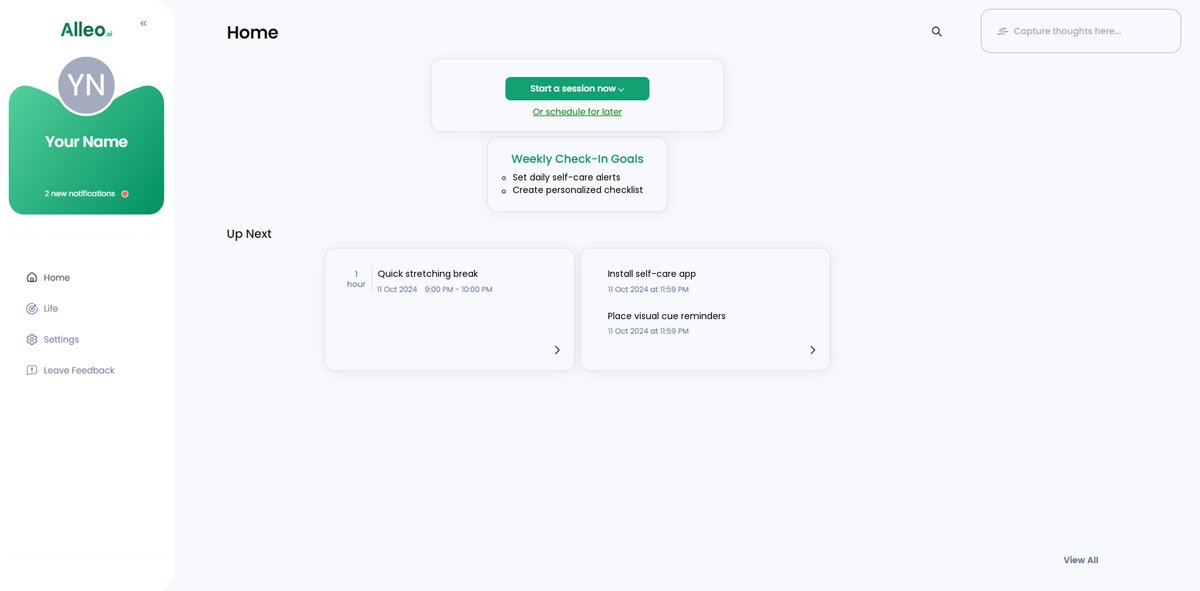
Step 5: Viewing and managing goals after the session
After your coaching session, check the app’s home page to review and manage the self-care goals you discussed, ensuring you stay on track with your personalized plan.
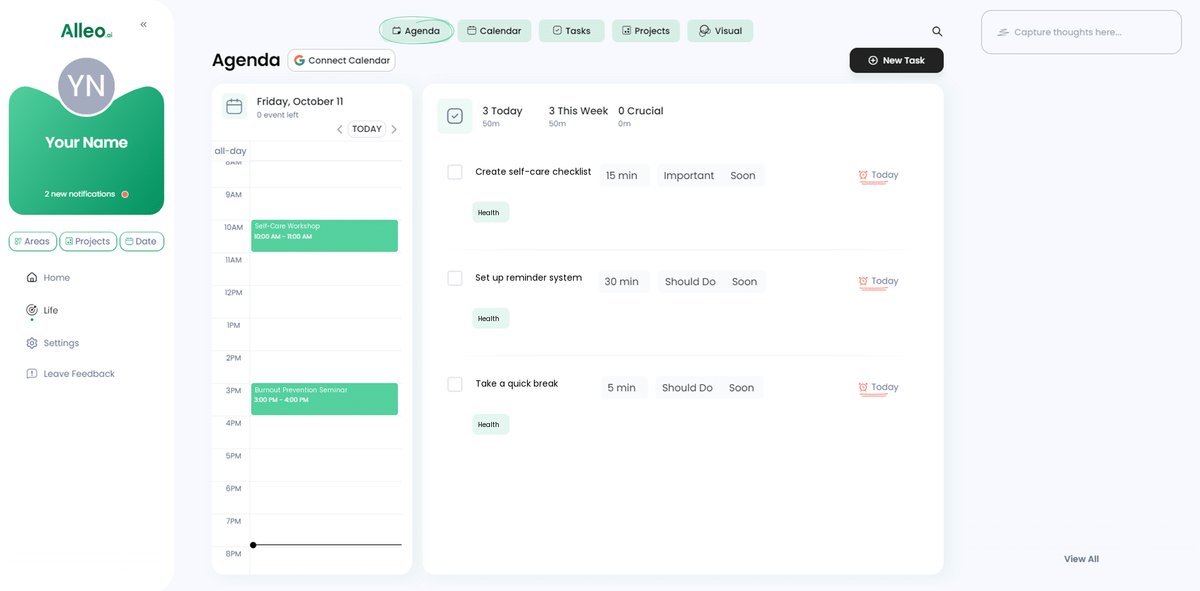
Step 6: Adding events to your calendar or app
Use the calendar and task features in the Alleo app to add self-care events and track your progress, ensuring you stay on top of your personalized self-care plan and monitor your journey towards better well-being.
Wrapping Up: Your Path to Effective Self-Care
We’ve covered a lot of ground in setting effective self-care reminders for healthcare workers. Remember, it’s crucial to prioritize your well-being in the demanding healthcare field.
Using dedicated digital wellness apps, calendar reminders, and checklists can make a big difference for medical professionals. Smart wearables and buddy systems add extra support for stress management and burnout prevention.
Voice assistants and visual cues help keep self-care top of mind for busy healthcare schedules.
I know it can feel overwhelming for nurses and doctors. But with these strategies, you’re well on your way to achieving work-life balance.
Consider trying Alleo. It offers tools and support to make self-care easier for healthcare employees.
Start your journey to better self-care today. Sign up for Alleo and take the first step towards a healthier you, incorporating mindfulness practices and physical health reminders into your routine.