7 Proven Methods to Identify Transferable Skills for MBA Applications
Are you struggling to identify the transferable skills for MBA applications that could make your application stand out?
Many young professionals face difficulties when trying to pinpoint and articulate these crucial skills for the MBA application process. As a life coach, I’ve helped many navigate this exact challenge when considering a career change to MBA.
In my experience, the key is a systematic approach to showcasing your professional experience in MBA applications.
In this article, you’ll learn proven strategies to identify and highlight your transferable skills for MBA applications, including leadership skills for MBA, analytical skills for MBA programs, and communication skills in business education. Let’s dive in.

Understanding the Challenge: Identifying Transferable Skills
Many young professionals struggle with pinpointing their transferable skills for MBA applications. This challenge can significantly hinder their MBA application process success.
Without recognizing these transferable skills for MBA, career opportunities may slip away.
In my experience, people often find it hard to articulate what they’ve learned from past roles. This difficulty can make it tough to stand out in MBA applications, especially when highlighting professional experience in MBA applications.
Several clients report feeling overwhelmed by the process of showcasing their soft skills for business school.
Failing to identify and highlight these skills can negatively impact your career change to MBA. It might even result in missed opportunities for advancement.
I see this problem frequently in MBA admissions.
So, what’s the solution for showcasing transferable skills for MBA applications?
Let’s explore it step by step.

Steps to Identify Transferable Skills for MBA Applications
Overcoming this challenge requires a few key steps. Here are the main areas to focus on to make progress in identifying transferable skills for MBA applications.
- Conduct a skills inventory from past experiences: List all past roles and identify gained skills relevant to the MBA application process.
- Map skills to MBA program requirements: Research MBA programs and match your transferable skills for MBA to their needs.
- Identify gaps in your skillset for target roles: Analyze job descriptions and perform a gap analysis, focusing on leadership skills for MBA and analytical skills for MBA programs.
- Use STAR method to articulate skills in stories: Craft STAR stories to clearly demonstrate your communication skills in business education.
- Research industry-specific transferable skills: Understand key industry skills through networking, emphasizing soft skills for business school.
- Seek feedback from mentors or colleagues: Get constructive feedback on your professional experience in MBA applications and teamwork abilities for MBA candidates.
- Create a skills-based resume highlighting transfers: Tailor a resume that emphasizes your transferable skills for MBA, showcasing adaptability in MBA admissions.
Let’s dive in to explore these steps for leveraging transferable skills in your career change to MBA!
1: Conduct a skills inventory from past experiences
A thorough skills inventory is crucial for understanding and highlighting your transferable skills for MBA applications.
Actionable Steps:
- List all past roles and experiences: Create a comprehensive list of your job roles, volunteer work, and educational experiences. Use a digital note-taking tool or journal to document your professional experience in MBA applications.
- Identify and categorize skills: For each role, identify the transferable skills for MBA you gained. Use a skills matrix to sort them into technical, interpersonal, and leadership skills for MBA categories.
- Reflect on significant projects: Write brief case studies for major projects or achievements. Highlight the analytical skills for MBA programs these projects required and how you utilized them.
Explanation:
Conducting a skills inventory helps you recognize and articulate your strengths. This is vital for tailoring your MBA application process to showcase your suitability.
According to Tulane University, developing a clear understanding of your transferable skills for MBA applications can significantly improve your chances of success in MBA programs and career transitions.
Key benefits of a thorough skills inventory:
- Enhances self-awareness
- Identifies unique selling points
- Guides personal development efforts
This organized approach ensures you present a compelling narrative in your applications, highlighting your communication skills in business education and teamwork abilities for MBA candidates.
Now, let’s move on to mapping these transferable skills for MBA to MBA program requirements.
2: Map skills to MBA program requirements
Mapping your transferable skills for MBA applications to program requirements is crucial for positioning yourself as an ideal candidate.
Actionable Steps:
- Research the skills valued by top MBA programs: Review MBA program websites, focusing on their core competencies and desired applicant profiles, including leadership skills for MBA and analytical skills for MBA programs.
- Match your identified transferable skills for MBA to these requirements: Create a comparison chart to see where your professional experience in MBA applications aligns with MBA expectations.
- Adjust your narrative to highlight relevant skills in your MBA application process: Draft application essays or personal statements that emphasize these aligned soft skills for business school.
Explanation:
Mapping your transferable skills for MBA applications to program requirements helps tailor your application to what schools are looking for. This strategy increases your chances of standing out, especially when considering a career change to MBA.
According to Georgetown University, aligning your skills with program requirements can significantly boost your admission chances.
Now, let’s move on to identifying gaps in your skillset for target roles.
3: Identify gaps in your skillset for target roles
Identifying gaps in your skillset is crucial for aligning your capabilities with post-MBA career opportunities and strengthening your transferable skills for MBA applications.
Actionable Steps:
- Analyze job descriptions for post-MBA roles: Highlight the required skills and compare them against your current skillset, focusing on transferable skills for MBA programs.
- Identify skill gaps that need addressing: Create a gap analysis document that outlines missing skills, including soft skills for business school and analytical skills for MBA programs.
- Develop a plan to acquire these skills: Enroll in relevant courses or training programs to bridge the gaps and enhance your professional experience in MBA applications.
Explanation:
Identifying skill gaps ensures you’re prepared for your desired roles. This proactive approach helps you become a strong candidate for MBA programs and future jobs, emphasizing leadership skills for MBA and communication skills in business education.
According to Stratus Admissions Counseling, understanding and addressing these gaps is essential for career transitions. Taking these steps will position you for success in the MBA application process and demonstrate your adaptability in MBA admissions.
Now, let’s explore how to use the STAR method to articulate your skills in stories, showcasing your teamwork abilities for MBA candidates.
4: Use STAR method to articulate transferable skills for MBA applications
Using the STAR method can help you clearly articulate your transferable skills for MBA applications in a structured way.
Actionable Steps:
- Learn the STAR method: Study examples of the Situation, Task, Action, Result framework. Look for templates to guide your storytelling in the MBA application process.
- Craft STAR stories for achievements: Write 3-5 STAR stories that highlight your significant accomplishments. Ensure each story showcases your critical transferable skills for MBA programs, including leadership skills for MBA and analytical skills for MBA programs.
- Practice your STAR stories: Record yourself or practice with a friend. Refine your narrative to ensure clarity and impact, focusing on communication skills in business education.
Explanation:
The STAR method helps you present your transferable skills for MBA applications in a compelling and organized manner. This approach can make your application stand out to MBA admissions committees, especially when highlighting your professional experience in MBA applications.
According to GMAT Club, articulating your skills effectively is crucial for success in both job applications and MBA admissions. This structured method ensures your stories are impactful and memorable, showcasing your teamwork abilities for MBA candidates.
By mastering the STAR method, you’ll be better prepared to articulate your transferable skills for MBA applications in both written applications and interviews, demonstrating your adaptability in MBA admissions.
5: Research industry-specific transferable skills
Understanding industry-specific transferable skills is crucial for aligning your capabilities with the demands of your target field and enhancing your MBA application process.
Actionable Steps:
- Identify key industries you are interested in: Use industry reports and career guides to understand the required transferable skills for MBA applications.
- Network with professionals in those industries: Schedule informational interviews to gather insights on necessary skills for a career change to MBA.
- Tailor your skillset to meet industry demands: Adjust your resume and LinkedIn profile to highlight these industry-specific transferable skills for MBA programs.
Explanation:
Researching industry-specific transferable skills ensures you can effectively align your capabilities with market needs. This approach helps you tailor your application and increases your chances of success in the MBA admissions process.
According to Stratus Admissions Counseling, understanding the required skills in your target industry is essential for a successful career transition.
Top transferable skills valued across industries and in MBA applications:
- Adaptability in MBA admissions
- Critical thinking and analytical skills for MBA programs
- Communication skills in business education
- Leadership skills for MBA
These steps will help you make a strong impression on MBA admissions committees and future employers by showcasing your professional experience in MBA applications.
6: Seek feedback from mentors or colleagues
Seeking feedback from mentors or colleagues is vital for refining your transferable skills for MBA applications and ensuring they are well-articulated.
Actionable Steps:
- Reach out to trusted mentors or colleagues: Schedule feedback sessions to review your transferable skills for MBA inventory and STAR stories. Be specific about the type of feedback you need.
- Present your skills and stories clearly: Provide a concise summary of your soft skills for business school and the STAR stories you’ve crafted. Ask for direct feedback on clarity and relevance.
- Implement feedback to refine your narrative: Incorporate suggestions to improve your articulation of transferable skills for MBA applications. Revise your documents and practice your stories based on the feedback received.
Explanation:
Getting feedback helps ensure your transferable skills for MBA applications are presented effectively, improving your MBA application process and interview performance. According to American University, seeking constructive feedback is essential for professional development and career success.
This step ensures your narrative is clear and compelling.
By incorporating feedback, you enhance the quality of your application, making a strong impression on admissions committees and future employers.

7: Create a skills-based resume highlighting transfers
Creating a skills-based resume is crucial for effectively showcasing your transferable skills for MBA applications. This approach helps emphasize your professional experience in MBA applications.
Actionable Steps:
- Learn the format of a skills-based resume: Review examples and templates of skills-based resumes. Focus on how they structure and highlight transferable skills for MBA.
- Highlight transferable skills prominently: Use bullet points and categories to organize skills effectively. Ensure the most relevant skills, such as leadership skills for MBA and analytical skills for MBA programs, are easy to spot.
- Tailor your resume for each MBA application: Customize the resume to match the specific requirements of each program. Emphasize the soft skills for business school that align with the program’s needs.
Explanation:
Creating a skills-based resume helps you present your most relevant transferable skills for MBA applications clearly and concisely. This format ensures MBA admissions committees can quickly see your strengths during the MBA application process.
According to Tulane University, emphasizing transferable skills is essential for standing out in MBA applications. By tailoring your resume, you demonstrate your suitability for the program and increase your chances of success, especially if you’re considering a career change to MBA.
Key elements of an effective skills-based resume for MBA applications:
- Clear skill categories
- Quantifiable achievements
- Relevant keywords highlighting communication skills in business education
A well-crafted resume showcasing teamwork abilities for MBA candidates and adaptability in MBA admissions can make a significant difference in your MBA application process.
Partner with Alleo on Your MBA Journey
We’ve explored the challenges of identifying transferable skills for MBA applications, their impact on MBA applications, and the steps to solve this problem. But did you know you can work directly with Alleo to make this journey easier and faster?
With Alleo, setting up an account is quick and easy. You’ll start by creating a personalized plan tailored to your specific needs, including how to highlight your professional experience in MBA applications.
Alleo’s AI coach will guide you through each step of the MBA application process, from conducting a skills inventory to crafting STAR stories that showcase your leadership skills for MBA. Alleo provides actionable feedback and keeps you accountable with text and push notifications.
Alleo offers affordable, tailored coaching sessions, just like a human coach, to help you develop your communication skills in business education. Plus, you can try it free for 14 days with no credit card required.
Ready to get started for free and enhance your transferable skills for MBA?
Let me show you how!
Step 1: Log In or Create Your Account
To begin your MBA preparation journey with Alleo, simply Log in to your account or create a new one to access personalized guidance on identifying and articulating your transferable skills.

Step 2: Choose Your Focus Area
Select “Setting and achieving personal or professional goals” to align your transferable skills with your MBA aspirations, helping you craft a more compelling application that showcases your potential for growth and success in the program.

Step 3: Select “Career” as Your Focus Area
Choose “Career” as your focus area in Alleo to align your goals with identifying and leveraging transferable skills for your MBA application, helping you stand out to admissions committees and prepare for future career transitions.

Step 4: Starting a coaching session
Begin your journey with Alleo by scheduling an intake session, where you’ll work with your AI coach to create a personalized plan for identifying and showcasing your transferable skills for MBA applications.

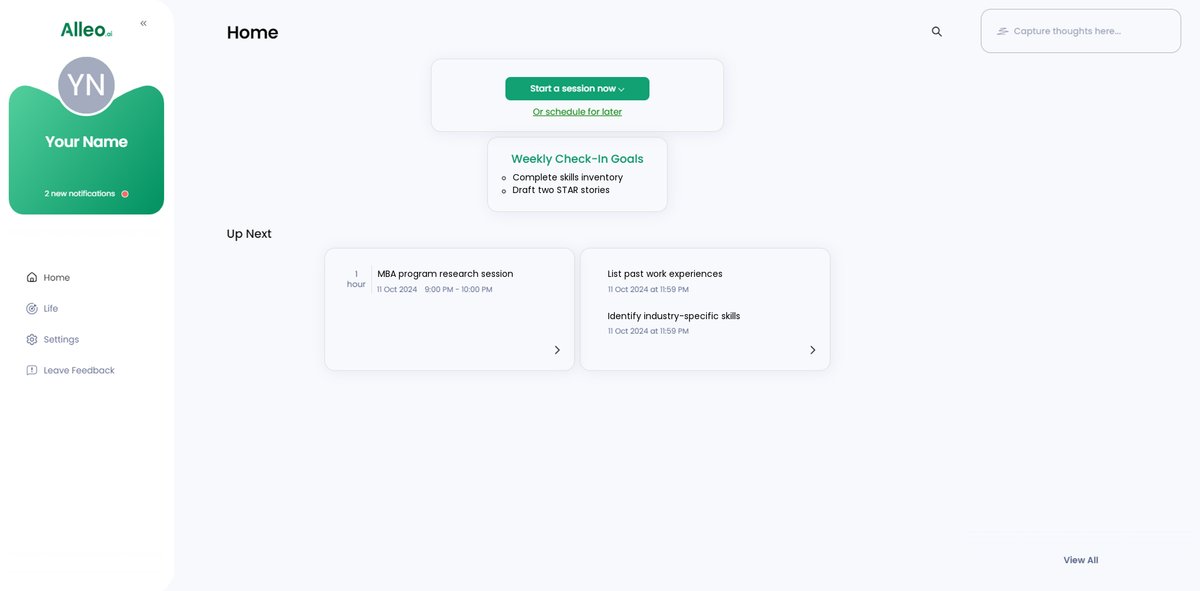
Step 5: Viewing and managing goals after the session
After your coaching session, check the app’s home page to review and manage the transferable skills and MBA application goals you discussed, allowing you to track your progress and stay accountable throughout your MBA journey.
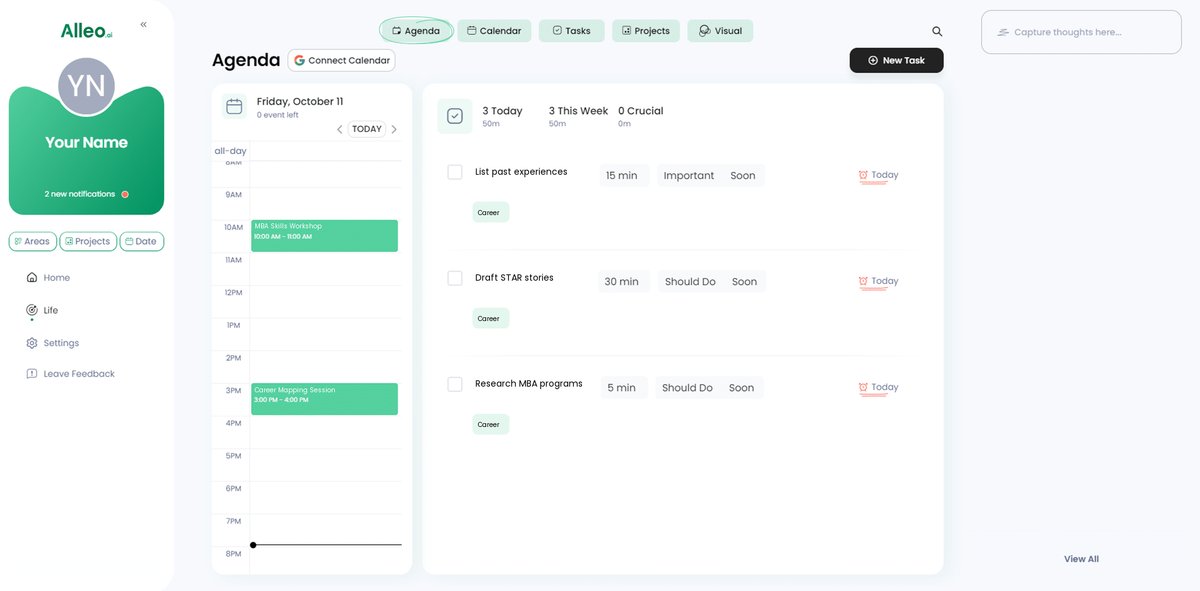
Step 6: Adding events to your calendar or app
Use Alleo’s calendar and task features to schedule and track your progress in identifying transferable skills, allowing you to stay organized and accountable as you prepare your MBA application.
Wrapping Up Your Journey to MBA Success
Navigating the path to an MBA can be challenging. Identifying and showcasing your transferable skills for MBA applications is key.
You’ve learned how to conduct a skills inventory, map your transferable skills for MBA to program requirements, and fill any gaps. Using the STAR method and seeking feedback ensures your professional experience in MBA applications is well-articulated.
Remember, you don’t have to do this alone in the MBA application process. Alleo is here to guide you every step of the way.
Start recognizing your potential today. You have the tools and support to succeed in demonstrating your leadership skills for MBA and analytical skills for MBA programs.
Ready to take the next step in your career change to MBA? Try Alleo for free, and let’s achieve your MBA dreams together, showcasing your communication skills in business education.