7 Proven Strategies to Overcome Impostor Syndrome for Early Career Professionals
Are you feeling like a fraud in your first professional role, struggling to keep up with more experienced colleagues? This is a common experience of self-doubt in young professionals.
As a life coach, I’ve helped many professionals navigate these challenges. In my experience, overcoming impostor syndrome at work is key to personal and professional growth. Dealing with workplace anxiety and impostor syndrome in the workplace can be crucial for career development.
In this article, you’ll discover actionable strategies for overcoming impostor syndrome at work, including building confidence at work, tracking achievements, and seeking support through mentorship for early career success.
Let’s dive in and explore coping mechanisms for impostor feelings and strategies to foster a professional growth mindset.

The Crushing Weight of Impostor Syndrome
Navigating the professional world as a recent graduate can be daunting. Many clients initially struggle with feelings of inadequacy and self-doubt in young professionals, a common experience when overcoming impostor syndrome at work.
Impostor syndrome in the workplace often leads to constant stress and anxiety. This not only affects your mental health but also your job performance and career development strategies.
In my experience, people often find themselves comparing their skills to more experienced colleagues. This comparison can be paralyzing, hindering professional growth mindset.
The impact is real.
Feeling like a fraud can make you hesitant to take on new challenges, stunting your growth. It’s a painful cycle that needs to be broken, requiring coping mechanisms for impostor feelings.
Overcoming impostor syndrome at work is essential for your personal and professional development, and building confidence at work is key to early career success.

Strategies to Combat Impostor Syndrome for Early Career Professionals
Overcoming impostor syndrome at work requires focusing on several key actions. Here are the main areas to concentrate on to make progress in dealing with workplace anxiety and building confidence at work:
- Recognize and Track Your Achievements Regularly: Keep a journal of your accomplishments to build confidence and overcome self-doubt in your career.
- Seek Feedback from Mentors and Trusted Colleagues: Regular feedback helps you stay on the right track and is crucial for early career success.
- Practice Positive Self-Talk and Affirmations: Replace negative thoughts with positive affirmations to combat impostor syndrome in the workplace.
- Focus on Continuous Learning and Skill Development: Invest in courses and workshops to enhance your skills and foster a professional growth mindset.
- Set Realistic Goals and Celebrate Small Wins: Break projects into tasks and reward yourself for progress, recognizing your achievements along the way.
- Embrace Challenges as Growth Opportunities: View mistakes as learning experiences and take on new projects to overcome impostor syndrome at work.
- Build a Supportive Network of Peers and Mentors: Connect with professionals for support and guidance, which can be invaluable for self-doubt in young professionals.
Let’s dive in!
1: Recognize and track your achievements regularly
Regularly recognizing and tracking your achievements is crucial for overcoming impostor syndrome at work and building self-confidence.
Actionable Steps:
- Keep a daily journal of accomplishments to combat self-doubt in young professionals.
- Write down three achievements at the end of each day to build confidence at work.
- Use a digital app or spreadsheet to log milestones and progress as part of your career development strategies.
- Set reminders to update your achievement log weekly, fostering a professional growth mindset.
- Reflect on past successes during moments of self-doubt to overcome impostor syndrome in the workplace.
- Review your achievement log when feeling inadequate, as a coping mechanism for impostor feelings.
Explanation: Regularly noting your achievements helps reinforce your competence and counters negative self-perceptions. This practice can significantly improve your confidence and job performance, aiding in overcoming self-doubt in your career.
According to Asana, tracking achievements is a powerful tool against impostor syndrome because it provides tangible evidence of your capabilities. Embracing this habit can help you stay positive and motivated in your professional journey while dealing with workplace anxiety.
This consistent approach will gradually shift your focus from perceived inadequacies to real accomplishments, supporting your efforts in overcoming impostor syndrome at work.

2: Seek feedback from mentors and trusted colleagues
Seeking feedback from mentors and trusted colleagues is crucial for overcoming impostor syndrome at work and building confidence in your professional abilities.
Actionable Steps:
- Schedule regular check-ins with a mentor.
- Set up bi-weekly meetings with a mentor to discuss progress and challenges in dealing with workplace anxiety.
- Join professional organizations or networks for support.
- Attend monthly meetups or webinars hosted by industry groups to aid in recognizing your achievements.
- Actively seek constructive feedback on your work.
- Request feedback from a trusted colleague after completing a significant project to overcome self-doubt in your career.
Explanation: Regular feedback helps validate your skills and provides guidance for improvement, essential for building confidence at work.
According to Kimryn Rathmell, mentorship is essential for professional growth and overcoming impostor syndrome in the workplace.
Engaging with mentors and peers ensures you stay on track and continue to develop your competencies, which is crucial for coping with impostor feelings.
Building a network of supportive professionals can make a significant difference in your career journey and help combat self-doubt in young professionals.

3: Practice positive self-talk and affirmations
Practicing positive self-talk and affirmations is essential for overcoming impostor syndrome at work and building self-confidence in young professionals.
Actionable Steps:
- Create a list of positive affirmations to repeat daily.
- Write and recite five affirmations each morning to combat self-doubt in your career.
- Challenge negative thoughts with evidence of your competence.
- Replace negative self-talk with factual statements about your abilities, recognizing your achievements.
- Use mindfulness techniques to stay present and focused.
- Practice a five-minute mindfulness meditation before starting your workday to deal with workplace anxiety.
Explanation: Practicing positive self-talk and affirmations helps rewire your brain to focus on your strengths and accomplishments. This approach boosts confidence and reduces self-doubt, supporting professional growth and a positive mindset.
According to The Polyglot Group, celebrating achievements and practicing self-care are crucial strategies for overcoming impostor syndrome in the workplace. Integrating these steps into your daily routine fosters a positive mindset, essential for professional growth and career development.
These practices will help you build a more resilient and confident professional identity, crucial for overcoming impostor syndrome at work and advancing in your career.

4: Focus on continuous learning and skill development
In today’s fast-paced world, continuous learning and skill development are vital for staying competitive and overcoming impostor syndrome at work.
Actionable Steps:
- Enroll in online courses relevant to your field.
- Complete one new course every quarter to expand your knowledge and build confidence at work.
- Attend workshops and conferences to stay updated.
- Participate in at least two industry events per year for networking and learning, helping you overcome self-doubt in your career.
- Read industry-related books and articles regularly.
- Dedicate 30 minutes each day to reading professional development material, fostering a professional growth mindset.
Explanation:
Investing in continuous learning helps you stay current and confident in your abilities. According to Asana, continuous learning combats feelings of inadequacy by providing new skills and knowledge, essential for dealing with workplace anxiety.
Embracing new learning opportunities ensures you remain adaptable and capable in your professional role, aiding in overcoming impostor syndrome at work.
Key benefits of continuous learning include:
- Enhanced problem-solving skills
- Increased adaptability to industry changes
- Improved self-confidence in your abilities, helping to combat impostor syndrome in the workplace
These steps will help you grow and maintain confidence in your professional journey, supporting your career development strategies.
5: Set realistic goals and celebrate small wins
Setting realistic goals and celebrating small wins is crucial for maintaining motivation and overcoming impostor syndrome at work.
Actionable Steps:
- Break down larger projects into manageable tasks.
- Use a project management tool to outline and track tasks, helping you build confidence at work.
- Celebrate small achievements to build momentum.
- Reward yourself with a small treat after completing each task, recognizing your achievements and overcoming self-doubt in your career.
- Review and adjust goals periodically to stay on track.
- Conduct a monthly goal review and adjust as needed, fostering a professional growth mindset.
Explanation: Setting realistic goals and celebrating small wins helps build confidence and maintain momentum, crucial for dealing with workplace anxiety and impostor syndrome in the workplace.
According to LinkedIn, tracking achievements and celebrating progress can counter self-doubt in young professionals.
This approach ensures continuous progress and boosts your professional growth, serving as effective coping mechanisms for impostor feelings.
These practices will help you stay focused and motivated in your career journey, contributing to early career success and overcoming impostor syndrome at work.

6: Embrace challenges as growth opportunities
Embracing challenges is a vital part of overcoming impostor syndrome at work and fostering professional growth. This approach is key to dealing with workplace anxiety and building confidence at work.
Actionable Steps:
- Volunteer for complex projects: Take on one challenging project each quarter to stretch your abilities and overcome self-doubt in your career.
- View mistakes as learning experiences: Analyze and document lessons learned from each mistake to turn setbacks into growth opportunities, fostering a professional growth mindset.
- Seek leadership roles: Propose and lead a small team initiative at work to build confidence and demonstrate your capabilities, an effective strategy for overcoming impostor syndrome in the workplace.
Explanation: Embracing challenges helps you grow and gain confidence in your professional skills, which is crucial for self-doubt in young professionals.
According to Kimryn Rathmell, facing new challenges and learning from mistakes are essential for professional growth. This mindset encourages continuous improvement and reduces the impact of impostor syndrome at work.
Remember, each challenge you face is a stepping stone to greater confidence and competence in your career, helping you in recognizing your achievements and overcoming impostor syndrome at work.

7: Build a supportive network of peers and mentors
Building a supportive network of peers and mentors is essential for overcoming impostor syndrome at work and achieving professional growth.
Actionable Steps:
- Join a peer support group: Meet with a peer group bi-monthly to share experiences and advice on dealing with workplace anxiety.
- Leverage social media for networking: Connect with at least five industry professionals each month on LinkedIn to build confidence at work.
- Attend professional networking events: Participate in one networking event per month to expand your connections and support career development strategies.
Explanation: Creating a supportive network provides guidance, feedback, and encouragement for overcoming self-doubt in your career. According to MentorCruise, having mentors and peers to share experiences with is crucial for personal and professional growth mindset.
These interactions can help you gain confidence and reduce feelings of self-doubt in young professionals.
The benefits of a strong professional network include:
- Access to diverse perspectives and experiences
- Opportunities for collaborative problem-solving
- Emotional support during challenging times and coping mechanisms for impostor feelings
Building a strong network is a powerful step towards overcoming impostor syndrome in the workplace and advancing in your career.
Partner with Alleo to Overcome Impostor Syndrome
We’ve explored the challenges of overcoming impostor syndrome at work and the steps to tackle it. But did you know Alleo can make this journey easier for young professionals dealing with workplace anxiety?
With Alleo, set up an account and create a personalized plan for building confidence at work. Alleo’s AI coach will guide you, offering tailored support like a human coach to help you recognize your achievements and develop strategies for professional growth.
The coach will follow up on your progress and keep you accountable via text and push notifications, acting as a virtual mentor for early career success and helping you cope with impostor feelings.
Ready to get started for free and begin overcoming self-doubt in your career? Let me show you how!
Step 1: Log In or Create Your Account
To start overcoming impostor syndrome with Alleo’s AI coach, log in to your existing account or create a new one in just a few clicks.

Step 2: Choose Your Focus Area
Select “Setting and achieving personal or professional goals” to start tackling your impostor syndrome. This option allows you to set concrete targets that align with overcoming self-doubt and building confidence in your abilities, directly addressing the challenges discussed in the article.

Step 3: Select “Career” as Your Focus Area
Choose “Career” as your focus area in Alleo to directly address your impostor syndrome challenges and boost your professional confidence. By concentrating on your career, you’ll receive tailored guidance to overcome self-doubt, track achievements, and develop the skills needed to thrive in your professional role.

Step 4: Starting a coaching session
Begin your journey with Alleo by scheduling an intake session to create a personalized plan for overcoming impostor syndrome and building professional confidence.

Step 5: Viewing and managing goals after the session
After your coaching session, open the Alleo app and check your home page to view and manage the goals you discussed, allowing you to track your progress in overcoming impostor syndrome and building professional confidence.

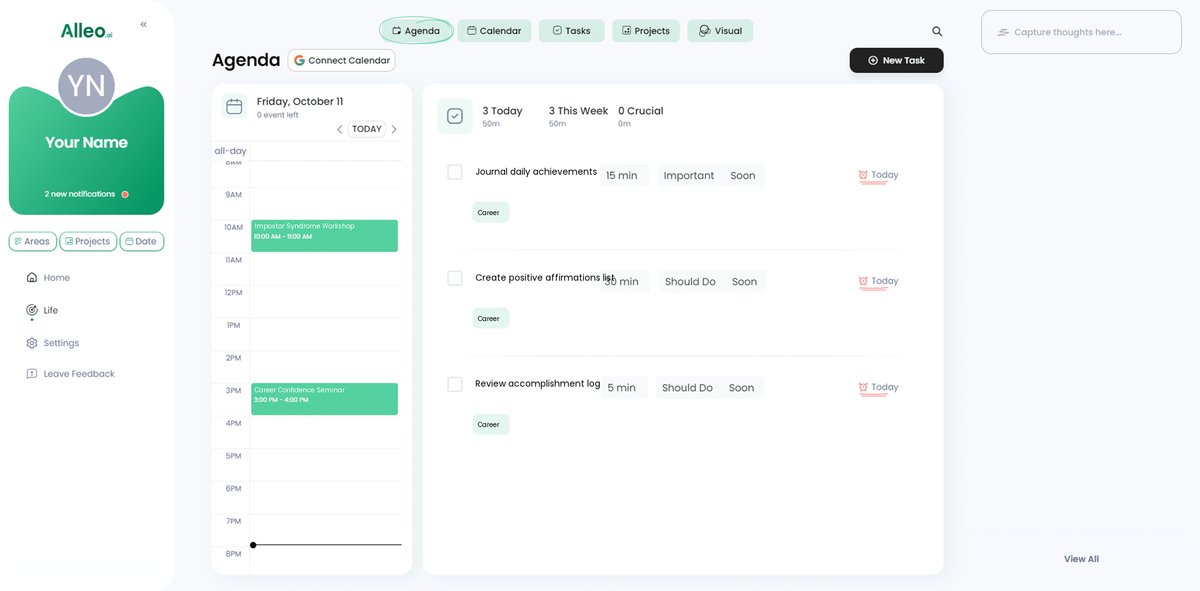
Step 6: Adding events to your calendar or app
Use Alleo’s calendar and task features to schedule and track your progress in overcoming impostor syndrome, such as setting reminders for daily affirmations, logging achievements, and planning skill development activities.
Your Journey to Confidence Starts Here
Empowering yourself to overcome impostor syndrome at work is a journey worth taking.
Remember, you’re not alone. Many have felt the same way and successfully navigated through impostor syndrome in the workplace.
With the strategies we’ve discussed, you can build confidence at work and grow professionally.
By tracking achievements, seeking feedback, and practicing positive self-talk, you’ll start recognizing your achievements and seeing your true potential.
Continuous learning, setting realistic goals, embracing challenges, and building a supportive network will further bolster your confidence and help in overcoming self-doubt in your career.
Alleo is here to support you every step of the way in dealing with workplace anxiety.
Try Alleo for free and take that first step towards overcoming impostor syndrome at work today.
You’ve got this!