Advocate for a 4-Day Workweek: Ultimate Guide for Professionals
Ever wondered if a four-day workweek could transform your business and boost workplace productivity?
As a life coach, I’ve guided many professionals through similar challenges in advocating four-day workweek strategies. I understand how daunting it can be to balance work-life and consider new flexible scheduling arrangements.
In this article, you’ll discover strategies to advocate effectively for a four-day workweek. We’ll cover actionable steps, benefits for employee satisfaction and retention, and tools to help you make this organizational change smoothly while maintaining business efficiency.
Let’s dive into these four-day workweek strategies that can reduce burnout and transform company culture.

Understanding the Challenges of Implementing a Four-Day Workweek
Making the shift to a four-day workweek isn’t easy for many. Small business owners often struggle with balancing work-life demands while maintaining workplace productivity and advocating four-day workweek strategies.
Employees may resist changes, fearing an increase in workload or a dip in productivity. You might worry about the costs and logistics of implementation, including potential impacts on labor costs and business efficiency.
In my experience, many clients initially struggle to see how a four-day workweek can fit into their business model. They face concerns about maintaining customer service levels and meeting deadlines while implementing flexible scheduling and organizational change.
But these challenges are manageable. With the right strategies, you can overcome them and create a healthier work environment for your team, potentially improving work-life balance, employee satisfaction, and reducing burnout.

Roadmap to Implementing a Four-Day Workweek
Overcoming this challenge requires a few key steps. Here are the main areas to focus on when advocating four-day workweek strategies to improve work-life balance and workplace productivity.
- Present productivity data from successful trials: Use data to demonstrate how other businesses have benefited from increased business efficiency.
- Propose a phased implementation approach: Start small and gradually expand to manage the transition effectively, minimizing disruption to company culture.
- Address concerns with flexible scheduling options: Offer flexible hours to accommodate different needs and enhance employee satisfaction.
- Highlight improved employee retention benefits: Show how a four-day workweek can boost retention and reduce burnout.
- Emphasize cost savings from reduced absenteeism: Calculate the financial benefits of fewer sick days and potential reductions in labor costs.
Let’s dive in to these strategies for advocating a four-day workweek!
1: Present productivity data from successful trials
Presenting productivity data from successful trials is crucial to advocating for a four-day workweek effectively. This strategy is key when advocating four-day workweek strategies to stakeholders.
Actionable Steps:
- Conduct a pilot study within your business to gather initial data on workplace productivity. Set clear objectives and metrics for success, and monitor productivity levels and employee satisfaction.
- Research and compile case studies from other businesses that have successfully implemented a four-day workweek. Focus on similar industries or company sizes, and summarize key findings on business efficiency and work-life balance to present to stakeholders.
Explanation: Presenting real data helps to build a compelling case for the four-day workweek. By showing evidence from your pilot study and other successful examples, you can address concerns about organizational change and highlight potential benefits like reduced burnout and improved employee retention.
For instance, San Juan County saw a significant increase in job applicants and reduced absenteeism after adopting a shorter workweek. This kind of evidence can be persuasive for stakeholders when advocating four-day workweek strategies.
Key benefits of presenting productivity data:
- Builds credibility for your proposal on flexible scheduling
- Addresses stakeholder concerns about labor costs with facts
- Demonstrates real-world success stories of improved company culture
With this data in hand, you’re ready to propose a phased implementation approach for advocating four-day workweek strategies.

2: Propose a phased implementation approach
Proposing a phased implementation approach ensures a smooth transition to a four-day workweek, a key strategy in advocating four-day workweek strategies.
Actionable Steps:
- Start with a trial period in a specific department. This helps gather feedback and identify potential issues before a full rollout, contributing to improved workplace productivity and employee satisfaction.
- Expand gradually to other departments. Use the insights gained from the trial to adjust and improve the implementation process, fostering positive organizational change.
- Set up regular feedback loops. Hold periodic reviews with employees to assess the impact and make necessary adjustments, enhancing work-life balance and reducing burnout.
Explanation: These steps matter because they allow you to take a measured approach and make adjustments as needed, crucial for successful business efficiency.
Starting small helps mitigate risks and gather valuable data. For example, success stories show that gradual implementation can lead to sustained productivity and employee satisfaction, potentially reducing labor costs and improving employee retention.
You’re now ready to address concerns with flexible scheduling options, further enhancing your company culture.
3: Address concerns with flexible scheduling options
Addressing concerns with flexible scheduling options is vital for ensuring the success of a four-day workweek transition when advocating four-day workweek strategies.
Actionable Steps:
- Offer flexible work hours within the four-day workweek. Allow employees to choose their start and end times, balancing personal and professional commitments to improve work-life balance.
- Implement a core hours policy to ensure team collaboration. Set specific hours when all team members are available, facilitating communication and teamwork while maintaining workplace productivity.
- Provide training on time management and productivity tools. Organize workshops or webinars on effective work practices, and introduce time-tracking software to enhance business efficiency.
Explanation: These steps are essential as they cater to individual needs while maintaining team cohesion. Offering flexibility can help alleviate concerns about increased workload and productivity when advocating four-day workweek strategies.
For instance, Japan’s approach to flexible work arrangements has shown promising results in employee satisfaction and productivity.
By implementing these flexible scheduling options, you can create a more adaptable and supportive work environment for your team, potentially reducing burnout and improving employee retention.

4: Highlight improved employee retention benefits
Highlighting improved employee retention benefits is crucial when advocating for a four-day workweek strategy. This approach can significantly impact workplace productivity and employee satisfaction.
Actionable Steps:
- Share success stories of increased employee retention. Collect testimonials from employees who have benefited from the new flexible scheduling and use these stories in internal communications.
- Conduct an internal survey to measure satisfaction. Analyze the data to identify trends and areas for improvement in work-life balance, then present the findings to your team.
- Use retention data in recruitment materials. Showcase the positive impact of a four-day workweek on employee retention and reduced burnout to attract new talent.
Explanation: These steps matter because they provide tangible evidence of the benefits of advocating four-day workweek strategies. Sharing real stories and data helps build a compelling case for organizational change.
For instance, San Juan County saw a significant increase in job applicants and reduced absenteeism after adopting a shorter workweek. This kind of evidence can be persuasive for stakeholders when advocating for four-day workweek strategies.
Key retention benefits to highlight:
- Improved work-life balance
- Increased job satisfaction and company culture
- Lower turnover rates and labor costs
By emphasizing retention benefits, you can create a more appealing workplace for both current and potential employees, ultimately improving business efficiency through advocating four-day workweek strategies.
5: Emphasize cost savings from reduced absenteeism
Emphasizing cost savings from reduced absenteeism is essential for advocating four-day workweek strategies effectively, contributing to overall business efficiency.
Actionable Steps:
- Track absenteeism rates before and after implementing the four-day workweek. Use HR software to monitor attendance and compare data to quantify cost savings, which can positively impact labor costs.
- Calculate the financial impact of reduced absenteeism on your business. Include savings on overtime, temporary staffing, and lost productivity, demonstrating improved workplace productivity.
Explanation: These steps matter because they provide tangible financial benefits of a four-day workweek. By tracking absenteeism and calculating cost savings, you can present a compelling case to stakeholders for organizational change.
For example, San Juan County saw a significant decrease in absenteeism after adopting a four-day workweek, enhancing work-life balance and employee satisfaction.
Areas of potential cost savings:
- Reduced overtime expenses
- Lower temporary staffing costs
- Increased overall productivity
By emphasizing these cost savings, you can make a strong case for the financial viability of a four-day workweek, which can lead to reduced burnout, improved company culture, and better employee retention through flexible scheduling.

Partner with Alleo on Your Journey to a Four-Day Workweek
We’ve explored the challenges of implementing a four-day workweek, the benefits it offers for work-life balance and employee satisfaction, and actionable steps to achieve it. But did you know you can work directly with Alleo to make this journey easier and faster while advocating four-day workweek strategies?
Setting up an account with Alleo is simple and quick. Sign up for a free 14-day trial—no credit card required—to start exploring flexible scheduling options.
Create a personalized plan tailored to your business needs and goals, focusing on workplace productivity and business efficiency.
Alleo’s AI coach will guide you through each step of advocating four-day workweek strategies. It will help you set clear objectives, monitor your progress, and make necessary adjustments to improve company culture and reduce burnout.
The coach will follow up regularly, handle changes in organizational change processes, and keep you accountable via text and push notifications, supporting your efforts in employee retention and managing labor costs.
Ready to get started for free? Let me show you how to begin advocating four-day workweek strategies!
Step 1: Log In or Create Your Account
To begin your journey towards a four-day workweek, Log in to your account or create a new one to access Alleo’s AI coach and personalized guidance.

Step 2: Choose “Building better habits and routines”
Click on “Building better habits and routines” to start creating a structured approach for implementing your four-day workweek, helping you establish new productivity practices and time management skills essential for this transition.

Step 3: Select “Career” as Your Focus Area
Choose “Career” as your focus area to align with your goal of implementing a four-day workweek, allowing you to address work-life balance and productivity challenges head-on.

Step 4: Starting a Coaching Session
Begin your journey towards a four-day workweek by scheduling an intake session with Alleo’s AI coach to create a personalized plan tailored to your business goals and challenges.

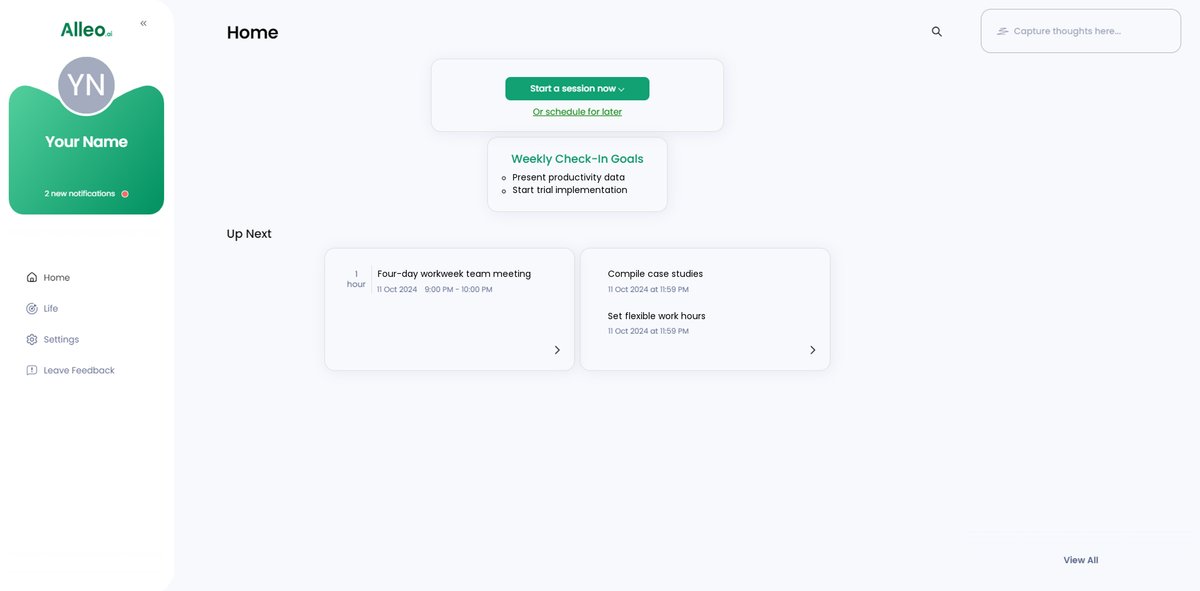
Step 5: Viewing and managing goals after the session
After your coaching session, check the Alleo app’s home page to view and manage the goals you discussed, allowing you to track your progress towards implementing a four-day workweek.
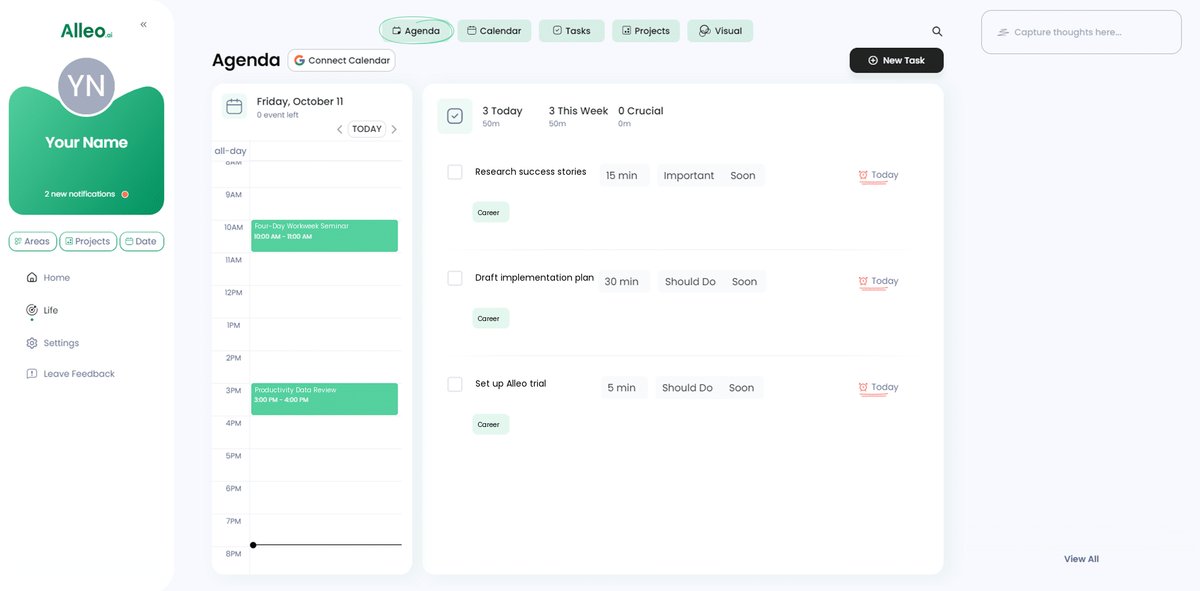
Step 6: Adding events to your calendar or app
Use Alleo’s calendar and task features to schedule and track your progress as you implement the four-day workweek, allowing you to easily monitor milestones and adjust your approach as needed.
Wrapping Up: Your Path to a Four-Day Workweek
Transitioning to a four-day workweek can seem daunting, but it’s achievable with the right approach when advocating four-day workweek strategies.
By leveraging productivity data, phased implementation, flexible scheduling, improved employee retention, and cost savings, you can make a compelling case for organizational change.
I empathize with the challenges you face as a small business owner. Balancing work-life and considering new work arrangements to reduce burnout isn’t easy.
However, the benefits of a four-day workweek are worth the effort. Your team will appreciate the improved work-life balance and increased employee satisfaction.
Don’t forget, Alleo is here to support you every step of the way in enhancing your company culture.
Ready to transform your workweek and boost business efficiency? Start your journey with Alleo today and experience the benefits of advocating four-day workweek strategies firsthand.