Master the Art of Following Up on Delegated Tasks Without Micromanaging: A Manager’s Guide
Are you struggling to follow up on delegated tasks without feeling like you’re micromanaging your team? Effective delegation without micromanaging is a crucial skill for leaders seeking to balance oversight and autonomy.
As a life coach, I’ve helped many professionals navigate these challenges. I understand the importance of empowering employees through delegation while maintaining accountability.
In this article, we’ll explore specific strategies for effective delegation without micromanaging. You’ll discover actionable steps and productivity tools for task monitoring to boost your leadership skills for task delegation and team performance.
Let’s dive in and explore management communication strategies that support effective delegation techniques.

Understanding the Challenges of Task Delegation
Effective delegation without micromanaging often feels like walking a tightrope. Many managers struggle with balancing oversight and autonomy, fearing micromanagement versus the risk of losing control over project outcomes.
In my experience, people often find it difficult to strike this balance. Poor delegation can lead to a decline in team morale and creativity, highlighting the importance of effective delegation techniques.
This is because team members feel stifled and untrusted when they’re overly monitored, undermining the goal of empowering employees through delegation.
Moreover, ineffective delegation can significantly hurt productivity. For instance, several clients report feeling overwhelmed by the constant need to check in on their team, which leads to burnout. This emphasizes the need for productivity tools for task monitoring and remote team task tracking.
Addressing these pitfalls is essential for boosting team efficiency and maintaining a positive work environment. Mastering leadership skills for task delegation and management communication strategies is crucial for effective delegation without micromanaging.
Key Strategies for Effective Delegation Without Micromanaging
Overcoming this challenge of effective delegation without micromanaging requires a few key steps. Here are the main areas to focus on to make progress in empowering employees through delegation:
- Set clear expectations and milestones upfront: Define objectives, set realistic deadlines, and communicate their importance, enhancing leadership skills for task delegation.
- Implement regular, brief check-in meetings: Schedule consistent check-ins, prepare agendas, and encourage open communication, improving management communication strategies.
- Use project management tools for progress tracking: Select the right productivity tools for task monitoring, track progress visually, and set up notifications for remote team task tracking.
- Provide constructive feedback and recognition: Offer specific feedback, recognize achievements, and create a feedback loop for performance evaluation of delegated work, balancing oversight and autonomy.
Let’s dive into these effective delegation techniques!
1: Set clear expectations and milestones upfront
Setting clear expectations and milestones upfront is crucial for effective delegation without micromanaging and ensuring accountability.
Actionable Steps:
- Define objectives clearly: Write detailed descriptions of tasks with specific outcomes. Provide examples of what successful task completion looks like, enhancing leadership skills for task delegation.
- Set realistic deadlines: Break tasks into smaller, manageable parts with individual deadlines. Use a timeline to visually map out milestones, aiding in remote team task tracking.
- Communicate the importance: Explain the significance of each task to the overall project or goals. Share how each team member’s contribution impacts broader objectives, promoting effective delegation techniques.
Benefits of clear expectations:
- Improved team alignment and focus
- Reduced misunderstandings and confusion
- Increased sense of empowerment among team members, balancing oversight and autonomy
Explanation: Setting clear expectations and realistic milestones helps to keep everyone aligned and focused. This approach reduces misunderstandings and ensures that team members know what is needed for success, supporting effective delegation without micromanaging.
According to a source, clear communication of expectations and regular progress reviews are vital for effective delegation. By doing so, you foster an environment where team members feel trusted and empowered, ultimately boosting productivity and morale while empowering employees through delegation.
This foundation allows you to transition smoothly into the next steps for effective delegation without micromanaging.

2: Implement regular, brief check-in meetings
Regular, brief check-in meetings are crucial for effective delegation without micromanaging your team and maintaining accountability.
Actionable Steps:
- Schedule consistent check-ins: Plan weekly 15-minute stand-up meetings to address immediate concerns and blockers, a key strategy in management communication strategies.
- Prepare agendas: Create simple agendas that keep meetings focused and ensure all key points are covered. Encourage team members to come prepared with updates and questions, promoting effective delegation techniques.
- Encourage open communication: Foster an environment where team members feel comfortable sharing progress and challenges. This builds trust and transparency, essential for empowering employees through delegation.
Explanation: Regular check-ins help you stay informed about project progress without hovering over your team. These brief meetings ensure that issues are addressed promptly, fostering a culture of accountability and balancing oversight and autonomy.
According to a source, this approach balances oversight with autonomy, which is vital for effective delegation. Implementing these steps will help maintain a positive work environment and boost productivity.
Transitioning to the next strategy, let’s explore how to use project management tools for progress tracking and remote team task tracking.

3: Use project management tools for progress tracking
Using project management tools is essential for effective delegation without micromanaging and to keep track of delegated tasks while ensuring accountability.
Actionable Steps:
- Select a suitable tool: Choose a project management tool that meets your team’s needs, such as Trello or Asana, to enhance productivity tools for task monitoring.
- Track progress visually: Utilize visual aids like Gantt charts or Kanban boards to monitor task progress and updates, aiding in remote team task tracking.
- Set up notifications: Configure the tool to send notifications about upcoming deadlines or overdue tasks to keep the team informed, supporting effective delegation techniques.
Key features to look for in project management tools for effective delegation without micromanaging:
- Task assignment and deadline tracking to support time management for busy managers
- Real-time collaboration capabilities for empowering employees through delegation
- Customizable workflows and reporting for performance evaluation of delegated work
Explanation: Implementing project management tools helps you stay organized and aware of task progress without hovering over your team, balancing oversight and autonomy.
Visual aids and notifications reduce the need for constant check-ins, allowing team members to work autonomously, which is crucial for effective delegation without micromanaging.
According to a source, using these tools effectively can boost productivity and ensure tasks are completed on time, enhancing leadership skills for task delegation.
Next, we’ll explore how providing constructive feedback and recognition can further enhance your leadership approach and management communication strategies.

4: Provide constructive feedback and recognition
Providing constructive feedback and recognizing achievements are essential for effective delegation without micromanaging and team motivation.
Actionable Steps:
- Offer specific feedback: Give clear, actionable feedback focused on particular aspects of the task. Use examples to illustrate points and provide context, enhancing effective delegation techniques.
- Recognize achievements: Publicly acknowledge and celebrate team members’ successes and contributions. Use recognition to motivate and encourage continuous improvement, empowering employees through delegation.
- Create a feedback loop: Establish a system for continuous feedback and improvement. Encourage team members to provide feedback on the delegation process and suggest improvements, fostering trust-building in team management.
Best practices for delivering feedback:
- Be timely and specific in your comments
- Balance positive reinforcement with areas for improvement
- Follow up to ensure understanding and implementation, utilizing management communication strategies
Explanation: Offering specific feedback helps team members understand what they did well and where they can improve. Recognizing achievements boosts morale and motivates the team, contributing to effective delegation without micromanaging.
According to a source, effective delegation can significantly enhance productivity and team satisfaction. Creating a feedback loop ensures continuous improvement and fosters an environment of open communication, crucial for balancing oversight and autonomy.
By implementing these steps, you can maintain a positive and productive work atmosphere, leading seamlessly to the next strategy in effective delegation without micromanaging.

Partner with Alleo for Effective Task Delegation
We’ve explored the challenges of effective delegation without micromanaging. Did you know you can work directly with Alleo to make this process smoother and enhance your leadership skills for task delegation?
Setting up an account with Alleo is simple. Create a personalized plan to track and manage your delegation needs, improving your management communication strategies and balancing oversight and autonomy.
Alleo’s AI coach offers tailored coaching sessions similar to a human coach. It follows up on your progress, handles changes, and keeps you accountable via text and push notifications, acting as one of the essential productivity tools for task monitoring.
Ready to get started for free? Let me show you how to implement effective delegation techniques and empower employees through delegation!
Step 1: Log In or Create Your Account
To get started with Alleo’s AI coach for effective task delegation, simply log in to your existing account or create a new one if you’re a first-time user.

Step 2: Choose “Building better habits and routines”
Click on “Building better habits and routines” to focus on creating consistent practices for effective task delegation and follow-up, helping you maintain accountability without micromanaging your team.

Step 3: Select “Career” as Your Focus Area
Choose “Career” as your focus area to address delegation challenges, boost productivity, and enhance your leadership skills – aligning perfectly with the strategies discussed for effective task management without micromanaging.

Step 4: Starting a coaching session
Begin your journey with Alleo by scheduling an intake session, where you’ll work with the AI coach to establish clear goals and create a personalized plan for effective task delegation and follow-up.

Step 5: Viewing and Managing Goals After the Session
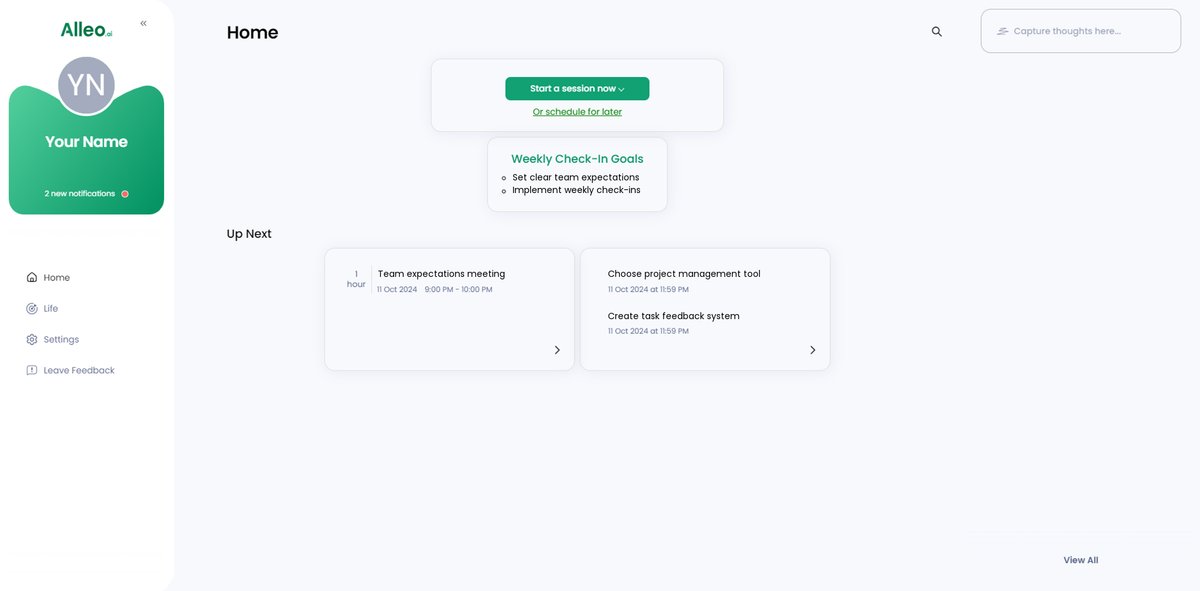
After your coaching session, open the Alleo app and check your home page to view and manage the goals you discussed, allowing you to track your progress and stay accountable.
Step 6: Adding events to your calendar or app
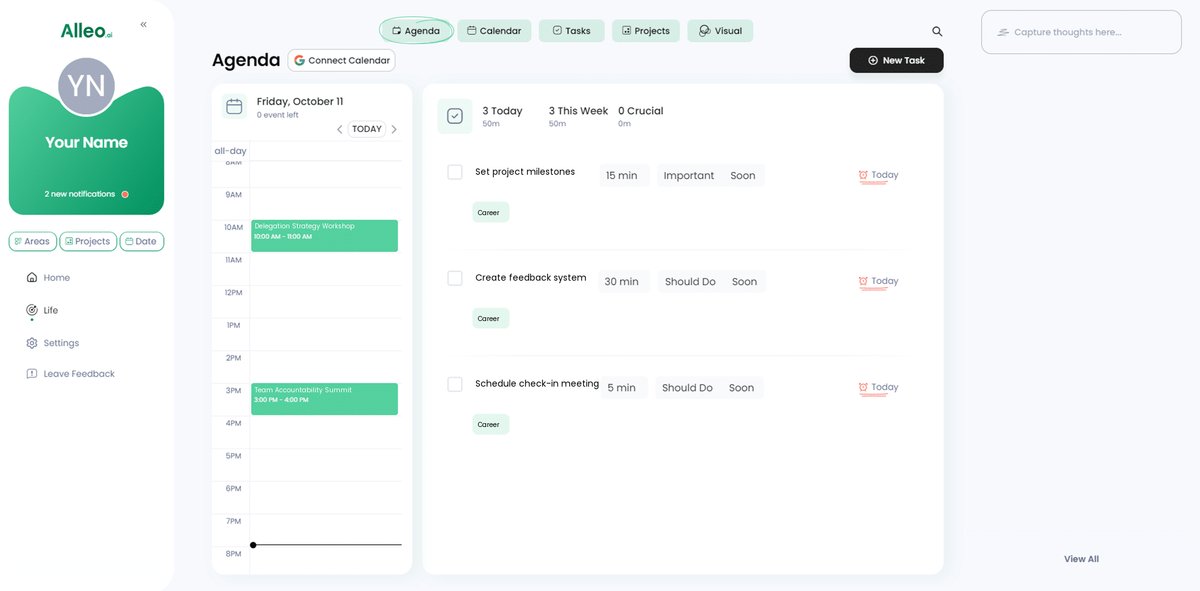
Use the app’s calendar and task features to add your delegation follow-up meetings and milestones, allowing you to easily track progress and stay on top of your team’s tasks without micromanaging.
Wrapping Up: Mastering Delegation Without Micromanaging
Now that we’ve explored actionable strategies for effective delegation without micromanaging, let’s reflect on their impact.
Effective delegation techniques start with setting clear expectations and milestones. This ensures everyone knows what’s needed and when, empowering employees through delegation.
Regular, brief check-ins help maintain accountability while fostering open management communication strategies. Productivity tools for task monitoring can keep you organized and informed without overstepping.
Providing constructive feedback and recognition boosts team morale and productivity, essential for performance evaluation of delegated work.
These strategies can transform your delegation approach, balancing oversight and autonomy in team management.
Consider Alleo to streamline this process of effective delegation without micromanaging. It can make managing follow-up tasks easier and more efficient, supporting time management for busy managers.
Try it for free today. Take the first step towards mastering delegation and boosting your team’s productivity through trust-building in team management.