7 Powerful Strategies to Boost Sleep Quality for Exhausted Professionals
Are you tired of feeling drained and unproductive despite putting in long hours at work? Many busy professionals struggle with this, often due to poor sleep habits.
As a life coach, I’ve helped many professionals navigate these challenges and implement effective sleep tips for busy professionals. I’ve seen firsthand how poor sleep can wreak havoc on mood, energy levels, and overall performance, impacting work-life balance and productivity.
In this article, you’ll discover effective strategies to improve your sleep quality and enhance your well-being. From creating a consistent bedtime routine to practicing relaxation techniques for stress management and better sleep, we’ll cover it all. We’ll explore sleep hygiene tips, bedroom environment optimization, and even touch on sleep technology for professionals.
Ready to transform your sleep and your life? Let’s dive into these sleep tips for busy professionals that can help regulate your circadian rhythm and boost your productivity.

The Real Impact of Poor Sleep on Busy Professionals
It’s not just about feeling tired. Poor sleep affects your mood, energy levels, and overall performance, which is why sleep tips for busy professionals are crucial.
Many professionals I work with struggle to maintain focus and productivity due to lack of quality sleep, often neglecting proper sleep hygiene tips.
In my experience, people often find themselves trapped in a cycle of fatigue. This relentless cycle makes demanding careers even more challenging, highlighting the importance of work-life balance and sleep.
Imagine waking up every night around 3-4am with thoughts about work, only to feel drained the next day. This situation is common among professionals who juggle multiple responsibilities, making stress management for better sleep essential.
Anecdotally, several clients report significant improvements in their mood and energy once they start prioritizing sleep. You can break the cycle too by implementing sleep tips for busy professionals.
Let’s explore how to optimize your bedroom environment and incorporate natural sleep aids.

Key Steps to Improve Sleep Quality for Busy Professionals
Overcoming this challenge requires a few key sleep tips for busy professionals. Here are the main areas to focus on to make progress with your sleep hygiene tips.
- Establish a consistent bedtime routine: Set a fixed bedtime and wake-up time, even on weekends, to regulate your circadian rhythm.
- Create a sleep-friendly environment: Ensure your bedroom is cool, dark, and quiet for optimal bedroom environment optimization.
- Practice relaxation techniques before bed: Try mindfulness meditation or progressive muscle relaxation for stress management and better sleep.
- Limit screen time 1-2 hours before sleep: Avoid screens and consider using blue light filters or sleep technology for professionals.
- Schedule strategic power naps during the day: Limit naps to 20-30 minutes in the early afternoon, using power napping techniques.
- Optimize caffeine intake and timing: Limit caffeine to the morning hours and stay hydrated, considering natural sleep aids if needed.
- Incorporate regular exercise into your schedule: Aim for at least 30 minutes of moderate exercise most days to improve work-life balance and sleep.
Let’s dive into these sleep tips for busy professionals!
1: Establish a consistent bedtime routine
Creating a consistent bedtime routine is crucial for improving sleep quality and breaking the cycle of fatigue, especially for busy professionals seeking effective sleep tips.
Actionable Steps:
- Set a fixed bedtime and wake-up time: Commit to going to bed and waking up at the same time every day, even on weekends, to regulate your circadian rhythm.
- Develop a calming bedtime ritual: Engage in relaxing activities like reading or taking a warm bath before bed to signal your body that it’s time to wind down, enhancing your sleep hygiene.
- Track your sleep patterns: Use a sleep diary or sleep technology for professionals to monitor your sleep habits and identify patterns that need adjustment.
Explanation:
Establishing a consistent bedtime routine helps regulate your body’s internal clock, making it easier to fall asleep and wake up refreshed. This is a key aspect of work-life balance and sleep management.
Consistent sleep and wake times can improve overall sleep quality and reduce fatigue, essential for busy professionals seeking better sleep.
According to the Mayo Clinic, a regular sleep schedule can significantly enhance your sleep quality and daytime alertness. For more insights, visit the Mayo Clinic’s guide on sleep.
Transitioning to the next step, let’s explore how to create a sleep-friendly environment.

2: Create a sleep-friendly environment
Creating a sleep-friendly environment is essential for improving sleep quality and breaking the cycle of fatigue. This is one of the key sleep tips for busy professionals looking to enhance their work-life balance and sleep.
Actionable Steps:
- Optimize your bedroom: Ensure your bedroom is cool, dark, and quiet. Use blackout curtains or an eye mask to block light, supporting circadian rhythm regulation.
- Invest in comfortable bedding: Choose a comfortable mattress and pillows to support restful sleep, an important aspect of sleep hygiene tips.
- Minimize noise: Consider using a white noise machine or earplugs to drown out disruptive sounds, aiding in stress management for better sleep.
Key elements of a sleep-friendly environment:
- Ideal room temperature (60-67°F or 15-19°C)
- Complete darkness or use of eye masks
- Comfortable, supportive mattress and pillows
Explanation:
Optimizing your sleep environment can significantly enhance your sleep quality. A cool, dark, and quiet bedroom supports your body’s natural sleep-wake cycle and is crucial for busy professionals seeking effective sleep tips.
Investing in comfortable bedding ensures you remain supported and relaxed throughout the night. According to the Mayo Clinic, creating a restful sleep environment is crucial for improving overall sleep quality and reducing fatigue.
By creating a sleep-friendly environment, you’re setting the stage for better rest. Next, let’s explore how to practice relaxation techniques before bed.
3: Practice relaxation techniques before bed
Practicing relaxation techniques before bed can significantly improve your sleep quality and reduce nighttime stress, making it an essential sleep tip for busy professionals.
Actionable Steps:
- Practice mindfulness meditation: Spend 10-15 minutes focusing on your breath and letting go of daily stress, enhancing your work-life balance and sleep.
- Engage in progressive muscle relaxation: Follow a guided routine, starting from your toes and gradually relaxing each muscle group up to your head, as part of your sleep hygiene tips.
Explanation:
These steps help calm your mind and body, making it easier to fall asleep. Relaxation techniques can reduce stress and improve the quality of your sleep, serving as effective stress management for better sleep.
According to the PubMed, progressive muscle relaxation effectively enhances sleep quality. By incorporating these practices, you can create a serene pre-sleep routine that supports better rest and helps regulate your circadian rhythm.
Next, let’s discuss the importance of limiting screen time before bed.
4: Limit screen time 1-2 hours before sleep
Limiting screen time before bed is crucial for improving sleep quality and breaking the cycle of fatigue, making it one of the essential sleep tips for busy professionals.
Actionable Steps:
- Set a digital curfew: Establish a rule to turn off all electronic devices at least 1-2 hours before bedtime, promoting better sleep hygiene.
- Engage in relaxing activities: Replace screen time with activities like reading a book, journaling, or listening to soft music to aid in stress management for better sleep.
- Use blue light filters: If screen time is unavoidable, use blue light filters or sleep technology for professionals to reduce the impact on your sleep.
Explanation:
These steps help reduce exposure to blue light, which can interfere with melatonin production and your sleep-wake cycle, crucial for circadian rhythm regulation.
According to the Abbott, blue light emitted by screens can suppress melatonin production, making it harder to fall asleep.
By managing screen time, you can enhance your sleep quality and feel more refreshed, improving work-life balance and sleep.
Next, let’s discuss the importance of scheduling strategic power naps during the day.

5: Schedule strategic power naps during the day
Strategically timed naps can boost your alertness and reduce fatigue, making them valuable sleep tips for busy professionals.
Actionable Steps:
- Limit naps to 20-30 minutes: Keep naps short to avoid sleep inertia and grogginess, an essential aspect of sleep hygiene tips.
- Nap in the early afternoon: Schedule naps between 1-3 PM to prevent interference with nighttime sleep and maintain work-life balance and sleep.
- Create a napping environment: Find a quiet, dark place to nap, and use a sleep mask and earplugs if needed, similar to bedroom environment optimization techniques.
Benefits of strategic power naps:
- Improved alertness and productivity
- Reduced fatigue and stress, aiding in stress management for better sleep
- Enhanced cognitive performance
Explanation:
Short naps can enhance alertness and cognitive performance without disrupting nighttime sleep, making them effective power napping techniques for busy professionals.
According to the Mayo Clinic, napping for 20-30 minutes in the early afternoon can provide significant benefits without affecting your sleep schedule, supporting circadian rhythm regulation.
By incorporating these steps, you can boost your energy levels and productivity, improving time management for adequate sleep.
Next, let’s discuss how to optimize your caffeine intake and timing.

6: Optimize caffeine intake and timing
Managing your caffeine intake and timing can significantly impact your sleep quality and overall energy levels, making it a crucial sleep tip for busy professionals.
Actionable Steps:
- Limit caffeine to the morning: Consume caffeinated beverages only in the early hours to minimize their impact on sleep and maintain work-life balance.
- Gradually reduce consumption: Decrease your caffeine intake over time if you’re sensitive to its effects, aiding in stress management for better sleep.
- Opt for alternatives: Replace coffee with herbal teas or water to stay hydrated and maintain energy levels, supporting natural sleep aids and circadian rhythm regulation.
Explanation:
These steps help reduce the risk of caffeine disrupting your sleep-wake cycle, an essential aspect of sleep hygiene tips.
According to the Abbott, caffeine can interfere with your ability to fall asleep if consumed too late.
By managing your caffeine intake, you can improve your sleep quality and feel more refreshed, which is crucial for professionals dealing with sleep disorders in adults.
Next, let’s discuss the importance of incorporating regular exercise into your schedule.

7: Incorporate regular exercise into your schedule
Regular exercise is vital for enhancing sleep quality and boosting your overall energy levels, making it one of the essential sleep tips for busy professionals.
Actionable Steps:
- Commit to daily exercise: Aim for at least 30 minutes of moderate activity most days to improve work-life balance and sleep.
- Choose enjoyable activities: Pick exercises you love to ensure consistency and aid in stress management for better sleep.
- Avoid late workouts: Schedule vigorous activities for the morning or early afternoon to support circadian rhythm regulation.
Best times for exercise to improve sleep:
- Morning: Boosts metabolism and energy for the day
- Lunchtime: Helps combat afternoon fatigue
- Early evening: Can relieve stress but avoid within 3 hours of bedtime as part of good sleep hygiene tips
Explanation:
These steps help regulate your sleep-wake cycle and reduce stress. Regular physical activity can improve your sleep quality and overall well-being, addressing potential sleep disorders in adults.
According to the Madison Family Care, regular exercise is crucial for managing fatigue and enhancing sleep.
Incorporating regular exercise into your routine can make a significant difference in how you feel each day, serving as one of the most effective sleep tips for busy professionals.

Partner with Alleo to Improve Your Sleep Quality
We’ve explored sleep tips for busy professionals and how to improve sleep quality. But did you know you can work directly with Alleo to make this journey easier and faster, enhancing your work-life balance and sleep?
Setting up an account with Alleo is simple. Create a personalized plan tailored to your sleep needs, including stress management for better sleep and natural sleep aids.
Alleo’s AI coach will provide full coaching sessions like any human coach. The coach tracks your progress, handles changes, and keeps you accountable with text and push notifications, helping with circadian rhythm regulation and time management for adequate sleep.
Ready to get started for free? Let me show you how to optimize your bedroom environment and explore sleep technology for professionals!
Step 1: Log In or Create Your Account
To start improving your sleep quality with our AI coach, log in to your existing account or create a new one in just a few clicks.

Step 2: Choose “Building better habits and routines”
Select “Building better habits and routines” as your goal to start improving your sleep quality and energy levels. This option directly addresses the challenges discussed in the article, helping you establish consistent sleep patterns and healthy pre-bedtime habits for better rest and productivity.

Step 3: Select “Health” as Your Focus Area
Choose “Health” as your primary focus area in the Alleo AI coach to address your sleep quality issues and boost overall well-being. By prioritizing your health, you’ll receive tailored guidance on improving sleep habits, managing stress, and incorporating exercise into your routine, all of which are crucial for breaking the cycle of fatigue and enhancing your professional performance.

Step 4: Starting a Coaching Session
Begin your journey with Alleo by scheduling an initial intake session, where you’ll discuss your sleep challenges and set up a personalized plan to improve your sleep quality and energy levels.

Step 5: Viewing and Managing Goals After the Session
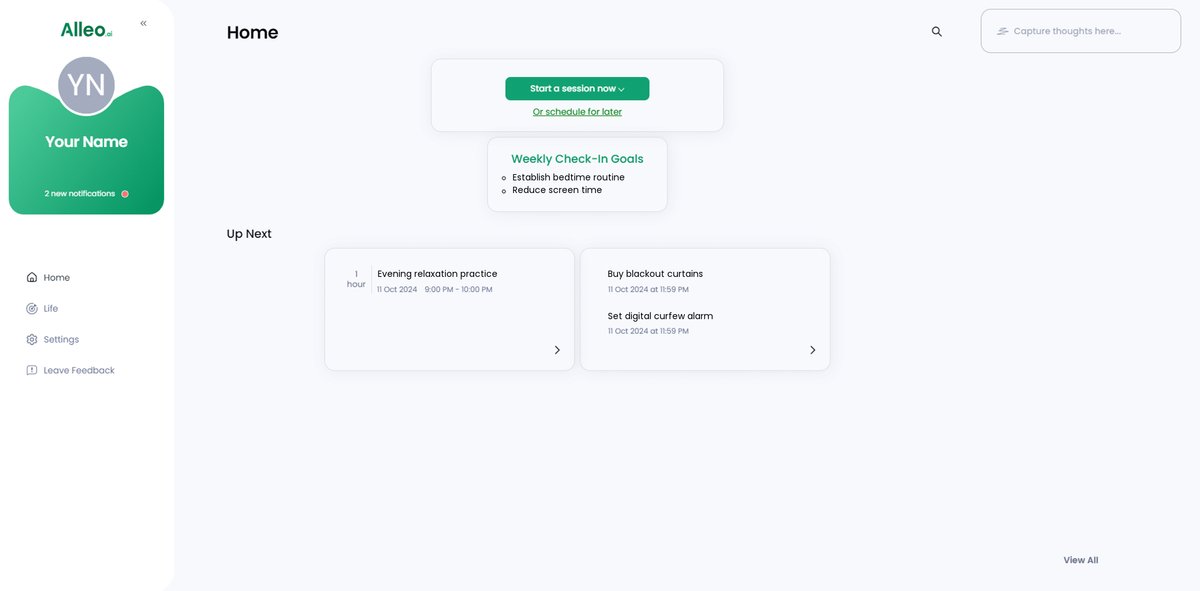
After your coaching session, open the Alleo app to find your discussed sleep improvement goals conveniently displayed on the home page, allowing you to easily track and manage your progress towards better rest.
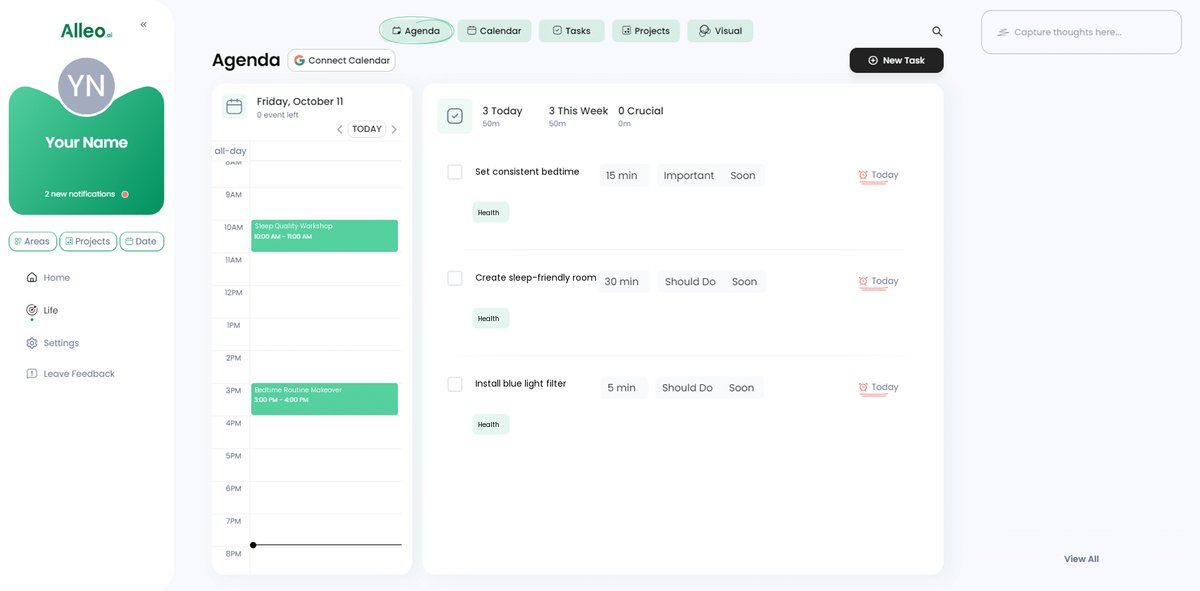
Step 6: Adding events to your calendar or app
Easily track your progress in improving sleep quality by adding sleep-related tasks and events to the Alleo app’s calendar feature, allowing you to monitor your bedtime routine, relaxation practices, and exercise schedule.
Wrap Up: Unlock Your Full Potential with Better Sleep
Improving your sleep quality as a busy professional is not just a luxury; it’s a necessity for optimal work-life balance and sleep.
Remember, small changes can make a big impact on your mood, energy, and performance through effective sleep hygiene tips.
By establishing a consistent bedtime routine, creating a sleep-friendly environment, practicing relaxation techniques for stress management and better sleep, and managing screen time, you can significantly enhance your sleep.
Additionally, strategic power napping techniques, smart caffeine intake, and regular exercise will further support your journey to better sleep and circadian rhythm regulation.
I understand the challenges you face, but these sleep tips for busy professionals can help you break the cycle of fatigue.
Consider partnering with Alleo to make this journey smoother. Alleo’s personalized coaching can guide you in implementing sleep tips for busy professionals every step of the way.
Prioritize your sleep, and watch your personal and professional life transform through improved time management for adequate sleep.
You deserve to feel refreshed and energized every day. Let’s make it happen together with effective sleep tips for busy professionals.