4 Proven Methods to Overcome Guilt When Setting Boundaries as a People-Pleaser
Ever find yourself saying “yes” when you really want to say “no”? You’re not alone. This is a common struggle for those overcoming people-pleaser guilt and setting boundaries.
Many busy professionals grapple with setting and maintaining healthy boundaries, often falling into people-pleasing behavior.
As a life coach, I’ve helped many professionals navigate these challenges and develop assertiveness techniques. Often, I encounter the same issue: feeling guilt after setting firm personal boundaries, which is crucial for emotional well-being.
In this blog, we’ll explore how to overcome the guilt that comes with setting boundaries and managing people-pleaser tendencies. You’ll discover practical, actionable steps and the wisdom necessary to prioritize yourself without the heaviness of guilt, promoting personal growth and self-esteem building.
Let’s dive into strategies for overcoming people-pleaser guilt and establishing boundaries that support your self-care and relationship dynamics.

Understanding the Guilt Behind Setting Boundaries
Setting boundaries often leads to an immediate feeling of guilt, especially for those overcoming people-pleaser guilt boundaries. This guilt can be overwhelming and counterproductive for individuals working on healthy boundaries.
Many clients initially struggle with this guilt, even though they know boundaries are necessary for their emotional well-being. They worry about disappointing others or being perceived as selfish, a common concern in codependency recovery.
This guilt affects daily life significantly. It can lead to stress, burnout, and reduced productivity, particularly in professional settings where assertiveness techniques are crucial.
In my experience, people often find it challenging to balance their needs with the expectations of others. This imbalance creates a cycle of guilt and self-neglect, hindering personal growth and self-esteem building.
Breaking this cycle is crucial for your well-being. Let’s explore how to do that through self-care strategies and by addressing people-pleasing behavior.
A Roadmap to Overcoming People-Pleaser Guilt When Setting Boundaries
Overcoming this challenge of people-pleaser guilt related to boundaries requires a few key steps. Here are the main areas to focus on to make progress in establishing healthy boundaries and managing guilt.
- Recognize guilt as a natural but unnecessary feeling: Understand and accept that guilt is normal but often unwarranted when setting boundaries and practicing assertiveness techniques.
- Practice self-affirmations to reinforce boundary-setting: Use daily affirmations to strengthen your resolve and build self-esteem, supporting your personal growth journey.
- Start with small, low-stakes boundary exercises: Begin with manageable situations to build confidence in overcoming people-pleaser guilt and improving relationship dynamics.
- Reframe boundaries as acts of self-care and respect: See boundaries as essential to your emotional well-being and a key part of codependency recovery.
Let’s dive into these strategies for overcoming people-pleaser guilt and establishing boundaries!
1: Recognize guilt as a natural but unnecessary feeling
Recognizing guilt as a natural but unnecessary feeling is crucial in overcoming people-pleaser guilt boundaries and establishing healthy boundaries.
Actionable Steps:
- Identify Your Triggers: Write down instances when you felt guilty for setting a boundary. Reflect on why you felt this way, especially in relation to people-pleasing behavior.
- Educate Yourself About Guilt: Read articles or books about the psychology of guilt to understand it better. Attend a webinar on emotional intelligence and guilt management.
- Challenge Negative Thoughts: Create a list of counterarguments for the negative thoughts that arise when you set boundaries. Practice replacing these thoughts with positive affirmations to boost self-esteem.
Explanation: Understanding guilt helps you see it as a natural emotion but often unnecessary when overcoming people-pleaser guilt boundaries. By identifying triggers and educating yourself, you can manage this feeling better and develop assertiveness techniques.
For example, reading about the psychology of guilt can provide insights into why it happens and how to handle it. This approach aligns with current trends in mental health, emphasizing self-awareness and emotional well-being.
For more on this, check out Hui Ting Kok’s insights.
Key benefits of recognizing guilt:
- Improved emotional resilience
- Enhanced self-awareness
- Greater ability to maintain healthy boundaries
Recognizing guilt as a natural but unnecessary feeling is the first step toward setting healthy boundaries and overcoming people-pleaser guilt boundaries.
2: Practice self-affirmations to reinforce boundary-setting
Practicing self-affirmations is essential for reinforcing boundary-setting and building confidence in overcoming people-pleaser guilt boundaries. This approach supports personal growth and emotional well-being.
Actionable Steps:
- Start each day with affirmations: Use statements like “I deserve to prioritize my needs” or “Setting boundaries is a form of self-care” to combat people-pleasing behavior.
- Visualize positive outcomes: Spend a few minutes each day imagining yourself confidently setting and maintaining healthy boundaries.
- Share successes with support: Discuss your boundary-setting achievements with a supportive friend or mentor to reinforce positive behavior and boost self-esteem.
Explanation: These steps matter because they help rewire your mindset to view boundary-setting as a positive and necessary act in overcoming people-pleaser guilt boundaries.
Affirmations and visualization techniques create a mental framework that supports your goals and enhances assertiveness techniques.
Sharing successes reinforces behavior through positive feedback, aiding in codependency recovery. For more insights, read Hui Ting Kok’s advice on how to recover from people-pleasing.
Embracing these practices will help you develop a healthier relationship with boundary-setting and improve relationship dynamics.

3: Start with small, low-stakes boundary exercises
Starting with small, low-stakes boundary exercises is crucial for building confidence and establishing healthy boundaries, especially when overcoming people-pleaser guilt.
Actionable Steps:
- Identify manageable situations: List small scenarios where you can practice setting boundaries, like declining an extra task at work, as part of your self-care strategies.
- Role-play conversations: Practice boundary-setting dialogues with a friend or in front of a mirror. Use assertiveness techniques and phrases like “I need to think about that.”
- Increase difficulty gradually: Track your progress and slowly introduce more challenging boundaries to support your emotional well-being.
Explanation: These steps help you build confidence without overwhelming yourself. By starting small and practicing, you gradually become more comfortable with boundary-setting, which is essential for overcoming people-pleaser guilt.
For more insights, check out Wondermind’s article on people-pleasing. This approach aligns with the trend of incremental growth and self-care.
Examples of low-stakes boundary exercises to address people-pleasing behavior:
- Saying “no” to a minor request
- Asking for personal space when needed
- Expressing a preference for plans
Taking these steps will help you gain the confidence needed to set firm boundaries and support your personal growth in overcoming people-pleaser guilt.

Partner with Alleo to Overcome Guilt in Setting Boundaries
We’ve explored the challenges of overcoming people-pleaser guilt boundaries and setting healthy boundaries. Solving these issues can transform your life and improve your emotional well-being.
Did you know you can work directly with Alleo to make this journey of personal growth easier and faster?
With Alleo, you get affordable, tailored coaching support to help you overcome people-pleasing behavior. Our AI coach offers full sessions just like a human coach, focusing on assertiveness techniques and self-care strategies.
Plus, you can start with a free 14-day trial, no credit card required.
Setting Up Your Alleo Account:
- Create Your Profile: Sign up and fill in your personal details to customize your experience in overcoming people-pleaser guilt boundaries.
- Personalized Boundaries Plan: Alleo helps you create a customized plan for setting and maintaining healthy boundaries.
- Goal Setting and Scheduling: Set realistic goals for guilt management and integrate them into your daily schedule. Receive reminders and motivational messages to stay on track with your self-esteem building journey.
Working with Your Alleo Coach:
- Tailored Advice: Receive specific advice to address your boundary-setting challenges and improve relationship dynamics.
- Progress Tracking: Alleo tracks your progress in overcoming people-pleaser guilt boundaries and provides feedback.
- Accountability: The coach keeps you accountable via text and push notifications, supporting your codependency recovery.
Ready to get started for free? Let me show you how!
Step 1: Log In or Create Your Account
To begin your journey towards setting guilt-free boundaries, log in to your existing Alleo account or create a new one in just a few clicks.

Step 2: Choose Your Focus Area
Select “Improving overall well-being and life satisfaction” as your goal to address boundary-setting challenges and reduce associated guilt, aligning with the article’s emphasis on self-care and personal growth.

Step 3: Selecting the Life Area You Want to Focus On
Choose the “Personal” life area to address boundary-setting challenges, as this focuses on self-care, relationships, and emotional well-being – key aspects in overcoming guilt associated with establishing boundaries.

Step 4: Starting a coaching session
Begin your journey with Alleo by scheduling an intake session, where you’ll discuss your boundary-setting goals and create a personalized plan to overcome guilt and prioritize self-care.

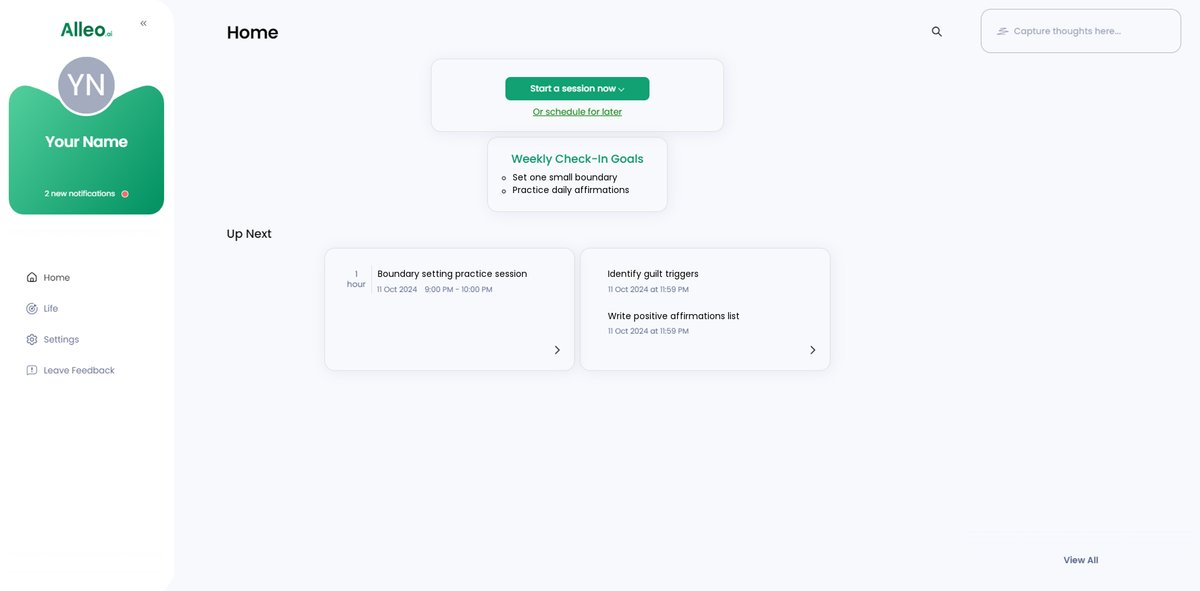
Step 5: Viewing and managing goals after the session
After your coaching session, open the Alleo app to find your discussed goals conveniently displayed on the home page, allowing you to easily review and manage your progress towards guilt-free boundary setting.
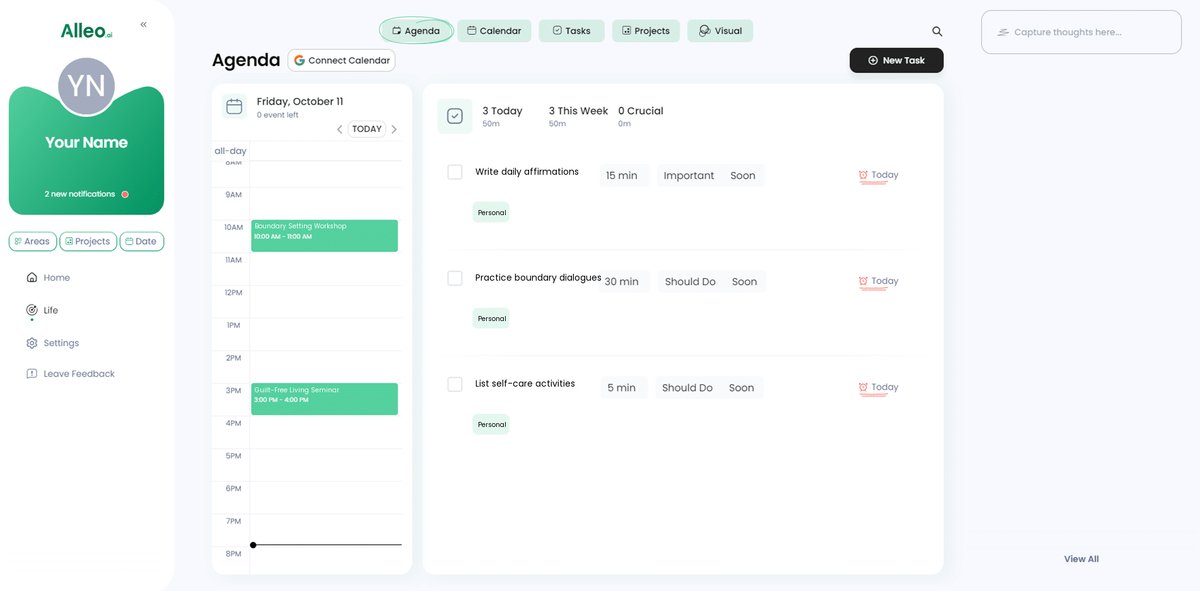
Step 6: Adding events to your calendar or app
Use Alleo’s calendar and task features to add boundary-setting events and track your progress, helping you visualize your journey towards guilt-free boundaries and maintain accountability.
Embrace Your Journey to Guilt-Free Boundaries
We’ve covered actionable steps to help you overcome people-pleaser guilt when setting boundaries. Remember, it’s normal to feel guilt, but it’s often unnecessary in maintaining healthy boundaries.
Focus on small wins and celebrate your progress in overcoming people-pleaser guilt boundaries. This journey is about prioritizing your well-being and developing assertiveness techniques.
You deserve to live without the weight of guilt. Practice self-affirmations and visualize positive outcomes to boost your self-esteem and improve emotional well-being.
Remember, you’re not alone in this process of personal growth. Alleo, your AI life coach, is here to support you in managing guilt and improving relationship dynamics.
Ready to start setting guilt-free boundaries and break free from people-pleasing behavior? Try Alleo for free and take the first step towards a happier, healthier you with effective self-care strategies.