6 Essential Ways to Maintain Healthy Boundaries for Recovering People Pleasers
Imagine finally having the freedom to say “no” without guilt and reclaiming your time for what truly matters. This is a crucial step in setting boundaries for people pleasers.
Maintaining healthy boundaries is a common struggle for recovering people pleasers, especially for busy individuals. Learning to say no and prioritizing mental health are essential skills in this journey.
As a life coach, I’ve helped many professionals navigate these challenges. In my experience, setting boundaries for people pleasers requires structured strategies and consistent practice, including assertiveness training and recognizing codependency.
In this article, you’ll discover practical steps to set boundaries, prioritize self-care for recovering people pleasers, and assert your needs effectively. We’ll explore techniques for setting personal limits and building self-esteem.
Let’s dive in and learn about overcoming guilt in relationships and improving communication skills for boundaries.

Understanding the Deep-Rooted Struggles of People Pleasers
Let’s explore why setting boundaries for people pleasers is so challenging. Many clients initially struggle with the ingrained habit of self-sacrifice, which can severely impact their personal well-being and hinder their journey in learning to say no.
For busy individuals, the emotional toll of constantly prioritizing others’ needs can lead to burnout and resentment. I often see clients feeling overwhelmed by the practical challenges of setting personal limits and recognizing codependency patterns in their relationships.
Imagine trying to set boundaries for people pleasers while managing a hectic schedule. It’s not just difficult—it’s often painful, especially when balancing personal needs with others’.
Navigating these challenges requires more than just willpower; it demands a strategic approach to assertiveness training and consistent practice in prioritizing mental health and building self-esteem.
A Roadmap to Maintain Healthy Boundaries for Recovering People Pleasers
Overcoming this challenge of setting boundaries for people pleasers requires a few key steps. Here are the main areas to focus on to make progress in assertiveness training and recognizing codependency.
- Practice saying “no” and sticking to it: Start small and build confidence through role-playing, essential for learning to say no.
- Set clear time limits for social interactions: Schedule and communicate these personal limits in advance.
- Prioritize self-care activities daily: Make self-care for recovering people pleasers non-negotiable and assess your energy levels.
- Reflect on personal values before making decisions: Create and refine a personal values statement to aid in setting boundaries for people pleasers.
- Use “I” statements to express needs assertively: Practice and seek feedback on your communication skills for boundaries.
- Celebrate small wins in boundary-setting: Reward yourself and share successes with a supportive community, boosting self-esteem.
Let’s dive in to explore these strategies for setting boundaries for people pleasers!
1: Practice saying “no” and sticking to it
Learning to say “no” is crucial for setting boundaries for people pleasers and prioritizing your needs.
Actionable Steps:
- Start with small declines: Say no to minor requests that don’t align with your values, focusing on setting personal limits.
- Role-play scenarios: Practice saying no with a trusted friend or coach to build confidence, as part of assertiveness training.
- Track your progress: Keep a journal of your refusals and reflect on their outcomes, supporting self-care for recovering people pleasers.
Explanation: Practicing these steps helps you build confidence and assertiveness in setting boundaries for people pleasers.
By starting small, you can gradually strengthen your ability to say no and overcome guilt in relationships.
Role-playing prepares you for real-life situations, making it easier to say no when it matters, enhancing your communication skills for boundaries.
Tracking your progress allows you to reflect on your growth and adjust as needed, supporting your journey in recognizing codependency.
For more insights, check out this article on setting boundaries.
These steps will empower you to protect your time and well-being, prioritizing mental health and building self-esteem.
2: Set clear time limits for social interactions
Setting clear time limits for social interactions is crucial when setting boundaries for people pleasers. This practice helps you manage your time and energy effectively.
Actionable Steps:
- Schedule specific time slots: Allocate fixed time slots for socializing in your calendar, an essential part of setting personal limits.
- Use alarms or timers: Set reminders to wrap up conversations or leave events on time, supporting your assertiveness training.
- Communicate time limits: Let others know your time limits in advance to manage their expectations, a key aspect of learning to say no.
Explanation: Setting clear time limits ensures you can balance social interactions with personal well-being, which is crucial for self-care for recovering people pleasers.
This practice helps prevent burnout and maintains a healthy work-life balance, essential for prioritizing mental health.
For more insights, read this article on setting boundaries.
By implementing these steps, you will protect your time and energy while nurturing healthier relationships, an important aspect of overcoming guilt in relationships and building self-esteem.

3: Prioritize self-care activities daily
Prioritizing self-care activities is crucial for maintaining your well-being and preventing burnout, especially when setting boundaries for people pleasers.
Actionable Steps:
- Schedule self-care: Identify and list self-care activities, then make them non-negotiable in your daily schedule, helping you in setting personal limits.
- Use reminders: Set daily reminders using Alleo to ensure you don’t skip self-care activities, which is essential for recovering people pleasers.
- Assess and adjust: Regularly evaluate your energy levels and adjust your self-care routine accordingly, prioritizing mental health.
Here are some essential self-care activities to consider for setting boundaries for people pleasers:
- Meditation or mindfulness practice for building self-esteem
- Regular exercise or physical activity
- Quality time with loved ones, practicing communication skills for boundaries
- Engaging in a hobby or creative pursuit to balance personal needs with others
Explanation: Prioritizing self-care helps you recharge and maintain your mental health, crucial for setting boundaries for people pleasers.
By scheduling and sticking to self-care activities, you create a routine that supports your overall well-being and helps in recognizing codependency.
Consistently assessing your energy levels ensures your self-care practices remain effective, aiding in learning to say no. For more insights, read this article on people-pleasing behavior.
By implementing these steps, you’ll find it easier to maintain healthy boundaries and take care of yourself, overcoming guilt in relationships.

4: Reflect on personal values before making decisions
Reflecting on your personal values before making decisions helps align your actions with what truly matters to you, which is essential when setting boundaries for people pleasers.
Actionable Steps:
- Create a values statement: Write down your core values and keep them accessible, aiding in setting personal limits.
- Pause and reflect: Before agreeing to any request, consider how it aligns with your values and practice learning to say no.
- Journal reflections: Use Alleo to journal your thoughts and refine your values over time, supporting self-care for recovering people pleasers.
Explanation: Reflecting on personal values ensures your decisions support your long-term goals and well-being, essential for prioritizing mental health.
By pausing before responding, you prevent hasty commitments that conflict with your priorities, building self-esteem in the process.
Journaling helps clarify your values and track your progress. Learn more about this approach in this article on recovering from people-pleasing.
By aligning your decisions with your values, you create a life that reflects your true self, improving communication skills for boundaries and balancing personal needs with others.
5: Use “I” statements to express needs assertively
Using “I” statements is essential for setting boundaries for people pleasers and expressing needs assertively while maintaining healthy boundaries.
Actionable Steps:
- Practice with examples: Use phrases like “I need some quiet time to recharge” in conversations, which aids in setting personal limits.
- Role-play scenarios: Practice assertive communication with a friend or mentor to gain confidence in learning to say no.
- Seek feedback: Ask trusted friends for feedback on your assertiveness training progress.
Key components of effective “I” statements include:
- Expressing your feelings
- Describing the specific behavior
- Explaining the impact on you
Explanation: Assertive communication helps convey your needs clearly without sounding aggressive, which is crucial for self-care for recovering people pleasers.
Practicing and seeking feedback ensures your communication is effective and respectful, aiding in recognizing codependency and prioritizing mental health. For more insights, check out this guide on recovering from people-pleasing.
By mastering “I” statements, you’ll assert your needs confidently and maintain healthier boundaries, contributing to building self-esteem and balancing personal needs with others.

6: Celebrate small wins in boundary-setting
Celebrating small wins in boundary-setting is crucial for maintaining motivation and reinforcing positive behavior, especially for people pleasers setting boundaries.
Actionable Steps:
- Reward yourself: Treat yourself to something enjoyable each time you successfully set a boundary, boosting self-esteem for recovering people pleasers.
- Share successes: Discuss your achievements in setting personal limits with supportive friends or an accountability partner.
- Reflect on progress: Use journaling to document and reflect on the positive outcomes of setting boundaries and prioritizing mental health.
Benefits of celebrating small wins:
- Boosts self-confidence and motivation in assertiveness training
- Reinforces positive boundary-setting habits for people pleasers
- Creates a positive association with assertiveness and learning to say no
Explanation: Recognizing and celebrating small wins helps sustain progress and boosts self-confidence. This practice reinforces your commitment to maintaining healthy boundaries and overcoming guilt in relationships.
According to Ashlie Price, acknowledging small victories can significantly reduce stress and improve well-being for those recognizing codependency.
By celebrating these achievements, you stay motivated and continue to develop stronger boundary-setting skills and communication skills for boundaries.

Partner with Alleo on Your Boundary-Setting Journey
We’ve explored the challenges of maintaining healthy boundaries and the steps to achieve them. But did you know you can work directly with Alleo to make this journey easier and faster for setting boundaries for people pleasers?
Setting up an account with Alleo is simple. First, create a profile and outline your boundary-setting goals, including setting personal limits and learning to say no.
Next, Alleo will develop a personalized plan tailored specifically for you. The AI coach will provide full coaching sessions, just like a human coach, focusing on assertiveness training and overcoming guilt in relationships.
Alleo offers continuous support via text and push notifications. The coach will follow up on your progress, handle changes, and keep you accountable in prioritizing mental health and building self-esteem.
Plus, you can start with a free 14-day trial, no credit card required, to begin your journey of setting boundaries for people pleasers.
Ready to get started for free and improve your communication skills for boundaries?
Let me show you how!
Step 1: Log in or Create Your Account
To begin your journey towards healthier boundaries, log in to your existing Alleo account or create a new one to access personalized coaching and support.

Step 2: Choose “Improving overall well-being and life satisfaction” as your goal
Select “Improving overall well-being and life satisfaction” as your primary goal to address the root causes of people-pleasing behaviors and develop healthier boundaries, aligning with the article’s focus on reclaiming your time and prioritizing self-care for a more balanced life.

Step 3: Select “Personal” as Your Focus Area
Choose “Personal” as your life area to concentrate on setting healthy boundaries, prioritizing self-care, and overcoming people-pleasing tendencies, which directly addresses the challenges discussed in the article and helps you reclaim your time and energy for what truly matters to you.

Step 4: Starting a coaching session
Begin your journey with Alleo by scheduling an intake session, where you’ll discuss your boundary-setting goals and create a personalized plan to guide your future coaching sessions.

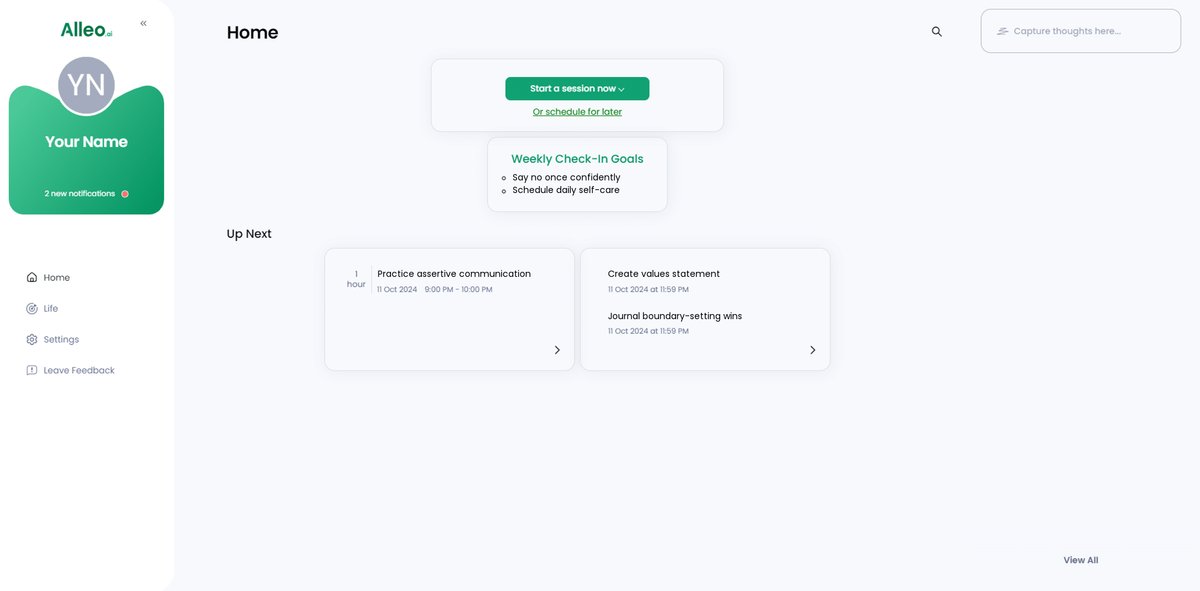
Step 5: Viewing and managing goals after the session
After your coaching session on setting boundaries, check the Alleo app’s home page to review and manage the personalized goals you discussed, helping you stay accountable and track your progress in maintaining healthy boundaries.
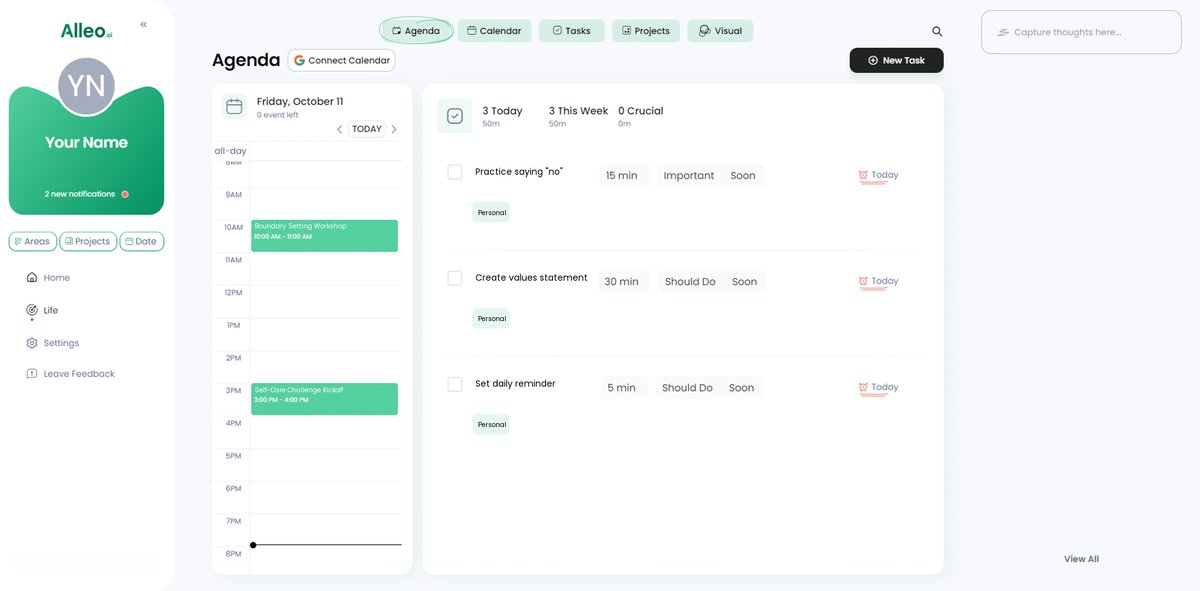
Step 6: Adding events to your calendar or app
Use Alleo’s calendar and task features to schedule and track your boundary-setting activities, helping you maintain consistency in your journey to healthier relationships and improved self-care.
Embracing Your Journey to Healthy Boundaries
As we’ve seen, setting boundaries for people pleasers is challenging but essential for your well-being.
Remember, it’s okay to prioritize yourself and say no without guilt, a crucial step in assertiveness training.
By practicing these steps, you’ll reclaim your time and energy while setting personal limits.
Celebrate each small victory along the way in your self-care journey as a recovering people pleaser.
Trust me, every step counts in recognizing codependency and building self-esteem.
Alleo can support you throughout this journey of learning to say no and prioritizing mental health.
With Alleo, you don’t have to do it alone in overcoming guilt in relationships.
Take advantage of the free 14-day trial and start setting boundaries for people pleasers today.
It’s time to embrace self-care and live authentically by balancing personal needs with others’.
You’ve got this, and Alleo is here to help improve your communication skills for boundaries.