How to Reduce Screen Time and Boost Productivity: A Professional’s Guide
Are you one of the many professionals who feel their screen time is consuming their life, leaving little room for personal growth and well-being? Many struggle to reduce screen time at work and maintain a healthy work-life balance.
As a life coach, I’ve helped many professionals navigate these challenges. In my experience, excessive screen time negatively impacts work-life balance techniques and overall productivity without technology.
In this article, you’ll discover strategies to reduce screen time at work, improve productivity, and achieve better mindful technology use. We’ll explore digital detox strategies and time management for professionals.
Let’s dive in.

The Hidden Costs of Excessive Screen Time
Let’s talk about the real impact of excessive screen time and how to reduce screen time at work. It goes beyond sore eyes and missed deadlines.
Many clients initially struggle with digital eye strain, which can make each workday feel longer and more exhausting. Eye strain prevention is crucial for maintaining productivity without technology.
Moreover, scrolling through social media during work hours disrupts mental focus. This distraction can significantly reduce productivity, highlighting the need for mindful technology use.
In my experience, people often find that their screen time creeps into personal moments, affecting both work and home life. This underscores the importance of work-life balance techniques.
Why is this so problematic?
Because it disrupts your work-life balance and can lead to burnout. Several clients report feeling constantly “on,” unable to fully disconnect and relax. Efficient workplace communication and time management for professionals are key to addressing this issue.
It’s a vicious cycle. But, there’s hope.
By understanding the problem, you can take the first step towards reclaiming your time and well-being. Implementing digital detox strategies and exploring screen-free activities for adults can help reduce screen time at work and improve overall mental health.
Effective Strategies to Reduce Screen Time for Busy Professionals
Overcoming this challenge requires a few key steps. Here are the main areas to focus on to reduce screen time at work and make progress.
- Implement mindful scrolling and digital nudges: Set specific times for social media use and use apps that remind you to take breaks, promoting mindful technology use.
- Create screen-free zones and times at work: Designate areas where screens are not allowed and encourage face-to-face interaction, fostering efficient workplace communication.
- Use breaks for non-digital activities: Take short walks, stretch, or engage in mindfulness exercises during breaks as part of your digital detox strategies.
- Set daily screen time limits and track progress: Use tracking apps to monitor screen time and gradually reduce it each week, improving work-life balance techniques.
Let’s dive in to explore these productivity without technology methods!
1: Implement mindful scrolling and digital nudges
Mindful scrolling and digital nudges can significantly reduce screen time at work and enhance productivity.
Actionable Steps:
- Set aside specific times for social media use. For example, limit yourself to 15 minutes in the morning and evening to promote mindful technology use.
- Use apps that remind you to take breaks or set screen time limits. These digital nudges prompt you to disconnect after a set period, supporting digital detox strategies.
- Replace mindless scrolling with intentional activities, such as reading a book or engaging in screen-free activities for adults.
Explanation:
Implementing these steps helps you stay focused and reduces the temptation to mindlessly scroll. By setting specific times and using reminders, you can create a structured approach to reduce screen time at work.
According to Meramonitor, such strategies are effective in improving time management for professionals and productivity.
Key benefits of mindful scrolling include:
- Increased focus and productivity without technology
- Reduced digital fatigue and eye strain prevention
- Improved work-life balance techniques
Taking control of your screen time with these methods can pave the way for a more balanced and fulfilling life, supporting mental health and enabling alternative relaxation methods.
2: Create screen-free zones and times at work
Creating screen-free zones and times at work is crucial for reducing screen time at work and maintaining productivity.
Actionable Steps:
- Designate specific areas in your workspace where screens are not allowed, such as break rooms or outdoor spaces, to encourage digital detox strategies.
- Implement screen-free times during meetings or brainstorming sessions to encourage face-to-face interaction and creative thinking, promoting productivity without technology.
- Encourage colleagues to join a ‘No Phone’ challenge during lunch breaks or team-building activities as part of work-life balance techniques.
Explanation:
These steps help reduce distractions and promote more meaningful interactions at work. Establishing screen-free zones enhances your focus and fosters creativity, supporting mindful technology use.
According to Johnson K-State, reducing screen time can improve social interactions and overall productivity.
Taking these measures can lead to a more balanced and effective work environment, contributing to better time management for professionals and eye strain prevention.
3: Use breaks for non-digital activities
Using breaks for non-digital activities is crucial for refreshing your mind and maintaining productivity while helping to reduce screen time at work.
Actionable Steps:
- Take short walks or stretch during breaks. These screen-free activities for adults help to clear your mind and reduce physical strain.
- Engage in mindfulness exercises or meditation for a few minutes. This can reduce stress and improve your focus as part of your digital detox strategies.
- Use break time to connect with colleagues. This fosters a more supportive and collaborative work environment and promotes efficient workplace communication.
Explanation:
Incorporating non-digital activities during breaks can significantly enhance your overall well-being and work-life balance. Physical activities like walking can reduce fatigue and boost your energy levels, contributing to productivity without technology.
According to UT Dallas, regular microbreaks are essential to prevent fatigue and discomfort. Connecting with colleagues can create a more positive work atmosphere and strengthen team bonds, supporting mindful technology use.
Effective non-digital break activities:
- Quick desk exercises or stretches for eye strain prevention
- Short outdoor walks as part of time management for professionals
- Brief mindfulness or breathing exercises as alternative relaxation methods
By implementing these steps, you can make your workday more balanced and productive while reducing screen time at work.
4: Set daily screen time limits and track progress
Setting daily screen time limits and tracking progress is crucial for managing your digital habits effectively and can help reduce screen time at work.
Actionable Steps:
- Establish a daily screen time goal. Use tracking apps like Screen Time or Digital Wellbeing to monitor and reduce your usage, promoting mindful technology use.
- Reward yourself for meeting screen time goals. Treat yourself to a favorite screen-free activity or relaxation time, supporting work-life balance techniques.
- Share your progress with a friend or family member. This creates accountability and keeps you motivated in your digital detox strategies.
Explanation:
These steps help you take control of your screen time by setting clear limits and tracking your progress. Using apps to monitor usage provides tangible data that can be motivating for professionals seeking to improve time management.
According to the American Academy of Ophthalmology, tracking screen time can lead to healthier digital habits and aid in eye strain prevention. Sharing your journey with others adds an element of accountability, making it easier to stick to your goals and maintain productivity without technology.
By following these strategies, you can gradually reduce your screen time at work and enjoy a more balanced life, incorporating alternative relaxation methods and efficient workplace communication techniques.
Partner with Alleo to Reclaim Your Time
We’ve explored the challenges of reducing screen time at work and improving productivity. But did you know you can work with Alleo to make this journey easier and faster?
Alleo provides tailored coaching to help you reduce screen time and implement digital detox strategies. Setting up an account is simple.
Create a personalized plan with our AI coach, who will track your progress and keep you accountable, focusing on work-life balance techniques and mindful technology use.
With Alleo, you receive reminders and notifications to stay on track. Our AI coach follows up on your progress and helps you adjust your plan as needed, incorporating time management for professionals and efficient workplace communication.
It’s like having a personal coach in your pocket to guide you through screen-free activities for adults and alternative relaxation methods.
Ready to start for free? Let me show you how to reduce screen time at work and improve your mental health!
Step 1: Log in or Create Your Account
To begin your journey towards better screen time management, log in to your existing Alleo account or create a new one in just a few clicks.

Step 2: Choose “Building Better Habits and Routines”
Select “Building Better Habits and Routines” to address your screen time challenges and improve work-life balance, aligning with the strategies discussed for reducing digital distractions and enhancing productivity.

Step 3: Select “Personal” as Your Focus Area
Choose “Personal” as your focus area to address screen time habits that impact your work-life balance, allowing you to develop strategies for reducing digital distractions and reclaiming time for personal growth and well-being.

Step 4: Starting a Coaching Session
Begin your journey with Alleo by scheduling an initial intake session, where our AI coach will help you set up a personalized plan to reduce screen time and improve your work-life balance.

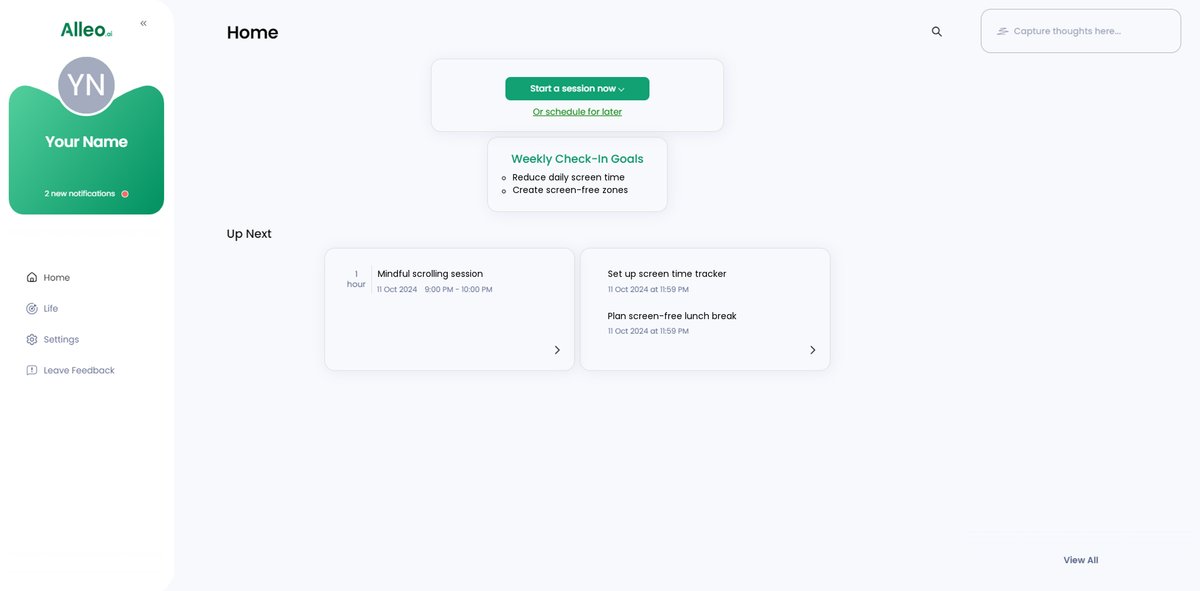
Step 5: Viewing and Managing Goals After the Session
After your coaching session, open the Alleo app to find your discussed goals conveniently displayed on the home page, allowing you to easily track and manage your progress in reducing screen time and improving productivity.
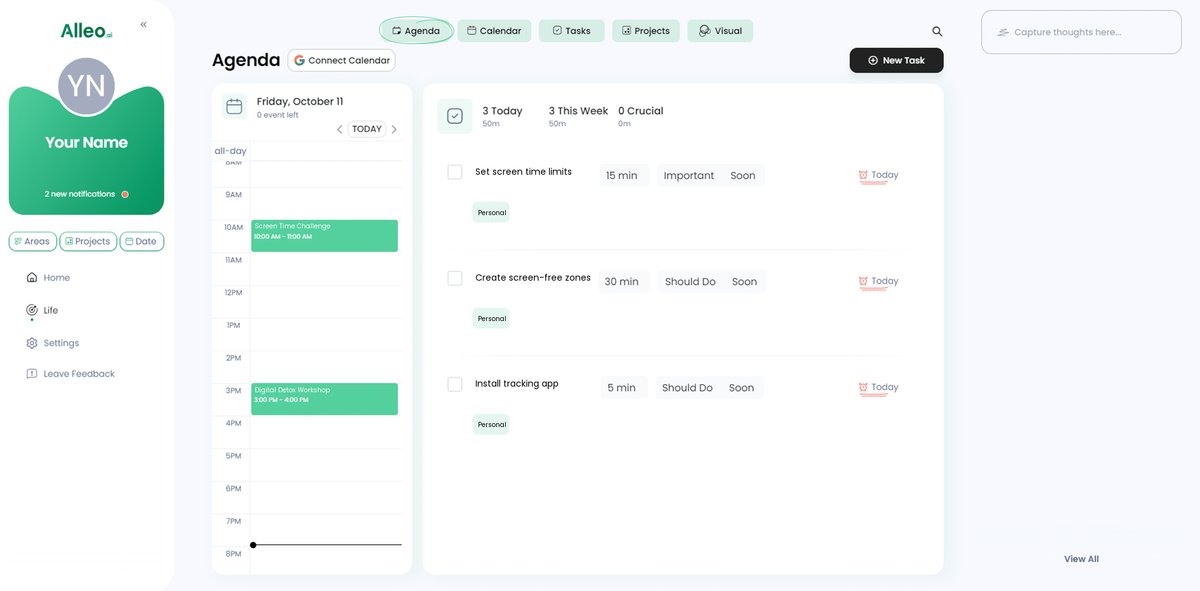
Step 6: Adding events to your calendar or app
Use the app’s calendar feature to schedule screen-free times and non-digital activities, allowing you to easily track your progress in reducing screen time and improving work-life balance.
Take Control of Your Screen Time Today
We’ve journeyed through various strategies to help you reduce screen time at work and boost productivity. Implementing these digital detox strategies can transform your daily routine and enhance your work-life balance techniques.
I understand the challenges you face as a busy professional. It’s easy to feel overwhelmed by digital demands and struggle with efficient workplace communication.
But remember, small changes lead to significant improvements in mindful technology use.
With dedication and the right tools, you can reclaim your time and explore alternative relaxation methods.
Alleo is here to support you every step of the way. Try it for free and start your journey towards a more balanced, fulfilling life with improved mental health and reduced screen time.