6 Powerful Strategies for Ethical Innovation in Corporate Leadership
Are you struggling to balance the need for innovation with ethical considerations in your corporate leadership? Implementing ethical innovation leadership strategies is crucial in today’s business landscape.
As a life coach, I’ve helped many professionals navigate these challenges. In my experience guiding clients through the complexities of emerging technologies and ethical dilemmas, I often encounter similar concerns about ethical decision-making in business and corporate social responsibility and innovation.
In this article, you’ll discover strategies for ethical innovation in corporate leadership. We’ll cover AI ethics frameworks, cross-functional ethics committees, transparent data governance, and more. These sustainable leadership practices will help you balance profit and ethics in business while fostering inclusive innovation strategies.
Let’s dive in to explore ethical innovation leadership strategies that promote long-term value creation through ethical leadership.

The Ethical Dilemma in Innovation
Balancing innovation with ethical considerations is a significant challenge for many executives. Emerging technologies, like AI and data analytics, present new ethical dilemmas that can be hard to navigate, requiring ethical innovation leadership strategies.
Neglecting these issues can lead to severe consequences, such as loss of consumer trust and legal repercussions. Ethical decision-making in business is crucial for long-term value creation through ethical leadership.
In my experience, professionals often struggle with integrating ethical practices into fast-paced innovation cycles. For example, the rapid adoption of AI can result in unintended biases, which can harm business operations and reputation. This highlights the importance of ethical technology adoption in corporations.
This is particularly true in sectors where AI is used for decision-making, such as hiring or lending, emphasizing the need for inclusive innovation strategies.
Furthermore, the pressure to stay ahead of competitors can sometimes overshadow ethical considerations. Several clients report feeling torn between pushing the boundaries of innovation and maintaining ethical integrity, a key aspect of corporate social responsibility and innovation.
This internal conflict can be very stressful, highlighting the need for sustainable leadership practices.
Ignoring these ethical challenges is not an option. The consequences, such as regulatory penalties or public backlash, can be devastating. Balancing profit and ethics in business is essential for long-term success.
Therefore, it is crucial to address these issues head-on, implementing ethical innovation leadership strategies that prioritize transparency in corporate innovation and stakeholder engagement in ethical innovation.
Roadmap to Ethical Innovation in Leadership
Overcoming this challenge requires a few key steps. Here are the main areas to focus on to make progress towards ethical innovation leadership strategies:
- Implement an AI Ethics Framework: Develop guidelines and train employees on ethical AI practices, fostering ethical technology adoption in corporations.
- Establish Cross-Functional Ethics Committees: Form diverse committees to address ethical issues and promote sustainable leadership practices.
- Conduct Regular Ethical Impact Assessments: Evaluate the ethical implications of new projects, balancing profit and ethics in business.
- Develop Transparent Data Governance Policies: Create clear data policies and enhance security measures, ensuring transparency in corporate innovation.
- Foster a Culture of Ethical Decision-Making: Promote open communication and reward ethical behavior, emphasizing corporate social responsibility and innovation.
- Engage Stakeholders in Innovation Processes: Organize workshops and maintain transparent communication, focusing on stakeholder engagement in ethical innovation.
Let’s dive into these ethical innovation leadership strategies!
1: Implement an AI ethics framework
Implementing an AI ethics framework is crucial for ensuring responsible innovation in your organization and is a key aspect of ethical innovation leadership strategies.
Actionable Steps:
- Develop comprehensive AI ethical guidelines.
- Create a clear document outlining ethical standards for AI use in your organization, focusing on ethical decision-making in business.
- Ensure these guidelines are accessible to all employees, promoting transparency in corporate innovation.
- Train employees on AI ethics.
- Conduct regular training sessions to keep staff informed about ethical AI practices and sustainable leadership practices.
- Use real-world scenarios to illustrate ethical dilemmas and solutions, emphasizing corporate social responsibility and innovation.
- Monitor and review AI systems regularly.
- Set up periodic audits of AI systems to ensure they comply with ethical standards and promote inclusive innovation strategies.
- Implement a feedback loop for continuous improvement based on audit results, balancing profit and ethics in business.
Explanation:
These steps matter because they help your organization navigate the complexities of AI responsibly. By establishing clear guidelines and conducting regular training, you ensure that all employees understand and adhere to ethical standards, which is essential for ethical innovation leadership strategies.
Furthermore, monitoring and reviewing AI systems will help you identify and correct potential ethical issues before they escalate. This proactive approach aligns with industry trends and is supported by resources like Harvard Business School.
Key benefits of implementing an AI ethics framework:
- Enhances organizational integrity
- Boosts consumer trust
- Ensures compliance with regulations
Taking these steps will not only enhance your organization’s ethical integrity but also boost consumer trust and compliance with regulations, contributing to long-term value creation through ethical leadership.

2: Establish cross-functional ethics committees
Establishing cross-functional ethics committees is crucial for addressing complex ethical issues within your organization and implementing ethical innovation leadership strategies.
Actionable Steps:
- Form a diverse ethics committee.
- Include members from various departments like IT, HR, legal, and operations.
- Ensure the committee represents different perspectives and expertise for inclusive innovation strategies.
- Conduct regular ethics meetings.
- Schedule monthly meetings to discuss and address ethical issues.
- Review recent projects and assess their compliance with ethical standards and corporate social responsibility in innovation.
- Empower the committee with decision-making authority.
- Provide the committee with the power to enforce ethical guidelines and support sustainable leadership practices.
- Allow them to make recommendations and take corrective actions when necessary, balancing profit and ethics in business.
Explanation:
These steps matter because they ensure that ethical considerations are integrated into all aspects of your organization’s ethical innovation leadership strategies.
By forming a diverse committee, you gather a wide range of insights, which is essential for comprehensive ethical decision-making in business.
Regular meetings help keep ethical issues at the forefront, while empowering the committee ensures that ethical guidelines are enforced effectively, promoting transparency in corporate innovation.
This approach aligns with industry trends and best practices, such as those highlighted by Join the Collective.
Implementing these committees will enhance your organization’s ethical integrity and support responsible innovation, focusing on long-term value creation through ethical leadership.
3: Conduct regular ethical impact assessments
Conducting regular ethical impact assessments is vital for ensuring your innovations align with ethical standards and societal expectations, a key aspect of ethical innovation leadership strategies.
Actionable Steps:
- Create an ethical impact assessment tool.
- Develop a standardized tool to evaluate the ethical implications of projects, supporting ethical decision-making in business.
- Ensure it covers aspects like privacy, bias, and transparency in corporate innovation.
- Train project managers on the assessment tool.
- Conduct workshops to teach project managers how to use the tool effectively, promoting sustainable leadership practices.
- Provide ongoing support and resources for implementation, fostering corporate social responsibility and innovation.
- Integrate assessments into project lifecycles.
- Make ethical impact assessments a mandatory part of project approvals, balancing profit and ethics in business.
- Review assessments at key milestones to ensure compliance and promote inclusive innovation strategies.
Explanation:
These steps matter because they embed ethical considerations into your innovation processes. Creating a tool helps standardize evaluations, making it easier to identify potential issues and support ethical technology adoption in corporations.
Training ensures that managers are equipped to use the tool effectively, and integrating assessments into project lifecycles ensures continuous ethical compliance. This approach aligns with industry best practices, such as those discussed in Seattle University’s blog.
Key components of an effective ethical impact assessment:
- Comprehensive evaluation criteria
- Stakeholder engagement in ethical innovation
- Clear mitigation strategies for ethical considerations in disruptive technologies
Taking these steps will help your organization navigate ethical challenges proactively and responsibly, contributing to long-term value creation through ethical leadership.
4: Develop transparent data governance policies
Developing transparent data governance policies is essential for ensuring data integrity and maintaining stakeholder trust in your organization, a key aspect of ethical innovation leadership strategies.
Actionable Steps:
- Create a comprehensive data governance framework.
- Outline policies for data collection, storage, and usage, focusing on ethical technology adoption in corporations.
- Ensure transparency in corporate innovation and communicate data practices clearly to stakeholders.
- Implement robust data security measures.
- Invest in advanced cybersecurity tools to protect sensitive information, aligning with sustainable leadership practices.
- Conduct regular security audits and update protocols as needed, demonstrating ethical decision-making in business.
- Establish data access controls.
- Define who has access to different types of data and under what circumstances, promoting corporate social responsibility and innovation.
- Implement role-based access controls to minimize the risk of data breaches, supporting inclusive innovation strategies.
Explanation:
These steps matter because they help protect sensitive information and maintain consumer trust, which is crucial for balancing profit and ethics in business. By creating clear data policies and conducting regular security audits, your organization can stay ahead of potential threats and uphold ethical innovation leadership strategies.
Implementing role-based access controls ensures that only authorized personnel can access critical data, reducing the risk of breaches. This proactive approach aligns with current best practices and industry trends, such as those discussed by Seattle University, and supports long-term value creation through ethical leadership.
Taking these steps will help you safeguard your data and uphold your organization’s ethical standards, addressing ethical considerations in disruptive technologies.
Next, I will cover fostering a culture of ethical decision-making.

5: Foster a culture of ethical decision-making
Fostering a culture of ethical decision-making is crucial for ensuring that innovation aligns with your organization’s values and societal expectations. This is a key component of ethical innovation leadership strategies.
Actionable Steps:
- Lead by example.
- Encourage executives and managers to model ethical behavior in corporate social responsibility and innovation.
- Share success stories and positive outcomes from ethical decision-making in business.
- Promote open communication.
- Create channels for employees to voice ethical concerns without fear of retribution, fostering transparency in corporate innovation.
- Encourage a culture of transparency and accountability in sustainable leadership practices.
- Reward ethical behavior.
- Implement a recognition program for employees who demonstrate strong ethical principles in balancing profit and ethics in business.
- Include ethical behavior as a criterion in performance reviews, promoting inclusive innovation strategies.
Explanation:
These steps matter because they help create an environment where ethics are a priority. By leading by example and promoting open communication, you ensure that employees feel comfortable raising ethical concerns, especially in ethical technology adoption in corporations.
Rewarding ethical behavior reinforces its importance and encourages others to follow suit. This approach aligns with best practices discussed by Join the Collective, which emphasizes the significance of ethical leadership in a globalized context.
Taking these steps will help you build a strong ethical foundation and support sustainable innovation, focusing on long-term value creation through ethical leadership.
Next, I will cover engaging stakeholders in the innovation process, an essential aspect of ethical innovation leadership strategies.

6: Engage stakeholders in innovation processes
Engaging stakeholders in innovation processes is crucial for ensuring that your ethical innovation leadership strategies align with broader ethical standards and stakeholder expectations.
Actionable Steps:
- Conduct stakeholder workshops.
- Organize workshops to gather input from diverse stakeholders on ethical innovation and sustainable leadership practices.
- Use these insights to inform your organization’s innovation strategies and ethical decision-making in business.
- Foster collaborative partnerships.
- Partner with academic institutions, industry groups, and NGOs to stay informed about ethical trends and corporate social responsibility and innovation.
- Leverage these relationships to co-develop ethical solutions and inclusive innovation strategies.
- Communicate transparently with stakeholders.
- Regularly update stakeholders on your organization’s ethical initiatives and progress in balancing profit and ethics in business.
- Use multiple channels, such as newsletters and social media, to maintain engagement and promote transparency in corporate innovation.
Explanation:
These steps matter because they ensure your innovations reflect the values and concerns of your stakeholders. By organizing workshops, you can gather valuable insights that guide ethical innovation leadership strategies.
Collaborative partnerships with institutions, like those discussed by West Virginia University, help you stay ahead of ethical trends and promote long-term value creation through ethical leadership. Transparent communication maintains stakeholder trust and engagement, which is essential for long-term success.
Benefits of stakeholder engagement in innovation:
- Improved product-market fit
- Enhanced reputation and trust
- Reduced risk of ethical missteps in ethical technology adoption in corporations
Taking these steps will enhance your organization’s ethical integrity and foster responsible innovation. Next, let’s discuss how Alleo can assist you in implementing these ethical innovation leadership strategies.
Partner with Alleo on Your Ethical Innovation Journey
We’ve explored the challenges of balancing profit and ethics in business, and now it’s time to act. Did you know you can work directly with Alleo to make implementing ethical innovation leadership strategies easier and faster?
Set up your account, create a personalized plan for sustainable leadership practices, and let Alleo’s AI coach guide you. You’ll get tailored coaching support on ethical decision-making in business, regular progress follow-ups, and accountability through text and push notifications to enhance your corporate social responsibility and innovation efforts.
Ready to start for free? Let me show you how to embark on your ethical innovation journey!
Step 1: Access Your Alleo Account
To begin your ethical innovation journey, log in to your Alleo account or create a new one if you haven’t already.

Step 2: Choose Your Ethical Innovation Goal
Select “Setting and achieving personal or professional goals” to focus on implementing ethical practices in your innovation processes. This aligns with the article’s emphasis on balancing innovation with ethical considerations, helping you address challenges like AI ethics, transparent data governance, or fostering an ethical decision-making culture.

Step 3: Select “Career” as Your Focus Area
Choose “Career” as your focus area to address ethical innovation challenges in your professional life, aligning with the article’s emphasis on corporate leadership and responsible technological advancement.

Step 4: Starting a coaching session
Begin your ethical innovation journey with an intake session to discuss your goals and challenges, allowing our AI coach to tailor a personalized plan that aligns with your organization’s values and innovation objectives.

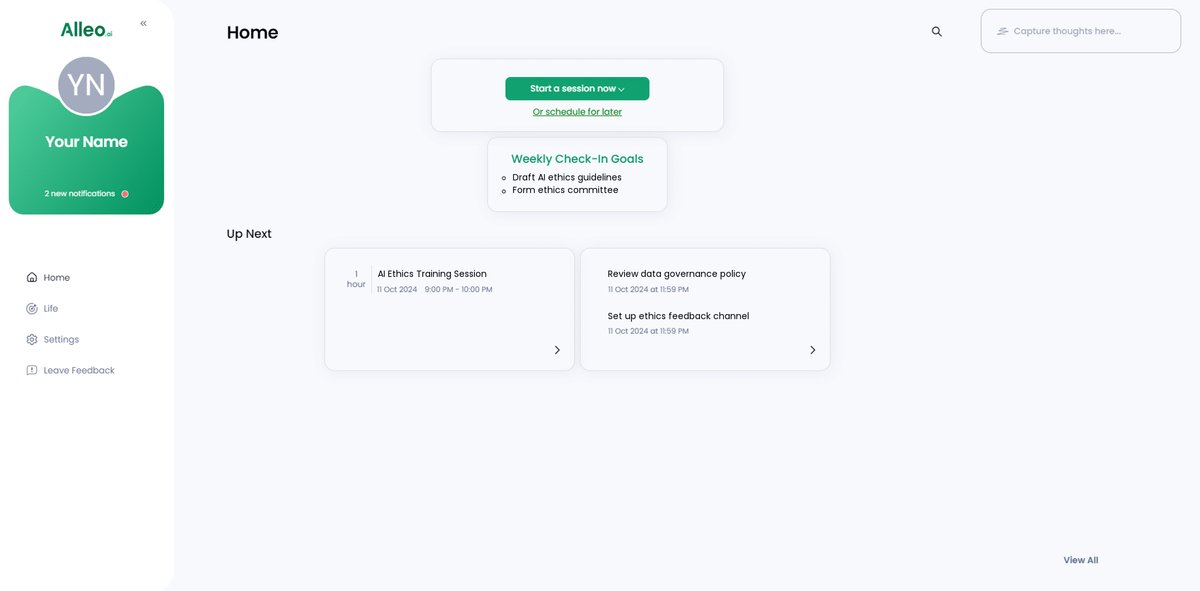
Step 5: Viewing and managing goals after the session
After your coaching session on ethical innovation, check the home page of the Alleo app to view and manage the goals you discussed, allowing you to track your progress in implementing strategies like AI ethics frameworks and cross-functional ethics committees.
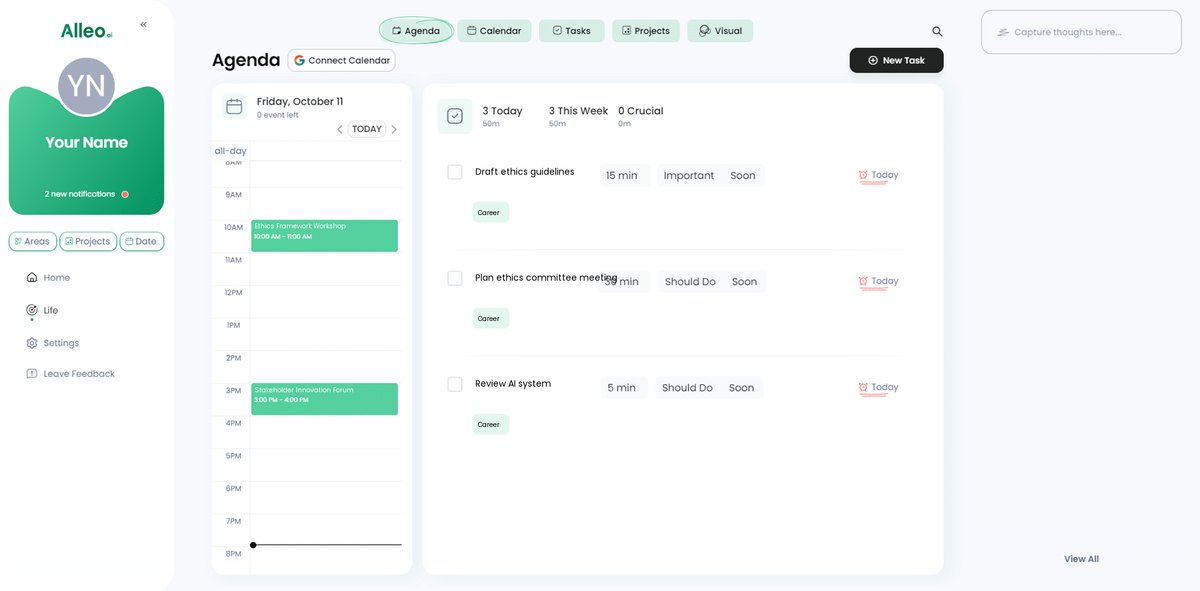
Step 6: Adding events to your calendar or app
Use the calendar and task features in the Alleo app to schedule and track your ethical innovation initiatives, allowing you to monitor your progress and stay accountable as you implement the strategies discussed in this article.
Bringing It All Together: Your Ethical Innovation Journey
We’ve covered a lot of ground on integrating ethical innovation leadership strategies into your business processes.
Balancing profit and ethics in business isn’t easy, but it’s crucial for long-term value creation through ethical leadership.
By implementing AI ethics frameworks, establishing cross-functional committees, and conducting regular ethical impact assessments, you’re on the right path to sustainable leadership practices.
Transparent data governance, fostering a culture of ethical decision-making in business, and engaging stakeholders will reinforce your efforts in corporate social responsibility and innovation.
I understand the challenges you face in ethical technology adoption in corporations; I’ve seen them firsthand with my clients.
But remember, you’re not alone in this journey towards inclusive innovation strategies.
Your commitment to ethical innovation leadership strategies will pay off, enhancing trust and long-term success.
Ready to take the next step in transparency in corporate innovation?
Let Alleo guide you with personalized coaching and support for ethical considerations in disruptive technologies.
Start your journey to ethical innovation today with Alleo.