Overcoming Imposter Syndrome as an Executive Leader: 3 Fundamental Principles for Success
Ever felt like you’re winging it, even at the top of your game? This is a common experience when overcoming executive imposter syndrome.
Imposter syndrome is a prevalent challenge for many executive leaders. This feeling of self-doubt can significantly impact your leadership effectiveness and personal well-being, especially when managing imposter feelings at work.
As a life coach specializing in executive coaching for confidence, I’ve helped many professionals navigate these executive leadership challenges. In my experience, recognizing your competence is crucial for overcoming self-doubt as a leader.
In this article, you’ll discover strategies to reframe self-doubt, seek mentorship, and practice self-compassion to address imposter syndrome in the C-suite. Let’s dive into these professional growth techniques for executives that can transform your corporate leadership mindset.

The Hidden Toll of Imposter Syndrome in Leadership
Imposter syndrome manifests in various ways, from constant self-doubt to overworking in an attempt to prove oneself. These feelings can cripple your confidence, making you second-guess every decision, a common challenge in overcoming executive imposter syndrome.
As an executive, this self-doubt not only affects you but also impacts your team. When leaders feel uncertain, it can create a ripple effect, causing team members to doubt their own capabilities. This is one of the key executive leadership challenges that can hinder professional growth for executives.
Many clients initially struggle with maintaining their executive presence, feeling like they don’t belong in the room. This can lead to a cycle of seeking reassurance from others, which undermines your authority and decision-making abilities. Addressing self-doubt in high-level positions is crucial for developing a strong corporate leadership mindset.
Addressing this challenge is crucial for leadership effectiveness and maintaining a healthy team dynamic. So, let’s explore actionable steps to overcome these feelings and reclaim your confidence, essential for managing imposter feelings at work and confidence building for CEOs.
Three Key Steps to Overcome Imposter Syndrome as an Executive Leader
Overcoming executive imposter syndrome requires a few key steps. Here are the main areas to focus on to make progress in managing imposter feelings at work:
- Reframe self-doubt with evidence of competence: Recognize and document your achievements to build confidence, addressing self-doubt in high-level positions.
- Seek mentorship from experienced executives: Gain guidance and support from seasoned professionals to enhance your corporate leadership mindset.
- Practice self-compassion and mindfulness daily: Engage in regular mindfulness practices to promote self-awareness and well-being, crucial for overcoming self-doubt as a leader.
Let’s dive into these strategies for overcoming executive imposter syndrome!
1: Reframe self-doubt with evidence of competence
Reframing self-doubt is essential to recognize your true capabilities and build confidence, especially when overcoming executive imposter syndrome.
Actionable Steps:
- Keep a Success Journal: Document daily achievements and positive feedback from colleagues. Review it weekly to reinforce a positive self-image and combat self-doubt in high-level positions.
- Create a Visual Accomplishment Board: Compile visual representations of your achievements, such as awards or project completions. Place the board in your workspace to serve as a constant reminder of your competence and aid in confidence building for CEOs.
- Regularly Reflect on Key Strengths: Identify your top three strengths and reflect on how they have contributed to your success. Write a brief narrative for each strength, detailing how it has positively impacted your work and executive leadership challenges.
Key benefits of reframing self-doubt include:
- Increased self-confidence
- Improved decision-making abilities
- Enhanced leadership presence
Explanation: These steps matter because they provide tangible evidence of your competence, helping to counteract self-doubt and manage imposter feelings at work.
For example, maintaining a success journal has been shown to significantly boost confidence and well-being, which is crucial for overcoming imposter syndrome in the C-suite.
According to Mohanbir Sawhney, focusing on facts that support your competence can help reframe negative thoughts and foster a corporate leadership mindset.
Taking these steps will not only enhance your confidence but also positively impact your leadership effectiveness, contributing to professional growth for executives and overall leadership psychology.
2: Seek mentorship from experienced executives
Connecting with experienced executives can provide invaluable guidance and reassurance as you navigate imposter syndrome in high-level positions. Overcoming executive imposter syndrome often requires support from those who have faced similar challenges.
Actionable Steps:
- Identify Potential Mentors: Reach out to respected executives in your network. Clearly explain your goals and how their experience can help you overcome self-doubt as a leader.
- Schedule Regular Check-ins: Arrange bi-weekly or monthly meetings to discuss your challenges and progress. Prepare topics and questions in advance to maximize the benefits of executive coaching for confidence.
- Join Executive Peer Groups: Participate in groups or mastermind sessions. Share your experiences and learn from others facing similar executive leadership challenges.
Explanation: These steps foster a support system, offering perspectives and advice from those who have faced similar challenges. Engaging in mentorship can help you feel more confident and less isolated in the C-suite.
Additionally, joining peer groups can provide diverse insights and strategies for managing imposter feelings at work. According to NAHSE, continuous learning in a complex industry like healthcare is crucial for growth and confidence.
Qualities to look for in a mentor to help with overcoming executive imposter syndrome:
- Extensive industry experience
- Strong communication skills
- Willingness to provide honest feedback on corporate leadership mindset
Taking these steps will not only bolster your leadership psychology but also create a network of trusted advisors to support your professional growth as an executive.

3: Practice self-compassion and mindfulness daily
Incorporating self-compassion and mindfulness into your daily routine can significantly enhance your leadership effectiveness and personal well-being, aiding in overcoming executive imposter syndrome.
Actionable Steps:
- Start a Daily Mindfulness Practice: Dedicate 10-15 minutes each morning to mindfulness meditation. Use guided meditation apps or attend a local mindfulness class to build the habit and address self-doubt in high-level positions.
- Self-Compassion Exercises: Practice self-compassion by writing a supportive letter to yourself when feelings of self-doubt arise. Utilize self-compassion mantras, such as “I am enough” or “I am doing my best,” during stressful moments to combat imposter syndrome in the C-suite.
- Regularly Schedule ‘Me Time’: Allocate time each week for activities that nourish your soul and recharge your energy (e.g., hobbies, nature walks, reading). Ensure this time is non-negotiable and free from work-related interruptions to support your professional growth as an executive.
Explanation: These steps matter because they help you maintain a balanced mindset and reduce stress, which is crucial for overcoming executive imposter syndrome.
According to Andrea Morrison, practicing self-compassion can alleviate personal stress and improve well-being, essential for managing imposter feelings at work.
Embracing mindfulness and self-compassion will allow you to lead with clarity and confidence, addressing executive leadership challenges.
Benefits of regular mindfulness practice:
- Reduced stress and anxiety
- Improved focus and decision-making
- Enhanced emotional regulation
By integrating these practices into your daily routine, you’ll cultivate a healthier mindset and foster greater resilience in your leadership role, effectively overcoming executive imposter syndrome and developing a strong corporate leadership mindset.

Partner with Alleo to Overcome Imposter Syndrome
We’ve explored the challenges of overcoming executive imposter syndrome as a high-level leader. Solving these executive leadership challenges can benefit your career and improve your leadership effectiveness.
Did you know you can work directly with Alleo to make this journey of overcoming self-doubt as a leader easier and faster?
Alleo offers affordable, tailored coaching support just like a human coach for managing imposter feelings at work. With Alleo, you get full coaching sessions and a free 14-day trial, requiring no credit card.
Setting up an account is simple. First, create your personalized plan for overcoming executive imposter syndrome.
Use Alleo’s AI coach to set and track your goals related to building confidence and addressing self-doubt in high-level positions. Alleo’s decision-making tools help you navigate complex leadership challenges with confidence.
The AI coach will follow up on your progress in overcoming imposter syndrome in the C-suite. It handles changes and keeps you accountable via text and push notifications.
Utilize Alleo’s habit-building features to establish and maintain daily mindfulness and self-compassion practices, essential for corporate leadership mindset development.
Network through Alleo’s community to find potential mentors and join peer groups. These connections provide invaluable guidance and reassurance for professional growth for executives.
You’ll receive tailored advice and support to overcome your specific challenges related to executive imposter syndrome.
Ready to get started for free with executive coaching for confidence? Let me show you how!
Step 1: Log In or Create Your Account
To begin your journey towards overcoming imposter syndrome with Alleo’s AI coach, simply log in to your existing account or create a new one to access personalized support and guidance.

Step 2: Choose “Improving overall well-being and life satisfaction” as your goal
Click on “Improving overall well-being and life satisfaction” to address imposter syndrome and boost your confidence as an executive leader, aligning with the article’s strategies for reframing self-doubt and practicing self-compassion.

Step 3: Select “Career” as Your Focus Area
Choose “Career” as your focus area in Alleo to directly address imposter syndrome challenges in your executive role, helping you build confidence and improve your leadership effectiveness.

Step 4: Starting a coaching session
Begin your journey with Alleo by scheduling an initial intake session, where you’ll discuss your imposter syndrome challenges and create a personalized plan to build confidence in your executive leadership role.

Step 5: Viewing and Managing Goals After the Session
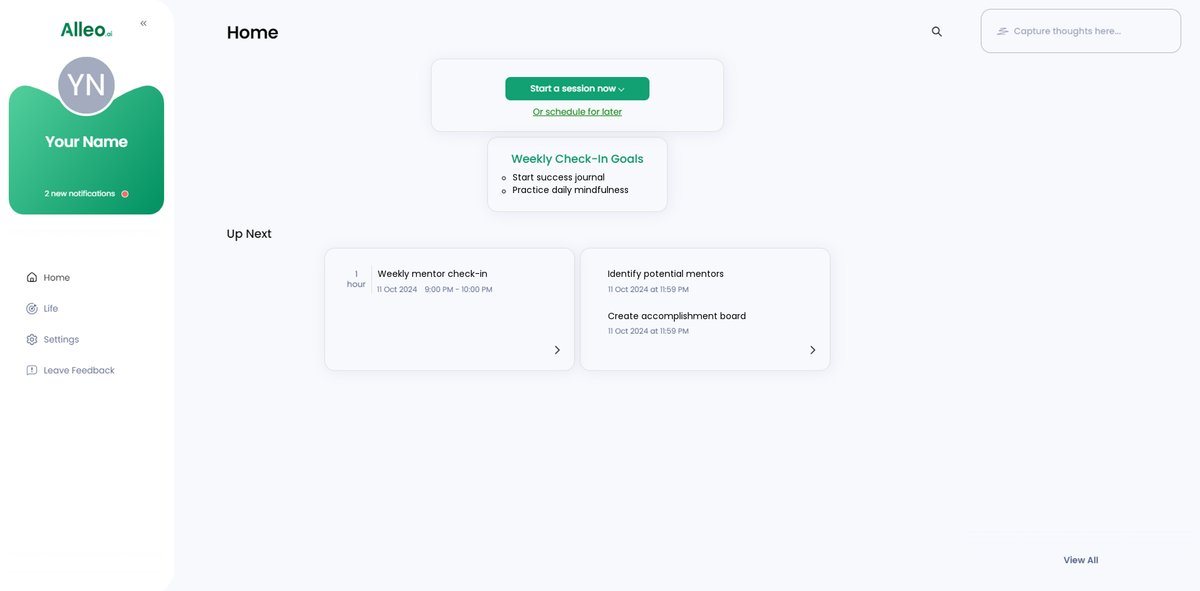
After your coaching session, check the Alleo app’s home page to view and manage the goals you discussed, allowing you to track your progress in overcoming imposter syndrome and building leadership confidence.
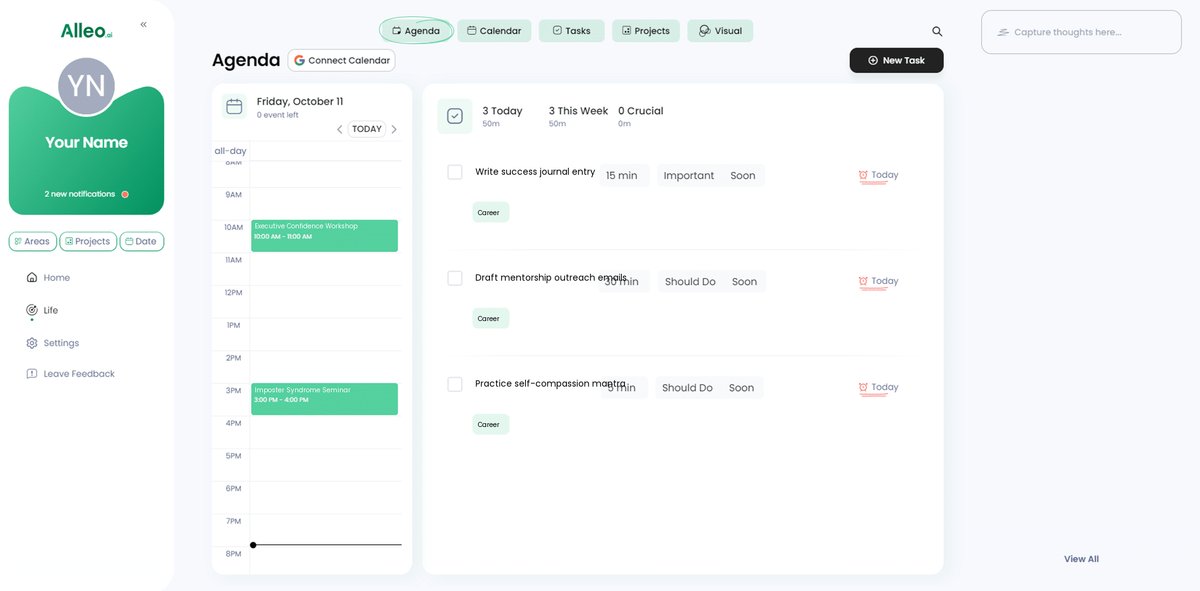
Step 6: Adding events to your calendar or app
Use Alleo’s calendar and task features to schedule and track your progress in overcoming imposter syndrome, adding key events like mentorship meetings, self-reflection sessions, and mindfulness practices to stay accountable and measure your growth as a confident leader.
Own Your Success and Lead with Confidence
Feeling like an imposter is common, especially when facing executive leadership challenges, but it doesn’t have to define you.
By reframing self-doubt in high-level positions, seeking mentorship, and practicing self-compassion, you can reclaim your confidence. These steps will not only enhance your leadership skills but also improve your personal well-being, helping in overcoming executive imposter syndrome.
Remember, overcoming imposter syndrome is a journey. Take it one step at a time, focusing on professional growth for executives.
You deserve to feel confident in your abilities. Embrace your successes and trust in your competence, addressing imposter syndrome in the C-suite.
Alleo is here to support you. With Alleo’s AI coach, you can set goals, track progress, and find mentors, aiding in confidence building for CEOs.
Start your journey to confidence today. You’ve earned your place at the table. Own it. Overcome self-doubt as a leader and master your corporate leadership mindset.