6 Proven Strategies to Revolutionize Your UX Stakeholder Management Skills
Imagine being in a high-stakes meeting where your UX recommendations get immediate buy-in. Sounds ideal, right?
As a life coach, I’ve helped many professionals navigate these challenges. In my experience helping clients improve UX stakeholder management and stand out in competitive industries, I often encounter the same issues.
In this article, you’ll discover proven strategies to improve your stakeholder management skills as a UX designer. From stakeholder communication techniques to aligning UX goals with business objectives through design thinking for stakeholders, we’ve got you covered.
Let’s dive in to explore user-centered design approaches and collaborative UX processes that can enhance your UX presentation skills and stakeholder workshop facilitation.

The Stakeholder Management Challenge for UX Designers
Picture this: You’re caught in a feedback tug-of-war, balancing conflicting suggestions from various stakeholders. This scenario isn’t just hypothetical; it’s a reality many UX designers face daily as they strive to improve UX stakeholder management.
When feedback conflicts, maintaining productive dialogue becomes tough. Poor stakeholder communication techniques can lead to project delays and decreased team morale in UX design project management.
This can be frustrating and counterproductive, especially when trying to implement a user-centered design approach.
Several clients report initial struggles with gaining stakeholder buy-in. Without buy-in, your UX recommendations and design thinking for stakeholders may never see the light of day.
The goal is to develop skills that ensure your ideas are embraced and implemented, fostering collaborative UX processes and effective stakeholder feedback integration.

Key Steps to Improve Stakeholder Management Skills for UX Designers
Overcoming this challenge requires a few key steps. Here are the main areas to focus on to improve UX stakeholder management:
- Develop clear communication strategies: Create a stakeholder communication plan and tailor messages to your audience, utilizing effective stakeholder communication techniques.
- Practice active listening and empathy: Engage in active listening exercises and empathy-building workshops to enhance your user-centered design approach.
- Align UX goals with business objectives: Conduct alignment meetings and set SMART objectives to ensure design strategy alignment.
- Build cross-functional relationships: Schedule team-building activities and seek mentorship to foster collaborative UX processes.
- Use data to support UX recommendations: Collect user data and present data-driven arguments, integrating stakeholder feedback effectively.
- Create visual presentations of UX concepts: Develop wireframes and host interactive demos to showcase your UX presentation skills.
Let’s dive in to improve UX stakeholder management!
1: Develop clear communication strategies
Effective communication is key to improve UX stakeholder management and gain buy-in for your UX recommendations.
Actionable Steps:
- Create a stakeholder communication plan. Define the purpose, frequency, and channels of your communication to ensure everyone is on the same page, enhancing your UX design project management.
- Use clear and concise language. Tailor your message to the audience’s understanding and needs to avoid misunderstandings, improving your UX presentation skills.
- Utilize feedback loops. Implement regular check-ins to gather and address stakeholder concerns promptly, facilitating stakeholder feedback integration.
Explanation:
These steps matter because clear communication helps build trust and ensures that everyone understands the goals and expectations in collaborative UX processes.
According to a report on effective communication, setting firm boundaries and maintaining clarity can significantly enhance stakeholder management.
By creating a communication plan and utilizing feedback loops, you align your goals with those of your stakeholders, fostering a more collaborative environment and improving UX stakeholder management.
Key benefits of clear communication strategies:
- Enhances mutual understanding
- Reduces conflicts and misinterpretations
- Builds stronger stakeholder relationships
This foundation sets you up for successful stakeholder interactions, paving the way for the next steps in improving your stakeholder management skills and implementing a user-centered design approach.

2: Practice active listening and empathy
Practicing active listening and empathy is essential for understanding and addressing stakeholder concerns effectively, helping to improve UX stakeholder management.
Actionable Steps:
- Engage in active listening exercises. Practice stakeholder communication techniques like paraphrasing and summarizing to ensure you understand stakeholders’ points in your UX design project management.
- Attend empathy-building workshops. Participate in sessions that focus on understanding different stakeholder perspectives, enhancing your user-centered design approach.
- Perform empathy mapping. Create empathy maps for key stakeholders to visualize their needs and concerns, applying design thinking for stakeholders.
Explanation:
These steps matter because they help build trust and ensure that stakeholders feel heard. This connection is crucial for gaining buy-in for UX recommendations and fostering collaborative UX processes.
According to a report on stakeholder communication, strong teams collaborate across functions rather than drawing strict lines between roles, emphasizing the importance of empathy in teamwork and stakeholder feedback integration.
By practicing active listening and empathy, you can better align your UX goals with stakeholder needs, setting the stage for successful collaborations and improving UX stakeholder management throughout your design strategy alignment efforts.

3: Align UX goals with business objectives
Aligning UX goals with business objectives is essential for ensuring that your UX recommendations are both relevant and impactful, helping to improve UX stakeholder management.
Actionable Steps:
- Conduct alignment meetings. Regularly meet with business leaders to understand their objectives and ensure your UX goals are aligned, utilizing stakeholder communication techniques.
- Use SMART objectives. Set Specific, Measurable, Achievable, Relevant, and Time-bound goals for your UX design project management to ensure clear targets.
- Develop a shared vision. Create a vision statement that reflects both UX and business goals, fostering a unified direction and incorporating a user-centered design approach.
Explanation:
These steps matter because they help bridge the gap between UX design and business priorities. By aligning goals, you ensure that your UX efforts contribute to broader company objectives and improve UX stakeholder management.
According to a product roadmap article, regular alignment and clear objectives are crucial for successful project management. This approach fosters collaboration and ensures that all stakeholders are working towards shared goals, supporting collaborative UX processes.
Key benefits of aligning UX goals with business objectives:
- Increases project relevance and impact
- Improves resource allocation
- Enhances overall business performance
Aligning UX goals with business objectives paves the way for more cohesive and successful projects, ultimately helping to improve UX stakeholder management.

4: Build cross-functional relationships
Building cross-functional relationships is crucial for effective stakeholder management and successful UX projects to improve UX stakeholder management.
Actionable Steps:
- Schedule cross-functional team activities. Organize team-building exercises to foster collaboration between different departments and enhance stakeholder communication techniques.
- Establish regular inter-departmental meetings. Create platforms for ongoing dialogue between UX, engineering, and marketing teams to support UX design project management.
- Seek mentorship. Find mentors in other departments to gain insights and build rapport across the organization, promoting a user-centered design approach.
Explanation:
These steps matter because they encourage open communication and collaboration, ensuring that all departments are aligned and working towards common goals, which is essential to improve UX stakeholder management.
According to a LinkedIn post, strong teams collaborate across functions rather than drawing strict lines between roles.
This approach fosters a cohesive work environment, making it easier to gain stakeholder buy-in for UX recommendations and integrate stakeholder feedback.
By building cross-functional relationships, you lay the groundwork for successful and integrated projects, enhancing collaborative UX processes and design strategy alignment.

5: Use data to support UX recommendations
Using data to support UX recommendations is crucial for improving UX stakeholder management and making informed decisions to gain stakeholder buy-in.
Actionable Steps:
- Collect and analyze user data. Use surveys, interviews, and usability testing to gather actionable insights about user experiences, aligning with a user-centered design approach.
- Present data-driven arguments. Use data visualization tools like Tableau and Google Data Studio to create compelling presentations that support your UX recommendations and enhance your UX presentation skills.
- Monitor and report on key metrics. Track and communicate the impact of UX changes on business outcomes to stakeholders regularly, integrating stakeholder feedback and improving UX stakeholder management.
Explanation:
These steps matter because presenting data-driven arguments helps build credibility and trust with stakeholders, which is essential for effective UX design project management.
According to a report on product roadmaps, data visualization and regular reporting are essential for maintaining transparency and demonstrating the value of UX improvements, aligning with design thinking for stakeholders.
By leveraging data, you can make a stronger case for your UX recommendations, leading to better alignment and support from stakeholders through collaborative UX processes.
Using data effectively ensures your UX recommendations are not only heard but also acted upon, which is key to improving UX stakeholder management and design strategy alignment.
6: Create visual presentations of UX concepts
Creating visual presentations of UX concepts is crucial for improving UX stakeholder management by making ideas tangible and understandable, facilitating stakeholder communication techniques.
Actionable Steps:
- Develop wireframes and prototypes. Use tools like Sketch or Figma to create clear visual representations of your UX concepts, enhancing your UX design project management.
- Use storytelling techniques. Craft narratives that explain the user journey and the benefits of your UX recommendations, aligning with a user-centered design approach.
- Host interactive demos. Organize sessions where stakeholders can experience the prototypes firsthand, incorporating design thinking for stakeholders.
Explanation:
These steps matter because visual presentations make abstract UX concepts concrete, helping stakeholders grasp the value of your ideas and improve UX stakeholder management.
According to a definitive guide on UX design tools, well-crafted UI can potentially increase website conversion rates by up to 200%.
By using wireframes, storytelling, and interactive demos, you create compelling and engaging presentations that resonate with stakeholders, making it easier to gain their support and facilitate collaborative UX processes.
Effective techniques for visual UX presentations:
- Use color psychology to evoke desired emotions
- Incorporate user flow diagrams for clarity
- Leverage before-and-after comparisons
By mastering these visual presentation techniques, you’re well-equipped to effectively communicate your UX concepts, secure stakeholder buy-in, and improve UX stakeholder management through enhanced UX presentation skills.

Partner with Alleo for Mastering Stakeholder Management
We’ve explored the challenges of improving stakeholder management skills for UX designers. But did you know you can work directly with Alleo to improve UX stakeholder management and make this journey easier and faster?
Set up an account with Alleo and create a personalized plan to enhance your stakeholder communication techniques and UX design project management. The AI coach will guide you through each step, providing tailored coaching support for implementing user-centered design approaches and design thinking for stakeholders.
Alleo follows up on your progress, handles changes, and keeps you accountable via text and push notifications, helping you refine your collaborative UX processes and stakeholder feedback integration skills.
Ready to get started for free and boost your UX presentation skills? Let me show you how to align your design strategy and master stakeholder workshop facilitation!
Step 1: Access Your Alleo Account
Log in to your existing Alleo account or create a new one to start improving your UX stakeholder management skills with personalized AI coaching.

Step 2: Choose Your Focus Area
Select “Setting and achieving personal or professional goals” to improve your stakeholder management skills as a UX designer. By focusing on this area, you’ll develop clear objectives that align with the strategies outlined in the article, helping you gain stakeholder buy-in and advance your UX career.

Step 3: Select “Career” as Your Focus Area
Choose “Career” as your focus area to enhance your stakeholder management skills as a UX designer, aligning perfectly with the article’s emphasis on professional growth and improved workplace interactions.

Step 4: Starting a Coaching Session
Begin your journey with Alleo by scheduling an intake session, where you’ll discuss your stakeholder management goals and create a personalized action plan to improve your UX design communication skills.

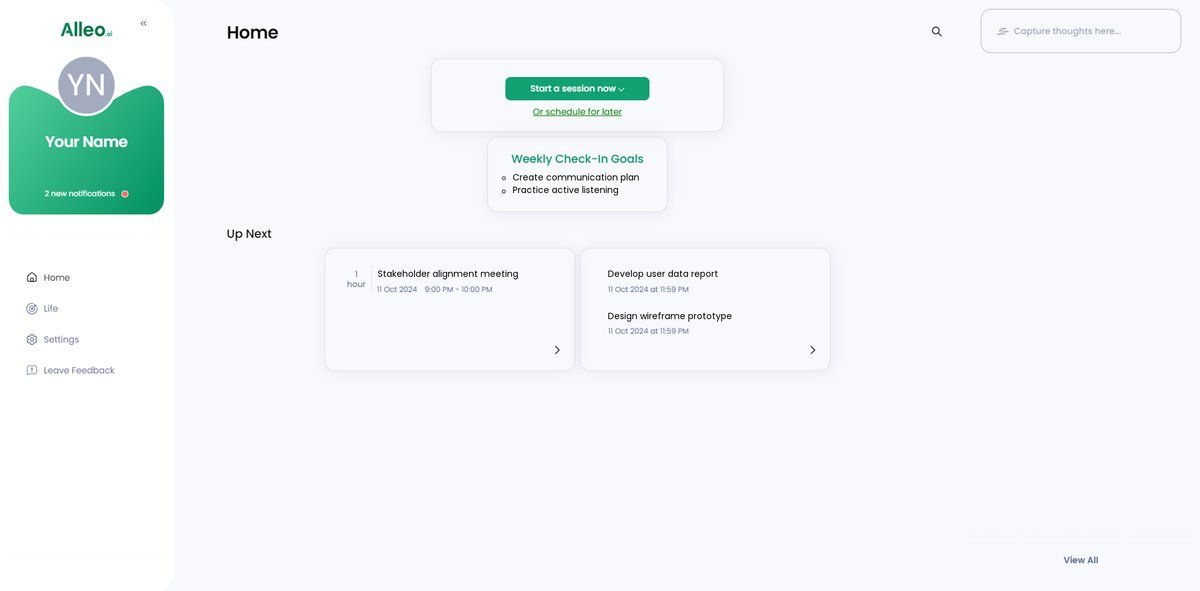
Step 5: Viewing and Managing Goals After the Session
After your coaching session, check the app’s home page to view and manage the UX stakeholder management goals you discussed, allowing you to track your progress and stay accountable.
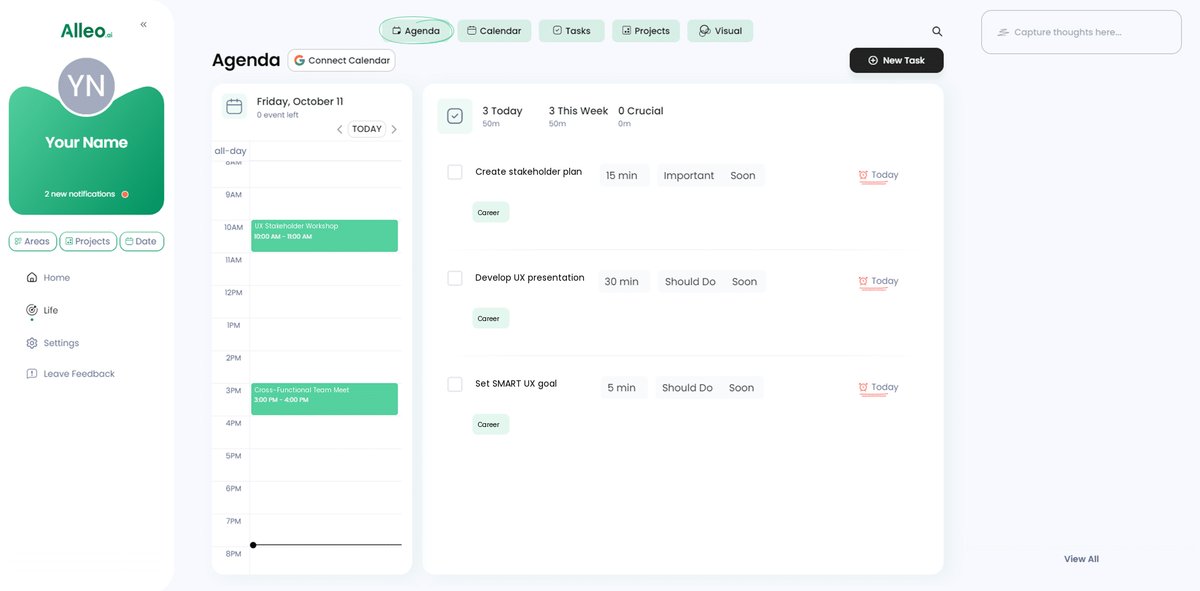
Step 6: Adding events to your calendar or app
Use the calendar and task features in the Alleo app to track your progress in implementing UX recommendations and improving stakeholder management skills, allowing you to set deadlines, monitor milestones, and stay accountable to your goals.
Bringing It All Together: Mastering Stakeholder Management
You’ve learned how to improve UX stakeholder management through clear communication, practicing empathy, and aligning UX goals with business objectives. These stakeholder communication techniques will help you gain buy-in for your UX recommendations.
Building cross-functional relationships and using data effectively are crucial steps in UX design project management. Visual presentations enhance your user-centered design approach, making your concepts tangible and understandable to stakeholders.
Remember, each interaction is a chance to strengthen your stakeholder management abilities and apply design thinking for stakeholders. You can master collaborative UX processes!
And don’t forget, Alleo is here to support your UX presentation skills. Try it for free, and see how it can make your journey smoother.
With the right strategies and tools to improve UX stakeholder management, you can achieve remarkable results. Let’s make it happen through effective stakeholder feedback integration!