4 Proven Strategies for Executives Seeking Work-Life Balance in Their Careers
Are you struggling to find a corporate role that offers a standard 40-hour work week? Achieving work-life balance for executives can be challenging in today’s demanding business environment.
As a life coach, I’ve helped many professionals navigate these challenges. In my experience, finding work-life balance is crucial for overall happiness and productivity. Executive time management and strategies for balancing career and personal life at the top are key focus areas.
In this article, you’ll discover strategies to seek flexible work arrangements for leaders, network effectively, and negotiate hours. We’ll explore actionable steps and tools to help you achieve a balanced lifestyle, including corporate wellness for executives and productivity hacks for busy leaders.
Let’s dive in to explore work-life balance for executives and how to prevent executive burnout.

The High Stakes of Executive Work-Life Balance
Many corporate executives face relentless demands and high expectations when it comes to work-life balance. Long working hours often spill over into personal time, leaving little room for family or relaxation, making work-life balance for executives a significant challenge.
This constant pressure can lead to burnout and reduced job satisfaction, highlighting the need for effective executive time management strategies.
In my experience, people often find it difficult to balance their roles, especially when work encroaches on weekends and holidays, emphasizing the importance of work-life integration for C-suite executives.
For example, several clients report struggling to switch off after work, impacting their sleep and overall well-being. This underscores the need for corporate wellness programs tailored for executives.
The negative effects are real, and they extend beyond the individual to their families and personal relationships, making balancing career and personal life at the top a critical issue.
It’s clear that finding the right work-life balance for executives is crucial for maintaining both professional success and personal happiness, potentially through flexible work arrangements for leaders or productivity hacks for busy leaders.

Overcoming the challenge of work-life balance for executives requires a few key steps. Here are the main areas to focus on to make progress in achieving executive time management and C-suite work-life integration.
- Seek Flexible Work Arrangements in Job Search: Research and target companies with flexible policies for leaders. Attend industry events and set up informational interviews to explore remote leadership positions.
- Network with Companies Known for Work-Life Balance: Join professional associations and leverage LinkedIn connections to find family-friendly executive roles.
- Negotiate for Reduced Hours in Current Role: Prepare a business case and propose a trial period to enhance corporate wellness for executives.
- Consider Transitioning to Consulting or Advisory: Identify your niche and build a personal brand to explore high-level job sharing opportunities.
Let’s dive in to explore productivity hacks for busy leaders and strategies for balancing career and personal life at the top!
1: Seek flexible work arrangements in job search
Finding roles with flexible work arrangements can significantly improve work-life balance for executives. Implementing effective executive time management strategies is crucial for achieving this balance.
Actionable Steps:
- Research Companies with Flexible Policies: Identify companies known for offering flexible work arrangements for leaders using online job boards and company websites. Look for high-level job sharing opportunities and remote leadership positions.
- Attend Industry Events and Workshops: Participate in seminars and networking events focused on work-life balance for executives to learn about companies that prioritize flexibility and corporate wellness for executives.
- Set Up Informational Interviews: Reach out to employees at target companies to discuss their experiences and ask specific questions about work-life integration policies for C-suite executives.
Explanation:
These steps matter because they help you find positions that align with your work-life balance goals as an executive. Engaging with industry events and informational interviews provides insights into company cultures and policies that support balancing career and personal life at the top.
According to an article from CoachHub, nearly 13% of full-time employees work entirely remotely, and 28% operate in a hybrid structure, highlighting the growing trend of flexible work arrangements, which can be beneficial for executives seeking work-life balance.
Key benefits of flexible work arrangements for executives include:
- Improved work-life balance for executives
- Increased job satisfaction and executive burnout prevention
- Enhanced productivity through effective time management
Taking these proactive steps can lead you to a more balanced and fulfilling career, even in high-pressure executive roles. Exploring family-friendly executive roles and implementing productivity hacks for busy leaders can further support work-life integration.

2: Network with companies known for work-life balance
Building a network with companies known for supporting work-life balance for executives can open doors to more fulfilling roles.
Actionable Steps:
- Join Relevant Professional Associations: Become a member of associations focusing on executive time management and flexible work arrangements for leaders. Attend meetings and build connections with other members.
- Leverage LinkedIn Connections: Actively connect with professionals from companies renowned for their C-suite work-life integration. Engage in meaningful conversations and express your interest in opportunities at their companies.
- Participate in Online Communities: Join forums and groups discussing work-life balance for executives. Share your experiences and seek advice from others who have successfully transitioned to more balanced roles, including high-level job sharing opportunities.
Explanation:
These steps are crucial for identifying companies that prioritize work-life balance for executives. By engaging with industry professionals and online communities, you gain insights and build valuable connections for remote leadership positions.
According to Best HR Certification, work-life balance is the strongest contributor to employee happiness. Hence, networking can help you find roles that align with your personal and professional goals, including corporate wellness for executives.
Networking effectively can lead you to opportunities that better match your work-life balance aspirations, helping with executive burnout prevention and balancing career and personal life at the top.
3: Negotiate for reduced hours in current role
Negotiating for reduced hours in your current role can significantly enhance your work-life balance for executives, allowing for better executive time management.
Actionable Steps:
- Prepare a Business Case: Gather data, such as performance metrics, that support your request for reduced hours. Highlight how flexible work arrangements for leaders can boost productivity and job satisfaction.
- Schedule a Formal Meeting with HR: Request a meeting to discuss the possibility of a flexible schedule. Present your business case and be ready to negotiate specific terms for C-suite work-life integration.
- Propose a Trial Period: Suggest a trial period to demonstrate the effectiveness of the reduced hours arrangement. Set clear goals and metrics for evaluating the success of this trial, focusing on balancing career and personal life at the top.
Explanation:
These steps matter because they provide a structured approach to negotiating reduced hours in your current role. Presenting a well-prepared business case can help HR see the benefits of flexible arrangements, including high-level job sharing opportunities.
According to Best HR Certification, work-life balance is the strongest contributor to employee happiness. Taking these steps can help you achieve a more balanced and fulfilling career, potentially leading to remote leadership positions.
Key elements to include in your business case:
- Performance metrics demonstrating productivity
- Potential cost savings for the company
- Examples of successful flexible arrangements in similar roles, emphasizing corporate wellness for executives
Consider these steps as a way to transition to a more balanced work-life approach in your current role, implementing productivity hacks for busy leaders and executive burnout prevention strategies.

4: Consider transitioning to consulting or advisory
Transitioning to consulting or advisory roles can provide greater control over your schedule and work-life balance for executives. This shift can be particularly beneficial for those seeking flexible work arrangements for leaders.
Actionable Steps:
- Identify Your Niche: Evaluate your skills and experience to choose a consulting niche aligning with your expertise. Research the demand for consultants in your chosen field, considering opportunities for C-suite work-life integration.
- Build a Personal Brand: Create a professional website and LinkedIn profile showcasing your consulting services. Publish articles and case studies to establish yourself as an expert in executive time management and corporate wellness for executives.
- Network with Potential Clients: Attend industry conferences and events to meet potential clients. Offer free initial consultations to demonstrate your value and build relationships, focusing on balancing career and personal life at the top.
Explanation:
These steps are essential to transitioning into consulting or advisory roles, offering more flexible work arrangements. By identifying your niche, you’ll focus on areas where you can excel, potentially including remote leadership positions.
Building a personal brand helps showcase your expertise and attract clients. Networking with potential clients at industry events can open many opportunities, including high-level job sharing opportunities.
According to My Consulting Offer, consulting roles often provide better work-life balance compared to traditional corporate jobs.
Benefits of transitioning to consulting:
- Flexible schedule and work location
- Opportunity to choose projects aligned with personal interests
- Potential for higher income based on expertise
Consider these steps as you explore consulting roles to achieve a more balanced lifestyle and implement productivity hacks for busy leaders.
Partner with Alleo for a Balanced Work-Life
We’ve explored the challenges of achieving work-life balance for executives and the steps to get there. Did you know you can work directly with Alleo to make this journey easier and faster for high-level job sharing opportunities and executive time management?
Setting up an account with Alleo is simple and quick. Once you’re signed up, you’ll create a personalized plan tailored to your work-life balance goals, focusing on C-suite work-life integration and corporate wellness for executives.
Alleo’s AI coach will guide you through each step, providing actionable advice and practical strategies for balancing career and personal life at the top. You’ll receive regular follow-ups, progress checks, and accountability through text and push notifications, supporting your remote leadership positions.
Ready to get started for free and discover productivity hacks for busy leaders? Let me show you how!
Step 1: Log In or Create Your Account
To begin your journey towards better work-life balance, log in to your existing Alleo account or create a new one in just a few clicks.

Step 2: Choose Your Focus – Improving Overall Well-being and Life Satisfaction
Click on “Improving overall well-being and life satisfaction” to address the work-life balance challenges discussed in the article, setting the foundation for a more fulfilling personal and professional life.

Step 3: Select “Career” as Your Focus Area
Choose “Career” as your focus area in the AI coach to address work-life balance challenges head-on, aligning with your goal of finding a corporate role with standard hours or transitioning to a more flexible work arrangement.

Step 4: Starting a coaching session
Begin your journey towards better work-life balance by scheduling an intake session with your AI coach to create a personalized action plan tailored to your specific goals and challenges.

Step 5: Viewing and Managing Goals After the Session
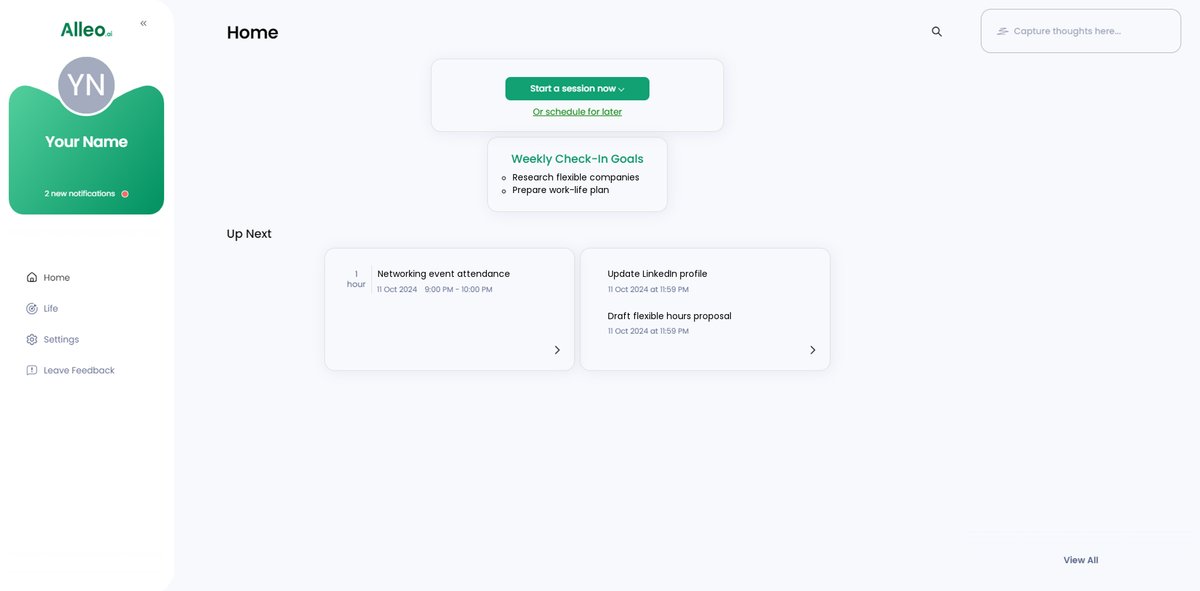
After your coaching session, log into the Alleo app to view and manage the work-life balance goals you discussed, which will be displayed on your home page for easy access and tracking.
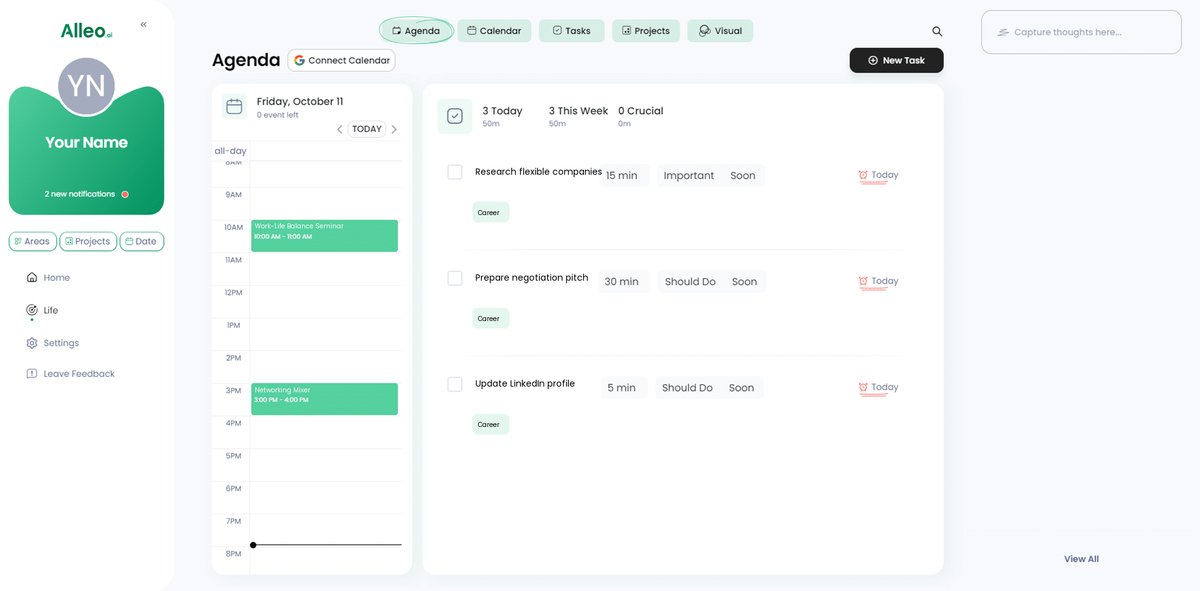
Step 6: Adding events to your calendar or app
Use the Alleo app’s calendar and task features to schedule and track your work-life balance activities, such as networking events, informational interviews, or dedicated time for building your personal brand as you pursue a more balanced career.
Achieving Work-Life Balance as a Corporate Executive
Balancing professional and personal life is challenging for executives, but work-life balance for executives is possible.
We’ve discussed seeking flexible work arrangements for leaders, networking, negotiating hours, and considering consulting roles. These strategies can help you find roles that support a balanced lifestyle and promote executive time management.
Remember, you’re not alone in this journey towards C-suite work-life integration.
Take proactive steps to improve your work-life balance and prevent executive burnout.
Consider using Alleo to set goals and create action plans tailored to your needs for balancing career and personal life at the top.
With the right strategies and support, you can achieve both a fulfilling career and a happy personal life, even in high-level job sharing opportunities.
Start your journey toward work-life balance for executives today with Alleo.