Master Strategies for Closing Career Skill Gaps: Your Expert Guide to Success
Are you feeling overwhelmed by the skill gaps you’re facing in your new role? Closing career skill gaps is essential for professional growth and success.
As a life coach, I’ve helped many professionals navigate these challenges. In my experience, addressing these gaps through career development planning is crucial for success.
In this article, you’ll discover effective strategies for closing career skill gaps. We’ll cover self-assessment tools, skill identification, development plans, mentorship programs, and online courses for career advancement.
Ready to transform your career through continuous learning methods and upskilling techniques? Let’s dive in.

Understanding the Challenges of Skill Gaps in Career Transitions
Transitioning to a new role can be both exciting and daunting. Many professionals face unexpected skill gaps that hinder their progress in closing career skill gaps.
These gaps can make you feel inadequate and frustrated, impacting your career development planning.
In my experience, people often find these gaps to be professionally and emotionally taxing. You might struggle with confidence or fear failure, highlighting the need for effective upskilling techniques.
It’s crucial to identify and address these gaps promptly using skill assessment tools.
Consider the impact on your performance and career growth. Addressing skill gaps is not just about meeting job requirements; it’s about thriving in your new role through professional growth strategies.
Let’s explore how to tackle this head-on, utilizing continuous learning methods and industry-specific training.
Your Roadmap to Closing Career Skill Gaps
Overcoming this challenge of closing career skill gaps requires a few key steps. Here are the main areas to focus on to make progress in your professional growth strategy:
- Perform a self-assessment of current skills: Evaluate your current skills and competencies using skill assessment tools to understand where you stand.
- Identify key skills required for target role: Research job descriptions and talk to professionals to pinpoint necessary in-demand skills for your career development planning.
- Create a personalized skill development plan: Set SMART goals and outline actionable steps for your skill growth, incorporating upskilling techniques.
- Seek mentorship in areas needing improvement: Find a mentor through mentorship programs to guide you through your skill development journey.
- Utilize online learning platforms for upskilling: Enroll in online courses for career advancement that align with the skills you need to acquire, embracing continuous learning methods.
Let’s dive in to explore these strategies for closing career skill gaps!
1: Perform a self-assessment of current skills
Conducting a self-assessment of your current skills is crucial in identifying areas for growth and ensuring a smooth career transition when closing career skill gaps.
Actionable Steps:
- List your current skills and competencies: Create a comprehensive inventory of your skills and experiences for career development planning.
- Use self-assessment tools or frameworks: Evaluate your proficiency levels using skill assessment tools like the Skills Matrix or SWOT analysis.
- Reflect on past performance reviews and feedback: Analyze feedback from previous roles to identify strengths and areas for improvement in your professional growth strategies.
Explanation: These steps help you gain a clear understanding of your existing skill set, which is vital for identifying gaps and planning your development when closing career skill gaps.
Reflecting on past reviews provides insights into your performance and areas needing attention. This structured approach aligns with current best practices in career development and personal growth through continuous learning methods.
Key benefits of self-assessment include:
- Increased self-awareness
- Clear direction for improvement and identifying in-demand skills
- Enhanced career planning and upskilling techniques
Taking this initial step sets a strong foundation for your skill development journey and closing career skill gaps.
2: Identify key skills required for target role
Identifying key skills required for your target role is essential for closing career skill gaps and ensuring a smooth transition.
Actionable Steps:
- Research job descriptions and industry standards: Examine job postings and professional guidelines to determine the required skills for your target role, focusing on industry-specific training needs.
- Conduct informational interviews: Speak with professionals currently working in your desired role to gain insights and firsthand knowledge about necessary skills, which can be a valuable networking for skill acquisition opportunity.
- Compare current skills with required skills: Create a list comparing your existing skills to those needed for the role to identify any gaps, using skill assessment tools for accurate evaluation.
Explanation: These steps are crucial to understanding what is required to succeed in your new role and for closing career skill gaps effectively.
By researching job descriptions and talking to industry professionals, you gain valuable insights into the expectations and standards. This allows you to focus your efforts on developing the most relevant skills and identifying in-demand skills.
Reflecting on your current skill set and identifying gaps ensures that your career development planning is targeted and effective. For further insights, check out this guide on career transitions.
Understanding these requirements sets you up for the next step in creating a personalized skill development plan, which may include continuous learning methods and online courses for career advancement.

3: Create a personalized skill development plan
Creating a personalized skill development plan is crucial to systematically close your career skill gaps and enhance your professional growth strategies.
Actionable Steps:
- Set SMART goals: Define your skill development goals to be specific, measurable, achievable, relevant, and time-bound, focusing on closing career skill gaps.
- Break down goals into actionable steps: Divide each goal into smaller tasks and set milestones to track your progress in upskilling.
- Allocate time and resources: Dedicate specific time slots and resources for each skill development activity to ensure consistent progress in your career development planning.
Explanation: These steps matter because they provide a structured approach to growing your skills, which is essential for career success and closing career skill gaps.
Setting SMART goals and breaking them down into smaller tasks helps you stay focused and track your achievements. Allocating time and resources ensures that you can consistently work on your development plan, incorporating continuous learning methods.
For more insights on effective goal setting, check out this guide on SMART goals.
Key components of an effective skill development plan:
- Clear objectives and timelines for closing career skill gaps
- Diverse learning methods, including online courses for career advancement
- Regular progress reviews using skill assessment tools
By following these steps, you set yourself up for continuous improvement and career growth, effectively closing career skill gaps through targeted upskilling techniques.
4: Seek mentorship in areas needing improvement
Seeking mentorship is crucial for closing career skill gaps and achieving career success.
Actionable Steps:
- Identify potential mentors: Look for experienced professionals within or outside your organization who have the skills you need to develop for your career development planning.
- Reach out and establish a mentoring relationship: Contact your chosen mentor and discuss your professional growth strategies and how they can assist you in upskilling.
- Regularly meet with your mentor: Schedule consistent meetings to review your progress, gain feedback, and address challenges in your continuous learning methods.
Explanation: These steps are significant because a mentor can provide guidance, support, and valuable insights tailored to your needs for closing career skill gaps.
Regular interaction with a mentor helps you stay on track and overcome obstacles in your career development planning. For more on the benefits of mentorship programs, check out this article on effective mentoring relationships.
Having a mentor accelerates your growth and ensures you are on the right path for closing career skill gaps and advancing your professional development.
5: Utilize online learning platforms for upskilling
In today’s digital age, online learning platforms are essential for closing career skill gaps and fostering professional growth strategies.
Actionable Steps:
- Explore reputable online learning platforms: Research platforms like Coursera, edX, or LinkedIn Learning to find courses relevant to your target skills and industry-specific training needs.
- Enroll in comprehensive courses: Choose courses that offer both theoretical knowledge and practical applications to ensure thorough learning and continuous learning methods.
- Apply new skills through projects: Implement what you’ve learned in real-world scenarios by working on projects or tasks related to your new role, enhancing your career development planning.
Explanation: These steps are crucial because they provide flexible and accessible ways to develop necessary skills for your new role. Online courses for career advancement often offer up-to-date content and practical exercises, which are vital for effective learning and closing career skill gaps.
By applying new skills through projects, you ensure that your learning is not only theoretical but also practical. For more on how online learning can benefit your career, explore this resource on digital learning trends.
Benefits of online learning for skill development:
- Flexibility in learning schedule
- Access to expert instructors and mentorship programs
- Opportunity for self-paced learning and identifying in-demand skills
Taking advantage of online learning platforms can significantly accelerate your skill development process and aid in closing career skill gaps through effective upskilling techniques.

Partner with Alleo to Close Your Career Skill Gaps
We’ve explored the challenges of closing career skill gaps, their impact, and steps to overcome them. Did you know you can work directly with Alleo to make this journey easier and faster for closing career skill gaps?
Setting Up with Alleo:
First, sign up for a free 14-day trial with no credit card required. Create a personalized career development plan tailored to your specific skill gaps and career goals.
Alleo’s AI coach will guide you through each step of closing career skill gaps, offering full coaching sessions just like a human coach, focusing on professional growth strategies.
Tailored Coaching Support:
The AI coach provides affordable, customized support to help you master essential skills through upskilling techniques. It tracks your progress and keeps you accountable with timely follow-ups via text and push notifications, acting as one of the most effective skill assessment tools.
Any changes in your goals or schedule? Alleo adjusts to keep you on track with continuous learning methods.
Ready to get started for free? Let me show you how to begin closing career skill gaps!
Step 1: Logging in or Creating an Account
To begin your journey in closing career skill gaps with Alleo, Log in to your account or create a new one to access personalized AI coaching and development plans tailored to your needs.

Step 2: Choose Your Focus Area
Select “Setting and achieving personal or professional goals” to align with your career skill gaps identified in the article. This option will help you create targeted objectives to overcome challenges and thrive in your new role.

Step 3: Selecting the life area you want to focus on
Choose “Career” as your focus area to directly address the skill gaps you’re experiencing in your new role, allowing Alleo’s AI coach to provide tailored guidance for professional development and career advancement.

Step 4: Starting a coaching session
Begin your journey with Alleo by scheduling an intake session, where you’ll discuss your career goals and skill gaps to create a personalized development plan with your AI coach.

Step 5: Viewing and managing goals after the session
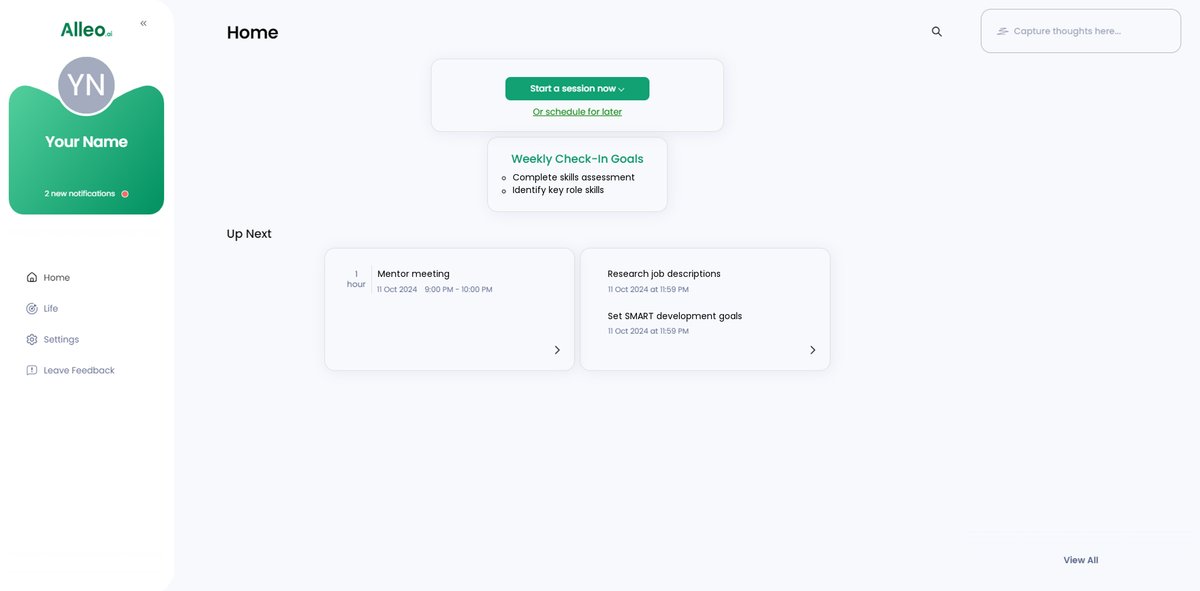
After your coaching session, easily track your progress by checking the goals you discussed, which will be displayed on the home page of the Alleo app for convenient viewing and management.
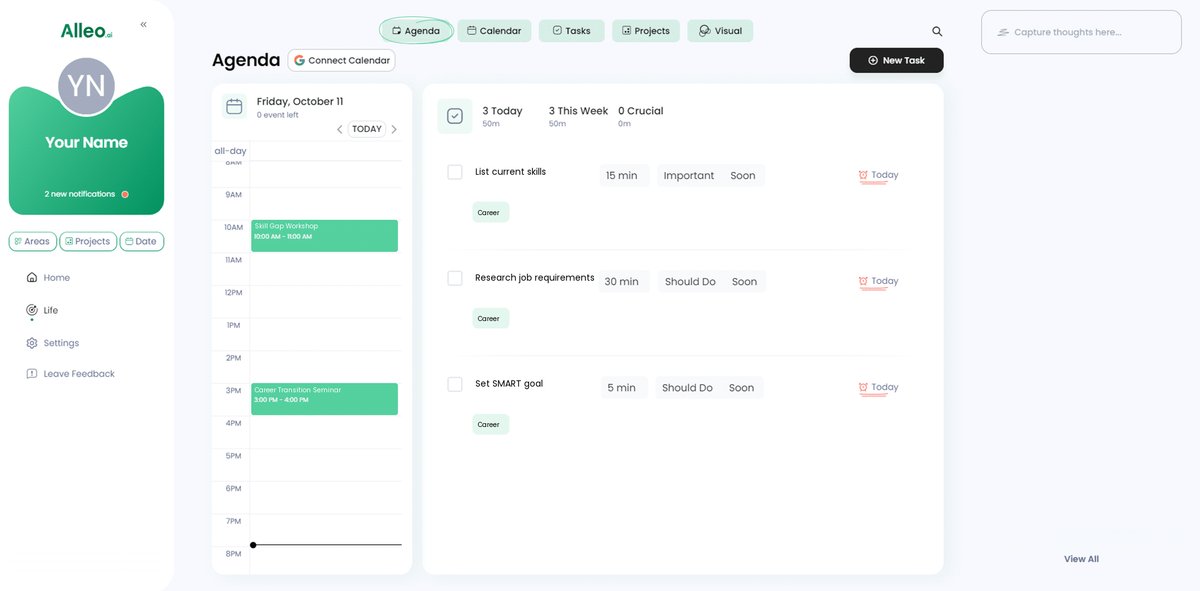
Step 6: Adding events to your calendar or app
Use Alleo’s calendar and task features to schedule your skill development activities and track your progress, ensuring you stay on top of your personalized plan to close career skill gaps.
Wrapping Up: Your Journey to Closing Career Skill Gaps
We’ve covered a lot in this article. You now have a roadmap to closing career skill gaps and advancing your professional growth.
I know it can be overwhelming. But remember, every step you take brings you closer to success in your career development planning.
Start with a self-assessment using skill assessment tools. Identify the key skills for your new role and in-demand skills in your industry.
Create a development plan, seek mentorship programs, and utilize online courses for career advancement.
Don’t forget, Alleo can support you through this process of closing career skill gaps. With personalized plans and an AI coach, you’re never alone on this journey of continuous learning.
So, take the first step today in your upskilling techniques. Your career growth is within reach through these professional growth strategies.
Try Alleo for free and watch your skills soar as you focus on closing career skill gaps.