7 Proven Strategies for Educators to Prevent Burnout and Manage Stress
Are you feeling overwhelmed by the constant demands of teaching and struggling to find work-life balance in education?
As a life coach, I’ve helped many educators navigate these challenges and develop effective strategies for preventing teacher burnout. I’ve seen firsthand how burnout can impact both personal and professional lives, highlighting the importance of educator mental health support.
In this article, you will discover effective strategies to prevent teacher burnout and manage classroom stress. From setting clear boundaries to practicing mindfulness techniques for teachers, these actionable steps can transform your daily routine and enhance your time management skills.
Ready to reclaim your energy and passion for teaching while improving your professional development for stress reduction?
Let’s dive in and explore these preventing teacher burnout strategies.

The Growing Concern of Educator Burnout
Burnout among educators is alarmingly common. Many teachers face overwhelming workloads and lack sufficient support, leading to chronic stress. Preventing teacher burnout strategies are crucial for addressing this issue.
This not only affects their professional lives but also spills over into their personal well-being. Work-life balance in education is often challenging to maintain.
The impact of burnout is severe. Educators often experience emotional exhaustion and physical symptoms. Classroom stress management techniques are essential for mitigating these effects.
I frequently see clients struggle with maintaining enthusiasm and energy for teaching. Teacher self-care techniques can help combat this issue.
It’s more than just feeling tired. Burnout can lead to reduced job satisfaction and even drive teachers to leave the profession. Time management for teachers is crucial for preventing burnout.
We need to address this issue urgently. Educator mental health support should be a priority in schools.
Educator burnout is a pressing issue that requires immediate attention. Implementing preventing teacher burnout strategies is essential for the well-being of our educators.

Effective Strategies to Prevent Teacher Burnout
To tackle educator burnout and implement preventing teacher burnout strategies, focus on these key actions:
- Establish clear work-life boundaries: Set specific work hours and avoid working beyond them to maintain work-life balance in education.
- Practice mindfulness and meditation daily: Incorporate short meditation sessions into your routine as part of teacher self-care techniques.
- Implement self-care routines and activities: Schedule regular self-care activities and prioritize healthy habits for educator mental health support.
- Seek support from colleagues and mentors: Join professional communities and find mentors for guidance, enhancing collaborative teaching strategies.
- Create a supportive classroom environment: Foster open communication and integrate social-emotional learning for classroom stress management.
- Engage in regular physical exercise: Incorporate exercise into your daily routine as part of preventing teacher burnout strategies.
- Utilize emotion regulation strategies: Practice deep breathing and keep a journal to manage stress, improving time management for teachers.
Let’s dive in!
1: Establish clear work-life boundaries
Maintaining clear work-life boundaries is crucial for preventing teacher burnout and managing classroom stress.
Actionable Steps:
- Set specific work hours and stick to them.
- Commit to not working beyond these hours to maintain a balance, a key teacher self-care technique.
- Designate a workspace at home strictly for work.
- Create an organized area for school-related tasks to separate work from home life, improving work-life balance in education.
- Communicate boundaries with colleagues and family.
- Inform your team and family about your work hours to avoid interruptions, an essential part of setting boundaries in education careers.
Explanation: Establishing clear work-life boundaries helps maintain a healthy balance between personal and professional life. This separation can reduce stress and prevent teacher burnout, supporting educator mental health.
According to the University of St. Augustine for Health Sciences, setting boundaries is essential for managing work-related stress. Clear boundaries ensure that you have time to recharge and maintain your well-being, which is crucial for preventing teacher burnout.
By implementing these steps, you can create a more manageable and fulfilling work-life balance, effectively preventing teacher burnout and enhancing your overall well-being in the classroom.
2: Practice mindfulness and meditation daily
Practicing mindfulness and meditation daily can significantly reduce stress and prevent teacher burnout.
Actionable Steps:
- Start each day with a 5-minute meditation session.
- Use apps like Headspace or Calm for guided meditations, enhancing teacher self-care techniques.
- Incorporate mindfulness breaks into your daily schedule.
- Take short, mindful pauses between classes to reset, improving work-life balance in education.
- Join a mindfulness group or workshop.
- Participate in school wellness programs offering meditation sessions for educator mental health support.
Explanation: Practicing mindfulness and meditation can help you manage classroom stress and enhance your overall well-being as a teacher.
According to the University of St. Augustine for Health Sciences, incorporating mindfulness into your daily routine can improve focus and reduce burnout, which is crucial for preventing teacher burnout.
These practices allow you to stay present and maintain a calm mindset throughout the day, supporting time management for teachers.
Key benefits of mindfulness and meditation include:
- Reduced stress and anxiety
- Improved focus and concentration
- Enhanced emotional regulation
By integrating these steps, you can create a more balanced and stress-free work environment, effectively preventing teacher burnout strategies.

3: Implement self-care routines and activities
Implementing self-care routines is vital in managing stress and preventing teacher burnout for educators.
Actionable Steps:
- Schedule regular self-care activities.
- Block out time each week for hobbies or relaxation, focusing on work-life balance in education.
- Prioritize sleep and healthy eating.
- Create a bedtime routine and meal prep for balanced nutrition as part of teacher self-care techniques.
- Treat yourself to occasional pampering.
- Plan a monthly spa day or a night out with friends to support educator mental health.
Explanation: Incorporating self-care routines ensures you maintain a healthy work-life balance and is crucial for preventing teacher burnout.
According to the AFA Education Blog, self-care is crucial for managing stress and preventing burnout.
Regular self-care, including mindfulness practices for teachers, can help you recharge and stay motivated in your teaching career.
Taking these steps will help you sustain your energy and passion for teaching while implementing effective classroom stress management strategies.
4: Seek support from colleagues and mentors
Building a support network among colleagues and mentors can significantly help in managing stress and preventing teacher burnout. This strategy is crucial for effective classroom stress management.
Actionable Steps:
- Join a professional learning community (PLC).
- Engage with peers to share strategies and support each other, enhancing collaborative teaching strategies.
- Find a mentor for guidance and advice.
- Connect with experienced educators for one-on-one mentorship, focusing on work-life balance in education.
- Participate in staff wellness programs.
- Attend workshops and seminars focused on educator mental health support and mindfulness practices for teachers.
Explanation: Seeking support from colleagues and mentors is essential for reducing feelings of isolation and stress, contributing to preventing teacher burnout strategies.
According to the Faculty Focus, institutional support and strategies are crucial in addressing burnout among educators.
By building a supportive network, you can gain valuable insights and encouragement to manage stress effectively, improving time management for teachers.
These steps will help you create a strong support system, enhancing your resilience and well-being, while promoting teacher self-care techniques and creating a positive school environment.

5: Create a supportive classroom environment
Creating a supportive classroom environment is essential for reducing stress and preventing teacher burnout among educators.
Actionable Steps:
- Foster open communication with students.
- Encourage students to share their thoughts and concerns regularly, promoting a positive school environment.
- Implement classroom stress management techniques that promote respect and cooperation.
- Use positive reinforcement and set clear expectations for behavior.
- Integrate social-emotional learning (SEL) into your curriculum as one of the preventing teacher burnout strategies.
- Teach students skills in self-awareness, self-management, and relationship-building.
Explanation: Creating a supportive classroom environment can significantly reduce stress and prevent burnout, enhancing educator mental health support.
According to the Massachusetts Department of Elementary and Secondary Education, integrating social-emotional learning (SEL) helps develop competencies in self-awareness, self-management, and relationship skills.
These practices not only benefit students but also create a more positive and manageable teaching environment for educators, supporting work-life balance in education.
Key elements of a supportive classroom environment include:
- Mutual respect between teacher and students
- Clear expectations and consistent routines
- Opportunities for student voice and choice, fostering collaborative teaching strategies
By implementing these preventing teacher burnout strategies, you can foster a classroom atmosphere that supports both student and teacher well-being.
6: Engage in regular physical exercise
Engaging in regular physical exercise is crucial for managing stress and preventing teacher burnout.
Actionable Steps:
- Take brisk walks during breaks.
- Use lunchtime or short breaks to walk and clear your mind, enhancing work-life balance in education.
- Join a fitness class or sports team.
- Participate in activities like yoga, Zumba, or a local sports league as part of teacher self-care techniques.
- Set personal fitness goals.
- Use fitness apps to track your progress and celebrate milestones, supporting educator mental health.
Explanation: Regular physical exercise significantly reduces stress and boosts overall well-being, contributing to classroom stress management.
According to the University of St. Augustine for Health Sciences, incorporating exercise into your routine can improve mental health and prevent burnout, aligning with strategies for preventing teacher burnout.
These activities help you stay energized and focused, making it easier to manage daily teaching demands and implement time management for teachers.
By integrating these steps into your routine, you’ll enhance your physical health and resilience against burnout, supporting professional development for stress reduction in education careers.
7: Utilize emotion regulation strategies
Utilizing emotion regulation strategies is essential for managing stress and preventing teacher burnout. These strategies are crucial for maintaining work-life balance in education.
Actionable Steps:
- Practice deep breathing exercises during stressful moments.
- Use techniques like box breathing to calm your mind, a key classroom stress management tool.
- Keep a journal to reflect on your emotions and triggers.
- Write down your thoughts and feelings daily to gain insights, supporting educator mental health.
- Develop a personal stress management plan.
- Identify your stressors and create strategies to manage them effectively, incorporating time management for teachers.
Explanation: Utilizing emotion regulation strategies helps you stay composed and focused. According to the CDC, these techniques are crucial in high-stress work environments.
By managing your emotions effectively, you can reduce stress and improve your overall well-being, which is key to preventing teacher burnout.
Effective emotion regulation techniques include:
- Cognitive reframing of stressful situations
- Practicing mindfulness in daily activities, a vital teacher self-care technique
- Seeking social support when needed, fostering a positive school environment
Implementing these strategies will empower you to handle stress better and maintain a positive outlook, essential for preventing teacher burnout.
Partner with Alleo to Manage Stress and Prevent Burnout
We’ve explored strategies to prevent teacher burnout and manage stress in the classroom. But did you know you can work directly with Alleo to make this journey easier for educators seeking work-life balance in education?
Set up an account and create a personalized plan with Alleo for preventing teacher burnout. Our AI coach offers tailored support for educator mental health, just like a human coach, focusing on teacher self-care techniques and time management for teachers.
Alleo follows up on your progress in implementing classroom stress management strategies, handles changes, and keeps you accountable via text and push notifications, supporting your professional development for stress reduction.
Ready to get started for free and learn more about preventing teacher burnout strategies? Let me show you how!
Step 1: Log In or Create Your Account
To begin your journey towards managing stress and preventing burnout, Log in to your account or create a new one to access Alleo’s personalized AI coaching support tailored for educators.

Step 2: Choose Your Focus – Improving Overall Well-being and Life Satisfaction
Select “Improving overall well-being and life satisfaction” as your goal to address the root causes of educator burnout and create a more balanced, fulfilling teaching career.

Step 3: Select “Career” as Your Focus Area
Choose “Career” as your focus area in Alleo to address educator burnout directly. By concentrating on your professional life, you’ll receive tailored strategies to manage work-related stress, set healthy boundaries, and reignite your passion for teaching, ultimately preventing burnout and enhancing your overall well-being.

Step 4: Starting a coaching session
Begin your journey with Alleo by scheduling an intake session, where you’ll discuss your goals and create a personalized plan to manage stress and prevent burnout in your teaching career.

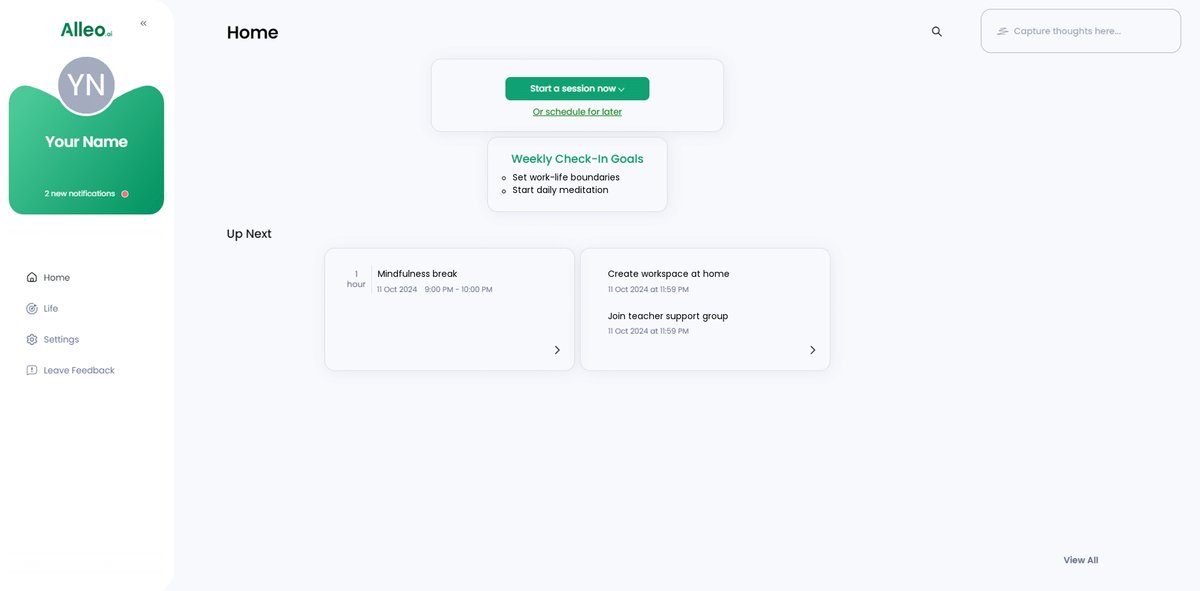
Step 5: Viewing and Managing Goals After the Session
After your coaching session, check the app’s home page to review and manage the goals you discussed, helping you stay on track with your burnout prevention strategies.
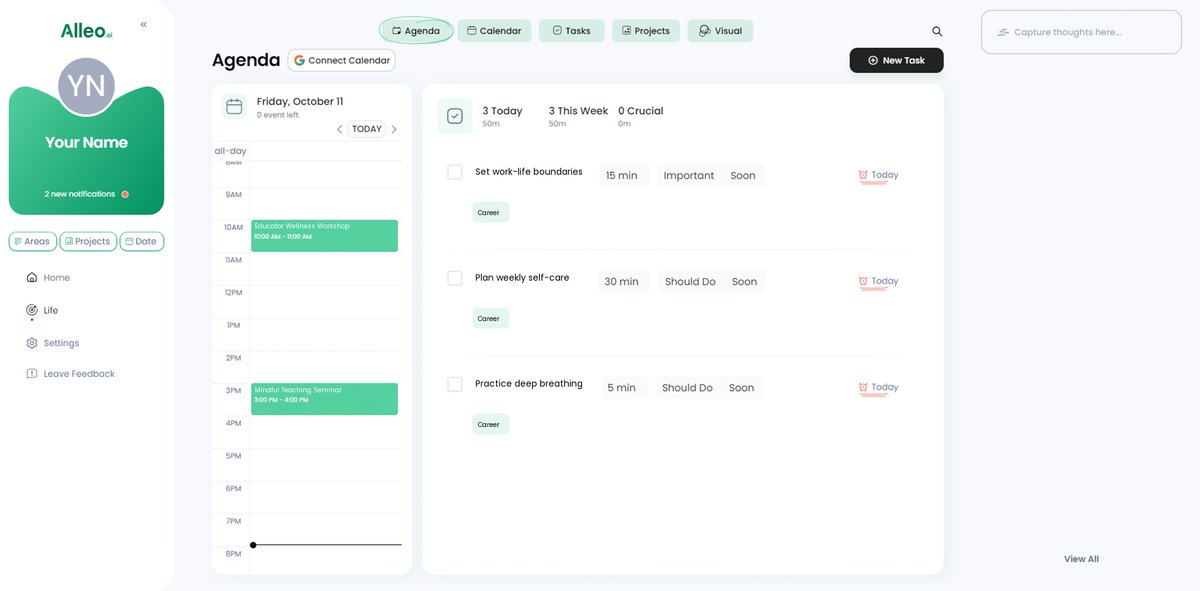
Step 6: Adding events to your calendar or app
Use Alleo’s calendar and task features to track your progress in implementing stress management strategies, such as scheduling regular exercise, meditation sessions, or self-care activities, helping you stay accountable and maintain a healthy work-life balance.
Bringing it All Together: Your Path to a Balanced Teaching Career
We’ve explored various strategies to prevent teacher burnout and manage stress as an educator. These steps can transform your teaching experience and support your professional development for stress reduction.
Remember, setting clear work-life boundaries in education, practicing mindfulness techniques for teachers, and prioritizing teacher self-care are crucial. Seek educator mental health support, create a positive school environment, exercise regularly, and use emotion regulation strategies for effective classroom stress management.
I understand how challenging it can be to maintain work-life balance in education. But small changes in time management for teachers can make a huge difference.
You don’t have to implement these preventing teacher burnout strategies alone. Alleo is here to help you every step of the way with collaborative teaching strategies.
Empower yourself to reclaim your energy and passion for teaching. Create a free account with Alleo and start your journey towards setting boundaries in education careers today.