5 Proven Classroom Management Strategies for New Charter School Teachers: Transform Your Teaching Experience
Ever found yourself overwhelmed by a class full of energetic students, unsure of how to maintain control? Classroom management for new teachers can be particularly challenging.
As an experienced life coach, I’ve guided many educators through the challenging early years of teaching, especially in charter school settings.
In this article, I’ll share practical strategies to help you manage your classroom effectively. You’ll learn how to set clear expectations, build positive relationships, and track student behavior. We’ll explore effective behavior management techniques and positive reinforcement strategies for educators to create a positive learning environment.
Let’s dive in and discover how to enhance student engagement in charter classrooms.

Understanding the Classroom Management Crisis
It’s no secret that new teachers in charter schools face immense classroom management challenges. Many clients report feeling overwhelmed and anxious due to disruptive behaviors and lack of support in charter school teaching challenges.
In my experience, this issue often leads to burnout, which is a real concern. Without effective behavior management techniques, teachers struggle to maintain control, impacting both their well-being and students’ learning in charter classrooms.
Several clients initially struggle with balancing discipline and fostering a positive learning environment. This struggle can make classroom management for new teachers feel like an uphill battle.
Addressing these challenges is crucial for creating a thriving classroom. Let’s explore actionable solutions to these common problems in charter school classroom organization.
Effective Strategies for Classroom Management in Charter Schools
Overcoming this challenge requires a few key steps, especially for new teachers implementing classroom management. Here are the main areas to focus on to make progress in charter school teaching challenges.
- Establish Clear Expectations and Consequences: Develop and communicate a comprehensive classroom management plan for new teachers, incorporating effective behavior management techniques.
- Implement Consistent Routines and Procedures: Design and practice daily schedules with your students to enhance student engagement in charter classrooms.
- Build Positive Teacher-Student Relationships: Spend time getting to know each student and incorporate team-building activities, focusing on building rapport with charter school students.
- Use Private Behavior Tracking System: Set up a system to track student behavior and progress, utilizing positive reinforcement strategies for educators.
- Teach and Practice Self-Regulation Skills: Introduce techniques like mindfulness and create a calm corner in your classroom, contributing to a positive learning environment.
Let’s dive into these classroom management for new teachers strategies!
1: Establish clear expectations and consequences
Setting clear expectations and consequences is vital for effective classroom management for new teachers, especially those in charter schools.
Actionable Steps:
- Develop a classroom management plan outlining expected behaviors and consequences.
- Hold a class meeting to define these expectations together, fostering student engagement in charter classrooms.
- Create visual aids, like posters, to reinforce rules and consequences.
- Display these prominently in the classroom, enhancing charter school classroom organization.
- Communicate expectations and consequences clearly to parents.
- Send a letter home and discuss during parent-teacher conferences, addressing charter school teaching challenges.
Explanation:
Establishing clear expectations and consequences helps create a structured environment where students understand what is required of them. This approach lays a foundation for positive behavior and minimizes disruptions, supporting effective behavior management techniques.
According to California Department of Education, sending students home does not address the root cause of their behavior. Instead, setting clear rules and consistent consequences can foster a more disciplined and productive classroom, essential for classroom management for new teachers.
Key benefits of clear expectations include:
- Reduced classroom disruptions
- Improved student focus and engagement
- Enhanced sense of safety and structure, creating a positive learning environment
Implementing these strategies can significantly improve classroom dynamics and support time management skills for new teachers.

2: Implement consistent routines and procedures
Implementing consistent routines and procedures is essential for maintaining a structured classroom environment, particularly when it comes to classroom management for new teachers.
Actionable Steps:
- Establish a daily schedule with consistent routines for transitions, activities, and breaks.
- Review and practice these routines with students regularly to enhance student engagement in charter classrooms.
- Utilize visual schedules and timers to help students understand and follow routines.
- Incorporate these tools in both whole-class and individual settings, supporting effective behavior management techniques.
- Create morning and end-of-day procedures to structure the school day.
- Implement activities such as morning meetings and reflection time, which are crucial for building rapport with charter school students.
Explanation:
Consistent routines help students know what to expect, reducing anxiety and increasing engagement. This structure allows for more effective learning and smoother transitions, addressing some of the charter school teaching challenges.
According to the Scholastic Blog, reducing transition time can significantly boost student performance. By maintaining a predictable environment, you create a positive learning environment where students can thrive.
These steps will set the stage for a productive and harmonious classroom, supporting classroom management for new teachers in charter school settings.

3: Build positive teacher-student relationships
Building strong teacher-student relationships is crucial for creating a positive and productive classroom environment, especially when it comes to classroom management for new teachers.
Actionable Steps:
- Conduct one-on-one conversations with students to learn about their interests and strengths.
- Use this information to tailor lessons and activities, incorporating differentiated instruction in charter schools.
- Implement a “student of the week” program to celebrate individual achievements.
- Rotate recognition weekly to ensure every student is highlighted, using positive reinforcement strategies for educators.
- Organize team-building activities and cooperative learning projects.
- Plan group tasks that promote collaboration and respect, fostering collaborative learning in charter settings.
Explanation:
Establishing positive teacher-student relationships fosters mutual respect and trust, which can lead to better classroom behavior and engagement. This is a key aspect of effective behavior management techniques.
When students feel valued, they are more likely to participate and adhere to classroom expectations, addressing charter school teaching challenges.
According to the Coordinator of School Culture, building strong relationships is key to maintaining a supportive and inclusive classroom environment.
Effective relationship-building strategies for classroom management for new teachers include:
- Active listening during student interactions
- Showing genuine interest in students’ lives, building rapport with charter school students
- Providing specific, positive feedback regularly
These steps can help you create a nurturing space where students are motivated to succeed, enhancing student engagement in charter classrooms.

4: Use private behavior tracking system
Utilizing a private behavior tracking system is key for monitoring and improving student behavior in your classroom, an essential aspect of classroom management for new teachers.
Actionable Steps:
- Set up a private clipboard or digital system to document student behavior and progress.
- Record both positive behaviors and areas needing improvement, implementing effective behavior management techniques.
- Schedule regular check-ins with students to discuss their behavior and set goals.
- Use these meetings to provide feedback and support, building rapport with charter school students.
- Communicate behavior tracking results with parents through regular updates.
- Develop a consistent method for sharing this information, such as weekly emails or a shared digital platform, addressing charter school teaching challenges.
Explanation:
Using a private behavior tracking system helps maintain an organized and structured approach to managing student behavior. This method allows you to provide timely feedback and support to students, ensuring they understand their progress and enhancing student engagement in charter classrooms.
According to the EdSource, consistent communication with parents also fosters a collaborative environment that supports student growth and is crucial for classroom management for new teachers.
Implementing these steps can lead to a more disciplined and productive classroom, creating a positive learning environment in charter school settings.
5: Teach and practice self-regulation skills
Teaching self-regulation skills is crucial for helping students manage their emotions and behaviors effectively, a key aspect of classroom management for new teachers.
Actionable Steps:
- Introduce self-regulation techniques like deep breathing and mindfulness.
- Practice these techniques together during designated class times, enhancing student engagement in charter classrooms.
- Create a “calm corner” in the classroom for students to practice self-regulation.
- Stock this area with tools like stress balls, coloring books, and noise-canceling headphones, addressing charter school teaching challenges.
- Implement a self-monitoring system where students can track their own behavior and emotions.
- Provide charts or journals for students to record their reflections, supporting effective behavior management techniques.
Explanation:
Teaching self-regulation skills empowers students to manage their own emotions, leading to a more harmonious classroom environment and creating a positive learning environment.
According to the Scholastic Blog, such techniques can significantly reduce disruptive behaviors and enhance student engagement.
By fostering self-regulation, you create a classroom where students can thrive both academically and emotionally, addressing classroom management for new teachers in charter settings.
Benefits of self-regulation in the classroom:
- Improved focus and attention during lessons
- Reduced conflicts between students, supporting positive reinforcement strategies for educators
- Enhanced emotional well-being and resilience, crucial for building rapport with charter school students
These steps will help you build a supportive and effective learning space, addressing classroom management for new teachers in charter schools.
Partner with Alleo for Effective Classroom Management
We’ve explored classroom management for new teachers and strategies. But did you know you can partner with Alleo to make this journey easier, especially when facing charter school teaching challenges?
Set up an account and create a personalized plan with Alleo’s AI coach. The coach provides tailored support for effective behavior management techniques, follows up on progress, and keeps you accountable via notifications. This can be particularly helpful for time management skills for new teachers and creating a positive learning environment.
Ready to get started for free? Let me show you how to enhance your classroom management for new teachers!
Step 1: Log In or Create Your Account
To start your journey towards better classroom management, log in to your Alleo account or create a new one if you haven’t already.

Step 2: Choose “Building better habits and routines”
Click on “Building better habits and routines” to address your classroom management challenges by establishing consistent procedures that will create a more structured and productive learning environment for your students.

Step 3: Select “Career” as Your Focus Area
Choose “Career” as your focus area to address classroom management challenges and enhance your teaching skills, aligning with the strategies discussed in the article for better classroom control and student engagement.

Step 4: Starting a coaching session
Begin your journey with Alleo by scheduling an initial intake session, where you’ll discuss your classroom management challenges and create a personalized plan to implement the strategies outlined in this article.

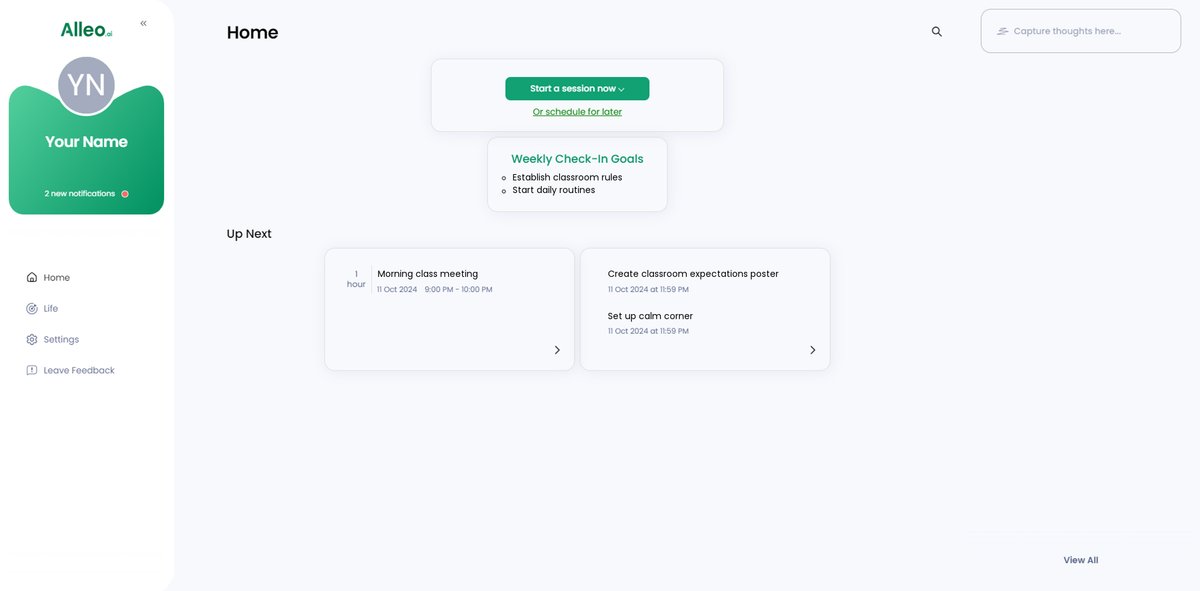
Step 5: Viewing and managing goals after the session
After your coaching session on classroom management strategies, check the Alleo app’s home page to review and track the goals you discussed, helping you stay focused on implementing effective techniques in your charter school classroom.
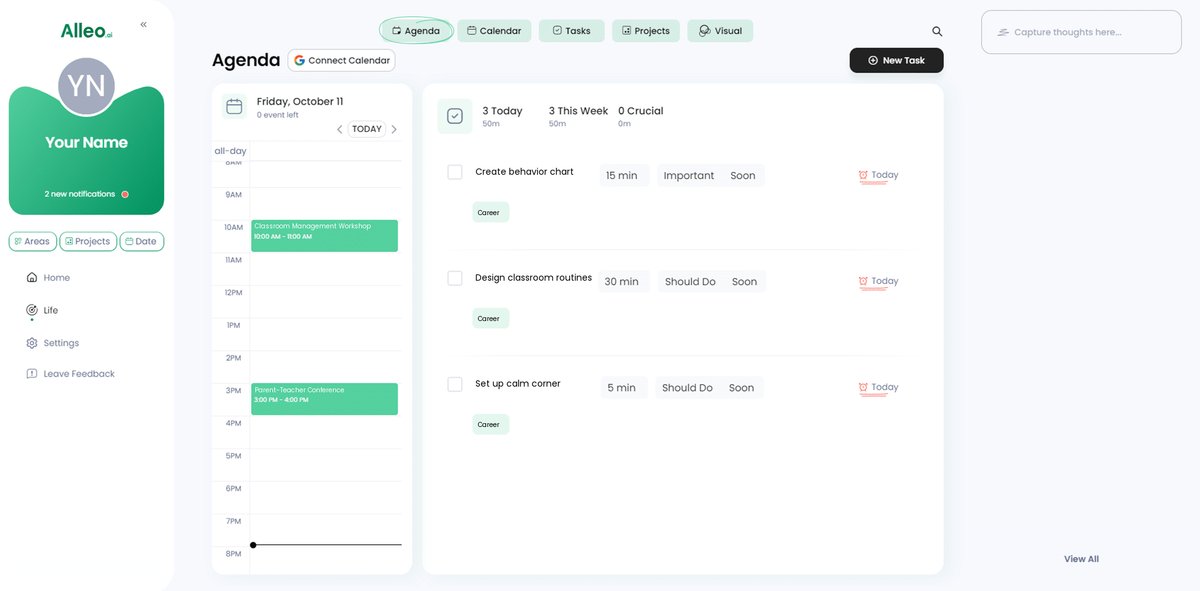
Step 6: Adding events to your calendar or app
Use the Alleo app’s calendar and task features to schedule and track your classroom management activities, helping you stay organized and monitor your progress in implementing the strategies discussed in this article.
Bringing It All Together: Your Path to Classroom Success
Classroom management for new teachers, especially in a charter school, isn’t easy. But with the right strategies, it’s totally achievable.
Remember to establish clear expectations and consistent routines. Build rapport with charter school students and use effective behavior management techniques. Creating a positive learning environment is key.
Teaching self-regulation skills can make a huge difference in student engagement in charter classrooms. These steps create a supportive and productive learning environment for new teachers.
Don’t forget, you’re not alone in facing charter school teaching challenges. Reach out for support when you need it.
Finally, consider using Alleo to help you stay organized and focused on classroom management for new teachers. It’s free to start and provides the guidance you need.
You got this. Let’s make your classroom a place where both you and your students thrive with effective classroom management for new teachers.