The Ultimate Guide: How Teachers Can Manage Disruptive Students Without Administrative Support
Imagine starting a lesson and being interrupted by a disruptive student—again. You’ve tried everything, but without administrative support, it feels like you’re alone in this battle of managing disruptive students without support.
As a life coach, I’ve helped many educators tackle this issue head-on. It’s a common challenge that can feel overwhelming, especially when dealing with disruptive students independently.
In this article, you’ll discover effective strategies for managing disruptive students without support. These classroom behavior management techniques will help create a more positive learning environment and reduce stress. We’ll explore teacher strategies for difficult students that you can implement on your own.
Let’s dive into these proactive classroom management approaches.

Understanding the Challenge of Classroom Disruptions
It’s tough when you lack administrative support for managing disruptive students. Many clients initially struggle with this issue, feeling isolated and overwhelmed when dealing with disruptive students independently.
In my experience, teachers often find that referrals to administration lead to minimal consequences. This leaves them feeling unsupported and frustrated, searching for effective discipline methods for teachers.
Lack of support can lead to teacher burnout and a negative classroom environment. You might feel like you’re constantly putting out fires rather than teaching effectively, making it challenging to implement proactive classroom management approaches.
This situation is painful. It impacts both your well-being and your students’ learning, highlighting the importance of teacher self-care and stress management.
Let’s explore how to tackle this challenge of managing disruptive students without support head-on.

Key Steps to Manage Disruptive Students Without Administrative Support
Overcoming the challenge of managing disruptive students without support requires a few key steps. Here are the main areas to focus on to make progress in classroom behavior management:
- Implement a Clear Classroom Behavior Contract: Create a behavior contract outlining rules and expectations, reviewed and signed by students and parents. This proactive classroom management approach helps in dealing with disruptive students independently.
- Use Non-Verbal Cues to Redirect Disruptive Students: Develop and practice a set of non-verbal signals for common disruptions. This effective discipline method for teachers can aid in de-escalation techniques for educators.
- Establish a Peer Mentoring System for Support: Pair disruptive students with responsible peers who can model good behavior. This strategy helps in building rapport with challenging students and enhances student engagement strategies.
Let’s dive into these teacher strategies for difficult students to create a positive learning environment!
1: Implement a clear classroom behavior contract
Creating a clear classroom behavior contract is crucial for setting expectations and maintaining order, especially when managing disruptive students without support.
Actionable Steps:
- Draft a detailed behavior contract outlining rules, procedures, and expectations. Ensure it is reviewed and signed by both students and parents as part of your classroom behavior management techniques.
- Regularly refer to the contract during class to reinforce expectations. Use weekly check-ins to address any breaches and discuss improvements, which is essential for dealing with disruptive students independently.
- Implement a reward system for students who adhere to the contract. Track behavior improvements and celebrate milestones as effective discipline methods for teachers.
Key elements of an effective behavior contract:
- Clear, specific rules and consequences
- Positive reinforcement strategies for creating a positive learning environment
- A system for tracking progress and student engagement
Explanation:
These steps matter because they establish clear expectations and consistent reinforcement, which are key to effective classroom management and managing disruptive students without support.
According to research, consistent routines create a positive learning environment. Regular check-ins and rewards help motivate students to follow the contract, leading to better behavior and less stress for you, which is crucial for teacher self-care and stress management.
With a solid behavior contract, you’re laying the foundation for a more harmonious classroom and proactive classroom management approaches. Now, let’s look at how non-verbal cues can further support this goal when managing disruptive students without support.

2: Use non-verbal cues to redirect disruptive students
Using non-verbal cues is crucial for managing classroom behavior without interrupting the flow of your lesson, especially when managing disruptive students without support.
Actionable Steps:
- Establish discreet signals for common disruptions. Teach and practice these signals with students until they become second nature, enhancing your classroom behavior management techniques.
- Implement visual aids like traffic lights or behavior charts to signal behavior expectations. Regularly update these visuals to maintain their relevance, supporting effective discipline methods for teachers.
- Utilize strategic positioning in the classroom to manage behavior. Stand near disruptive students to redirect their focus, a key strategy for dealing with disruptive students independently.
Explanation:
These steps matter because they provide a subtle way to manage behavior without disrupting the lesson. According to Edutopia, non-verbal cues can help maintain a positive learning environment by keeping students on track.
Regularly updating visual aids ensures they stay engaging and effective, contributing to proactive classroom management approaches.
Effective non-verbal cues for classroom management:
- Eye contact and facial expressions
- Hand signals or gestures
- Proximity control
With non-verbal cues in place, you can create a more harmonious classroom while managing disruptive students without support. Now, let’s explore how a peer mentoring system can further support this goal.
3: Establish a peer mentoring system for support
Establishing a peer mentoring system can significantly help in managing disruptive students without support by leveraging positive peer influence and implementing effective classroom behavior management techniques.
Actionable Steps:
- Identify potential peer mentors: Select responsible students who model good behavior and can assist peers, supporting teacher strategies for difficult students.
- Pair disruptive students with mentors: Assign disruptive students to peer mentors for specific activities or projects, aiding in dealing with disruptive students independently.
- Organize peer-led activities: Schedule weekly activities led by peer mentors that promote teamwork and positive behavior, enhancing student engagement strategies.
Explanation:
These steps are essential because they harness the power of peer influence to improve behavior. According to Edutopia, peer mentoring can foster a supportive classroom environment and reduce disruptions, aligning with proactive classroom management approaches.
Regularly assessing pairings ensures the system remains effective and beneficial for all students, contributing to creating a positive learning environment.
Benefits of peer mentoring in the classroom:
- Improved social skills and communication
- Increased self-esteem for both mentors and mentees
- Reduced disruptive behavior through positive role modeling, supporting effective discipline methods for teachers
With a peer mentoring system, you can create a more cohesive and supportive classroom community, aiding in managing disruptive students without support and building rapport with challenging students.
Partner with Alleo to Manage Classroom Disruptions
We’ve explored the challenges of managing disruptive students without administrative support. But did you know you can work directly with Alleo to make this journey of managing disruptive students without support easier and faster?
Imagine having a personal coach who helps you plan lessons and implement effective classroom behavior management techniques. With Alleo, you can set up a behavior contract, track non-verbal cue effectiveness, and organize peer mentoring schedules – all essential strategies for dealing with disruptive students independently.
Creating an account with Alleo is easy. You’ll start with a personalized plan tailored to your classroom needs, focusing on proactive classroom management approaches and student engagement strategies.
Alleo’s AI coach will follow up on your progress and handle any changes. You’ll receive text and push notifications to keep you accountable, supporting your teacher self-care and stress management while managing disruptive students without support.
Ready to get started for free? Let me show you how to enhance your skills in building rapport with challenging students and creating a positive learning environment!
Step 1: Log In or Create Your Account
To start managing classroom disruptions with Alleo’s AI coach, simply log in to your account or create a new one to begin your personalized journey toward a more harmonious classroom environment.

Step 2: Choose “Building better habits and routines”
Select “Building better habits and routines” from the goals list to focus on establishing consistent classroom management practices that will help you effectively handle disruptive students without relying on administrative support.

Step 3: Select “Career” as Your Focus Area
Choose “Career” as your focus area in Alleo to access tailored strategies for classroom management, helping you effectively handle disruptive students and improve your teaching experience without relying on administrative support.

Step 4: Starting a coaching session
Begin your journey with Alleo by scheduling an intake session, where you’ll discuss your classroom challenges and create a personalized plan to manage disruptive students effectively.

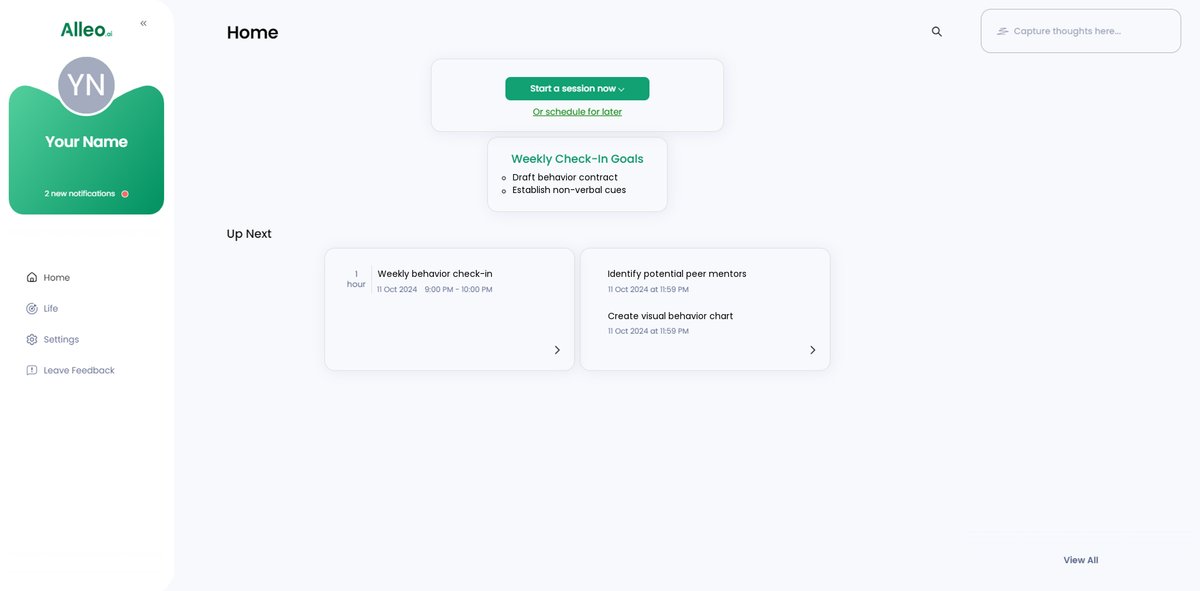
Step 5: Viewing and Managing Goals After the Session
After your coaching session, open the Alleo app to find your discussed goals conveniently displayed on the home page, allowing you to easily track and manage your progress in creating a more harmonious classroom environment.
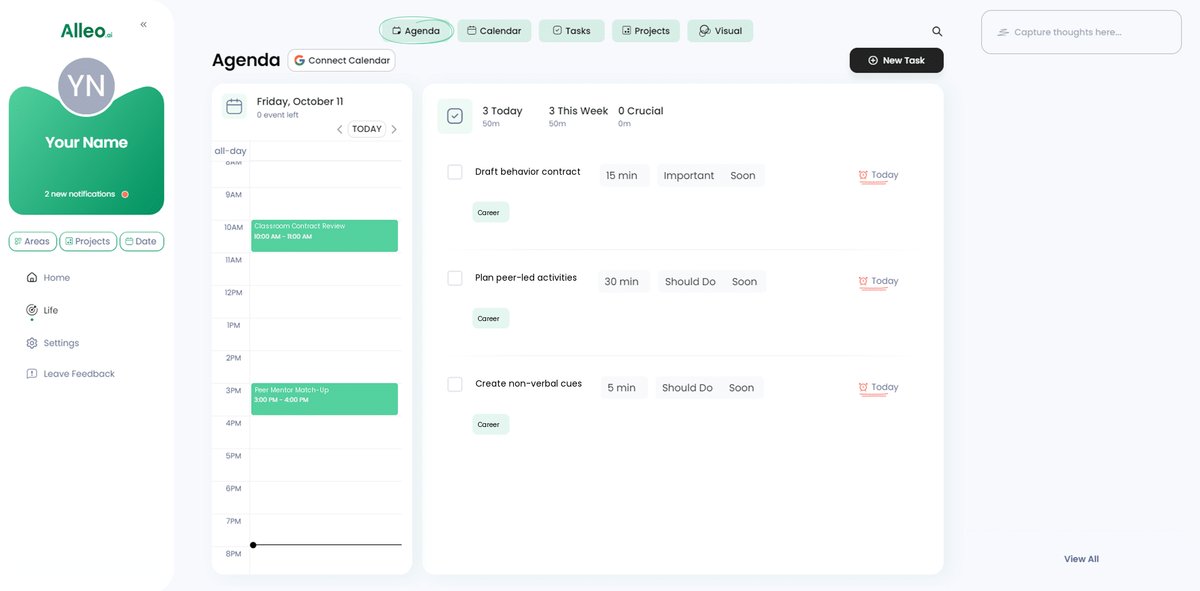
Step 6: Adding events to your calendar or app
Use the Alleo app’s calendar and task features to easily add and track events related to implementing your classroom management strategies, such as weekly behavior contract check-ins, peer mentoring sessions, or rewards for positive behavior.
Wrapping It All Up
Managing disruptive students without administrative support can be daunting, but you’re not alone. You’ve learned practical strategies for dealing with disruptive students independently to create a more harmonious classroom.
Remember, a clear behavior contract sets the foundation for expectations. Non-verbal cues help maintain order without disrupting your flow, serving as effective discipline methods for teachers.
Peer mentoring leverages positive peer influence for better behavior, promoting student engagement strategies.
These proactive classroom management approaches can transform your classroom environment, reducing stress and fostering better learning. You’ve got this.
For even more support in managing disruptive students without support, consider using Alleo. Our AI coach can help you implement these classroom behavior management techniques seamlessly.
Take control of your classroom today. Try Alleo for free and see the difference it makes in creating a positive learning environment.