Revolutionize Your Approach: 6 Powerful Strategies for Teaching ADHD Students Social Impact
Are you struggling to help ADHD students understand the impact of their actions on others? Developing ADHD social awareness strategies is crucial for effective classroom management.
As a life coach, I have guided many educators through these exact challenges. I’ve seen firsthand how powerful effective strategies can be, especially when it comes to social skills training for ADHD students.
In this article, you’ll discover actionable strategies to encourage self-reflection and social awareness in your ADHD students. We’ll cover techniques like:
- Self-talk exercises for emotional regulation
- Role-play scenarios to build empathy
- Collaborative problem-solving for peer interaction support
Let’s dive into these ADHD-friendly teaching methods and inclusive education strategies.

Understanding the Depth of the Challenge
It’s not just about academic performance; ADHD students often struggle to grasp the social impact of their actions. This gap in social awareness can lead to disruptive behaviors and strained relationships in the classroom, highlighting the need for effective ADHD social awareness strategies.
In my experience, educators frequently express frustration over the lack of effective ADHD classroom management techniques. This struggle can create a chaotic learning environment, affecting all students, including those who require social skills training for ADHD.
Moreover, teachers need tools and techniques that are both practical and impactful. Without these ADHD-friendly teaching methods, they feel ill-equipped to address these challenges, leading to stress and burnout.
Addressing these issues is crucial for a harmonious classroom. Let’s explore actionable strategies that can make a real difference in implementing inclusive education for ADHD students.
A Comprehensive Roadmap to Enhance Social Awareness in ADHD Students
Overcoming this challenge requires a few key steps. Here are the main areas to focus on to make progress with ADHD social awareness strategies.
- Teach self-talk to enhance social awareness: Daily self-talk exercises and visual aids improve self-awareness, supporting emotional regulation strategies for ADHD.
- Role-play scenarios to practice perspective-taking: Weekly sessions simulate common social situations, aiding social skills training for ADHD students.
- Use “Cringe to Clutch-o-Meter” for context: Interactive activities rate real-life scenarios for context awareness, enhancing peer interaction support for ADHD learners.
- Implement collaborative problem-solving model: Training sessions for educators and classroom implementation, promoting ADHD-friendly teaching methods.
- Create activities building social skills for all: Fun and inclusive school-wide initiatives fostering inclusive education for ADHD students.
- Encourage vocalization of internal dialogue: Classroom discussions and one-on-one coaching, supporting conflict resolution skills for ADHD children.
Let’s dive into these ADHD social awareness strategies!
1: Teach self-talk to enhance social awareness
Teaching self-talk is crucial in helping ADHD students understand their social impact and develop ADHD social awareness strategies.
Actionable Steps:
- Start daily self-talk exercises: Encourage students to practice morning affirmations to boost their self-awareness and support emotional regulation strategies for ADHD.
- Use visual aids and tools: Implement self-talk charts and cue cards to guide students in their reflections, aligning with ADHD-friendly teaching methods.
- Encourage journaling: Have students maintain daily self-reflection journals to document their thoughts and progress, enhancing social skills training for ADHD students.
Explanation:
These steps matter because they promote consistent self-reflection and improve social awareness. By integrating self-talk into daily routines, students can develop better social skills and reduce disruptive behaviors, supporting effective ADHD classroom management techniques.
For more insights, check out this article on social skills for kids with ADHD.
Key benefits of self-talk for ADHD students:
- Improves self-regulation and supports peer interaction for ADHD learners
- Enhances problem-solving skills and conflict resolution skills for ADHD children
- Boosts confidence in social situations and contributes to building empathy in ADHD students
These methods lay a foundation for students to understand and articulate the social impact of their actions, aligning with ADHD social awareness strategies and inclusive education for ADHD students.
2: Role-play scenarios to practice perspective-taking
Role-play scenarios are essential for helping ADHD students understand different perspectives and social cues, serving as effective ADHD social awareness strategies.
Actionable Steps:
- Conduct weekly role-play sessions: Simulate common social situations to encourage empathy and understanding, enhancing social skills training for ADHD students.
- Implement peer mentoring programs: Pair students for role-playing exercises, fostering mutual learning and peer interaction support for ADHD learners.
- Facilitate feedback and discussion: Hold group debriefing sessions after role-plays to discuss experiences and insights, promoting emotional regulation strategies for ADHD.
Explanation:
These steps are vital as they provide practical experiences and reflection opportunities, enhancing social awareness among ADHD students through ADHD-friendly teaching methods.
Regular role-play and feedback sessions promote empathy and improve classroom dynamics, supporting ADHD classroom management techniques.
For more insights, check out this article on social skills for kids with ADHD.
These methods create a supportive environment where students can safely explore and understand social interactions, fostering inclusive education for ADHD students.

3: Use “Cringe to Clutch-o-Meter” for context
Using the “Cringe to Clutch-o-Meter” helps ADHD students understand the context of their actions and reactions, serving as one of the effective ADHD social awareness strategies.
Actionable Steps:
- Introduce the “Cringe to Clutch-o-Meter”: Explain the concept and its purpose to students, using relatable examples as part of social skills training for ADHD students.
- Conduct interactive rating activities: Use real-life scenarios to help students rate and discuss the level of appropriateness, incorporating ADHD classroom management techniques.
- Facilitate reflective discussions: Hold conversations where students share personal experiences and how they rated them, promoting emotional regulation strategies for ADHD.
Explanation:
These steps matter because they help students develop situational awareness and social cognition. By rating and discussing real-life scenarios, students gain insights into appropriate social behaviors, enhancing peer interaction support for ADHD learners.
According to Additude Magazine, teaching situational awareness can significantly improve social interactions for ADHD students.
This method fosters a supportive environment where students can learn and grow together, aligning with inclusive education for ADHD students.
4: Implement collaborative problem-solving model
Implementing a collaborative problem-solving model is crucial for fostering teamwork and empathy in ADHD students, serving as an effective ADHD social awareness strategy.
Actionable Steps:
- Organize training sessions for educators: Facilitate workshops on collaborative problem-solving techniques to equip teachers with practical ADHD classroom management techniques.
- Incorporate group projects in the classroom: Design assignments that require students to work together to solve problems, promoting teamwork and enhancing social skills training for ADHD students.
- Conduct regular assessments: Gather feedback from students and adjust strategies to ensure continuous improvement in peer interaction support for ADHD learners.
Explanation:
These steps matter because they help ADHD students develop essential social and problem-solving skills. By working together, students learn to understand different perspectives and collaborate effectively, supporting emotional regulation strategies for ADHD.
According to Additude Magazine, teachers need practical strategies to support ADHD students in classroom settings, leading to a more inclusive environment and promoting ADHD-friendly teaching methods.
This method creates a dynamic learning experience that benefits all students, fostering inclusive education for ADHD students and building empathy in ADHD students.
5: Create activities building social skills for all
Creating activities to build social skills benefits all students, fostering a more inclusive classroom environment and supporting ADHD social awareness strategies.
Actionable Steps:
- Organize school-wide social skills programs: Plan events and initiatives that involve all students, encouraging inclusive participation and teamwork, which are essential ADHD classroom management techniques.
- Implement fun and engaging activities: Use games and group challenges to teach social skills in an enjoyable and interactive way, incorporating social skills training for ADHD students.
- Continuously monitor progress: Track students’ social interactions and adjust activities based on their evolving needs, focusing on emotional regulation strategies for ADHD.
Explanation:
These steps matter because they promote inclusivity and engagement, helping ADHD students and their peers develop essential social skills. By incorporating diverse activities, you create a dynamic learning environment that supports peer interaction for ADHD learners.
According to Edutopia, inclusive education practices benefit all students by fostering empathy and collaboration.
Key elements of effective social skills activities:
- Engaging and interactive formats that align with ADHD-friendly teaching methods
- Clear objectives and learning outcomes for inclusive education for ADHD students
- Opportunities for reflection and feedback, supporting building empathy in ADHD students
This approach ensures that every student has the opportunity to improve their social interactions, incorporating conflict resolution skills for ADHD children and positive reinforcement for ADHD social behaviors.
6: Encourage vocalization of internal dialogue
Encouraging vocalization of internal dialogue is one of the effective ADHD social awareness strategies that helps students articulate their thoughts and understand social impacts.
Actionable Steps:
- Facilitate classroom discussions: Encourage students to share their internal dialogues in group settings, promoting self-awareness and implementing ADHD classroom management techniques.
- Conduct one-on-one coaching: Provide individual sessions where students practice vocalizing their thoughts and feelings, supporting social skills training for ADHD students.
- Implement reward systems: Use positive reinforcement for ADHD social behaviors to acknowledge and encourage students’ efforts in vocalizing their internal dialogue.
Explanation:
These ADHD social awareness strategies matter because they help students develop self-awareness and improve social interactions. By articulating their inner thoughts, students can better understand and manage their behaviors, enhancing emotional regulation strategies for ADHD.
According to Edutopia, inclusive education practices benefit all students by fostering empathy and collaboration, which aligns with ADHD-friendly teaching methods.
Benefits of vocalizing internal dialogue:
- Increased emotional intelligence
- Better communication skills
- Enhanced self-regulation abilities
This approach ensures that students feel supported in their journey to better social awareness, promoting peer interaction support for ADHD learners.
Partner with Alleo to Enhance Social Awareness in ADHD Students
We’ve explored the challenges of helping ADHD students understand their social impact and develop ADHD social awareness strategies. But did you know you can work directly with Alleo to make this journey easier and faster?
Alleo is your affordable AI life coach, offering tailored coaching support specifically designed for educators implementing ADHD classroom management techniques. With full coaching sessions, Alleo mimics the experience of working with a human coach to improve social skills training for ADHD students.
You can start with a free 14-day trial, with no credit card needed.
Setting up an account with Alleo is simple. Create a personalized plan that addresses your unique challenges in building empathy in ADHD students and supporting peer interaction for ADHD learners.
Alleo’s coach will follow up on your progress, handle any changes, and keep you accountable with text and push notifications as you implement ADHD-friendly teaching methods and emotional regulation strategies for ADHD.
Ready to get started for free and enhance your inclusive education for ADHD students?
Let me show you how!
Step 1: Log In or Create Your Account
To start your journey in enhancing ADHD students’ social awareness, log in to your existing Alleo account or create a new one to access personalized AI coaching tailored for educators.

Step 2: Choose “Building Better Habits and Routines”
Select “Building Better Habits and Routines” as your goal to develop consistent strategies for enhancing ADHD students’ social awareness and classroom behavior, directly addressing the challenges discussed in the article.

Step 3: Select “Personal” as Your Focus Area
Choose “Personal” as your life area to address the challenges of helping ADHD students understand their social impact, as this focuses on developing self-awareness and interpersonal skills crucial for classroom success.

Step 4: Starting a Coaching Session
Begin your journey with Alleo by scheduling an intake session, where you’ll discuss your challenges in helping ADHD students and create a personalized plan to improve their social awareness and classroom dynamics.

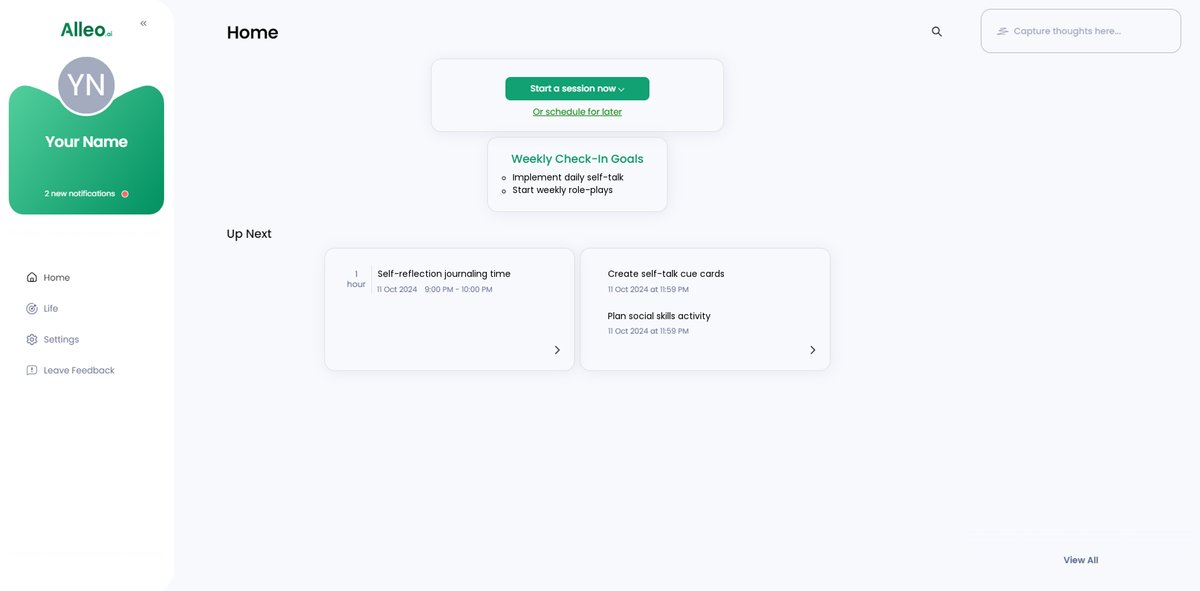
Step 5: Viewing and managing goals after the session
After your coaching session on enhancing social awareness for ADHD students, check the app’s home page to review and manage the goals you discussed, ensuring you stay on track with implementing strategies like self-talk exercises and role-play scenarios.
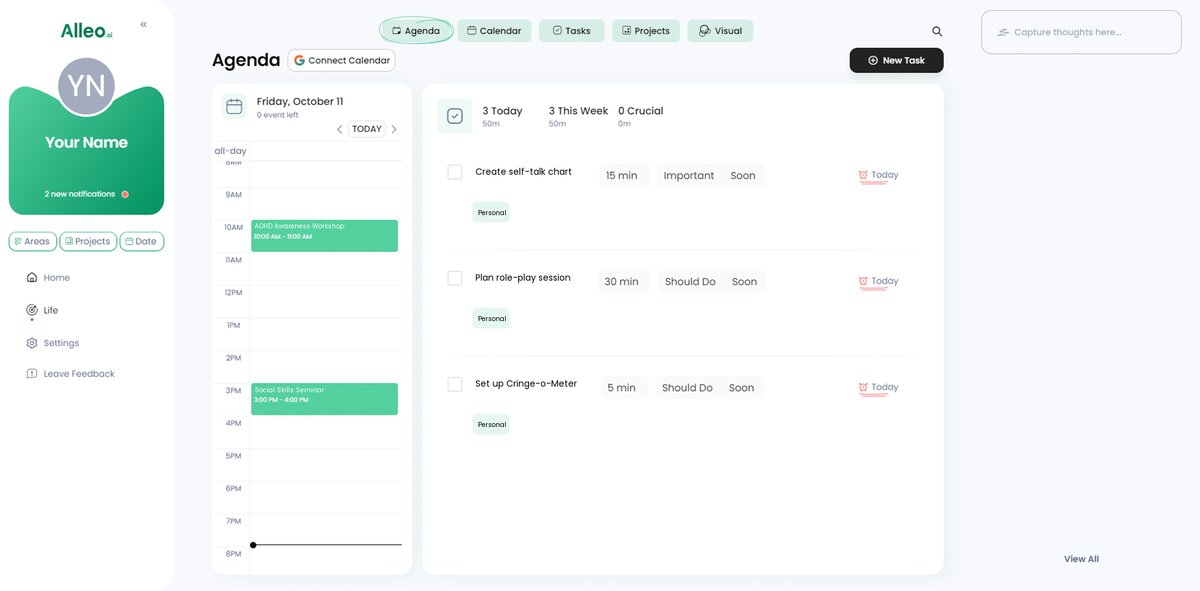
Step 6: Adding events to your calendar or app
Use the calendar and task features in Alleo to schedule and track your progress on implementing strategies for ADHD students, such as daily self-talk exercises or weekly role-play sessions, helping you stay organized and accountable in your efforts to enhance social awareness in the classroom.
Wrapping Up: Empowering ADHD Students Through Social Awareness
We’ve covered actionable ADHD social awareness strategies to help students understand their social impact. By focusing on self-talk, role-play, contextual tools, collaborative learning strategies for ADHD students, inclusive activities, and vocalization, you can create a supportive classroom environment and implement effective ADHD classroom management techniques.
I understand your challenges and frustrations. Remember, you’re not alone in this journey of developing social skills training for ADHD students.
Alleo is here to support you with personalized coaching, offering ADHD-friendly teaching methods and emotional regulation strategies for ADHD.
Try Alleo for free and see the difference it can make for you and your students, enhancing peer interaction support for ADHD learners.
Empower your students today. Let’s transform their social awareness together, focusing on inclusive education for ADHD students and building empathy in ADHD students.