Empty Nesters’ Guide: 4 Best Practices for Starting Your Volunteer Journey
Feeling like an empty nester without purpose?
As a life coach, I’ve helped many navigate this transition. In my experience, volunteering for empty nesters can transform your life and community.
In this article, you’ll discover the best practices for starting volunteer work after kids leave home. We’ll cover how to identify your interests, find local retirement volunteering opportunities, and overcome common barriers to meaningful activities for empty nesters.
Let’s dive into exploring community service for older adults and finding purpose through volunteer work.

Understanding the Emotional Challenges of Becoming an Empty Nester
The transition to an empty nest can be emotionally challenging for many parents. Volunteering for empty nesters can help address these challenges. Many clients initially struggle with feelings of loneliness and purposelessness as their children leave home.
This shift often brings a sense of loss and anxiety about the future, which retirement volunteering opportunities can help alleviate.
Starting volunteer work can feel daunting for empty nesters. Common barriers include background checks, training requirements, and time commitments.
These hurdles can seem overwhelming, especially when you’re already feeling vulnerable. However, senior volunteer programs can provide support during this transition.
In my experience, people often find themselves stuck in a cycle of isolation. This isolation can amplify feelings of purposelessness, which community service for older adults can help address.
However, recognizing these challenges is the first step toward overcoming them and finding meaningful volunteer work after kids leave home.
By acknowledging the emotional and practical barriers, you can begin to take actionable steps toward finding meaningful activities for empty nesters through volunteering opportunities.
Steps to Start Volunteering as an Empty Nester
Overcoming this challenge requires a few key steps. Here are the main areas to focus on for empty nesters exploring volunteering opportunities.
- Identify Personal Interests and Skills to Offer: Reflect on your hobbies and skills, then match them to community needs. This is crucial for meaningful activities for empty nesters and skills-based volunteering for seniors.
- Research Local Organizations Needing Volunteers: Use online databases and attend community events to find retirement volunteering opportunities and senior volunteer programs.
- Start with Short-Term or One-Time Commitments: Begin with manageable commitments to ease into volunteering for empty nesters, especially if dealing with empty nest syndrome.
- Attend Volunteer Orientation or Training Sessions: Participate in training to prepare for your new role in community service for older adults.
Let’s dive into volunteering for empty nesters and discover how to find purpose through volunteer work!
1: Identify personal interests and skills to offer
Identifying your personal interests and skills is a crucial first step in finding fulfilling volunteering for empty nesters opportunities.
Actionable Steps:
- Reflect on past hobbies and activities. Set a timer for 15 minutes, and brainstorm a list of activities you enjoyed before becoming a parent. Narrow this list down to your top three interests for retirement volunteering opportunities.
- Assess your current skills and experiences. Write down your professional and personal skills, then match these skills to potential senior volunteer programs or skills-based volunteering for seniors roles.
- Connect your interests with community needs. Research local community service for older adults that align with your skills. Identify at least two organizations that match your interests for meaningful activities for empty nesters.
Explanation:
Taking the time to identify your personal interests and skills ensures that you find volunteer work after kids leave home that is both fulfilling and impactful. By aligning your passions with community needs, you can make a significant difference while enjoying the process.
According to Pacaso, empty nesters who engage in activities they are passionate about report higher levels of satisfaction and fulfillment.
This thoughtful approach will help you transition smoothly into volunteering roles that you genuinely care about, giving back to the community in retirement and finding purpose through volunteer work.

2: Research local organizations needing volunteers
Finding the right local organizations to volunteer with is essential for a fulfilling and impactful experience, especially for empty nesters looking for meaningful activities.
Actionable Steps:
- Utilize online volunteer databases. Use websites like VolunteerMatch or Idealist to search for volunteering opportunities for empty nesters. Bookmark at least five potential volunteer roles.
- Attend local community events. Participate in community fairs or events to meet representatives from local organizations offering retirement volunteering opportunities. Collect contact information from at least three organizations.
- Reach out to friends and family for recommendations. Ask your network about senior volunteer programs they know. Make a list of at least three recommended organizations.
Key benefits of researching local organizations:
- Discover diverse opportunities for community service for older adults
- Connect with passionate community leaders
- Find causes that resonate with your values and help combat empty nest syndrome through volunteering
Explanation:
Taking these steps ensures you find volunteer work after kids leave home that aligns with your interests and skills. Utilizing various resources helps you discover a wider array of options for giving back to the community in retirement.
According to Rotation.org, connecting with local organizations can significantly enhance your volunteer experience and community involvement.
These strategies will help you build a network and find meaningful activities for empty nesters through volunteering that fit your life.
3: Start with short-term or one-time commitments
Beginning with short-term or one-time commitments can make the transition into volunteering for empty nesters smoother and less overwhelming.
Actionable Steps:
- Sign up for a one-time volunteer event. Choose an event that aligns with your schedule and interests. Complete the event and reflect on your experience as a senior volunteer.
- Participate in a volunteer orientation session. Attend an orientation to learn more about retirement volunteering opportunities. Note key takeaways and assess if it’s a good fit.
- Volunteer for a short-term project. Commit to a project with a defined end date. Track your satisfaction throughout the project as you explore community service for older adults.
Explanation:
These steps are vital for easing into volunteering for empty nesters without feeling overwhelmed. Starting small allows you to gauge your interest and commitment level in meaningful activities for empty nesters.
According to Frontiers in Public Health, short-term commitments can help reduce feelings of loneliness and improve overall life satisfaction among older adults.
By taking manageable steps, you can build confidence and find the right fit for your interests and skills in volunteer work after kids leave home.
Taking these small steps can help you transition smoothly and find joy in your new volunteer role as you explore giving back to the community in retirement.

4: Attend volunteer orientation or training sessions
Attending volunteer orientation or training sessions is crucial for preparing effectively for your new role, especially when volunteering for empty nesters.
Actionable Steps:
- Register for necessary training sessions. Sign up for the required training for your volunteer role. Complete the training and obtain any certifications, which is essential for retirement volunteering opportunities.
- Network with other volunteers during training. Introduce yourself and exchange contact information with fellow trainees. Form connections with at least two other volunteers, which can be particularly beneficial in senior volunteer programs.
- Seek mentorship from experienced volunteers. Request to shadow a seasoned volunteer. Gain insights and tips from their experience, which is valuable for community service for older adults.
Benefits of volunteer training:
- Develop new skills
- Boost confidence in your role
- Understand the organization’s mission better
Explanation:
These steps help you gain the skills and confidence needed for volunteering. Training and networking can also enhance your experience by connecting you with like-minded individuals, which is particularly important for empty nesters seeking meaningful activities.
According to ODPHP Health, regular commitment-based activities centered on shared interests help older adults feel a sense of belonging.
Taking these proactive steps ensures you are well-prepared and integrated into your new volunteer community, which is essential for finding purpose through volunteer work after kids leave home.
Partner with Alleo on Your Volunteering Journey
We’ve explored the challenges of starting volunteer work as an empty nester, the benefits, and the steps to get started. Did you know you can work with Alleo to make this volunteering for empty nesters journey easier and faster?
Setting up an account with Alleo is simple. Create a personalized plan tailored to your interests and skills, perfect for finding meaningful activities for empty nesters and retirement volunteering opportunities.
Alleo’s AI coach provides affordable, tailored support, just like a human coach, helping you navigate senior volunteer programs and community service for older adults. Plus, enjoy a free 14-day trial with no credit card required.
The coach will follow up on your progress, handle changes, and keep you accountable via text and push notifications, ensuring you stay engaged in volunteer work after kids leave home.
Ready to get started for free and explore skills-based volunteering for seniors? Let me show you how!
Step 1: Log In or Create Your Account
To begin your volunteering journey with AI-powered guidance, log in to your existing Alleo account or create a new one in just a few clicks.

Step 2: Choose “Improve overall well-being and life satisfaction”
Select “Improve overall well-being and life satisfaction” as your goal to address the emotional challenges of becoming an empty nester and find purpose through volunteering, aligning with your journey towards a more fulfilling life.

Step 3: Selecting the life area you want to focus on
Choose the “Personal” life area to address your empty nester challenges, as it aligns with finding new purpose through volunteering and personal growth opportunities.

Step 4: Starting a coaching session
Begin your journey with an intake session to create a personalized volunteering plan that aligns with your empty nester status and interests.

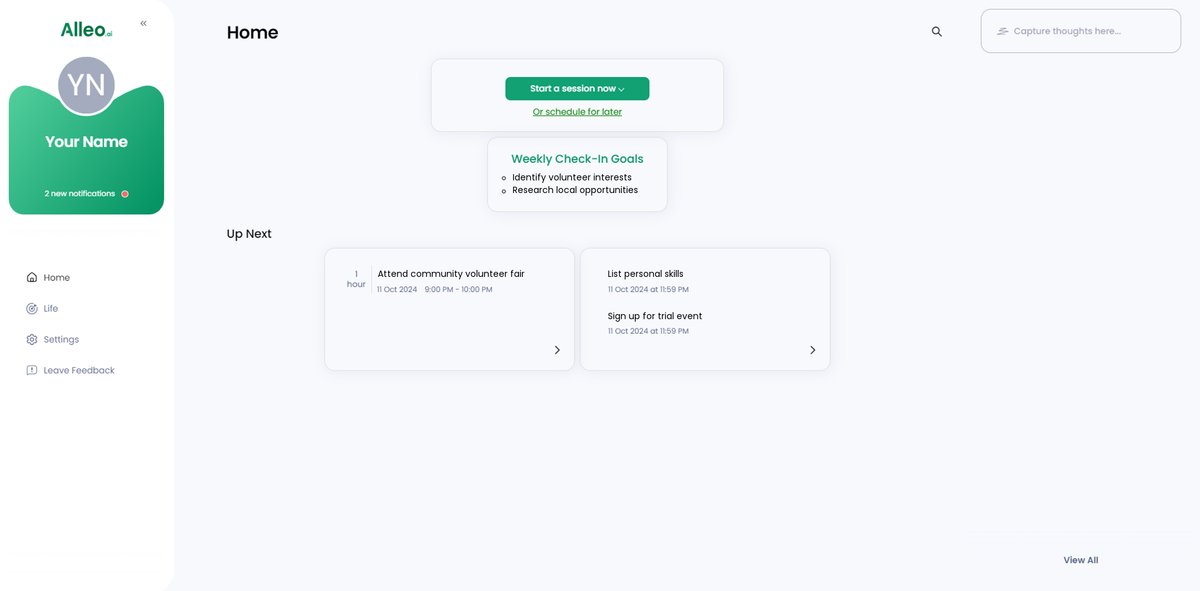
Step 5: Viewing and Managing Goals After the Session
After your coaching session on finding volunteer opportunities as an empty nester, check the Alleo app’s home page to view and manage the goals you discussed, helping you stay on track with your volunteering journey.
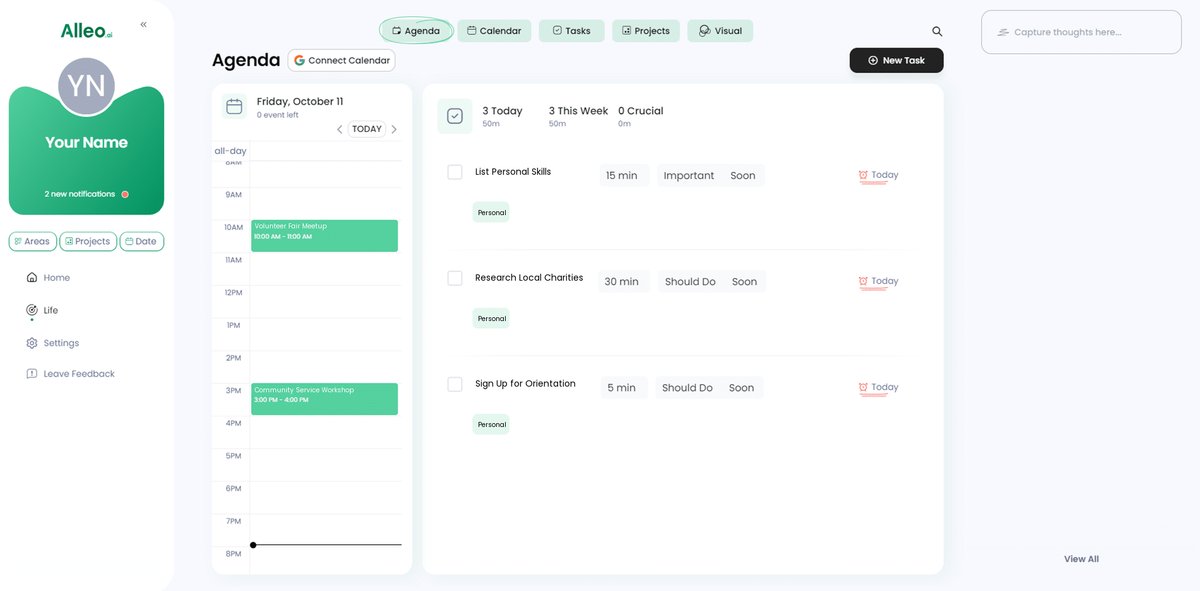
Step 6: Adding events to your calendar or app
After identifying volunteer opportunities, use the calendar and task features in the Alleo app to schedule and track your volunteering commitments, helping you stay organized and motivated as you embark on your new journey as an empty nester.
Embrace Your New Purpose Through Volunteering
As we wrap up, remember that finding purpose as an empty nester is a journey. Volunteering for empty nesters can be the key to rediscovering joy and community.
You’ve learned how to identify your interests, research retirement volunteering opportunities, and start with manageable commitments. These steps can transform your life, bringing new connections and fulfillment through meaningful activities for empty nesters.
Don’t hesitate to take the first step in giving back to the community in retirement. Alleo is here to support you.
Sign up for a free trial and let Alleo guide you through your volunteer journey. You have the power to make a difference through senior volunteer programs. Start today!