The Ultimate Guide to Mastering Hybrid Event Streaming for Event Planners
Are you struggling to balance streaming services and live broadcasts for your hybrid events? Managing hybrid event streaming effectively is crucial for success in today’s event landscape.
Imagine planning a hybrid event where remote attendees feel as engaged as those in person, thanks to seamless in-person and online event integration.
As an event planner, I’ve seen the challenges of managing streaming services for hybrid events firsthand. The key is integrating hybrid event technology seamlessly to ensure high-quality, low-latency, and accessible experiences for everyone, whether they’re attending virtually or in person.
In this article, we’ll explore strategies to manage hybrid event streaming effectively, including virtual attendee engagement techniques, live streaming platforms for events, and simultaneous content delivery strategies.
Let’s dive in and discover how to create hybrid event networking opportunities that bridge the gap between in-person and remote participants.

The Challenges of Hybrid Event Streaming
Managing hybrid event streaming effectively involves balancing quality, latency, and accessibility, which can be daunting. Many clients struggle with ensuring remote attendees enjoy the same seamless experience as those in person, particularly when it comes to virtual attendee engagement.
A frequent challenge is the integration of various hybrid event technologies. Without smooth integration of in-person and online event elements, the event can suffer from technical glitches, distracting both in-person and virtual participants.
Ensuring accessibility is another critical aspect of managing hybrid event streaming effectively. For instance, you need to incorporate closed captioning and ASL interpretation to cater to all attendees, whether they’re participating remotely or on-site.
Common pitfalls in hybrid event streaming often include inconsistent audio quality and latency issues with live streaming platforms for events. These can significantly detract from the overall experience, making it crucial to address them proactively when managing hybrid event streaming effectively.

Key Steps to Master Hybrid Event Streaming
Overcoming this challenge requires a few key steps. Here are the main areas to focus on to make progress in managing hybrid event streaming effectively.
- Choose an Accessible Hybrid Event Platform: Select live streaming platforms for events with features like closed captioning and ASL interpretation.
- Set Up Dedicated Streaming Equipment and Testing: Invest in high-quality A/V equipment and conduct thorough testing for in-person and online event integration.
- Integrate Real-Time Audience Engagement Tools: Implement live polls, Q&A sessions, and chat functions to enhance virtual attendee engagement and hybrid event audience interaction.
- Create a Multi-Channel Content Delivery Plan: Plan live, pre-recorded, and on-demand sessions using simultaneous content delivery strategies.
- Train Staff on Hybrid Event Management: Conduct training workshops and define clear roles, including remote speaker management.
- Implement Backup Streaming Solutions: Develop and test contingency plans for potential issues using event planning software for hybrid events.
Let’s dive in to explore these strategies for managing hybrid event streaming effectively!
1: Choose an accessible hybrid event platform
Selecting the right platform is crucial for managing hybrid event streaming effectively and ensuring all participants have a seamless experience.
Actionable Steps:
- Research and compare platforms: Identify live streaming platforms for events with strong accessibility features like closed captioning and ASL interpretation.
- Evaluate platform compatibility: Assess the platform’s integration capabilities with existing event planning software for hybrid events and event management tools.
- Review user feedback: Look at user reviews and case studies to understand platform strengths and weaknesses in hybrid event technology.
Explanation: Choosing the right platform is essential for delivering a seamless hybrid event. Accessible platforms ensure that everyone can participate fully, regardless of their abilities, enhancing in-person and online event integration.
For example, platforms that offer features such as ASL interpretation help in making events more inclusive. By comparing different platforms and understanding their capabilities, you can select one that best meets your event’s needs for managing hybrid event streaming effectively.
This sets the stage for a well-coordinated hybrid event. Let’s move on to setting up the necessary equipment.
2: Set up dedicated streaming equipment and testing
Setting up dedicated streaming equipment and conducting thorough testing is vital for managing hybrid event streaming effectively.
Actionable Steps:
- Invest in high-quality equipment: Choose professional-grade cameras, microphones, and A/V tools for hybrid event technology. Ensure you have backup equipment ready for any technical issues.
- Conduct multiple test streams: Run tests to check for latency, quality, and connectivity problems. Simulate different scenarios to ensure robustness in simultaneous content delivery strategies.
Key considerations for equipment setup:
- Ensure proper lighting for clear video quality
- Use directional microphones to minimize background noise
- Set up multiple camera angles for dynamic presentations and enhanced virtual attendee engagement
Explanation: Ensuring high-quality streaming equipment and thorough testing is crucial to avoid technical glitches during the event and for managing hybrid event streaming effectively.
For example, running multiple test streams can help identify potential issues early on. This proactive approach aligns with industry trends, as highlighted in Fielddrive’s hybrid event guide, which emphasizes the importance of technology in creating seamless experiences for in-person and online event integration.
This sets the stage for integrating real-time audience engagement tools and improving hybrid event audience interaction.
3: Integrate real-time audience engagement tools
Integrating real-time audience engagement tools is crucial to keep virtual attendees as engaged as those in person when managing hybrid event streaming effectively.
Actionable Steps:
- Incorporate interactive features: Add live polls, Q&A sessions, and chat functions to encourage participation from remote attendees, enhancing hybrid event audience interaction.
- Use virtual networking tools: Facilitate connections between remote and in-person participants through virtual networking platforms, creating hybrid event networking opportunities.
- Monitor and respond in real-time: Deploy a dedicated team to monitor engagement tools and respond to audience interactions promptly, leveraging event planning software for hybrid events.
Explanation:
Using these tools helps create a dynamic and interactive experience for all attendees. For instance, live polls and Q&A sessions can make virtual attendees feel part of the event, improving in-person and online event integration.
Additionally, virtual networking tools bridge the gap between remote and in-person participants. This approach aligns with current trends in hybrid events, emphasizing the importance of engagement and utilizing hybrid event technology effectively.
Let’s move on to creating a multi-channel content delivery plan for managing hybrid event streaming effectively.
4: Create a multi-channel content delivery plan
Creating a multi-channel content delivery plan ensures your hybrid event caters to diverse audience preferences while managing hybrid event streaming effectively.
Actionable Steps:
- Develop a detailed schedule: Plan a mix of live, pre-recorded, and on-demand sessions to engage attendees throughout the event, incorporating hybrid event technology for seamless delivery.
- Ensure cross-platform accessibility: Make sure content can be accessed on various devices by optimizing for different screen sizes and platforms, enhancing virtual attendee engagement.
- Coordinate with presenters: Provide training and guidelines to speakers to ensure their content is effective for both in-person and virtual audiences, focusing on remote speaker management.
Explanation:
These steps are crucial for maximizing engagement and reach. By offering varied content formats, you cater to different viewing preferences and schedules, facilitating in-person and online event integration.
Ensuring cross-platform accessibility aligns with industry trends, as highlighted in InEvent’s hybrid event checklist, which emphasizes the importance of flexible content delivery and simultaneous content delivery strategies.
Coordinating with presenters ensures smooth transitions and consistent quality, enhancing the overall experience and creating hybrid event networking opportunities.
Let’s now move on to training your staff on hybrid event management.
5: Train staff on hybrid event management
Training your staff in hybrid event management is crucial for managing hybrid event streaming effectively and ensuring a seamless experience for both in-person and remote attendees.
Actionable Steps:
- Conduct training workshops: Organize workshops focused on hybrid event technology and management. Include hands-on sessions to familiarize staff with live streaming platforms for events and processes.
- Establish clear roles and responsibilities: Define specific roles for team members, such as technical support, virtual attendee engagement monitoring, and content management. Make sure each role is well-understood.
Essential skills for hybrid event staff:
- Proficiency in using streaming and engagement platforms for in-person and online event integration
- Ability to troubleshoot technical issues quickly
- Strong communication skills for coordinating between virtual and in-person teams
Explanation:
These steps are essential to ensure your team can handle the complexities of hybrid events. For example, training workshops provide the necessary skills to manage hybrid event technology effectively, while clear roles prevent confusion during the event.
This aligns with trends in hybrid event management, as highlighted in eShow’s insights on integrating physical and digital experiences.
Now, let’s move on to implementing backup streaming solutions.
6: Implement backup streaming solutions
Implementing backup streaming solutions is crucial to ensure your hybrid event runs smoothly, even if technical issues arise when managing hybrid event streaming effectively.
Actionable Steps:
- Develop contingency plans: Identify potential risks like internet outages and create detailed backup plans for each scenario, considering hybrid event technology.
- Test backup systems regularly: Conduct regular tests to ensure all backup solutions are functional and ready for quick deployment, supporting both in-person and online event integration.
Explanation:
These steps are essential to mitigate potential disruptions and maintain a seamless experience for all attendees, including virtual attendee engagement. Regular testing and contingency planning help you respond promptly to any issues when managing hybrid event streaming effectively.
For instance, eShow emphasizes the importance of integrating physical and digital experiences for smooth hybrid events. By preparing for potential problems, you can ensure a robust and reliable streaming setup using live streaming platforms for events.
Key components of a robust backup plan:
- Secondary internet connection from a different provider
- Backup power sources for critical equipment
- Alternative streaming platform ready for immediate switchover, supporting hybrid event audience interaction
With these backup measures in place, your hybrid event will be well-prepared for any unexpected challenges, ensuring simultaneous content delivery strategies.

Partner with Alleo for Seamless Hybrid Event Streaming
We’ve explored the challenges of managing hybrid event streaming effectively and how to overcome them. But did you know you can work directly with Alleo to make this process easier and faster using our hybrid event technology?
Setting up an account with Alleo is simple. Create a personalized plan tailored to your hybrid event needs, including virtual attendee engagement and in-person and online event integration strategies.
Alleo’s AI coach offers full coaching sessions, just like a human coach, to address your specific streaming challenges. The coach helps you stay accountable with follow-up progress checks, text, and push notifications, ensuring successful hybrid event audience interaction.
Ready to get started for free? Let me show you how to leverage our event planning software for hybrid events!
Step 1: Log In or Create Your Account
To start mastering hybrid event streaming with Alleo’s AI coach, simply Log in to your account or create a new one to access personalized guidance and support for your event planning needs.

Step 2: Choose “Building better habits and routines”
Click on “Building better habits and routines” to focus on creating consistent practices that will enhance your hybrid event management skills and streamline your streaming processes, ultimately leading to more successful and engaging events.

Step 3: Select “Career” as Your Focus Area
Choose “Career” as your focus area to address challenges in managing hybrid event streaming, aligning with the article’s emphasis on professional event planning skills and technology integration for seamless experiences.

Step 4: Starting a Coaching Session
Begin your journey with Alleo by scheduling an intake session, where our AI coach will help you create a personalized plan for managing your hybrid event streaming challenges and set achievable goals for your upcoming events.

Step 5: Viewing and Managing Goals After the Session
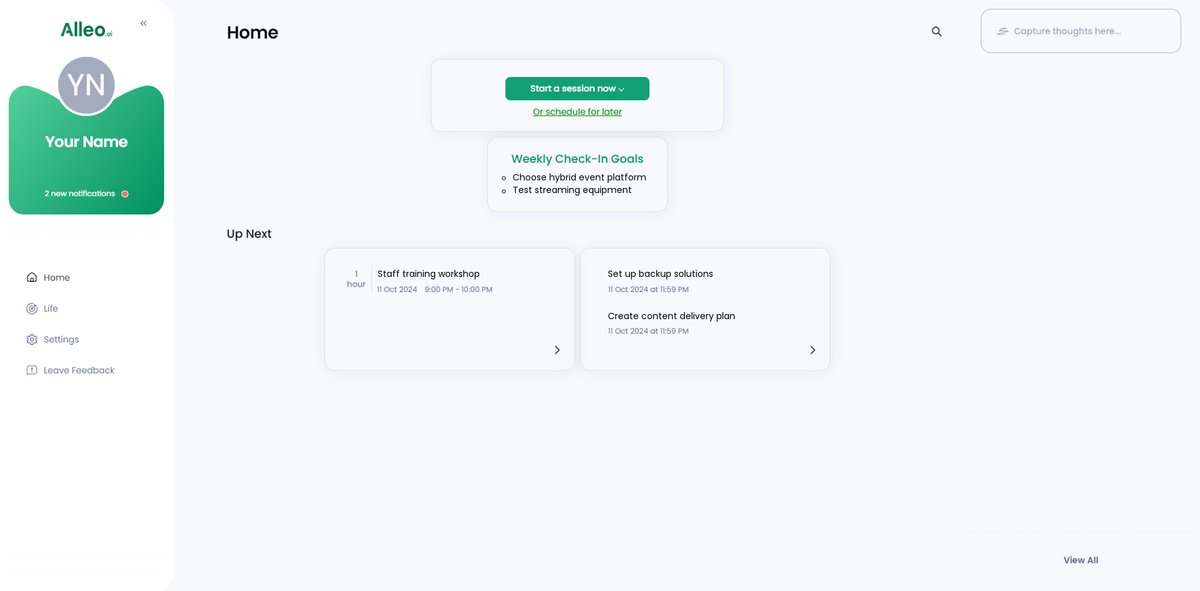
After your coaching session, check the Alleo app’s home page to view and manage the goals you discussed, allowing you to track your progress and stay accountable for improving your hybrid event streaming skills.
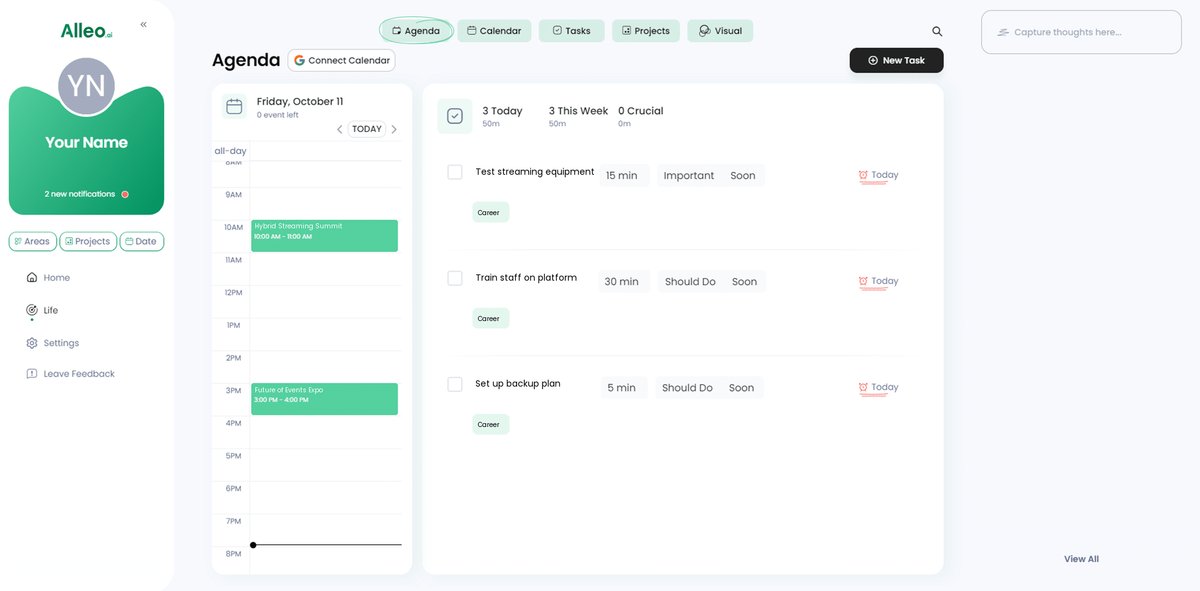
Step 6: Adding events to your calendar or app
Use Alleo’s calendar and task features to schedule and track your hybrid event planning milestones, ensuring you stay on top of your streaming setup and can easily monitor your progress in solving any challenges that arise.
Wrapping Up: Mastering Hybrid Event Streaming
After implementing these strategies, you’re well on your way to managing hybrid event streaming effectively. It’s a tough challenge, but you’re not alone in this journey.
Remember, seamless technology integration is key. By choosing the right hybrid event technology and live streaming platforms for events, setting up quality equipment, and engaging your audience through virtual attendee engagement, you can create a memorable event.
Training your team and having backup plans ensures you’re ready for anything. These steps transform potential pitfalls into manageable tasks, including remote speaker management and simultaneous content delivery strategies.
Finally, don’t forget Alleo. Our event planning software for hybrid events simplifies your planning and offers real-time support for in-person and online event integration.
Ready to make your next hybrid event a success? Try Alleo for free and see the difference in hybrid event audience interaction and networking opportunities yourself!