7 Game-Changing Strategies for Successful CRM Adoption Every Sales Manager Should Know
Are you struggling to get your team to adopt new CRM software despite extensive preparation and documentation efforts? Implementing effective CRM adoption strategies for managers is crucial for success.
As a life coach, I’ve helped many professionals navigate these challenges. In my experience, the key to successful CRM adoption is understanding the obstacles and implementing effective strategies. Overcoming CRM adoption challenges requires a comprehensive approach that includes CRM implementation best practices and sales team CRM training.
In this article, you’ll discover proven CRM adoption strategies for managers in sales. We’ll cover practical steps, from leading by example to leveraging digital adoption platforms. These strategies will help in improving sales productivity with CRM and ensuring smooth CRM integration with sales processes.
Let’s dive in to explore how customer relationship management tools can transform your sales operations.

Understanding the Challenges of CRM Adoption
Transitioning to a new CRM system can be daunting. Many financial advisors struggle with resistance to change and the complexity of customer relationship management tools. Implementing effective CRM adoption strategies for managers is crucial for success.
I’ve seen clients battle with extensive documentation, only to find their teams hesitant to embrace the new system. Overcoming CRM adoption challenges often requires careful planning and execution.
This hesitation often stems from the perceived difficulty of learning and using the new CRM. The results? Incomplete, inaccurate data that hampers forecasting and opportunities. Proper CRM data management for sales is essential for improving sales productivity with CRM.
Poor CRM adoption can also lead to disorganized data, severely affecting sales performance. Managers must focus on CRM implementation best practices to ensure smooth integration with sales processes.
In my experience, even the most prepared teams face these hurdles. It’s not just about having the right tools but also about ensuring everyone is on board and comfortable using them. Effective sales team CRM training is key to successful CRM adoption strategies for managers.

Key Strategies for Successful CRM Adoption
Overcoming CRM adoption challenges requires a few key steps. Here are the main areas to focus on for effective CRM adoption strategies for managers to make progress.
- Lead by example in daily CRM usage: Sales managers should consistently use the CRM and share success stories, demonstrating CRM implementation best practices.
- Provide regular, focused CRM training sessions: Conduct monthly sales team CRM training sessions and offer one-on-one mentoring to improve sales productivity with CRM.
- Integrate CRM with existing tools and workflows: Identify key customer relationship management tools and demonstrate how CRM integration with sales processes can streamline workflows.
- Incentivize data logging with rewards system: Implement a rewards program recognizing consistent CRM data management for sales.
- Use a Digital Adoption Platform for guidance: Utilize a platform to provide real-time, context-aware assistance for mobile CRM for field sales teams.
- Implement a “Champion User” program: Identify a Champion User to act as an internal CRM advocate and assist in measuring CRM success in sales.
- Start with MVP approach for gradual adoption: Begin with a Minimum Viable Product to avoid overwhelming users and facilitate CRM analytics for sales forecasting.
Let’s dive in to these CRM adoption strategies for managers!
1: Lead by example in daily CRM usage
Leading by example in daily CRM usage is a crucial CRM adoption strategy for managers, setting a standard and encouraging team adoption.
Actionable Steps:
- Use the CRM daily for all your tasks, including logging interactions and tracking progress, as part of CRM implementation best practices.
- Share weekly updates on how CRM data management for sales has driven decisions and improved strategies in team meetings.
- Highlight team members’ CRM-related successes and publicly recognize their efforts in improving sales productivity with CRM.
Explanation: Leading by example helps build trust and demonstrates the value of customer relationship management tools. When sales managers regularly use and promote the CRM, it shows their commitment and the system’s importance in CRM integration with sales processes.
According to Teamgate, consistent CRM use by leaders can significantly boost team adoption. This approach aligns with industry trends towards enhanced leadership in technology adoption and overcoming CRM adoption challenges.
Key benefits of leading by example include:
- Increased team motivation during sales team CRM training
- Improved data quality for CRM analytics for sales forecasting
- Enhanced overall CRM adoption and success in sales
Encouraging your team through example can transform CRM usage habits and drive overall success, including the use of mobile CRM for field sales teams.

2: Provide regular, focused CRM training sessions
Regular, focused CRM training sessions are crucial for ensuring your team fully understands and uses the CRM efficiently, which is a key aspect of successful CRM adoption strategies for managers.
Actionable Steps:
- Conduct monthly training sessions tailored to different CRM functionalities and sales team CRM training needs.
- Create interactive workshops that address common pain points and questions related to CRM implementation best practices.
- Offer one-on-one mentoring sessions for personalized support and guidance on customer relationship management tools.
Explanation: Providing regular, focused training sessions helps your team gain confidence and proficiency in using the CRM, improving sales productivity with CRM.
Interactive workshops and personal mentoring ensure that everyone gets the support they need, addressing CRM data management for sales and overcoming CRM adoption challenges.
According to HubSpot, ongoing training significantly improves user adoption and data quality.
This approach addresses both common challenges and individual needs, fostering a more effective CRM adoption process and CRM integration with sales processes.

3: Integrate CRM with existing tools and workflows
Integrating CRM with existing tools and workflows is essential for streamlining processes and enhancing team efficiency, making it a crucial CRM adoption strategy for managers.
Actionable Steps:
- Identify key tools currently used within your team and ensure they integrate seamlessly with the CRM, following CRM implementation best practices.
- Demonstrate how CRM integration with sales processes can simplify workflows and reduce manual tasks during team meetings.
- Provide clear, step-by-step guides and tutorials on integrating specific customer relationship management tools with the CRM.
Explanation: Integrating the CRM with existing tools is crucial for a smooth workflow and increased efficiency in sales team CRM training.
It allows your team to continue using familiar software while benefiting from the CRM’s capabilities, improving sales productivity with CRM.
According to Scratchpad, effective integration can significantly improve user adoption and overall productivity.
Ensuring seamless integration helps mitigate resistance to change by making the transition easier, overcoming CRM adoption challenges.
This integration step sets the foundation for a more cohesive and efficient work environment, essential for CRM data management for sales.

4: Incentivize data logging with rewards system
Encouraging consistent data logging is crucial for accurate CRM insights and successful CRM adoption strategies for managers.
Actionable Steps:
- Implement a rewards program: Recognize and reward team members who consistently log data in the CRM, improving sales productivity with CRM.
- Offer tangible incentives: Provide gift cards, extra leave days, or public recognition for top performers in CRM data management for sales.
- Track and celebrate milestones: Regularly acknowledge improvements in data quality and celebrate these milestones with the team, overcoming CRM adoption challenges.
Explanation: Incentivizing data logging helps motivate your team to consistently use the CRM, leading to better data accuracy and reliability. This is one of the key CRM implementation best practices.
According to Scratchpad, proper incentives not only boost CRM adoption but also enhance overall data management. This strategy aligns with the trend of using motivational tools to drive technology adoption in organizations, including mobile CRM for field sales teams.
This approach transforms data logging into a rewarding and engaging activity, fostering a culture of accountability and excellence in customer relationship management tools usage.

5: Use a Digital Adoption Platform for guidance
Using a Digital Adoption Platform (DAP) is essential for providing real-time, context-aware assistance during CRM adoption, making it a crucial CRM adoption strategy for managers.
Actionable Steps:
- Utilize a Digital Adoption Platform: Implement a DAP to offer in-app guidance and tutorials for navigating the CRM, improving sales productivity with CRM.
- Set up real-time assistance: Configure the DAP to provide context-aware help and notifications to support users, aiding in overcoming CRM adoption challenges.
- Collect feedback: Use the DAP to gather user feedback and adjust guidance based on their needs, helping measure CRM success in sales.
Explanation: Leveraging a Digital Adoption Platform enhances the user experience by offering immediate, relevant support. This reduces the learning curve and helps users become proficient faster, which is key for effective CRM implementation best practices.
According to VisualSP, DAPs can significantly improve CRM adoption rates by providing in-app guidance and reducing support tickets. This approach aligns with industry trends towards using technology to facilitate smoother transitions in customer relationship management tools.
Key features of an effective Digital Adoption Platform:
- Interactive walkthroughs for sales team CRM training
- Contextual help pop-ups for CRM data management for sales
- User analytics for improvement, supporting CRM analytics for sales forecasting
Adopting a DAP can streamline your CRM onboarding process and ensure consistent user support, enhancing CRM integration with sales processes and supporting mobile CRM for field sales teams.
6: Implement a “Champion User” program
Implementing a “Champion User” program is a crucial CRM adoption strategy for managers to foster internal advocacy and drive CRM adoption within your team.
Actionable Steps:
- Identify and train a Champion User: Select a team member passionate about CRM and provide comprehensive training to ensure they are proficient in customer relationship management tools.
- Encourage the Champion User to host peer training sessions: Have them share CRM implementation best practices and offer support to colleagues, improving sales productivity with CRM.
- Regularly recognize and reward the Champion User: Acknowledge their efforts publicly to maintain motivation and encourage others, helping in overcoming CRM adoption challenges.
Explanation: Having a dedicated Champion User can dramatically improve CRM adoption rates by providing peer support and advocacy for sales team CRM training.
This approach ensures that there is always an internal expert available to assist and motivate the rest of the team, facilitating CRM integration with sales processes.
According to Orgzit, involving a Champion User helps bridge the gap between management and users, fostering a more collaborative environment for CRM data management for sales.
This strategy not only promotes CRM usage but also enhances team morale and engagement, contributing to measuring CRM success in sales.
7: Start with MVP approach for gradual adoption
Starting with an MVP approach is essential for easing your team into new CRM software without overwhelming them, making it one of the most effective CRM adoption strategies for managers.
Actionable Steps:
- Begin with essential features: Start by implementing the most crucial CRM features needed for daily tasks and gradually introduce additional functionalities, following CRM implementation best practices.
- Collect and act on feedback: Regularly gather user feedback to understand their needs and adjust the CRM integration with sales processes accordingly.
- Provide continuous support: Offer ongoing support and resources to help users adapt to new features as they are introduced, focusing on sales team CRM training.
Explanation: Using an MVP approach allows your team to become comfortable with customer relationship management tools at a manageable pace. This strategy helps prevent resistance to change and ensures a smoother transition, overcoming CRM adoption challenges.
According to ServerSys, starting with an MVP can reduce disruption and deliver value quickly. This method aligns with industry best practices for technology adoption by prioritizing user readiness and improving sales productivity with CRM.
Benefits of the MVP approach in CRM adoption:
- Reduced user overwhelm
- Faster time to value
- Increased user acceptance
This gradual approach fosters a more supportive and adaptable environment for CRM adoption, enabling better CRM data management for sales and enhancing the overall success of your CRM implementation strategy.

Partner with Alleo for Seamless CRM Adoption
We’ve explored the challenges of CRM adoption and effective strategies to tackle them. But did you know you can work directly with Alleo to make this journey easier and faster? Our CRM adoption strategies for managers are designed to streamline the process.
Setting up an Alleo account is simple. First, create your personalized CRM adoption plan with clear, achievable milestones. This aligns with CRM implementation best practices for optimal results.
Alleo’s AI coach will provide tailored coaching and actionable insights. This helps you overcome specific CRM adoption challenges and improve sales productivity with CRM.
Alleo will follow up on your progress, handle changes, and keep you accountable via text and push notifications. This approach aids in measuring CRM success in sales and ensures effective CRM data management for sales teams.
Ready to get started for free? Let me show you how to implement CRM adoption strategies for managers!
Step 1: Log In or Create Your Account
To begin your CRM adoption journey with Alleo, Log in to your account or create a new one to access personalized AI coaching and support for seamless CRM implementation.

Step 2: Choose Your CRM Adoption Focus
Select “Setting and achieving personal or professional goals” to pinpoint your specific CRM adoption challenges, allowing Alleo’s AI coach to provide targeted strategies and support for overcoming resistance and improving team efficiency with your new CRM system.

Step 3: Select “Career” as Your Focus Area
Choose “Career” as your focus area to address CRM adoption challenges, aligning your professional goals with effective software implementation strategies for improved team performance and data management.

Step 4: Starting a Coaching Session
Begin your CRM adoption journey with an intake session in Alleo, where you’ll discuss your goals and challenges to create a personalized plan for improving your team’s CRM usage.

Step 5: Viewing and managing goals after the session
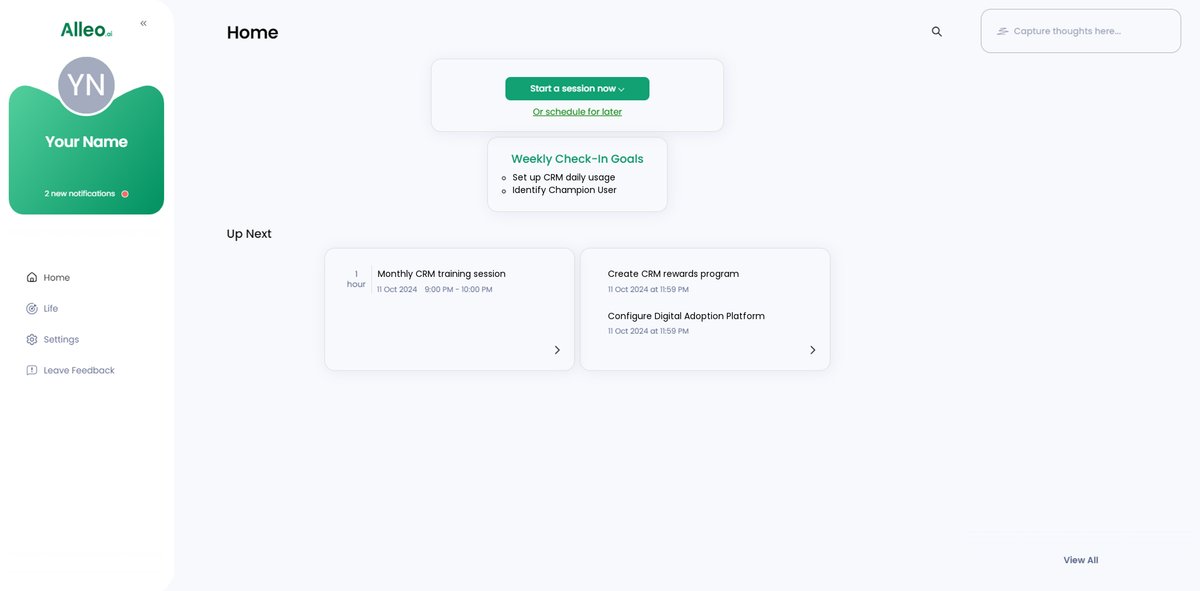
After your CRM adoption coaching session, check the Alleo app’s home page to view and manage the goals you discussed, allowing you to track your progress and stay accountable to your CRM implementation plan.
Step 6: Adding Events to Your Calendar or App
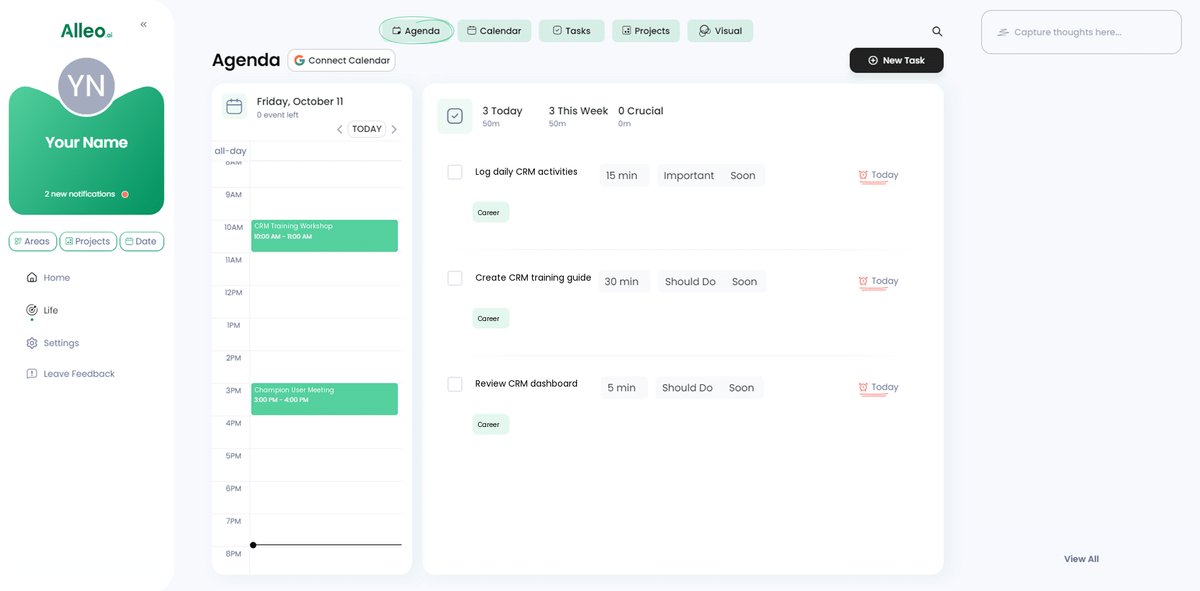
Use the AI coach’s calendar integration to easily add CRM training sessions, Champion User meetings, and milestone celebrations, allowing you to track your progress in solving CRM adoption challenges directly within the app.
Wrapping Up: Achieving CRM Success Together
Navigating CRM adoption strategies for managers can be challenging, but you now have a roadmap to success. Implementing these CRM implementation best practices will help you overcome CRM adoption challenges and enhance your team’s efficiency.
Remember, leading by example, regular sales team CRM training, and incentivizing CRM data management for sales are crucial. Integrating customer relationship management tools and leveraging a Digital Adoption Platform also make a significant difference in improving sales productivity with CRM.
You don’t have to do it alone. With Alleo, you can create a personalized CRM adoption plan and receive ongoing support for CRM integration with sales processes.
Let’s make CRM adoption a smooth journey. Try Alleo for free and transform your CRM experience, including mobile CRM for field sales teams.
Together, we can achieve great results in measuring CRM success in sales.